
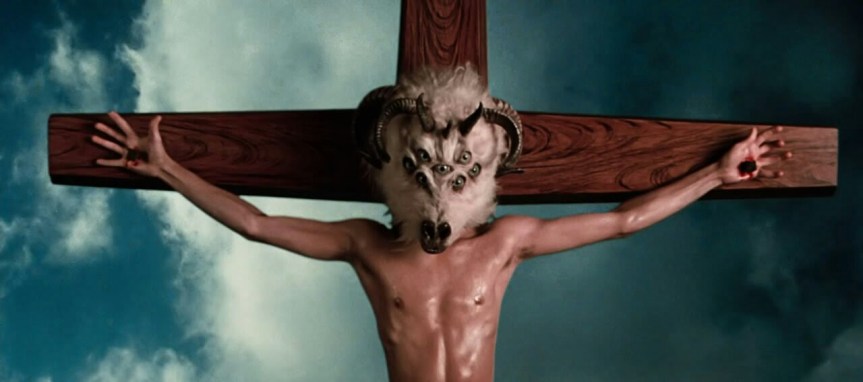
A 2016 UK Guardian article about films that show how the mind works included an analysis of Ken Russell’s Altered States by radical psychologist Sue Blackmore. She said there isn’t really a ‘hard problem of consciousness’*. She said that ‘somehow’, we should see the mind and brain as the same thing.
If we’re allowed to think that something might ‘somehow’ be true, we might also consider the possibility suggested by radical biologist Rupert Sheldrake: that the brain is a receiver for consciousness, which – somehow – exists outside it.
(Sheldrake is written off as “woo” by some, but for those who bother to read him he makes a good case.)
* The hard problem of consciousness
The name given in neuroscience / consciousness studies to the unsolved problem of how and why sensations acquire characteristics, such as colours and tastes. (See, for instance, this Guardian article on the subject.)
Postscript
I emailed Sue Blackmore and she kindly replied. Her reply showed she’s dedicated to opposing the duality that sees consciousness as something separate. Sadly, she doesn’t think much of Sheldrake’s ideas. (Perhaps some radicals, ploughing their lone furrows and perhaps secretly yearning for the mainstream, don’t like to be associated with other radicals. Perhaps.)
Please feel free to comment.
 soothfairy