at fifty-five, Larkin leaked
his early-morning fear of death
at thirty-three, Thomas told
his dying dad to rage
both too young for the animal dread –
and the need to act your age
life’s a bowl of cherries
it’s also a bowl of crap
it’s a cabaret, a revolving door
a way marked on a map
but after threescore years and ten
the end is feeling real
and whatever life is, you want more
to stem the fear you feel
well tough, too bad, you greedy old git
your lust for life’s a bit obscene
death is coming – let it come
you can blame the selfish gene
act your age, turn the page
do some meditation
follow your breath, accept that Death
will need no invitation
Mother Nature doesn’t care
now you’re past the age of mating
so – what comes next?
you might well ask
to pass the time of waiting
free-verse main
what comes next? nothing, say devout atheists something, say practical mystics and
unbelievable believers i don’t know, say we wishy-washy agnostics
no one really knows
which should put nothing in the lead
but many near-death day-trippers say
there’s something coming next
consciousness being unexplained
and perhaps in a separate field
my money’s on something to win
but will it be something good
or will it be something bad?
a Heaven of wonderful meaning
or a Hell of meaningless dreams?
i pray to Om for meaning
for meaning after death
but Great God Om is silent
he’s on a toilet break, the total fake
my unanswered prayer
goes drifting into space
i can only speculate
something scenario 1: dreaming
dreaming after death
the scariest scenario
my living dreams are confused,
unhappy and meaningless
i fear an eternity of that
i add to my my to-do list
practice lucid dreaming
something scenario 2: judgement
on the day of judgement at the crossroads
with St Peter, the Devil
and Robert Johnson watching on
a ghostly AI does the dirty work
sifting swiftly through my life
the result isn’t great
what d’you say? says Johnson
in a kindly kind of way
i say i’m sorry
for not making the most of it
and being a shit sometimes
it wasn’t my fault, give me a break, i whine
then pulling what’s left of myself together
i say whatever, do it
and my judged afterlife begins
something scenario 3: quantum reality
so obviously the multiverse
being made of consciousness
and everything being an illusion, kind of
and my consciousness being a durable
construct of quantum reality
i survive death
with a body made of quantum magic
mine but young and healthy
i see the light, dead friends and relatives
maybe Baby Jesus and Santa Claus
another illusion? perhaps
but it’s better than instant nothing
isn’t it?
quantum scenario 1: reincarnation
after a while,
in the reincarnation unit
surrounded by the spirits of
my surviving loved ones (if any)
and maybe an angel or two
my soul is stripped down
to its unique quantum core
and reborn
(preferably as a human for fuck’s sake)
hello again!
additional souls for the increasing population are presumably made from scratch
quantum scenario 2: reabsorption
after a (different) while,
in the reabsorption unit
(watched again by loved ones and angels)
i dissolve into the ocean of quant
bye bye!
quantum scenario 3: freedom!
after a (short) while
i join a rebel group
we escape from Heaven
in a scifi-action-movie kind of way
and roam the quantum multiverse
on a quest for cosmic justice
like Roy Batty and Gilgamesh
we’re going to meet our maker
whoopee!
other quantum scenarios may be available
or there’s nothing
brain shuts down, mind fades fast
never mind, i think
it was never going to…
Editors’s note: This poem was smuggled out of a high-security asylum for the insane somewhere in the Austrian Alps. Brucciani is thought to have overdosed on scopolamine whilst serving as poet in residence at the Sigmund Freud Museum. The Society of Poets is said to be organising a rescue mission.
The murder of six million Jews by Nazi Germany, known as the Holocaust, is hard to contemplate. But it resonates – as it should – in our collective memory.
Started August 2016 | last updated May 2025 | 1,700 words | Contents
There’s been anti-Jewish racism since the Jews’ most recent exile from Israel by the Roman empire, and their consequent dispersion throughout Europe.
Exile and diaspora is the conventional narrative – but apparently it’s more complicated than that. Apparently, historically, there was no expulsion two thousand years ago.
But however it came about, Jewish diaspora communities lived in Europe. They lived mainly in productive harmony with host communities, but cynical anti-Jewish rabble-rousing led to outbreaks of racist violence, or ‘pogroms‘; and Christian and Muslim extremism led to persecution and expulsion.
The Granada massacre of 1066, a Muslim pogrom in which approximately 4,000 Jews were killed, marked the end of centuries of peaceful coexistence with a liberal Muslim regime in Spain.
The final Christian reconquest of Spain in the late 1400s led to approximately 2,000 Jews being murdered by the Spanish Inquisition and to the eventual expulsion from Spain of over 50,000 Jews.
Savage pogroms continued all over Europe until as recently as the 1940s.
16th-century Christianity reformer Martin Luther publicly recommended the burning of synagogues. Protestant Luther’s beef with Judaism was supposedly theological – but his bitter hatred betrays something less ethereal.
Reformer and anti-Jewish racist Martin Luther | Painting: Lucas Cranach the Elder
(Ironically, Luther’s modern namesake, Protestant minister and black civil rights leader Martin Luther King, publicly spoke out against black anti-Judaism. He acknowledged Jewish participation in the civil rights movement and he actively – controversially – supported the state of Israel.)
Encouraged by the original Luther’s widely disseminated anti-Jewish rhetoric, 19th-century German ‘race’ theorists and philosophers ramped up the anti-Judaism.
The 19th-century German ‘race’ theorists invented the pseudoscientific word ‘antisemitic’. (See my post about that ridiculous word for a tragic phenomenon, Antisemitism – anti-what??)
German philosopher Friedrich Nietzsche is often accused of anti-Judaism. However, that reputation was created by his sister Elizabeth Förster-Nietzsche, who edited his works after his mental breakdown in 1889 and his death in 1900.
Nietzsche’s sister systematically falsified his writings to match her own virulent anti-Jewish racism. Nietzsche was arguably a protofascist, but he was deeply contemptuous of anti-Judaism and nationalism.
Förster-Nietzsche’s falsifications have since been corrected, but they were current in the 1920s and 30s. The main fakery was in Förster-Nietzsche’s collection of her late brother’s notes, published in 1906 as a book, The Will to Power.
Luther and Förster-Nietzsche were perpetuating derogatory stereotypes of Jews common in Europe for centuries, as exemplified in literature by Shakespeare’s Shylock and Dickens’s Fagin.
For instance, the ‘blood libel’ was a widespread anti-Jewish slur which – ridiculously – accused Jews of murdering Christian children to use their blood in the baking of Passover bread.
Such stereotypes found ultimate expression in the fake but influential 1903 document, The Protocols of The Elders of Zion, which purported to reveal – in great detail – a Jewish plot for world domination.
The Protocols of The Elders of Zion was exposed as totally fraudulent in the early 1920s, but it was taught as factual to schoolchildren in 1930s Nazi Germany. It’s still touted around amongst modern conspiracy theory enthusiasts. (David Icke thinks the ‘Elders of Zion’ are extradimensional beings.) Anti-Jewish prejudice, unlike most other forms of racism, isn’t colour prejudice. It’s not a reaction to people’s skin colour – it’s white-on-white prejudice.
As with Islam, Judaism is a religion, not a ‘race’. But, although Judaism contains different ethnic strands, the European Jewish diaspora can be said to be a ‘population’, like African or South Asian people. In the social construct sense, they’re a ‘race’. But they’re not a population easily identifiable by appearance. So how does the prejudice arise?
Anti-Jewish prejudice must be a form of culturist racism: specifically – historically – prejudice against the Jewish diaspora, where people of a different culture came to live in or near a settled neighbourhood, not as individuals but as a self-contained community.
Such Jewish diaspora groups arrived at established communities throughout Europe as fringe communities. Romani travellers, also known as Gypsies, who kept moving rather than settling, were similarly outsiders – and were similarly wiped out in the Holocaust.
Jews – like Gypsies – are voluntarily outsiders, not wanting to integrate but keeping to themselves and to their own culture. This marks them out for prejudice – in that being different means being seen as a threat.
The cultural differences are actually harmless – Jews aren’t actually plotting to rule the world – it’s the difference itself that causes fear, probably mainly unconsciously, which manifests as racism.
Culturism, of course, works one way. Racism is power plus prejudice, so the power is with the European majority and the prejudice is against the outsider minority.
(Culturism, as well as underlying white-on-white anti-Judaism, probably also boosts white-on-black colour prejudice, in that a different skin colour indicates a different culture.)
European anti-Judaism climaxed in the 1940s in Nazi Germany with the Holocaust, Adolf Hitler’s insane, genocidal ‘final solution to the Jewish question’.
Hitler’s anti-Jewish fascism was boosted by:
Widespread, centuries-old European anti-Jewish stereotypes and culturist racism
The anti-Jewish writings of German uber-Protestant Martin Luther
Racist 19th-century German pseudoscientific ‘race’ theory
The protofascist ‘übermensch‘ writings of German philosopher Friedrich Nietzsche
The anti-Jewish falsifications by Nietzsche’s fascist sister, Elizabeth Förster-Nietzsche in his posthumous book, The Will to Power.
Racist, pseudoscientific US eugenics programmes funded by the Carnegie Institution, the Rockefeller Foundation and John Kellogg.
Nazi Germany’s increasingly brutal 1930s anti-Jewish campaign ended in genocide when Jews were sent to extermination camps. In the death camps, the German state systematically murdered six million Jews.
Between 150,000 and 1.5 million Romani people were also murdered by the state.
For those of us who oppose racist anti-Judaism, the Holocaust’s meticulously organised murder of six million Jews haunts our imagination. It’s difficult to understand how people could have done that.
In 1961 the trial of high-ranking Nazi Adolph Eichmann took place in Israel. Eichmann, who’d been instrumental in organising the Holocaust, famously said he’d merely obeyed orders.
Yale professor Stanley Milgram, a US Jewish social psychologist, heard about Eichmann’s defence and posed this question:
What is there in human nature that allows an individual to act without any restraints whatsoever, so that he can act inhumanely, harshly, severely, and in no ways limited by feelings of compassion or conscience? My bolding
Milgram then conducted a famous and controversial series of ingenious experiments – with shocking results.
Milgram showed that ordinary people in thrall to white-coated authority figures were willing to inflict what they believed to be severe pain and even death on strangers. (The strangers were played by actors.)
Questions have understandably been raised about the ethics and methodology of Milgram’s experiments. Their relevance to the Holocaust has been questioned. But Milgram’s basic findings still hold true.
The Holocaust authority figures themselves must have had some form of empathy-deficient mental disorder such as psychopathy. But more disturbingly, ordinary people in that situation were able to set aside their empathy.
Perhaps, however, the Holocaust executioners were not only acting in innate obedience to authority figures, as suggested by Milgram’s experiments, but were also indulging an instinctive racist urge.
Ironically, extreme nationalism – a main factor in the Holocaust – is now a charge made against the powerful US-backed state of Israel in its ongoing conflict with Palestinian people, many of whom were expelled from their homes and homeland during the controversial establishment of Israel which began in 1948.
Equally ironically, the number of Palestinian people registered as refugees (in 2025) is six million. (There are about seven million Jewish people living in Israel.)
Following an attack on Israel in October 2023 by Hamas, the militant group running the Palestinian Gaza Strip, Israel launched the one-sided Gaza ‘war’ against Hamas during which many tens of thousands of Palestinian civilians, including children, have been killed or seriously injured by the IDF – the Israeli ‘defence’ forces.
Mahmoud Ajjour, nine, lost both arms during an Israeli attack on Gaza City | Photo: Samar Abu Elouf / New York Times
The International Criminal Court (ICC) accused the Israeli premier of war crimes and crimes against humanity, and – in the final irony – Israel was accused of genocide.
Supporters of the Palestinian cause who criticise Israeli Zionism are accused (perhaps correctly in some cases) of anti-Jewish racism. And so it goes.
A Sephardi (Jews of North African origin) chief rabbi reportedly said there could be no explanation other than ‘pure racism’.
Outside Israel, despite the terrible lesson of the Holocaust, anti-Judaism continues to thrive.
A 2008report by the US department of state found there was an increase in anti-Judaism across the world, and both old and new expressions of anti-Judaism persisted.
A 2012report by the US bureau of democracy, human rights and labor noted a continued global increase in anti-Judaism, and found Holocaust denial and opposition to Israeli policy were used to promote or justify anti-Judaism.
The German government has paid over $90bn in compensation to the victims and survivors of the Holocaust and their heirs.
Cosmic architect Yin was in bad mood. Something had gone wrong. Yin had picked a universe, found a suitable planet, added a moon, seeded life, guided evolution by wiping out the dinosaurs (with, Yin smugly recalled, a well-aimed asteroid), and now, after four billion planet years (no time at all, really) the sodding superconscious beings were about to destroy their environment!
Reason had replaced religion, so further intervention was out – free will was essential. It was tempting to smite that ‘drill, Baby, drill’ fool, but it was a free and fair election, so… The short life span didn’t help. Yin felt bad about that, but it was what happened with evolution. Apparently.
The angels would try to help, but it wasn’t looking good. Another singularity project down the drain, thought Yin. The same thing, or similar, was happening in innumerable universes. Oh well, fuck it, thought Yin. Plenty more fish in the sea.
Black and South Asian postwar immigrants to the UK and their descendants are often asked ‘Where are you from?’ – a question loaded with a queasy mixture of idle curiosity and unconscious or semiconscious racism.
Begun 2019 | Revised 2025 | 1,300 words | Contents
How should they respond to that loaded question? It’s a minefield.
For a white Briton like me, asking that question of a brown or blackBriton who’s a stranger or casual acquaintance is a bad idea. Much worse is asking as a follow-up question:
Where are you really from?
Such questions are inconsiderately intrusive and, at best, microracist. Unpicked – though the questioner might not consciously realise it – the question is likely to mean:
Your skin colour and facial appearance suggests your ethnic origin isn’t north European. In which country are your family origins? Actually, though, I don’t really care where you’re from. My question is mainly rhetorical and microracist. I’m really just drawing attention to your otherness.
A 2022 high-profile incident at a charity reception involving a UK royal aide, ‘Lady’ Susan Hussey, and a black British charity worker, Ngozi Fulani, is a good example of this phenomenon.
Hussey questioned Fulani’s origins, repeatedly asking where she was ‘really’ from. This was witnessed by several other people and reported by Fulani on
social media.
Former royal aide Susan Hussey | Photo: Getty
‘Lady’ Hussey – daughter of the 12th ‘Earl’ Waldegrave, widow of former BBC chairman and life peer ‘Baron’ Hussey, godmother to heir ‘Prince’ William, and a close friend of ‘King’ Charles, ‘Queen’ Camilla and the late ‘Queen’ Elizabeth – resigned after the incident.
At an arranged meeting two weeks later in Buckingham Palace, Hussey apologised to Fulani, and Fulani accepted Hussey’s apology.
However, in spite of that stage-managed resolution, the unpleasant incident supports Meghan Markle’s implied claim of racism in the royal household; and implies widespread casual racism amongst the ruling class.
If the question, as in that case, seems offensively rhetorical, the asker’s bluff can be called: ‘Why do you want to know?’
If the question seems genuine, and worthy of a helpful response, it might nevertheless be not so easy to answer.
For an answer to be accurate – and understood – both parties need good geopolitical and historical awareness. It can get complicated.
For instance, If a British person of South Asian appearance is known to be a Muslim, they might not be – as might be assumed – of Pakistani or Bangladeshi origin. Many UK Muslims have origins in the Indian state of Gujerat. (Almost 20 percent of Indian people are Muslims.)
Many South Asian people came to the UK from Kenya and Uganda. South Asian communities were established beforepartition in East Africa and the Caribbean, mainly in Kenya, Uganda and Trinidad. They were there because of another piece of clumsy and careless social engineering by the Brutish Empire:indentured servitude.
Following the ending of slavery, between 1834 and 1917, many people were induced to move from India to other colonies as indentured labourers for the empire. Unsurprisingly, the conditions were harsh and the wages low. The workers were derogatively called ‘coolies’.
Indian indentured labourers, seeking to escape the poverty and famine frequent during colonial rule, came mainly from the Punjab and Bengal regions (both later severed during partition).
On completing their indenture, some Indian people stayed on in Africa or the Caribbean. They were joined by family members and formed thriving expatriate communities, albeit protected by the brutal stranglehold of empire.
After those colonies gained independence, many South Asian residents moved to the UK. Those in Uganda were famously expelled by Idi Amin. In Kenya, harsh changes to citizenship rules prompted mass voluntary emigration.
Those UK immigrants, whilst identifying by religion, often also identify by their diaspora community. For instance, people may identify as Kenyan Muslims.
My South Asian Muslim wife, when asked ‘Where are you from?’, sometimes says ‘Nairobi’. Her ethnicity is Punjabi but she was born in Kenya and spent her childhood there.
The person asked that question could give an informative reply, such as:
My family origins are Punjabi Muslim in what’s now Pakistan. In the late 1800s my grandfather went from the Punjab to work in what’s now Kenya. Our family lived there before coming to the UK in the late 1960s.
They could summarise it: ‘Pakistan’. But the question is more likely to provoke a passive-aggressive and deliberately obtuse reply, such as, ‘I’m from Leicester – where are you from?’ (or the deliberately annoying ‘from my mother’s womb’).
The hidden question, ‘Why are you here?’ at least offers the possibility of debate and reason; but behind that lurks the racist rhetorical question:
Why don’t you go back there?
For postwar immigrants to the UK and their descendants, such racism is never far below the surface.
Note: My post Racism explained as a redundant instinct suggests racism is a redundant anti-stranger instinct revived and twisted by colonialism and postcolonialism – and, sadly, provoked by the postwar mass immigration carelessly engineered by a patrician government. We anti-racists choose to reject and oppose that twisted impulse and to embrace our brilliant multicultural society.
Thoughtful white Brits aware of all that – or just wary of the social minefield – don’t ask that awkward, loaded question. But it does get asked.
If I was a British person of colour asked by a white person, ‘Where are you from?’, and the question seemed intrusive, I’d want to challenge it, but it in a non-hostile way.
I’d initially bat it back by – politely – saying, ‘How do you mean?’ If they indicated they were asking about my ethnic origin rather than my place of residence, I’d ask – still politely, if possible:
Why do you want to know?
The questioner might well find it difficult to explain themselves. Serves them right.
British people of colour people also ask the question, ‘Where are you from?’ of each other. The purpose is to find out the other’s origins: country, religion, region, town, caste, class, whatever.
That’s a different can of worms – and it doesn’t excuse white Brits asking that question. As always, context is crucial. The context is the white west and – as always – racism is prejudice plus power.
Osler takes the question seriously, exploring her complex Empireland* family heritage, but she starts by explaining how that question can undermine one’s sense of belonging and nationality with its implied accusation:
You don’t belong here – you’re not British
Clearly, not everyone asking that question is aware of the toxic smog it stirs up – but ignorance is no excuse. Osler suggests a barbed comeback: having answered (or not answered) the question, turn it around and ask:
Where are you from?
* Note: The resonant name Empireland was used by award-winning British journalist Sathnam Sanghera as the title of his 2021 best-selling book, which shows how the Brutish Empire shaped modern Britain but has been airbrushed out of cultural awareness and is barely even taught in schools.
In which Baby Jesus, Santa Claus and a pagan shaman debate the true meaning of Christmas.
Image by Alsopinion
Once upon a time, dear Reader – last year, actually – in the nearby dimension where mythical beings live, the house called Christmas had an unexpected visitor.
In the house called Christmas, Baby Jesus lived in the attic with his mother. Santa Claus lived in the main part with Mrs Claus and some elves. A pagan shaman lived in the cellar.
(The absentee landlord, God, lived in a mansion on a nearby mountain. Mother Nature lived next door.)
Many of the beings in that dimension had chosen human form – for the craic. That included the residents of the house called Christmas.
It was a big house, with grounds, paddocks, stables, and outhouses. The residents had their own appartments but there was a shared ground-floor kitchen-diner.
One day, shortly before Christmas, a human called Helen tripped through a gap in the continuum and found herself outside the house.
It was snowing, and the snow lay deep, crisp and even. A sign on the door said “Christmas”. Helen rang the bell – a sleigh bell.
An elf opened the door. “Come in”, he said. “They’re all in the kitchen.” The elf gestured down the hallway, went into a side room and shut the door behind him.
Helen stared after the elf. She heard shouting coming from down the hall and walked towards the sound. A gruff voice shouted, “Fuck you, you fuckin’ little bastard!” She opened the door.
AI illustration by me/Canva
Baby Jesus, with his halo, and Santa Claus, with his red suit, were sitting at a large kitchen island. Baby Jesus was in a high chair. They each had a glass of red wine. There were two empty wine bottles in front of them. A speaker was playing Jingle Bells on the Multiversal Matrix station.
Baby Jesus looked like a baby, but he thought, spoke and drank like an adult. He was drunk, as was Santa.
“Fuck you, yer fucking fat twat!” Jesus slurred angrily at Santa. “You don’ even know where yer from. Is it Greece? Or fuckin’ whatsit, Anatolia? Or the fuckin’ North fuckin’ Pole?!”
Helen, standing in the doorway, cleared her throat. They both looked at her. “Hello,” she said. “Sorry to barge in. I was lost, so I rang the bell. An elf let me in. I’m Helen.”
“Hi,” said Jesus. “Hullo,” said Santa.
Helen looked around. Mary, Baby Jesus’s teenage mother, was slumped in an armchair with a cigarette and a glass of wine.
AI illustration by me/Microsoft Generator
“‘Twat’ isn’t a nice word, darling,” Mary said to Jesus. She waved at Helen.
A Central-Asian-looking man, the shaman, sat at one end of the island, chopping mushrooms. He said, “What about ‘fucking’? Is that a nice word?” Jesus grunted. The shaman winked at Helen.
Mrs Claus sat at a large dining table, rolling a joint.
As supernatural beings, they didn’t need food or drink – or intoxicants. But in their human form, they’d got into the habit. The elves supplied their groceries and dope.
“Hello, dear. Don’t mind them,” said Mrs Claus to Helen. “They’re always like this at Christmas. Come in, have a seat. We get the odd human visitor every now and then.”
AI illustration by me/Craiyon – sorry about the hands
Helen stared at Baby Jesus. He hiccuped. “So,” said Helen to Mrs Claus, “you’re not … human?”
“No dear,” said Mrs Claus. “You’ve strayed into a different world. We’re mythical beings. But don’t you worry,” she added, “Our visitors usually get back – somehow or other.”
“The elves do it,” said the shaman to Helen. “Get you back.”
Helen sat down next to Mrs Claus. “Have a glass of wine, dear,” said Mrs Claus to Helen. She poured one. Helen took a gulp. “Thanks,” she said.
“I’m sorry,” said Helen to Jesus. “I interrupted you. Do please continue.”
“Yeah, well,” said Jesus. He drank some wine. “Thing is,” he added, “Christmas is mine!”
He pointed at Santa and shouted, “He fuckin’ stole it!“.
“Actually, it’s mine,” said the shaman to Jesus. “Your church stole it. Yule.”
“Well, yer’ve still got yer fuckin’ yule log,” sneered Jesus. “Anyway,” he muttered, “I never wanted the fuckin’ church in the first place.”
“But the point,” he went on, “the fucking point is, it’s s’posed to be about my fuckin’ birthday!”
“The clue’s in the fuckin’ name!” he shouted.
“Ah, but,” said Santa. “They don’t say ‘Christ-mas’, with the ‘t’, do they. They say ‘Chris-mas’. Tha’s me – Chris. Chris Kringle.”
Jesus snorted. “Bollocks!” he said. “Tha’s from the German, whatsit, Christkindl. Means Christ child. Me!”
“Yeah, well, it’s me they go on about,” Santa said to Jesus. “Me. It’s Santa this an’ Santa that, innit. Not you. An’ cert’nly not you, Mr fuckin’ Yule.”
“I have my followers,” said the shaman.
“Yeah, a few new-age, sandal-wearin’, tofu-eatin’ hippies. Bless ’em.” said Santa. “Hardly mainstream like me, is it.”
“Mind you,” Santa said to Jesus, “they like your carols, I’ll give you that.”
“They used to be mine too,” said the shaman, sadly. “Kind of. The Holly and the Ivy still is.”
And,” said the shaman to Santa, “you got your red and white and the flying reindeer from me.”
“Matrix,” said the shaman. “Show it.” An image of a Siberian shaman feeding a reindeer appeared on a large wall screen.
Image: unknown
“We flew, tripping on magic mushrooms,” said the shaman.
“Wharever,” said Santa. “Christmas is mine now. So you can both fuck off.”
“You – yer’ve got too big fer yer… stupid fuckin’ boots!” shouted Jesus at Santa. He slumped back in his high chair. He sighed.
“I know,” said Jesus. “I know it’s yours. An’ I’m not gettin’ it back. But I’m better than you. People know that.”
Santa busied himself opening another bottle. The speaker played All I want For Christmas Is You by Mariah Carey. “I like this one,” said Mary.
Mrs Claus lit her joint, took a big hit and passed it to Helen. “Go on, dear,” she said. “It’ll take the edge off.”
Helen took a hit, coughed and passed the spliff back to Mrs Claus. She cleared her throat. “So, Jesus,” she said. He glared at her. “I mean, if you don’t mind me asking. Are you really the Baby Jesus?”
“Hah!” said Jesus to Santa, pointing at him. “She’s not asking you if you’re really Santa, is she?” Santa shrugged.
“‘S complicated,” Jesus said to Helen, “the mythical thing. But basically, yes. I’m a, er, a manifestation. Of the Son of God.”
“So what about Joseph?” asked Helen.
“Not here,” said Jesus. “Not mythical enough.”
“Like me,” said Mrs Claus. “I shouldn’t be here, really. But he can’t manage on his own.”
“Hah!” said Santa. “Probably true.”
“The elves got her in.” said the shaman. “Obviously, I’m not personally mythical,” he added. “More representative. And I help with the reindeer.”
“So you see,” Jesus said. “Helen,” he added. He cleared his throat. “As the Baby Jesus,” he said, with the careful enunciation of the drunk, “I’m here in this house – we’re all here – because of bloody Christmas!”
“What about Easter?” asked Helen. The shaman snorted. “Another one stolen,” he said.
“Ostara,” he said to Helen. “Or Ēostre.”
“Moan, moan, moan,” said Jesus to the shaman. “Yer still got yer soddin’ eggs. An’ yer stupid bloody rabbit.” The shaman sniffed.
“Easter. ‘S a different house,” said Jesus to Helen. Mary sighed.
The room fell silent, apart from the speaker playing Merry Christmas Everyone by Shakin’ Stevens. An elf came in and finished preparing their meal.
AI illustration by me/Adobe Firefly
Helen accepted Mrs Claus’s invitation to join them for dinner. Baby Jesus picked at his food. He’d become maudlin. Helen wished she hadn’t mentioned Easter. The conversation was mainly small talk about yule logs, reindeer and Helen’s family.
Helen wanted to ask Mary about the virgin birth, but didn’t like to. The speaker played Last Christmas by Wham! “Ooh, I like this one,” said Mrs Claus. “Me too,” said Helen. They giggled.
“Still,” said the shaman to Jesus, “Cheer up. You rose from the dead, didn’t you?”
AI illustration by me/Microsoft Generator
“Tha’s right,” said Santa to Jesus. “‘S why my, er, ancestor was doin’ all those miracles. In Anatolia. In your name.”
“S’pose so,” said Jesus.
“Cheer up, dear,” said Mary to Jesus. “It’s Christmas.” Jesus sniffed.
“Always look on the bright side of life,” sang the shaman.
Jesus laughed. “Hah! Very funny,” he said. The elf gave them each a glass of arak. “Anyway,” said Jesus. “Cheers.”
The mood and the conversation lightened. The elf served coffee and then tapped Helen on the shoulder. “You can go back now if you like,” he said. “OK, thanks,” said Helen.
“Follow me,” said the elf. Helen stood up. The others looked at her. “Well, thanks,” she said. “For the lovely meal. And everything. It was really nice to meet you all.”
“You too, darling,” said Mrs Claus. “All the best.”
Helen started to follow the elf, and then she turned back. “Can I just say,” she said. They looked at her again.
“We … humans, most of us, we’re not very religious these days, are we,” she said. “But Christmas is what it is because of all of you.” The others nodded thoughtfully. “So,” said Helen, “Happy Christmas.”
“Yeah, Happy Christmas,” they said, raggedly but agreeably.
‘Time for your nap, dear,’ said Mary to Baby Jesus. He nodded. ‘You too,’ said Mrs Claus to Santa. He grunted.
Helen followed the elf out of the door. The speaker was playing Fairytale of New York by the Pogues and Kirsty MacColl.
Clip from video for Fairy Tale of New York | Image: YouTube
Helen got back safely – the elves had a portal in the living room – and, dear Reader, they all lived happily thereafter.
Helen didn’t tell anyone about her visit to the house called Christmas. She thought they wouldn’t believe her. She died aged 95 in a post-apocalypse commune. (That’s another story.)
The mythical beings had to move further away when their dimension was demolished by the Xogon empire to make way for a new interdimensional highway. (Fortunately, our nearby dimension was just off the route.)
The house called Christmas re-manifested. Baby Jesus, Santa Claus and the shaman continued to debate the real meaning of Christmas. They still got the occasional human visitor. Most of them got back safely.
Christmas continued to the end of time, which was sooner than everyone expected.
It’s the annex that outgrew its source. It’s still there, but here it’s repurposed and enhanced as a separate post.
This necessarily detailed account of what’s known about Browne and Mitchell’s relationship and its aftermath is an inseparable part of the rumour about Browne and Hannah. Many people condemn Browne solely because they believe Mitchell’s accusatory song Not to Blame.
In forums and comments they say, in effect, referring to Not to Blame, ‘Browne’s an abuser who drove his wife to suicide. Joni Mitchell says so’.
Not to Blame’s believability depends on her relationship with Browne. Mitchell, known for her lyrical integrity, had an affair with Browne and knew him well – so it must be true, right?
I also love a lot of her other work, earlier and later. She’s complex and unique – a genius.
She’s a superstar and I’m a mere fan. I’m not worthy to lace her size-nine dancing shoes, let alone accuse her of misusing her art and platform out of anger to make a damaging, baseless accusation – but needs must…
Mitchell’s 1972 relationship with Jackson Browne in their Laurel Canyon paradise sounds like a match made in heaven. What could possibly go wrong? Well, quite a lot.
Their relationship and its unhappy ending led eventually to Mitchell releasing her accusatory song Not to Blame (on the award-winning 1994 album Turbulent Indigo).
Mitchell has denied her songs are autobiographical but Not to Blame, released in the wake of the rumour that Browne assaulted Daryl Hannah, is widely understood to be Mitchell’s condemnation of Browne as a wife-beater who drove his first wife, Phyllis Major, to suicide.
In 1976, after bizarrely gatecrashing Major’s funeral, Mitchell made a similar but coded accusation about Major’s suicide in Song For Sharon (on the album Hejira).
18 years later, in Not to Blame, Mitchell not only repeated the current rumour about Browne and Hannah, but – much more damagingly – she again implied Browne was responsible for Major’s suicide.
There was no basis for Mitchell’s accusation. Major had long-term mental health problems and before committing suicide she suffered severe postnatal depression.
Some of Browne’s songs show he and Major had serious relationship problems (see below), but no one apart from Mitchell has made the terrible accusation that Browne drove Major to suicide.
In Not to Blame, Mitchell, clearly directly addressing Browne, said he despised frail women and loved to drive them to suicide:
[She] had the frailty you despise
And the looks you love to drive to suicide
This annex shows Mitchell’s accusation is baseless. It’s probably libellous. Why would she do that? What went so wrong with her relationship with Browne?
Relationships are normally private but Mitchell’s shocking public accusation against her ex-lover made their relationship public. The scant published information available portrays a love affair that started well but ended badly.
Then came the aftermath: Mitchell’s lasting and overwrought hatred of Browne – a hatred vented some 20 years later in 1994’sNot to Blame.
Mitchell’s abiding hatred for Browne was also publicly aired some 40 years later with bitter comments made in a 2017 biography.
But it all began, dear Reader (or Skimmer), in 1972…
Joni Mitchell and Jackson Browne began their 1972 relationship whilst touring the US and Europe together.
The tour began in February 1972. Mitchell, 28, was promoting her upcoming fifth album, For the Roses (released in November 1972). Browne, 22, was opening for her and promoting his debut album, Jackson Browne (January 1972).
Manchester! I could have gone…
David Yaffe in Reckless Daughter says after Mitchell’s relationship with James Taylor (see below) had ended, she was…
…thrown on the road with Jackson Browne, another brooding singer-songwriter who was even more harmful to Joni’s already fragile emotional state. [P 167; my bolding]
Mitchell famously said about her thin-skinnedBlue period that she felt ‘like a cellophane wrapper on a pack of cigarettes’.
But Yaffe’s suggestion that Browne was more harmful to the fragile Mitchell than Taylor – whilst it matches Mitchell’s vicious character assassination of Browne in Yaffe’s book (see below) – isn’t borne out by accounts of their relationship.
Far from being harmful to Mitchell’s emotional state on the road, Browne apparently lifted it. According to Sheila Weller’sGirls Like Us:
When Jackson and Joni dueted on “The Circle Game”, fans saw a chemistry between them. By the end of the tour … “Joni and Jackson were together,” Danny Kortchmar [friend and session guitarist] recalls … “Jackson and I are in love” is how Joni put it to her old flame Roy Blumenfeld [drummer in The Blues Project] when he visited L.A. … “She just fell for him,” says a confidante. [P 406]
Chemistry | Photo: Gijsbert Hanekroot/Redferns
After the tour, back home in LA, they didn’t live together. After a while, their ‘dating’ relationship apparently became turbulent. It ended later the same year.
One possible reason for the turbulence in their relationship was that recently in their neighbourhood of Laurel Canyon, home since the 60s to many LA rock musicians, cocaine had replaced cannabis as the drug of choice.
Moreish cocaine can be addictive, and can cause violence. Did the – possibly cocaine-related – turbulence in their relationship manifest as violence?
There was apparently some violence in both directions (see below), but serious incompatibility seems to have been the main problem. Perhaps they were too different – or too similar.
Weller’s Girls Like Us:
By the end of 1972…things were not going well between her and Jackson. “It was a high-strung relationship,” says a confidante. Everyone in their crowd was “doing so much cocaine at the time,” and “Joni thrives on conflict, and not many guys can take that”. (“I’m a confronter by nature,” she’s admitted.)…Nonetheless, Joni remained in love with Jackson. [P 407; my bolding]
Mitchell’s song Car on a Hill (from her 1974 album Court and Spark), said to be about her relationship with Browne, described her growing anxiety and prescient feeling of loss:
I’ve been sitting up waiting for my sugar to show…
He said he’d be over three hours ago…
He makes friends easy, he’s not like me
I watch for judgement anxiously
Now where in the city can that boy be?
He’s a real good talker, I think he’s a friend…
It always seems so righteous at the start
When there’s so much laughter, when there’s so much spark
When there’s so much sweetness in the dark
Around that time, Browne met Phyllis Major, who would become his wife. (See below.) Weller says:
Jackson’s attention to Phyllis Major felt, to Joni, like “a great loss and a great mind-fuck,” says her confidante. [P 408]
It was Browne who ended his relationship with Mitchell. (See below.) This apparently caused Mitchell to have a nervous breakdown. She spent some time in residential therapy.
However, a scorned Mitchell was also furious. Love turned to hate and rage – and how! Weller:
Joni remained deeply angry at Jackson for years. Said percussionist Don Alias, who became her serious boyfriend for several years in the late 1970s, “She really had this hatred of Jackson Browne; the whole Jackson Browne thing was really heavy for her.” [P 410; my bolding]
Sad, but evidently true. Hence, 22 years later, Not to Blame.
There was apparently some violence in the relationship between Jackson Browne and Joni Mitchell, but it clearly wasn’t the habitual kind characteristic of an abusive relationship.
There was violence of some kind – allegedly in both directions – during Joni’s relationship with Browne. [P 343]
Sheila Weller’sGirls Like Us claims Browne hit Mitchell on one occasion.
According to Weller (as related in a 2008news report), Mitchell confided to a friend that Browne disrespected her on stage at LA club The Roxy, and they later had an argument, during which he hit her. [P 407]
Weller assured me her source was good. However, Mitchell cast doubt on the credibility of scenes related in Weller’s book when she vetoed a planned movie based on it.
In a 2014interview, Mitchell said she told the movie’s producer, ‘It’s just a lot of gossip – you don’t have the great scenes’. She also said:
‘There’s a lot of nonsense about me in books – assumptions, assumptions, assumptions.’
So there’s questionable hearsay evidence that Browne hit Mitchell on one occasion. On the other hand, Browne claimed Mitchell attacked him during their relationship.
In a 1997interview about his response to Mitchell’s Not to Blame, he described Mitchell as a violent woman who twice physically attacked him.
Browne has denied his songs are autobiographical – something, at least, he shares with Mitchell – but Fountain of Sorrow is widely believed to be about Mitchell. In a 2014interview, Browne was asked about the meaning of these lines from the song:
When you see through love’s illusion there lies the danger
And your perfect lover just looks like a perfect fool
Declining to say who it was about, he nonetheless replied (typically gnomically):
‘It’s about the fact that when you fall in love with someone, when you’re broken-hearted, you don’t see them as a person.’
Was Browne saying although he loved Mitchell he was still heartbroken from a previous relationship? Was it his continuing focus on a previous lover that so distressed Mitchell?
According to Sheila Weller’sGirls Like Us, Browne was a romantic who said he kept getting his heart crushed. Weller says in 1971 Browne had a brief love affair in London with actor and photographer Salli Sachse, who’d been official photographer for Crosby, Stills, Nash and Young. (P 405).
Sachse and Peter Fonda in The Trip, 1967 | Photo: AIP
Weller refers to Sachse as ‘Jackson’s pre-Joni girlfriend‘. [P 410] The ‘you’ in Browne’s Something Fine (from his 1972 debut album, Jackson Browne) is thought to be Sachse.
In a 2019interview*, Sachse (an artist living in California) said she left Browne to go to Holland, where she met and fell in love with an artist.
*Sorry – you have to scroll past many pages of rogue code to get to the interview.
Was Browne’s heart crushed again when Sachse left him and fell for another man? Was he on the rebound?
Maybe not. That’s speculation – and it was a short affair, lasting only about 10 days. But it would perhaps explain that strange remark of Browne’s:
‘When you fall in love with someone, when you’re broken-hearted, you don’t see them as a person.’
Or was that actually about Mitchell and James Taylor, Mitchell’s pre-Browne lover. Was it Mitchell who was broken-hearted and on the rebound? Mitchell and Taylor were together from 1970-71. For a while, according to Yaffe, they were very close. (P 127) Then, with Taylor’s growing heroin/opioid addiction and Mitchell entering her thin-skinnedBlue period (when, she’s said, she felt ‘like a cellophane wrapper on a pack of cigarettes’), the relationship declined.
James Taylor and Joni Mitchell, 1971 | Photo: Joel Bernstein
According to one account, the relationship was ended by Taylor after Mitchell complained about him flirting with female admirers, and after he’d started seeing Carly Simon.
However, according to Weller, when Taylor and Simon met, Taylor and Mitchell’s relationship had already ended. (P 359) Oddly, neither Yaffe nor Weller describe how it ended, but Weller, writing about Mitchell’s 1972 album For the Roses, said James’ ‘rejection’ got to her. (P 334)
Taylor (in choosing California as his favourite song from Blue) claimsMitchell ended things when she left him in an airport and flew back to California. (Is that what Blue’s This Flight Tonight is ‘about’?)
Who dumped who matters because it’s suggested Mitchell’s lasting anger at Browne stems from him dumping her. But if Taylor also dumped her, how come she’s not angry at him?
Anyhow…was Mitchell broken-hearted when her relationship with Taylor ended? Was Browne – a young, good-looking, cultured singer-songwriter, like Taylor – Mitchell’s rebound substitute? Was Browne referring to Mitchell not seeing him as a person?
Taylor married Carly Simon in November 1972. Did that make the breakup with Browne even worse for Mitchell?
Happy couple: Carly Simon and James Taylor at their wedding, 1972 | Photo: Peter Simon (Carly’s late brother)
However, if Mitchell’s relationship with Browne was a relatively insignificant rebound relationship, why would she remain so intensely bitter towards him 20, 40 years later?
There was a 20s age gap between Joni Mitchell and Jackson Browne – she was 28, he was 22. Browne’s relative immaturity probably contributed to the breakdown of their relationship.
Browne has said he was lacking in emotional maturity at that time. He was talking about his song, Ready or Not (on his 1973 album For Everyman).
Ready or Not is about Browne’s first wife Phyllis Major, who he met around the time of his break-up with Mitchell. The song is funny, honest and slightly flippant.
Two verses refer to Major’s apparently unintended pregnancy and to Browne’s uncertainty about settling down:
Now baby’s feeling funny in the morning
She says she’s got a lot on her mind
Nature didn’t give her any warning
Now she’s going to have to leave her wild ways behind
She says she doesn’t care if she never spends
Another night running loose on the town
She’s gonna be a mother
Take a look in my eyes and tell me, brother
If I look like I’m ready
I told her I had always lived alone
And I probably always would
And all I wanted was my freedom
And she told me that she understood
But I let her do some of my laundry
And she slipped a few meals in between
And the next thing I remember, she was all moved in
And I was buying her a washing machine
The Songfacts page on Ready or Not (click on the ‘artistfacts’ tab) quotes a Mojo interview* with Browne:
‘She [Major] hated that song. She said, “I wasn’t having a baby to get you. And the bullshit about the washing machine is just insulting. So fuck you.” And she was right. I should have said in that song, “Oh shit, I’m about to become a parent and I have no idea how to do this.” But I was not emotionally mature enough.’ [My bolding]
* The interview date isn’t given, and there’s no online archive for Mojo.
In a filmed interview*, a 1970s-looking Browne described Ready or Not as glib, and said – generously – he learned from Mitchell the need to write deeper songs. (And he did – with his next album, the timeless Late for the Sky.)
* The interview was possibly in a TV documentary about Laurel Canyon. Unfortunately, I haven’t been able to find it again.
Those comments show Browne considered himself relatively immature at that time. With Mitchell, perhaps this was inevitable given the awkward younger-man 20s age gap.
He was, as he sang in Fountain of Sorrow, ‘one or two years’ – six, actually – and (apparently) ‘a couple of changes’ behind her.
Ready or Not portrayed Browne as torn between settling down and freedom. No doubt the immaturity and commitment-aversion shown in the song and acknowledged in his comments on it – along with the age gap – contributed to his apparent incompatibility with Mitchell.
Browne’s casually entitled sexism, as shown in Ready or Not‘s jokey reference to Major doing laundry and cooking meals can’t have helped.
(There was a lot of that around – despite the proclaimed hippy ideals of equality and liberation.)
Jackson Browne’s relationship with Joni Mitchell was ended by Browne in 1972 shortly before or after he met his future wife Phyllis Major. Apparently Mitchell was incensed it was Browne who ended it.
She was also apparently distraught. According to Sheila Weller’s 2008 Girls Like Us, a confidante of Mitchell said she attempted suicide by taking pills and she threw herself at a mirror, badly cutting herself. (P 408)
Mitchell has denied this. According to David Yaffe’s 2017 Reckless Daughter, the breakup was ‘less eventful than has been reported elsewhere’ (P 167). Mitchell told Yaffe:
‘I read a page in one of those books. It said when Jackson Browne dumped me I attempted suicide and I became a cutter. A cutter! A self-mutilator! I thought, Where do they get this garbage from? I’m not that crazy. I’m crazy, but not that crazy.’ (P 237)
Hmm.
After a period in residential therapy, Mitchell moved into the home of her – and Browne’s – friend and manager, David Geffen.
I asked Geffen about Mitchell’s alleged suicide attempt. He replied to say:
‘Everything written about it is either wrong or completely made up … I am not going to talk about Joni’s private life other than to say Jackson is not violent in any way and the end of relationships are always messy.’
(I told Geffen I was asking about Mitchell’s alleged suicide attempt in the course of my investigation into the rumour that Browne assaulted Daryl Hannah. In his reply, Geffen added, ‘Jackson never assaulted Hannah’.) Yaffe’sReckless Daughter quotes Larry Klein, Mitchell’s husband from 1982 to 1994, as saying:
‘Joni had a great deal of anger towards Jackson … Maybe it stems from the fact that he was the one to end the relationship … I think that’s a pattern in her life. She would do things that would lead to the end of the relationship … and then feel unjustly abandoned.’ [P 167; my bolding]
In late 1972, around the time he ended his relationship with Joni Mitchell, Jackson Browne met the woman who was to become his first wife, the actor and model Phyllis Major.
They met in the LA Troubadour club. Apparently Major was being harassed, and Browne intervened. His song Ready or Not (from For Everyman, 1973) included his jaunty account of meeting Major:
I met her in a crowded barroom
One of those typical Hollywood scenes
I was doing my very best Bogart
But I was having trouble getting into her jeans
I punched an unemployed actor
Defending her dignity
He stood up and knocked me through that barroom door
And that girl came home with me
Soon after meeting, they began a serious relationship. Their son Ethan was born in 1973. They married in 1975.
Oddly – apparently for no reason – Browne ends Walking Slow (from Late for the Sky, 1974) with these doleful lines:
I’m feelin’ good today
But if I die a little farther along
I’m trusting everyone to carry on
Tragically, it was, of course, Major who died a little farther along and Browne who had to find a way to carry on.
Major had long-term mental health problems and suffered severe postnatal depression. She attempted suicide in 1975, and committed suicide in March 1976 by taking an overdose of barbiturates.
🌷 🌷 🌷
In Not to Blame, Mitchell said Browne drove Major to suicide. (See below.) That terrible accusation is unfounded and uncorroborated – but Browne and Major were apparently having problems.
As a free-spirited and dedicated musician, no doubt Browne was sometimes an absent husband and parent. And Major had a history of mental health issues.
But – as with the relationship between Browne and Mitchell – no one else really knows what went on. I haven’t found any published information about their relationship – apart from in songs.
Disregarding Not to Blame’s uncorroborated accusation, three of Browne’s songs refer to difficulties in his relationship with Major.
1974’s Walking Slow, despite its breezy tone and its opening lines about being happy and feeling good, refers to marital discord:
I got a pretty little girl of my own at home
Sometimes we forget we love each other
And we fight for no reason
Browne added, presciently:
I don’t know what I’ll do if she ever leaves me alone
Things were apparently worse than typical marriage tiffs. Sleep’s Dark and Silent Gate, written soon after Major’s suicide, has a verse about their relationship:
Never shoulda had to try so hard
To make a love work out, I guess
I don’t know what love has got to do with happiness
But the times when we were happy
Were the times we never tried
It took Browne many years to write a whole song about what went wrong. 1986’s In the Shape of a Heart is very moving – and painfully revealing:
I guess I never knew what she was talking about
I guess I never knew what she was living without …
There was a hole left in the wall from some ancient fight
About the size of a fist, or something thrown that had missed
And there were other holes as well, in the house where our nights fell
Far too many to repair in the time that we were there …
It was the ruby that she wore, on a stand beside the bed
In the hour before dawn, when I knew she was gone
And I held it in my hand for a little while
And dropped it into the wall, let it go, heard it fall …
Speak in terms of a life and the living
Try to find the word for forgiving
Browne’s reference to ‘a hole left in the wall from some ancient fight about the size of a fist, or something thrown that had missed‘ implies him hitting the wall in frustration or her throwing something at him.
The reference to ‘other holes as well in the house where our nights fell, far too many to repair in the time that we were there‘ is clearly metaphorical.
Browne’s not confessing to domestic violence. He’s expanding Walking Slow’s ‘we forget we love each other, and we fight for no reason’ and Sleep’s Dark and Silent Gate’s ‘had to try so hard to make a love work out’ to In the Shape of a Heart’s account of his struggle to cope:
Jackson Browne met his first wife, Phyllis Major, around the time he ended his relationship with Joni Mitchell in 1972. Tragically, Major committed suicide in 1976. (See above.)
In two of her songs, Mitchell has accused Browne of driving Major to suicide.
The epic Song For Sharon (on the album Hejira) was released in 1976 soon after Major’s suicide. In one of the song’s ten verses, Mitchell implied Browne drove Major to it.
The accusatory Not to Blame (on the award-winning album Turbulent Indigo) was released in 1994 in the wake of the rumour that Browne beat Hannah. In addition to boosting that rumour, Mitchell repeated her smear about Major’s suicide more openly – and with spurious detail about Browne and Major’s three-year-old son.
(Not to Blame is analysed in detail in the next section.)
Mitchell was apparently acquainted with Major before Browne met her. In David Yaffe’sReckless Daughter, she described Major as ‘a sensitive, artistic, beautiful girl, who was passed from guy to guy to guy‘, and said when she learned Major was with Browne, she thought:
‘Here comes another one – the worst one of all. The very worst one. And all that shit that she’s gone through to fall into his clutches.’ [P 238 – Yaffe’s italics; my bolding]
(In Yaffe’s book, Mitchell harshly criticised all her exes, but was especially – gratuitously – vicious about Browne. See below.)
According to Sheila Weller’sGirls Like Us, Mitchell angered Browne by attending Major’s funeral. Weller says Mitchell saw a parallel with her ownsuicide attempt and included a coded implication in Song For Sharon that Browne was responsible for Major’s suicide. (P 411)
At the time of writing, Wikipedia‘s description of Song For Sharon – in its entry on the album Hejira – cites Weller’s claim that the song alludes to Major’s suicide. Wikipedia relates Weller’s observation that the song asks if the suicide was a means of ‘punishing someone’.
Mitchell’s beautiful Song For Sharon is a long and rambling autobiographical catch-up (nominally – as it were – addressed to an old friend, Sharon). However, the song’s poetic and sonic beauty conceals an ugly bitterness. Verse five (of ten) is a coded account of Mitchell’s vengeful response to the news of Major’s suicide.
Although Major died from a barbiturate overdose, the verse refers cryptically to a woman who ‘just drowned herself’. It says she was ‘just shaking off futility’ – ie of life with Browne – ‘or punishing somebody’ – ie Browne, presumably for his supposed mistreatment of her:
A woman I knew just drowned herself
The well was deep and muddy
She was just shaking off futility
Or punishing somebody
My friends were calling up all day yesterday
All emotions and abstractions
It seems we all live so close to that line
and so far from satisfaction
In Yaffe’s Reckless Daughter there’s no comment from Mitchell about the coded accusation in Song For Sharon. Nevertheless, Yaffe, perhaps referring to unpublished parts of his conversations with Mitchell, describes her emotional compulsion to make that accusation:
A woman [Major], who had been married to an ex-lover [Browne], commits suicide. She [Mitchell] feels bad. And she can’t let go of her bitterness toward the man who surely drove her to it, which makes her feel even more sympathy, more anger … She is sad, she is angry, she takes umbrage. She would like to be above settling scores, yet she is compelled to do so. It all came rushing back. Jackson had the nerve to dump her. Then she had such a vivid sense of what was wrong with him, and she could see what he was doing to the women who came after. [P 236-7; my bolding]
(Not to Blame is analysed in detail in the next section.)
The bitterness in Song For Sharon was coded and muted. However, 18 years later Mitchell was still bitter – and she let rip.
Mitchell’s song Not to Blame (on the award-winning album Turbulent Indigo), released in 1994 in the wake of the Browne-Hannah rumour, openly and angrily repeated her accusation that Browne drove Major to suicide.
The first two verses of Not to Blame were about Browne and Hannah, but the last verse, cruelly padded with spurious detail about Browne’s son, addressed Major’s suicide:
I heard your baby say
When he was only three
‘Daddy let’s get some girls
One for you and one for me’
His mother had the frailty you despise
And the looks you love to drive to suicide
Not one wet eye around
lonely little grave
Said ‘He was out of line girl
You were not to blame’
The spurious detail (‘I heard your baby say …’) referred to Browne and Major’s three-year-old son. Interviewed about Not to Blame in 1997, Browne said:
‘It was abusive to employ that image of my son as somebody who treated his mother’s death light-heartedly. I mean, he was a three-year-old baby, you know. This is inexcusable.’
Major took her own life after apparently suffering long-term mental health issues and extreme postnatal depression.
Browne’s songs Walking Slow, Sleep’s Dark and Silent Gate and – especially – In the Shape of a Heart refer to the difficulties they had in their relationship. (See above.)
Those difficulties may have been known to Mitchell – theirs was a small world. However, no one apart from Mitchell (and forum contributors who believe Mitchell’s accusation) has suggested Browne mistreated Major and drove her to suicide.
There’s no corroboration for the nasty accusation Mitchell made in those two songs and – despite Yaffe’s empathic explanation for Song For Sharon‘s coded accusation – no excuse.
In 1994, in the wake of the Jackson Browne-Daryl Hannah rumour – 22 years after her relationship with Browne had ended – Joni Mitchell released her accusatory song Not to Blame (on the award-winning album Turbulent Indigo).
This section offers a detailed analysis of the song, the part it’s played in the rumour about Browne and Hannah, and its reference to the suicide in 1976 of Browne’s first wife, Phyllis Major.
(Mitchell’s twisted take on Major’s suicide in Not to Blame and in the earlier Song For Sharon is also separately addressed above.)
Not to Blame is often invoked in discussion forums and comments as proof Browne’s a wife-beater.
It’s no such thing, but some people seem to think Mitchell’s condemnation of Browne trumps Browne’s protestation of innocence – perhaps because of Mitchell’s stronger reputation and her ‘weaker’ sex.
It doesn’t help, of course, that Browne refuses to explain what happened with Hannah.
Not to Blame offered no proof Browne assaulted anyone or drove them to suicide. Mitchell repeated and embroidered the gossip about Hannah, and she accused Browne of causing Major’s suicide. But the song provided no hint of corroboration or evidence.
For instance, she made no reference to her brief relationship with Browne 20 years previously, despite that being the last time she’d known him.
(Mitchell did talk about their relationship in David Yaffe’s 2017 autobiography, Reckless Daughter. She was highly critical of Browne – see below – but she notably didn’t mention Not to Blame; nor did she repeat her accusations about Hannah’s injuries or Major’s suicide.)
If Not to Blame reveals any truth, it’s not that Browne’s a wife-beater, it’s that Mitchell’s a grudge-holder – and that there’s no rage like love turned to hate.
Not to Blame is beautifully sung over sparse piano chords and sexy bass, with a light, slightly breathless, beguiling purity. Mitchell’s lyrics sound utterly convincing. She doesn’t sound angry or bitter – she sounds like, say, a Norwegian ice-maiden crooning light jazz.
But the song’s dulcet beauty belies its ugly theme: banal vengeance with a poisonous sting.
Not to Blame was released in 1994, when the rumour that Browne beat Hannah was still in the news. The US‘uncle’ letters about Hannah (see above) had been published that year.
Despite Mitchell’s flimsy pretence that Not to Blame wasn’t about anyone in particular, it was clearly about Browne – and was perfectly timed to twist the knife.
The first verse repeated and embellished the rumour of abuse. The second verse addressed domestic abuse in general (and obscurely accused Browne of ‘perversity’). Then, after that banal bluster, came the madness.
The venomous spite of the third verse was openly aimed at Mitchell’s real target: Browne and Major – albeit cloaked with fake sympathy for Major.
Browne left Mitchell for Major in 1972. Mitchell apparently never got over it.
Major committed suicide in 1976. In the same year, in Hejira’s Song For Sharon, Mitchell implied that Browne caused it.
18 years later, in Not to Blame’s final verse, Mitchell returned to Major’s suicide, accusing Browne of despising women’s frailty and loving to drive them to suicide.
Why did she do that?
In David Yaffe’s autobiography, Reckless Daughter, Yaffe often apparently channels Mitchell in order to explain without quoting. (See, for instance, Yaffe’s explanation for Mitchell’s comment on Major’s suicide in Song For Sharon.)
In that spirit, here’s my channelled explanation for Not to Blame’sthird verse:
Jackson had left her – genius Joni – for airhead* Phyllis. The shallow bastard! Then Phyllis killed herself. Joni gatecrashed the funeral. She pretended to feel sorry for Phyllis so she could blame Jackson. Her bitterness towards him festered. Now, years later, here was the Daryl Hannah rumour – a chance too good to miss! It had to be his fault! Like Phyllis’s suicide! Like how he left her!! Bastard! Stab! Stab! Stab!
Or something like that. But however you slice it, Not to Blame’s third verse is quite the Psycho scene.
The first verse got right to it. Jackson Browne had already been damaged by the gossip about Daryl Hannah. Now Joni Mitchell put the boot in by repeating – and embroidering on – the rumour.
The first verse says:
The media said Browne beat Hannah
His philanthropy was hypocritical
She had his fist marks on her face
His friends said it was her fault and he was not to blame
The story hit the news from coast to coast
They said you beat the girl you loved the most
Your charitable acts seemed out of place
With the beauty, with your fist marks on her face
Your buddies all stood by
They bet their fortunes and their fame
That she was out of line
And you were not to blame
In Yaffe’sReckless Daughter there was no comment from Mitchell on Not to Blame, but Yaffe misleadingly implied the song was Mitchell’s revenge for Browne’s alleged violence against her:
There was violence of some kind – allegedly in both directions – during Joni’s relationship with Browne, and this song [Not to Blame] finds her carrying a grudge 20 years later. [P 343; my bolding]
Allegations of violence in a relationship must be taken seriously, but the alleged occasional two-way violence in their relationship (see above) was clearly not the persistently repeated one-way assault typical of domestic abuse.
In 1994, Mitchell’s 20-year grudge resulted in Not to Blame‘s accusation that Browne was a physical abuser. The grudge, however, can’t have been about physical abuse in their relationship – because the infrequent two-way violence in their relationship clearly didn’t amount to that.
Mitchell’s fiercely derogatory comments on Browne in Yaffe’s book (see below) revealed a long-held grudge (over 40 years by that time) but in the book, she notably – perhaps advisedly – didn’t repeat Not to Blame’s physical abuse smear.
Yaffe was wrong to suggest Mitchell’s grudge was about ‘violence of some kind’ in her relationship with Browne. More accurately, Yaffe went on to describe the song as a ‘violent and personal attack‘. (P 344)
The second verse of Not to Blame was less directly accusatory:
Six hundred thousand doctors
Are putting on rubber gloves
And they’re poking at the miseries made of love
They say they’re learning how to spot
The battered wives among all the women
They see bleeding through their lives
I bleed for your perversity
These red words that make a stain
On your white-washed claim
That she was out of line
And you were not to blame
However, the second verse seemingly gave a coded explanation for the damning accusation in the third verse – that Jackson Browne despises women’s frailty and habitually makes them suicidal.
In the second verse, Joni Mitchell said, ‘I bleed for your perversity‘. That apparently referred to Browne’s obstinacy in insisting he wasn’t to blame. But was wordsmith Mitchell also implying sexual perversity?
Was Mitchell suggesting Browne was secretly gay and his hiding it was a perversion? Was she saying his secret gay misogyny made him despise women’s frailty and beauty and want to drive them to suicide? Yaffe’sReckless Daughteropenly suggested Browne was secretly gay. According to Mitchell, Browne’s mother said to her:
‘I wondered what form your perversion would take’. (P 167)
Explaining that gnomic comment (a family trait?), Yaffe, apparently channelling Mitchell, said:
Joni eventually came to feel she was being given a heads-up. Maybe there was something off about Jackson’s relationships. And he did seem to be more giddy with his male friends than he could ever be with a woman… This guy had issues. [P 167-8; my bolding]
Yaffe told me he got most of the people involved to tell their side of the story, but Browne’s management didn’t respond.
However, it seems likely that whatever Browne’s mother was on about, whatever was ‘off’ in Browne’s relationship with Mitchell, and whatever ‘issues’ he had, he’s not secretly gay.
Perhaps Mitchell was pursuing her vendetta against him by slinging any mud that came to hand.
Whether or not Mitchell subtly loaded all that onto the word ‘perversity’, her accusation that Browne loved to drive beautiful women to suicide couldn’t be justified in any case – it was clearly absurd.
Another accusatory element in the second verse was the phrase ‘battered wives’.
Not to Blame implied Browne beat Hannah, but it didn’t imply he beat Mitchell or any other women. The song’s reference to ‘battered wives’ was ostensibly a general comment about doctors not recognising domestic abuse.
However, ‘battered wives’ might also have been a subtle dig at Browne. A few months before the release of Not to Blame, Daryl Hannah’s uncle, Haskell Wexler, in his much-publicised angry letter to monthly film and music magazine US, said:
I was with her in the hospital … The doctor was shocked by the severity and noted Daryl as ‘a badly battered woman’. [My bolding]
In his reply to Wexler, Browne threatened to go public unless allowed to privately ‘describe Daryl’s actions’. Wexler’s subsequent silence suggests he heard Browne’s explanation and found it plausible – but that wouldn’t have fitted with Mitchell’s bitter preconception.
(Also, Wexler or the doctor may have been exaggerating. According to a contemporaneous People report, although Hannah was seen in New York days after the incident with a bandaged hand and a black eye, 10 days after the incident, the ‘badly battered woman’ was pictured in a paparazzi video ‘smooching’ with JFK Jr in Manhattan.)
Perhaps Mitchell, having seen Wexler’s letter, felt entitled to subliminally enhance her anti-Browne message with the phrase ‘battered wives’.
💔💔💔 Not to Blame 🔼
Verse 3
Stab! Stab! Stab!
In Not to Blame’sthird verse, Joni Mitchell finally thrust home the poisoned point: her hatred for Jackson Browne after he left her for Phyllis Major in 1972. In this verse, Mitchell got well and truly Psycho on Browne’s ass.
After Major’s suicide in 1976, Mitchell gatecrashed the funeral. This verse was her twisted account of it, and her even more twisted explanation for Major’s suicide:
I heard your baby say when he was only three
‘Daddy let’s get some girls
One for you and one for me’
His mother had the frailty you despise
And the looks you love to drive to suicide
Not one wet eye around her lonely little grave
Said ‘He was out of line girl
You were not to blame’
In two crazy and vicious lines, she suggested not only that Browne despised his wife’s frailty and drove her to suicide but also that he made a habit of it:
[She] had the frailty you despise
And the looks you love to drive to suicide
Major took her own life after apparently suffering long-term mental health issues and extreme postnatal depression.
Browne and Major apparently had relationship problems. (See above.) That may have been known to Mitchell. But no one apart from Mitchell has suggested Browne drove Major – or any other women – to suicide.
Mitchell’s vengeful accusation was a cheesy, melodramatic lie. Such is art made to serve congealed rage.
Mitchell also callously referred to Browne and Major’s three-year-old son:
I heard your baby say when he was only three
‘Daddy let’s get some girls
One for you and one for me’
If Mitchell, the unwelcome guest at Major’s funeral, heard those words, they were clearly the foolish words of a baby.
Using those words, whether true or invented, to suggest Browne was a womaniser and his three-year-old son was aware of that and was colluding with it at his mother’s funeral was bizarre. It showed the twistedness of her anger.
‘It was abusive to employ that image of my son as somebody who treated his mother’s death light-heartedly. I mean, he was a three-year-old baby, you know.’
Joni Mitchell should withdrawNot to Blame’s very damaging baseless accusation. It’s not too late for her to put it right. (See my appeal to Mitchell, below.)
In his 1997 interview, Jackson Browne expressed frustration at not being able to talk to Mitchell about Not to Blame.
He said it was inexcusable for her to believe the tabloid gossip, and he was tired of people assuming she was an authority on his life despite not having known him for 20 years.
He said he wrote to Mitchell after hearing the song, but she didn’t reply. He’d tried not to conduct a public defence against Mitchell’s song, but was tired of having to accept her bitter attack.
So Browne had his say – but the song continued to damage him.
In Not to Blame Mitchell used her poetic artistry and her beguiling voice to create the baseless impression of a man who mistreats women, who despises their frailty and loves to drive them to suicide.
The angry and personal tone of the third verse will have convinced some that Browne must be guilty of something terrible. Such is the power of an accusation made by someone of stature.
Mitchell’s reputation – sealed with her unparalleled album, Blue – as the foremost truthful songwriter of her generation, together with her brief but intimate knowledge of Browne, gave Not to Blame an impressive veneer of credibility.
However, behind that cool, authentic exterior, Mitchell was wildly stabbing at Browne like a vengeful goddess* re-enacting the Psycho shower scene.
This song and the unfair damage it’s done to Browne should fade to grey in the limbo reserved for such defamatory fits of passion.
* Thanks to commenter Alan Smith for that apposite epithet.
Typically tight-lipped, Jackson Browne has said very little about his relationship with Joni Mitchell other than in response to Not to Blame and in contemporaneous lyrics, some of which he’s – kind of – explained.
In a 1997interview about Not to Blame, Browne described Mitchell as a violent woman who twice physically attacked him during their relationship.
Browne has also spoken about the ‘differences’ alluded to in Fountain of Sorrow (from his 1974 album Late for the Sky), believed to be about Mitchell.
In his spoken introduction to a 2014videoed performance of Fountain of Sorrow, Browne explained he wrote it for an ex-lover. He’d run into her sometime after they separated, was impressed by her beauty, remembered ‘all the good stuff’, and wrote the song for her. His introduction concluded:
‘But as time went on, as years went on, it turned out to be a more generous song than she deserved‘.
The audience’s knowing and sympathetic laughter showed they got Browne’s drily understated reference to Mitchell and her vengeful song, Not to Blame.
Weirdly, however, Fountain of Sorrow isn’t a generous celebration of an ex-lover’s good points at all – it’s a typically deep and soulful meditation on relationships, memory, and loneliness.
I’m just one or two years and a couple of changes behind you
In my lessons at love’s pain and heartache school
Where if you feel too free and you need something to remind you
There’s this loneliness springing up from your life
Like a fountain from a pool
Asked in a 2014interview about that introduction to Fountain of Sorrow, Browne said:
‘The things that come to bear in that song are the healing and acceptance of each other’s differences. That’s what I meant by it being more generous than she deserved.’
Hmmm. In the same interview about Fountain of Sorrow Browne was asked about the meaning of these lines:
When you see through love’s illusion there lies the danger
And your perfect lover just looks like a perfect fool
He replied, gnomically:
‘It’s about the fact that when you fall in love with someone, when you’re broken-hearted, you don’t see them as a person.’ (See above.)
The equally brilliant and moody song Late for the Sky – ‘Looking hard into your eyes, there was nobody I’d ever known‘ – is also thought to be about Mitchell.
Such were Browne’s thoughtful – if not particularly ‘generous’ – reflections on their relationship. Mitchell’s take on it, however, seemed increasingly angry.
In 1972, Jackson Browne ended his relationship with Joni Mitchell. Apparently permanently furious ever since, she’s trashed him implicitly in two songs and explicitly in a recent biography.
In 1976, Mitchell’s Song For Sharon, released soon after the suicide of Browne’s first wife Phyllis Major, included a coded implication that Browne caused Major’s suicide.
In 1994, Mitchell’s uncompromisingly vicious Not to Blame, released in the wake of the Browne-Daryl Hannah rumour (22 years after Mitchell’s relationship with Browne had ended), openly implied Browne was a wife-beater who drove his wife to suicide.
More recently, in David Yaffe’s 2017 biography Reckless Daughter, published 45 years after her relationship with Browne, Mitchell – apparently consumed by bitterness like a modern-day Miss Havisham – brutally dismissed Browne as a worthless nonentity.
Yaffe’s book drew on conversations he recorded in 2015 shortly before Mitchell’s aneurysm.
Surprisingly – perhaps advisedly – Yaffe’s book contained no comments by Mitchell about Not to Blame. (Readers had to rely on the author’s flawed explanation.)
However, Mitchell wasn’t holding back in Yaffe’s book. She lashed out at Browne, describing him as ‘a leering narcissist‘, ‘just a nasty bit of business‘ and ‘the very worst one’.
Some of Mitchell’s comments about Browne in Yaffe’s book were merged with those about her previous lover, singer-songwriter James Taylor.
Taylor and Browne seemed to have almost fused in Mitchell’s mind into a single lump of uselessness – but while she excused Taylor as a junkie, she condemned Browne as actively vile.
Mitchell made the ‘leering narcissist’ comment when speaking about her love not being returned:
‘I did love, to the best of my ability, and sometimes, for a while it was reciprocated, and sometimes … they were incapable. James numbed on drugs and Jackson Browne was never attracted to me … when [Jackson] spoke about old lovers, he leered. He was a leering narcissist.’ (Yaffe, P 167)
The ‘nasty bit of business’ comment occurred when Mitchell explained how her sadness was caused by having her self-worth undermined:
‘I wasn’t mentally ill. I was sad … When someone’s undermining your self-worth, it’s not a healthy situation. Well, it’s not James’s fault, he’s fucked up. And Jackson’s just a nasty bit of business.’ (Yaffe, P 169)
The ‘very worst one’ comment was about Browne meeting Phyllis Major at the time he ended his relationship with Mitchell. She described Major as ‘a sensitive … girl, who was passed from guy to guy to guy’ (see above), and claimed a horrified concern:
‘Here comes another one – the worst one of all. The very worst one. And all that shit that she’s gone through to fall into his clutches.’ [Yaffe, P 238 – Yaffe’s italics; my bolding]
There’s more of this from Mitchell in Yaffe’s and Weller’s books. Yaffe told me he was able to get most of the people involved to tell their side of the story but Browne’s management didn’t respond.
That was probably for the best. Browne must have had his faults, but Mitchell seems to have constructed an alternative reality in which fault is one-sided, exaggerated and vilified.
In forum discussions and comments, people say Joni Mitchell’s song Not to Blame shows Jackson Browne assaulted Daryl Hannah and drove his wife Phyllis Major to suicide. But they’re wrong.
My inquiry into the Browne-Hannah rumour, and this detailed annex about the Browne-Mitchell relationship and its aftermath shows Not to Blame is an unjustified accusation made in anger.
In 1976 in Song For Sharon, released soon after the suicide of Browne’s first wife, Phyllis Major, Mitchell implied Browne drove her to it.
In 1994 in Not to Blame, released in the wake of the Browne-Hannah rumour, Mitchell boosted that rumour; and, this time, openly accused Browne of driving Major to suicide.
💔
Why did Mitchell lash out in Not to Blame with those damaging smears, 20 years after their relationship had ended? What was it about that brief relationship that made her so vengeful?
Was it simply that Browne didn’t sufficiently return her feelings (perhaps because it was a rebound relationship) and – perhaps even worse – that he ended it?
Was Mitchell inconsolably enraged because he dumped her? Possibly, but James Taylor (Mitchell’s pre-Browne lover) also, apparently, dumped her and they’ve stayed friends – whereas in 2015 she described Browne as ‘just a nasty bit of business’.
He’s got a friend – even if he did dump her | Photo: Marcy Gensic (2018) | Thought bubble: Yaffe [P 169]
Also, Browne and Taylor are apparently good friends. As of late 2021, they were planning to tour together. This suggests Taylor doesn’t share his friend Mitchell’s bad opinion of Browne.
Best of friends: Mr Nasty and Mr Fucked-up | Photo: Taylor’s selfie?
If there’s more to it than the indignity of Browne being the one to end it, perhaps it’s the depth of Mitchell’s feelings for Browne – feelings apparently not fully returned – and the depth of her despair when he ended their relationship.
In 2017 in David Yaffe’sReckless Daughter, Mitchell angrily dismissed Browne as deeply selfish and unpleasant – ‘the very worst one’.
No one else has publicly said such things about Browne. Mitchell’s unsupported criticism, so bitter after over 40 years, raises the possibility that in denigrating him she was hiding a painful truth.
Perhaps Browne wasn’t the despicable nobody she portrayed to Yaffe, but was actually the lost love of her life. To paraphrase the poet, there’s no fury like that of a woman scorned and no rage like love turned to hate.
Mitchell’s previous lover, James Taylor, was handsome enough, but Browne was undeniably a very good-looking young man.
Browne in 1971. Handsome is … | Photo: Henry Diltz
Was Mitchell entranced by Browne’s combination of talent and beauty – and hopelessly in love with him? As she’s said, ‘I’m a fool for love’.
Perhaps closer to the truth than Mitchell’s bitter comments in Yaffe’s book are her poignant – and erotic – lines about the start of their relationship from Car On A Hill:
It always seems so righteous at the start
When there’s so much laughter
When there’s so much spark
When there’s so much sweetness in the dark
Did Browne inadvertently get through Mitchell’s defences like no one else – and leave her permanently embittered when he ended their relationship?
In his 1997 interview about Not to Blame, Browne said, ‘She and every one of her friends knows – it’s all about carrying a torch’.
💔
Is that the explanation for Mitchell’s lasting bitter anger and its expression in Not to Blame‘s spiteful slur?
We’ll probably never know – Browne has mainly kept quiet about their relationship, and Mitchell’s heated outbursts have shed little light.
Whatever happened and whatever Mitchell’s state of mind, her relationship with Browne gave Not to Blame considerable credibility.
That song’s defamatory message, boosted by Mitchell’s renown as the truthful songwriter and by her more recent expression of lasting hatred in Yaffe’s biography (see above), has continued to damage Browne’s reputation. Sheila Weller’s 2008 biography Girls Like Us recounts a brief meeting in 2004:
Mitchell ran into Browne in a grocery store. He told her he couldn’t bear the animosity between them and the two reportedly buried the hatchet. [P 497]
However, Mitchell’s bitter comments on Browne in Yaffe’s biography (made shortly before her 2015 anneurism) showed the hatchet was buried alright – in Browne’s head.
Joni Mitchell has said she was thin-skinned and exposed when recording Blue in 1971. If she was still vulnerable in 1972, perhaps the relatively immature Jackson Browne got under her thin skin and accidentally did some lasting damage.
In Not to Blame she used her art to hurt him back. Her more recent comments in David Yaffe’s biography, Reckless Daughter, inflamed the wound.
After all this time, perhaps she could forgive him and retract her claws. Some healing would be good. Not to Blame‘s baseless accusation should be withdrawn…
Its false note resonates dissonantly
It should be silenced, allowed to fade away
It’s a bad spell woven with lurid colours
It should be undone, allowed to fade to grey
It’s a bad smell. Light a candle, hey?
Apparently, Joni Mitchell doesn’t use the internet, but a friend might show her my impudent but well meant direct appeal:
Dear Joni
You’ve said some terrible things about Jackson – and many people believe you.
After Phyllis’s suicide, you implied in Song For Sharon it was his fault.
After the Daryl Hannah incident, you accused him in Not to Blame of being a violent man who drove his wife to suicide.
In that song you said to Jackson, about Phyllis’s death:
[She] had the frailty you despise
And the looks you love to drive to suicide
That was baseless and cruel. But a lot of people believe you. In forums and comments, they say, in effect:
He’s a wife-beater and he drove his wife to suicide. Joni Mitchell says so.
In David Yaffe’s biography, you said Jackson was a ‘leering narcissist’, a ‘nasty bit of business’ and the ‘very worst one’.
No one else has said such extreme things about him. Would your discerning friend James Taylor, who presumably knows Jackson pretty well, be his friend if he shared your view of him?
What d’you say, Joni? You and Jackson were lovers for a while – you know what he was like. Was he really that bad?
If not, however embarrassing it might be after all that bombast, you owe him an apology – as a debt of honour.
Before you die would be good. (Flinch not, dear younger Reader. Those of us over 70 may try to deny it – I do – but we know we’re facing death.)
OK, he pissed you off. He seems to have a knack for doing that. Maybe he broke your heart, and you’ve been lashing out ever since.
But don’t take this grudge to the grave. C’mon, Canada – let it go!
You guardedly conceded to Cameron Crowe in 1979 that ‘Jackson writes fine songs‘. (Faint praise? Like the grocery where you reportedly ran into each other in 2004, a mere purveyor of fine goods?)
Perhaps he’s not as good as you. Perhaps he’s the Monet to your Manet. But he writes beautiful songs. Like this one about you:
Fountain of sorrow, fountain of light
You’ve known that hollow sound of your own steps in flight
You’ve had to struggle, you’ve had to fight
To keep understanding and compassion in sight
You could be laughing at me, you’ve got the right
But you go on smiling, so clear and so bright
🌷
Cat lady in red: Joni and Bootsy, 2020 | Photo: PR
In 1971, Rolling Stone magazine insulted Joni Mitchell by calling her ‘Old Lady of the Year’. A year later, the magazine insulted her again in its ‘Hollywood’s Hot 100’ chart by putting her name in a lipstick kiss.
Those two creepy incidents are detailed here as an addendum partly because they’re so well known, and partly because the second one happened around the time Mitchell got together with Jackson Browne.
They’re not directly relevant to Mitchell’s bitter vendetta against Browne, but they may have worsened her self-confessed downward spiral during that time – when the seeds of bitterness took root.
The two Rolling Stone items are featured on the official Joni Mitchell website, with the Hot 100 introduction and facsimiles of both items.
In February 1971, Joni Mitchell was insultingly dubbed ‘Old Lady of the Year’ by Rolling Stone magazine and its famously misogynist co-founder and editor, Jann Wenner.
From Rolling Stone, 4 February 1971 (#75) Editor: Jann Wenner
In a would-be-humourous 4-page section titled It Happened in 1970: Rolling Stone Annual Awards for Profundity in Arts and Culture, Mitchell got this citation:
Old Lady of the Year: Joni Mitchell (for her friendships with David Crosby, Steve Stills, Graham Nash, Neil Young, James Taylor, et al.)
(‘Old lady’ was hippie slang for girlfriend – with, in this case, a snide hint of groupie.)
As it happens, despite the award’s lewd implication, Mitchell’s love life wasn’t promiscuous: it was serial. Crosby and Nash were Mitchell’s exes; and at that time, she was in a relationship with Taylor.
And if a female artistwaspromiscuous, so what? In the age of free love, sexual equality and the contraceptive pill, it would have been deeply hypocritical to shame her for it.
Stills and Young, also named, were friends of Mitchell. Wenner used the word ‘friendships’ suggestively, leeringly adding the Latin phrase ‘et al’ meaning ‘and others’.
(‘Et al’ is used in academic publications when naming authors. Wenner dropped out of university.)
Perhaps Wenner thought his targeted misogyny was daringly funny. Tastefully adjacent to Mitchell’s award was Wenner’s award for ‘Old Man of the Year’:Charles Manson, for his ‘friendships’ – with his murderous female acolytes. Hilarious, Jann.
In February 1972, a year after smearing Joni Mitchell as ‘Old Lady of the Year’, Rolling Stone struck again. Its now-infamous Hollywood’s Hot 100 chart insulted her again – by gratuitously putting her name in a lipstick kiss.
The Hollywood’s Hot 100 chart mapped LA musicians’ musical and ‘romantic’ links. Its introductory text described the LA scene as an ‘incestuous’ society whose members came from several ‘families’.
From Rolling Stone, 3 February 1972 Chart: Jerry Hopkins | Editor: Jann Wenner Zoomable facsimile
The Hot 100 chart had solid lines for musical links. These links were (and still are) fascinating to music lovers. (The brilliant series of rock family trees by UK journalist, author and historian Pete Frame are similarly fascinating.)
More questionably, the chart had dotted lines for ‘romantic’ links. The dotted lines had heart symbols for existing relationships and broken hearts for previous ones.
The chart linked Mitchell musically to James Taylor, David Crosby, Stephen Stills and Neil Young.
Mitchell was linked ‘romantically’ – by dotted lines with broken hearts – to exes Crosby, Graham Nash and Taylor.
(Mitchell’s 1972 relationship with Jackson Browne hadn’t yet begun – and although Browne was part of that scene and his debut album had just been released, he wasn’t on the Hot 100 chart.)
The Hot 100 chart’s prurient mapping of ‘romantic’ connections was cheesy – but apparently accurate. It could be argued the musical and romantic connections were inseparable parts of the story. As such, the chart was borderline-acceptable.
However, the Hot 100 chart crossed the line by singling Mitchell out for some bizarrely puerile and insulting treatment.
The names of all the other female artists on the chart were printed normally. But Mitchell’s name was printed at an angle inside a large lipstick kiss, with the words ‘Kiss Kiss’ printed three times.
The Hot 100 chart, uncredited in the magazine, was drawn by the late Jerry Hopkins, author and journalist, who’d been Rolling Stone’sLA correspondent in the late 1960s. Hopkins died in 2018.
In Joe Hagans’s 2017 biography of Wenner, Hopkinssaid he drew the chart as a joke, and it was Wenner who insisted on publishing it. Hopkins said:
I was horrified, but not nearly so much as Joni was. I am grateful only that my name was not attached. Joni – if you see this, I’m sorry.
Why didn’t the horrified Hopkins refuse to let his chart be published? Was it owned – perhaps commissioned – by Wenner?
It seems unlikely that Hopkins produced his carefully detailed chart of musical connections as a joke. Perhaps his ‘joke’ comment referred to the chart’s ‘romantic’ connections. Or perhaps he was referring only to Mitchell’s ‘kiss kiss’ lipstick treatment.
But if Hopkins did that as a ‘joke’, then who was the joke meant for? Was it meant to complement his good friend Wenner’s apparent disdain for the LA folk-rock scene and his sniggering ‘Old Lady of the Year’ sense of humour?
Hopkins said he was sorry the chart was published. But was he sorry for the chart’s leeringly crude kiss graphic – which implicitly libelled Mitchell?
Hopkins died in 2018 after a long illness. Perhaps, when he was asked about it for Hagans’s 2017 biography of Wenner, he genuinely regretted that nasty ‘joke’.
In any case, by printing Hopkins‘ offensive Hollywood’s Hot 100 chart in Rolling Stone, Wenner was attacking Mitchell again. But why?
Why did Rolling Stone editor Jann Wenner insult Joni Mitchell by calling her Old Lady of the Year and printing the Hollywood’s Hot 100 chart with her name in a kiss graphic?
Was it gay misogyny? Although Wenner was married at that time to Rolling Stone co-funder Jane Wenner and was supposedly bisexual, he eventually emerged as gay. Male gay misogyny is a well-kept secret (masked, for instance, by the phenomenon of gay men tolerating straight women claiming close friendship).
Beauty and the Beast: the Wenners, 1968 | Baron Wolman
But those smears – and other later ones, such as saying ‘The Hissing of Summer Lawns’ was the worst album title of the year in 1975 – showed something more focussed than generic gay misogyny.
They showed Wenner’s obsessive personal animosity towards Mitchell (albeit unconvincingly presented as edgy humour). San Francisco-based Wenner apparently scorned the LA folk-rock scene. (Rolling Stoneslammed albums by CSNY, Neil Young and David Crosby.) But something beyond that must have irrationally wound him up.
As the necessarily forceful owner and editor of an internationally successful magazine, perhaps Wenner became autocratic and delusional – and felt entitled to indulge what was apparently his whimsical dislike of Mitchell.
Wenner’s future cultural rehab group session: ‘Hi – I’m Jann. I’m an delusional autocrat with an irrational dislike of Joni Mitchell.’
(Mitchell’s: ‘Hi – I’m Joni. I’m holding on to my bitterness and my irrational hatred of Jackson Browne.’)
Whatever its cause, Wenner’s anti-Mitchell campaign showed he had no respect for her widely acknowledged artistry.
That disrespect was life-long. The crass remarks Wenner made about Mitchell some 50 years later helped get him thrown off the board of his beloved Rock and Roll Hall of Fame. (See below.)
Back then, understandably offended by Wenner’s smears, Mitchell boycottedRolling Stone for many years. Supposedly, she later threw tequila at Wenner during an awards ceremony and was then apparentlyblacklisted by the magazine – as described in her song Lead Balloon (on Taming the Tiger, 1998).
In 1979, because of her friendship with Rolling Stone writer Cameron Crowe, Mitchell broke her boycott and gave the magazine an interview. She dismissed Rolling Stone’sobsessive interest in her relationships as ‘ludicrous’.
Rolling Stone’smistreatment of Mitchell continued, but eventually the tide turned. In 2017 Wenner sold his stake in Rolling Stone; and in 2023, the magazine celebrated Mitchell’s overdue ‘Jonissance’ recognition; and belatedly repented its misogynist past.
Also in 2023, Wenner got his overdue comeuppance. Promoting his book of interviews (with exclusively white, male musicians), he vented his disrespect for Mitchell and his disdain for black musicians.
Those remarks led to Wenner’s removal from the board of directors of the Rock and Roll Hall of Fame – which he’d co-founded. Wenner’s editorial animosity was an obstruction on Mitchell’s long and winding road to superstardom. But in the end, she won her righteous feud with Wenner. Hoo fucking rah!
(Now she should end her pointlessfeud with Browne.)
In March 2024, at an awardtribute concert for Elton John and Bernie Taupin, Joni Mitchell sang a jazzy, swing version of I’m Still Standing – with her own lyrics.
The song wasn’t, as might be expected, about Mitchell’s ongoing recovery from her 2015 aneurysm. It was apparently her revenge for mistreatment by former Rolling Stone editor Jann Wenner – and her celebration of his downfall.
In September 2023, Wenner, the man behind Rolling Stone’s damaging 1970s anti-Mitchell smear campaign, was sacked from the board of directors of the Rock and Roll Hall of Fame (which he’d co-founded) after he made derogatory remarks about black musicians – and about Mitchell.
For her performance of I’m Still Standing, Mitchell – apparently with the permission of John and Taupin – rewrote the song’s three verses.
Taupin’s lyrics express bitterness about the ending of a relationship. Mitchell’s lyrics – perhaps not her best work – were thematically similar to Taupin’s. They were equally bitter – and aimed at someone who’d wronged her:
You’ll never know what love is like
You’re too self-centred and you’re too uptight
You’re cold and distant and you don’t care
I’ve seen the ugly side you hide behind that mask you wear
You’re not happy ’til you make me cry
That’s not gonna happen – look, my eyes are dry
And my heart’s not broken and my path is clear
And you were just a bumpy little detour, Dear
[Chorus]
You think you won, you think I lost
You’d get the sunshine and I’d get the frost
My life gets better for me every day
And I’m still standing while you just fade away
[Chorus]
[Bold: Taupin]
It might be thought Mitchell’s triumphal put-down was about Jackson Browne – keeping the hate warm after 50 years (and ignoring – or, to be fair, probably completely unaware of – this post’s appeal to her to let it go).
But whatever Mitchell thought of Browne, he clearly wasn’tjust fading away. Like Mitchell, he was still standing. So it probably wasn’t about him.
The song could have been about the downfall of anyone who’d crossed Mitchell, but the timing of her exultant performance, just six months after her nemesis Wenner was humiliatingly sacked from the board of the Rock and Roll Hall of Fame, makes him the likely target.
Also, the ‘bumpy little detour’ from Mitchell’s ‘path’ matched this post’s description of Wenner’s campaign as an obstruction in Mitchell’s road to superstardom.
Mitchell can certainly hold a grudge.
Mitchell, who resumed public performances in 2021, was (still) standing on this occasion – with a stick – and was on good form.
The swing arrangement was very catchy, and (apart from some mistiming in the final chorus) Mitchell sang well. In spite of the caustic lyrics, she didn’t sound bitter – she sounded amused!
Mitchell’s eyes were shielded by tinted glasses, but she had a mischievous glint; and she was laughing and smiling. It was good to see.
Not bad for a post-aneurysm 80-year-old. She’s now truly Old Lady of the Year. Take that, Jann!
Smiling assassin, March 2024 | Taylor Hill/WireImage
Still friends: Crowe and Mitchell, November 2022 Photo: Bruce Glikas/Getty Images
In 1979, Joni Mitchell broke her anti-Jann Wenner boycott of Rolling Stone by giving an interview to Cameron Crowe. (See above.) They became friends – and were now said to be planning a biopic about Mitchell.
Rolling Stone writer Crowe became a filmmaker, writing and directing films such as award-winners Almost Famous and Jerry Maguire and the recent controversial flop, Aloha.
A 2023article said Crowe was developing a drama film with Mitchell about her life. That’s good news – but what about Jackson Browne? Will the film feature Mitchell’s obsessive hatred for Browne?
Will Crowe’s film, if it gets made, defame Browne, as Mitchell has? Or will it ignore her brief relationship with Browne and its 45-year aftermath? If Mitchell has an editorial say, the film is unlikely to tell the truth about her and Browne.
To complicate things, Crowe’s also been friends with Browne. There was Crowe’s friendly 1974Rolling Stone cover interview with Browne. And in 1982, because of their friendship, Browne co-wrote Somebody’s Baby for Crowe’s screenwriting debut, Fast Times at Ridgemont High.
If Crowe and Browne are still friends, Crowe might understandably prefer to airbrushBrowne out of the Mitchell picture. (Like he airbrushed Mitchell out of his 1974 interview with Browne.)
Also…
How about another film from Crowe – about Browne? With Mitchell airbrushed out, presumably.
And…ahem…if Crowe or anyone else wants to make a film based on this post – as I write, it’s had over 70,000 views – I’m open to offers. It’s registered with the Writers Guild of America. In my (deluded) imagination, I see it as a heightened docudrama.
Jackson Browne’s relationships with Joni Mitchell, Phylis Major and Daryl Hannah suggest not that he was an abusive man who liked to drive women to suicide, but rather that he was attracted to troubled women. It happens. Happily, he’s now apparently in a comparitively untroubled relationship.
Joni Mitchell, meanwhile, continues unrepentantly to be… Joni Mitchell. She should repent – if only for her own sake – of her pointless grudge against Browne. But she seems bitterly determined to take it to the grave, like a Norwegian snow-queen version of Miss Havisham.
Dear Reader, this sorry tale is told. Browne and Mitchell, briefly together in beautiful youth, then two middle-aged gods at war, are now ageing artists facing the dying of the light.
This post has sought to counter Mitchells’s libellous anti-Browne campaign. But perhaps in the long run it signifies nothing other then a sad story of love turned to hate. I wish the best to both of them.
Page numbers from Sarah Crichton Books paperback, 2018
(There’s an excellent review of Yaffe’s book in Goodreads.)
Weller interviewed confidantes of her three subjects. Yaffe drew mainly on his conversations with Mitchell, recorded in 2015 shortly before her aneurysm.
The two biographies both get one thing wrong when writing about Mitchell’s Not to Blame. They both wrongly say Daryl Hannah accused Browne of assaulting her.
Weller (P 411):
Browne’s longtime girlfriend, actress Daryl Hannah, accused him of beating her up
Yaffe (P 343):
Hannah claimed that Browne beat her badly enough to put her in a hospital
That’s careless – Hannah made no such explicit accusation. The only public statement made was a carefully worded press release issued on the day of the incident:
‘Daryl Hannah received serious injuries incurred during a domestic dispute with Browne for which she sought medical treatment.’
That clever wording implies Browne assaulted her but doesn’t actually say so.
(Why not? I conclude she probably got those injuries when Browne defended himself against her autistic rage attack.)
There’s not much published information available about Jackson Browne’s life in the 1970s. There’s an unhelpfulRolling Stoneinterview – and a rare out-of-print book.
The unhelpful Rolling Stone interview
Baby love: Jackson and Ethan Browne on the cover of the Rolling Stone | May 1974 | Photo: Annie Leibovitch
The 1974Rolling Stone cover interview with Browne by Cameron Crowe was well researched, but only selectively revealing. (RS is paywalled – there’s a transcript here.)
The interview relayed Browne’s open, rambling recollections of his teenage years (including his 1960s New York encounters with Nico, Leonard Cohen and Lou Reed), but was less revealing about his more recent life.
Crowe briefly mentioned Browne’s relationship with Phyllis Major (referring to her only as ‘Phyllis’), but although Browne spoke about their baby, Ethan, he didn’t mention Major at all.
There was also no mention in the interview of Browne’s 1972 affair with Joni Mitchell
The interview highlighted the January 1972 release of Browne’s eponymous debut album. But, bizarrely, the interview stopped abruptly short of relating the international promotional tour Browne then did with Mitchell.
The US and European tour began in February 1972. Browne opened for Mitchell, who was promoting her upcoming fifth album, For the Roses (released in November 1972). Their relationship began during the tour.
But the interview censored that. After reporting the release of Browne’s first album in January 1972, Crowe skipped ahead a year and a half to Browne’s next album, For Everyman, released in October 1973.
Browne spoke about how fame made him self-conscious, Crowe wrote about Browne’s friends and collaborators, Browne recalled meeting Dylan – and that was it.
1972 was a big year for Browne:
His first album was released.
He toured internationally.
He began and ended an intense relationship with Joni Mitchell.
He met the woman he was now living with, with whom he had a baby.
But 1972 was almost completely airbrushed out of the 1974 Rolling Stone interview. Weirdly, there’s nothing in the interview about Browne and Mitchell.
Apparently it’s good. But it’s out of print and it’s $50 or more for a used paperback. My blog’s (deliberately) un-monetised, I’m retired – and I can’t afford it. (Cue violins.) If anyone can send me a copy, please let me know.
I’ve also found much useful material on Mitchell’s official website, a comprehensive labour of love started, managed, maintained and mainly funded by Les Irvin, the fan who knows (almost) everything about Mitchell.
I’ve removed all instances of ‘tw*t’ (as an insult) from this blog. It’s not as obvious, but it’s the same as the c-word. I realised (too late) men saying ‘tw*t’ as an insult is wrong. It’s crude – in a bad way. (Unless you’re a poet like John Cooper Clarke.) But there’s no satisfactory non-genitalia-related alternative. Twit? Prat? Not quite the same meaning. And ‘tw*t! is such a satisfing expletive to explete! For the last time: Twat!
Recently in my workplace I overheard some jokey chat about ‘gingers’. It wasn’t directed at a particular person but I felt uneasy, as I always do when this casual prejudice happens. It felt like a form of racism.
Prejudice against red-haired people, known as gingerism, apparently exists only in England. It’s always framed as jokey banter and is often heard in the workplace or the pub.
If anyone objects, they’re likely to be chided: ‘It’s just a bit of fun. Can’t you take a joke?’ But is it a harmless joke? Or is it actually racism seeking an ‘acceptable’ form?
In the 1950s and 60s, racist comments were commonplace in the workplace and the pub, but now they’re unacceptable in public. Perhaps ‘harmless’ jokes about red-haired people or about the Welsh, (another similarly mocked group) constitute a new outlet for the redundant but dangerous and destructive anti-stranger instinct upon which racism is apparently built.
A UK Guardian article on the subject downplayed the idea of gingerism as racism, pointing out that people with red hair clearly don’t suffer the same devastating personal and institutional discrimination as people with black or brown skin.
However, the Guardian article suggested an interesting explanation for gingerism: English anti-Celtism, and – more specifically – anti-Irish feeling.
Many Irish people have red hair. Since Cromwell’s brutal colonisation of ireland, there’s been a tendency for the English to disdain the Irish. (Hence Irish ‘jokes’.)
In the 1950s, London boarding-house signs supposedly said, ‘No blacks, no dogs, no Irish‘. This seems to be apocryphal, but it illustrates a real prejudice.
English red-haired people bravely (Brave!) try to reappropriate the word ‘ginger’ – as African Americans have reappropriated the N-word. But the bullying ‘jokes’ continue regardless.
Red-haired Neanderthals
Neanderthal humans had red hair. Having lived in Europe for over 100,000 years, they were apparently wiped out 35,000 years ago by immigrating early modern humans. (Early modern humans emigrated everywhere – they’re the ancestors of all humans.)
Perhaps ‘jokey’ bullying of red-haired people and colonialist anti-Irish sentiments are echoes of that ancient hostility.
(As well as killing Neanderthals, early humans interbred with them. Most Europeans and Asians have 1-4% Neanderthal DNA. However, red hair in modern humans isn’t inherited from Neanderthals – apparently it’s a different gene.)
I was scolded on a local Facebook page for criticizing the phrase ‘mixed race’. The scolder said: ‘I’m mixed race – that’s what I call myself.’ ‘Yes, but…’ I thought.
Meghan Markle, aka Duchess of Sussex | Photo: Shutterstock
Here in the UK, people have their ethnicity labelled, like it or not. But the phrase ‘mixed-race’ is loaded with prejudice. Isn’t it?
We’re asked to tick a box for our ethnic identity on forms gathering data for marketing or discrimination-monitoring purposes. The UK police use ethnic identity codes to describe suspects. The UK census asks, ‘What is your ethnic group?’
People of colour might, on the one hand, see such labelling as a form of racism. On the other hand, the concept of ethnicity allows people of colour to identify themselves – in positive terms.
Either way, ethnic identification is here to stay. So… is it OK to say ‘mixed-race‘? No. How can it be OK to say ‘mixed-race‘ when ‘race‘ is known to be a false category cooked up by white supremacists with fake science?
But… the phrase ‘mixed-race‘ is in widespread use by both white people and people of colour. In that context, race is supposedly a neutral ‘social construct‘ that simply describes the different human populations.
Even the Guardian (centre-left, the UK’s only national daily newspaper not owned by billionaires) uses ‘mixed race‘ to describe, for instance, Meghan Markle. (The usually brilliant Guardian style guide is silent on the subject.)
When ‘mixed-race’ is used in a social-construct sense, the toxicity of the word ‘race‘ is somehow shut out. The vile supremacist ideology scratches at the door, but is just ignored. The usage may be considered harmless but it carries the baggage of slavery.
As a zealous and pedanticantiracist, I objected to the use of the phrase on a local Facebook page and got a hostile response. People said, ‘I’m mixed-race – that’s what I call myself’.
But why would anyone accept ‘mixed-race‘ as a description of themselves, loaded as it is with outmoded prejudice?
Which words are acceptable alternatives to ‘race’? Ethnicity? Heritage? Ancestry?
‘Race’ is used in what’s meant to be a neutral social-construct sense to describe the different human populations. But the supposed neutrality of that context doesn’t mask the word’s stench of bigotry. An alternative to the toxic word ‘race’ is needed.
Ethnicity
The UK governmentstyle guide recommends the word ‘ethnicity’:
We refer to ethnicity and not race…We don’t say ‘mixed people’ or ‘mixed race people’. We usually say ‘people with a mixed ethnic background’…
‘Ethnicity’ is an awkward mouthful of a word, and might seem blunt. But its meaning is clear – and it’s neutral.
The UK census uses the phrase ‘ethnic group‘. It quacks like a nerdy Dalek, ‘What is your ethnic group?’
Under ‘Mixed or multiple ethnic groups’, the UK census lists several options, including write-it-yourself in 18 characters or less (good luck with quadruple ethnicity):
(The insensitive Dalek means well. UK public services being mainly multicultural, the data can shape progressive policy.)
Heritage
The government guide and the census don’t use the word ‘heritage‘ – perhaps partly because there’s a connotation problem.
‘Heritage‘ could sound like something to do with the National Trust collection of stately homes – many of which, according to a 2020 NT report, have links to the slave trade and colonialism.
But ‘heritage’ has some merit as an alternative to ‘race’. ‘Mixed heritage‘ is a syllable shorter than ‘mixed ethnicity‘; and ‘heritage’ is easier to say than ‘ethnicity’, lacking that awkward ‘thn‘ sound.
Also, ‘heritage‘ sounds less personal and direct than ‘ethnicity‘. ‘Your heritage‘ sounds more discrete and less intrusive than ‘your ethnicity‘.
And when addressing someone’s cultural background, ‘heritage’ is more meaningful than ethnicity.
Note: The notion of cultural heritage might not be as innocuous as it sounds. Perhaps racism is boosted by culturism, in that the ‘strangerness’ of people of African or Asian ethnicity living in the west indicates a different culture. That cultural difference – perhaps perceived unconsciously – might elicit fear and prejudice in the ignorant.
Ancestry
Then there’s ‘ancestry‘, which is acceptable if the context is understood.
So…
‘Heritage‘ and ‘ancestry‘ are useful non-toxic alternatives to ‘race‘ and they’re less direct than ‘ethnicity‘. But they’re ambiguous and euphemistic. We’ve all got mixed heritage and ancestry – but we haven’t all got mixed ethnicity.
So – with some reservation – I’ll mainly use ‘ethnicity‘ in this post – it’s more meaningful.
If you have more than one ethnic identity, would you want to say how many? If so, how would you say it – and when?
Some people describe themselves as having dual ethnicity. They want people to be aware of the challenges and benefits of having two different ethnic backgrounds.
That’s understandable. But ‘dual ethnicity‘ or the occasionaly used ‘biracial‘ – which includes that word – can be seen as pointlessly limiting, like the horrible ‘half-caste‘ (which leads to a hell-hole of outdated racist numerical classifications such as ‘quadroon‘).
What if you have more than two ethnicities? If, say, one of your parents has African ethnicity and the other parent has dual South Asian and European ethnicity, would you say you have triple ethnicity (or you’re triracial)?
What if your parents have four ethnicities? It’s increasingly possible: say, East Asian, South Asian, African and European. Would you say you have quadruple ethnicity? (It sounds a bit like ‘quadroon’…)
‘Mixed ethnicity‘ is discreet and flexible, giving enough information without a number. It says, in effect:
As you may infer from my facial appearance, I have more than one ethnic identity and that’s an important part of my character. I’ll give more information if and when it’s appropriate.
Ethnic identity is used negatively by racists. But it’s used positively by people of colour – and usefully by public services such as the census and the police.
Racists use ethnic identity negatively to assert their imagined superiority.
However, people of colour identify themselves positively as, for instance, black British, Asian British or mixed ethnicity, thereby identifying their family origins, the colour of their skin, and their cultural allegiances.
The UK censususefully records ethnicity statistics which can help shape progressive policies.
And apparent ethnicity can be useful to describe an unknown person. In the Facebook incident that prompted this post, a man harassing women in a park was described as ‘mixed-race‘.
The UK police use radio shorthand identification codes, known – tautologically – as IC codes, to describe suspects to colleagues. For instance, IC3 stands for black, IC4 for South Asian and IC5 for East Asian.
There’s no IC code for people whose appearance indicates mixed ethnicity. However, IC7 means unknown.
During ‘stop and search’ operations, police use more complex ‘self-defined ethnicity‘ codes. People stopped are asked to choose one of 18 codes. The codes follow census categories (see above) by including options for mixed ethnicity.
(Although such ‘racial profiling‘ is useful to the police, it’s also abused by them. For instance, the controversial practice of stop and search is overused against young black men by a force repeatedly said to be institutionally racist.)
Science-denying racists say there are different human races, some of which are intrinsically superior to others. They’re wrong.
Pseudo-scientific racists, from Enlightenment philosophers (eg Kant and Locke) onwards, tried to justify colonialism and slavery by claiming Europeans are inherently more intelligent than other ‘races‘. They aren’t.
Taxonomically, all modern humans are Homo sapiens (the only surviving species of the genus Homo).
Race is a slippery concept, but in biology it’s an informal rank below the level of subspecies, the members of which are significantly distinct from other members of the subspecies.
Genetic research has confirmed the obvious: apart from some ‘single-gene’ disorders*, the differences that evolved between different human populations, albeit visually and culturally obvious, are not significantly distinct. This means the different populations are not races in any scientifically meaningful sense.
There are no different human races, just human populations – which are becoming increasingly mixed.
White racists, of course, don’t care if there are scientifically meaningful races or not. They just indulge in bullying prejudice against people of colour. The disused phrase, ‘colour prejudice’ is more linguistically meaningful than ‘racism’.
* Single gene disorder: genetic disease caused by a mutation in a single gene.
Some single-gene disorders are specific for certain populations, like Tay-Sachs disease among Ashkenazi Jews, cystic fibrosis in Caucasians, thalassemias among people from Southeast Asia and the Mediterranean countries, and sickle cell disease in people of Western African origin.
The different human populations are becoming mixed. The historical causes are bad but the mixing is good.
Increased travel in recent centuries brought large numbers of people of different appearance face to face for the first time in human history. Unfortunately, most of that contact was colonial.
The consequent vile transatlantic slave trade and carelessly engineered postwar mass immigration resulted in black and white people living in the same country. Inevitably, in spite of racism and conflict, they’ve mixed.
Before pseudo-scientific racism was rumbled, racists sneered about ‘miscegenation‘; and amongst ethnic minorities there’s pressure to resist assimilation and preserve cultural heritage by not ‘marrying out’.
But – some dodgy lyrics aside – Blue Mink were right: what we need is a great big melting pot. Marrying ‘out’ doesn’t have to mean loss of cultural heritage – it can be seen as marrying in.
Ethnicity is often related to religion, and there may be concern that marrying ‘out’ will dilute religion and therefore morality. But here in the western melting pot, we live in a post-religious age. God – as the source of morality – is dead.
Fortunately, as social animals we have innate goodness – and any innate badness can be constrained by the rule of law, preferably under liberal democracy (the worst form of government apart from all the others).
(Non-religious spirituality, on the other hand, is alive and well – and isn’t affected by inter-ethnic mingling.)
People say ‘race’ is a ‘social construct’. But the word ‘race’ is still toxic, and the abstract idea of a ‘social construct’ can be misunderstood – and misused.
Science shows there are no human races, but some say ‘race’ is a social construct which doesn’t have to be scientifically meaningful – it’s just a way of describing the different human populations.
A social construct is said to be a concept or category that exists due to shared agreement within a society, rather than being based on objective reality.
‘Race‘ as a social construct is used by non-racists as shorthand for populations of different ethnicity. It’s used in that way in speech by people of colour; and by both black and white writers and speakers in non-racist media. For instance, the liberal, antiracist UK Guardian happily describes Meghan Markle as ‘mixed race’.
But devious racists use the social construct idea to blur the issue and keep talking about ‘race‘ despite the evidence there are no races. Confusion between ethnicity and race is the loophole in the social construct through which racists can slip.
The social construct idea has complex theoretical academic origins. Not everyone gets it. Many people reading or hearing the word ‘race’ in the media, unaware of any ‘shared agreement’ about what it means, might understandably assume it refers to an objective reality and means what it says.
Many people reading or hearing the word ‘race’ will think – and will be encouraged to do so by loophole racists – it means what it meant in the days of empire, slavery and Holocaust, when ‘races’, identified by appearance or culture (or both), were ranked in order of superiority, with white at the top and black at the bottom.
Despite its frequent use by non-racists as – supposedly – a social construct, the word ‘race‘ is fundamentally toxic and redundant. For antiracists, the solution to this linguistic dilemma is to abandon the flimsy social construct context and stop using the word ‘race‘.
(‘Race‘ is, of course, implied in the word ‘racism‘ but until the misnamed thing ends, the word will probably continue to be used, trailing its toxic root.)
Some black antiracist campaigners say mixed-ethnicity people should identify as black – but how can it be right to deny part of your ethnic identity?
Some radical black antiracists say: ‘If you’re not white, you’re black.’ They’re saying people of mixed ethnicity should identify solely as black (meaning non-white, ie black or brown).
One such proponent was prominent black UK broadcaster and antiracist campaigner, the late Darcus Howe. Fellow activist Sunder Katwala has recalled being on the receiving end of Howe’s rhetoric.
Katwala, the mixed-ethnicity director of immigration think-tank British Future, wrote about the encounter in the conclusion to his 2012 BF report The Melting Pot Generation.
Katwala and Howe were chatting after a TV discussion (about a controversial remark made by a black politician). Katwala apparently referred to himself as ‘mixed-race’, and Howe objected. Katwala:
“Mixed race? What’s all this mixed race nonsense? If you’re not white, you’re black.”
That old point was jovially roared at me with some emphasis by one of this country’s leading public raconteurs on race and racism.
“But I’ve never thought I was black. Shouldn’t it be up to me to decide?”
“What are you then?”
“British. And English. My parents are from India and Ireland, so I’m half-Asian and mixed race as well.”
“British? Why don’t you call yourself Indian? Are you ashamed of your father, boy?”
Howe was forcefully expressing the well-known position of radical antiracism: ‘mixed‘ is nonsense – if you’re not white, you’re black.
It’s an understandably angry political response to mixed-ethnicity people experiencing racism because they’re not white.
It’s a proud and noble gesture. But should people of mixed ethnicity feel obliged to deny a significant part of their cultural heritage? Isn’t the antiracist cause best served by people of colour feeling free to express their full identity?
Note: I came across the story about Howe and Katwala in a 2021 Conversationarticle by mixed-ethnicity author and academic Remi Adekoya. The article, Biracial Britain: why mixed-race people must be able to decide their own identity, was based on Adekoya’s groundbreaking 2021 book:Biracial Britain: What it means to be mixed race.
Some mixed-ethnicity people call themselves ‘mixed-race’. It’s easy to say – and difficult to criticise.
Some people of mixed ethnicity say:
‘I’m mixed-race – that’s what I call myself. Don’t tell me what to say!’
It must be difficult enough being brown-skinned in a white world – facing microracism (‘Where are you from?’) and conscious and unconscious personal and institutional bias – without having a would-be white saviour (I’m white, by the way – Hi!) tell you how you should or shouldn’t describe yourself.
Whitesplaining word-nerd virtue-signaller – who do I think I am? It’s like a white person telling black Americans not to use the N-word: ‘I say, you rapper chappies – you really shouldn’t use that bad word.’
Except it’s not like that. When a mixed-ethnicity person uses the phrase ‘mixed-race‘ to describe themselves, they’re not re-appropriating the word ‘race‘ in a playfully political way.
They’re giving white people permission to use that phrase – and they’re inadvertently agreeing with zealous racists, the only people who think there actually aredifferent races.
The question remains: why would anyone choose ‘mixed-race‘ as a description of themselves, knowing it to be loaded with outmoded prejudice?
Maybe mixed-ethnicity people call themselves ‘mixed-race‘, thinking, ‘So what? Who cares? It’s a social construct. It’s just what people say. And it’s only two syllables.’
Maybe they’re winding up mitherers like me. If so, damn – you got me!
I just hope it’s not an example of that depressing phenomenon, internalised racism.
‘Mixed race’ is easy to say and ‘race’ is now supposedly a neutral social construct. But shouldn’t that toxic word be retired?
Some people choose to describe themselves as ‘mixed-race‘. The word ‘race‘ has ugly roots but when it’s understood as a social construct rather than a fake biological category perhaps it seems better than the non-toxic alternatives.
The main alternative, ‘ethnicity‘, isn’t an easy word. Although it’s harmless and clear in meaning, it’s a difficult, official-sounding word. It doesn’t roll off the tongue easily – it’s definitely not a people’s word.
But in spite of that, ‘ethnicity‘ is still better than ‘race‘, isn’t it? The phrase ‘mixed race‘ is easy to say but even in a social-construct context it remains loaded with fake science and colonial notions of white superiority.
Shouldn’t the word ‘race’ be left in the shameful past where it belongs?
‘Mixed ethnicity‘ is a mouthful. It’s got academic roots, three extra syllables and an awkward ‘thn‘ sound. But it avoids that toxic word and in its neutral clarity it celebrates our differences and embraces their mixing.
A casual phrase in use is ‘mixed ethnic’. It’s easier to say someone is ‘mixed ethnic’ rather than saying they have ‘mixed ethnicity’, but when applied to a person, the casual abbreviation ‘ethnic’ might – understandably – be considered offensive.
A commenter on this post (see below) points out that young people of mixed ethnicity tend to refer to themselves simply as ‘mixed‘.
That’s a cool solution. When used in context, the abbreviation ‘mixed‘ keeps the meaning while avoiding bothuncool words: ‘race‘ and ‘ethnicity‘.
For older people (like me) the – less cool – solution is:
There’s a large park near us with deer in it. I’m an anti-hunting vegetarian, but whilst walking there recently, I felt an atavistic urge to hunt the deer!
Kill Bambi! | Photo: Christopher Day
Here in the UK, we churlish peasants hate the landed aristocracy (and the nouveaux super-rich), not least for their hobbies of huntin’, shootin’ an’ fishin’. (The dropped end-consonant is an aristo affectation.)
However, putting aside class hatred, maybe that’s what we’d all do if we had their time and money (although perhaps not in pursuit of the inedible fox, UK aristos’ favourite quarry). Maybe it’s intrinsically enjoyable. Maybe it goes back to hunting and gathering.
Putting aside – also – our modern vegetarian sensibilities, maybe hunting and gathering was sociable and enjoyable. Then we invented farming, which was antisocial and boring. (Perhaps nomadic herding is an acceptable intermediate lifestyle.)
After the Norman invasion of England in 1066, the victors stole all the land. They hunted in their forests. No one else could. (Perhaps poaching was semi-tolerated as a safety valve. Huntin’ an’ poachin’!)
So in the future (having somehow survived the climate crisis), with aristos and the super-rich all exiled to the moon (for receiving stolen land and criminal damage to the environment), and with reformed money, a state income, most work automated, food produced hydroponically and the land commonised and rewilded, we can all enjoy some occasional recreational huntin’ an’ gatherin’.
Then, at the end of the day, it’s back to the tribal eco-cave for an evening of eating, drinking, story-telling and singing around the fire. (Finally, drunk as skunks, it’s back by autodrone to our ecopods.)
















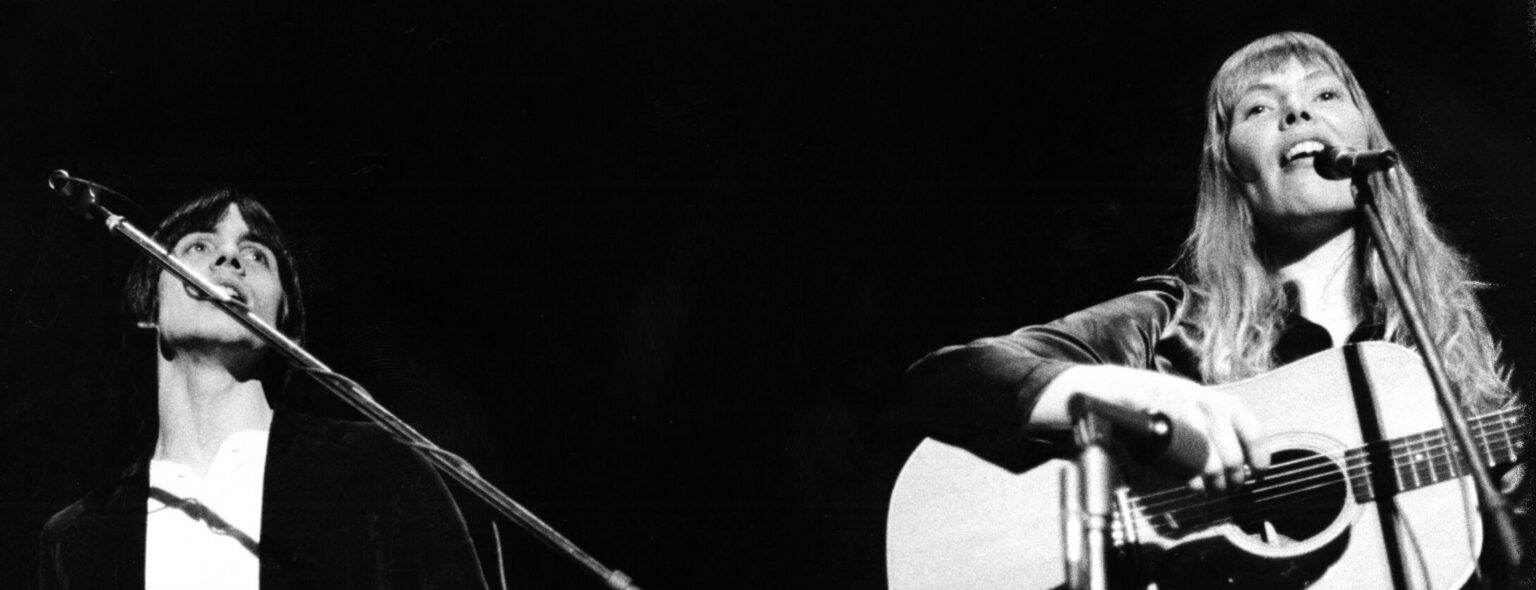

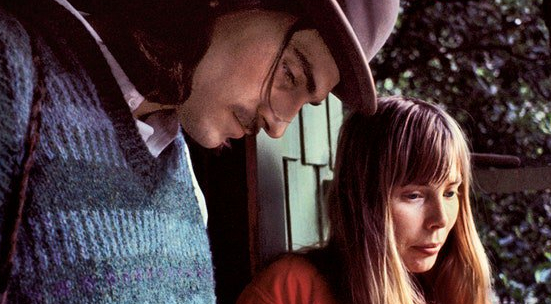

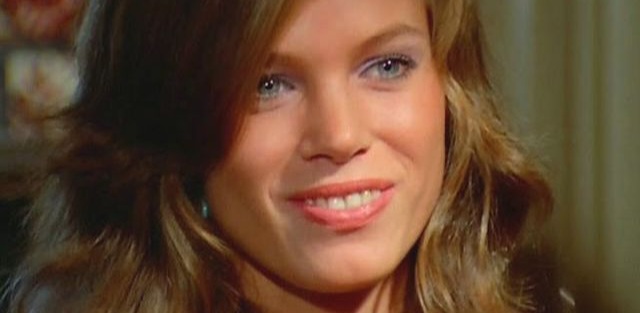








 soothfairy