Gilligan, Blair and the Iraq war

Whatever happened to Andrew Gillingham?

August 2023 | 1,250 words | Contents
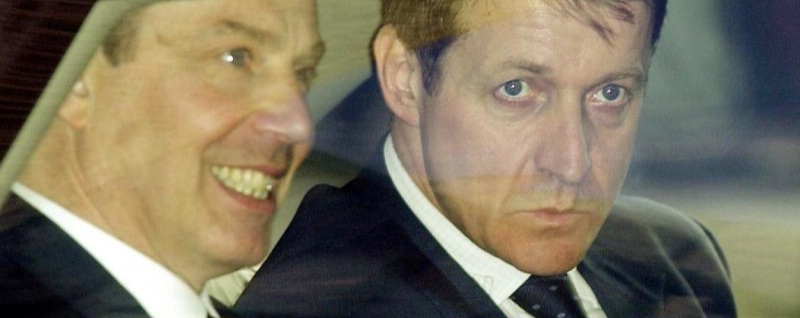
The sycophant and his rottweiler: UK premier Tony Blair and his director of communications Alastair Campbell in 2007 | Photo: Ben Curtis / PA


Gilligan, Blair and the Iraq war

Top🔺

Contents

Introduction
The ‘dodgy’ dossier
Gilligan’s Today report – and its aftermath
The Hutton inquiry
Fake intelligence and war
Whatever happened to Andrew Gilligan?
Misguided Muslim criticism of Gilligan


Gilligan, Blair and the Iraq war

Contents🔺

Introduction

In my post about the 2022 anti-Muslim Hindutva march in my home city of Leicester, UK, I said a Muslim activist who’d muddied the waters with misinformation had been exposed in 2014 as an Islamist. The reporter who exposed him was Andrew Gilligan.

Gilligan was the BBC reporter who in 2003 famously broke the ‘dodgy’ dossier story in the UK shortly after the Iraq war began. His report kicked off a massive row with the Labour government of premier Tony Blair.

Tragically, Gilligan’s source, civil servant David Kelly, committed suicide after being outed by Blair’s spin doctor, Alastair Campbell. Criticised by the inquiry into Kelly’s death, Gilligan was forced to resign from the BBC.

So was Gilligan a good journalist? Was his Islamism exposé reliable?

And whatever happened to him?


Gilligan, Blair and the Iraq war

Contents🔺

The ‘dodgy’ dossier

In 2002 in the wake of al-Qaeda’s 2001 9/11 attack on New York, idiotic US president George W Bush was planning to attack Iraq – and sought the UK’s support. Sychophantic UK premier Tony Blair agreed immediately, famously writing to Bush, ‘with you, whatever’.

In February 2003, UK government director of communications Alastair Campbell released a dossier assessing weapons of mass destruction (WMD) in Iraq. Crucially, Blair’s foreword to the dossier, referring to Iraqi president Saddam Hussein, said:

    ‘His military planning allows for some of the WMD to be ready within 45 minutes of an order to use them.’

    [My bolding]

In March 2003 sychophant Blair took the UK to war – without waiting for UN approval, and in spite of an anti-war protest in February in London by over one million people.


Gilligan, Blair and the Iraq war

Contents🔺

Gilligan’s Today report – and its aftermath

On 29 May 2003, Andrew Gilligan, then defence correspondent for Today, the BBC’s flagship radio news programme, reported that the February dossier’s ‘WMD in 45 minutes’ claim was unreliable, but had been added to make the dossier ‘sexier’.

After the broadcast, furious government director of communications Campbell went into spin overdrive; and went on the hunt for Gilligan’s source. But Gilligan and the BBC stood firm.

In June a newspaper article by Gilligan was titled:

    ‘I asked my intelligence source why Blair misled us all over Saddam’s weapons. His reply? One word: Campbell‘.

    [My bolding]

On 8 July spin doctor Campbell, having found Gilligan’s source, outed him to the media. The source was David Kelly, a top UK government weapons expert.

On 15 and 16 July, Kelly was questioned by parliamentary committees. Some of the questioning was overtly hostile.

On 17 July, Kelly died, supposedly by suicide.


Gilligan, Blair and the Iraq war

Contents🔺

The Hutton inquiry

In August 2003 the government appointed judge Brian ‘Lord’ Hutton to hold an inquiry into the circumstances surrounding the death of whistleblower David Kelly.

In his report in January 2004, Hutton concluded Kelly died by suicide.

As for the ‘circumstances’, Hutton’s BBC-bashing, government-whitewashing report deliberately missed the point: Blair’s dodgy dossier.

Ignoring most of the evidence presented, Hutton ridiculously exonerated the government of blame (apart from criticising them for not warning Kelly he was about to be named); and – even more ridiculously – said Andrew Gilligan’s original accusation was ‘unfounded’.

In the face of Hutton’s anti-BBC nitpicking, Gilligan admitted careless note-taking, and asserting some uncorroborated facts; and the BBC admitted editorial lapses.

Gilligan, the BBC chair and the BBC director-general resigned. In his resignation statement, Gilligan said:

    This report…seeks to hold reporters, with all the difficulties they face, to a standard that it does not appear to demand of, for instance, Government dossiers.


Gilligan, Blair and the Iraq war

Contents🔺

Fake intelligence and war

Despite the minor errors uncovered by the blinkered cavilling of Brian Hutton’s inquiry, Andrew Gilligan’s shocking report, far from being ‘unfounded’, as Hutton ridiculously claimed, was substantially true.

As David Kelly briefed and Gilligan reported, the dossier’s WMD claim was known to be highly unreliable but was nevertheless included to boost the case for war.

The ‘WMD in 45 minutes’ claim turned out to be, in fact, completely untrue – as did every single allegation in the dossier. The dossier had been cobbled together from various plagiarised non-intelligence sources.

Tony Blair claims he didn’t know the ‘intelligence’ was dodgy, but he’s widely disbelieved. Hence his nickname: Bliar.

Idiot Bush also used fake intelligence in the build-up to war. False information about al-Qaeda in Iraq was obtained by torture. The real US motive for the war was lucrative oil deals and private military contracts for idiot Bush’s billionaire friends.

World-wide protests by ten million people and Gilligan’s revelation of fake intelligence had no effect on the progress of the coalition’s ‘shock and awe’ bombardment.

UK operations ended in 2009. The US finally withdrew in 2011. By the end of the war, hundreds of thousands of people had died needlessly.

A brutal regime was deposed, but the unplanned aftermath, like the eight-year war, was a shambles. 12 years later, the country’s still ruined.

Blair’s reputation was deservedly destroyed.


Gilligan, Blair and the Iraq war

Contents🔺

Whatever happened to Andrew Gilligan?

Since the Iraq war controversy, Andrew Gilligan, having presumably improved his journalistic technique to avoid repeating the errors famously detailed in the Hutton report, has recovered his maligned reputation.

He’s been nominated for five awards, one of which he won.

In 2008 Gilligan was named Journalist of the Year by the UK Press Awards panel for his investigative reports into cronyism and corruption by Labour London mayor Ken Livingstone’s administration.

Gilligan’s award-winning work was described as ‘relentless investigative journalism at its best’.

In 2016, Gilligan lost his job as London editor of the right-wing Torygraph in a wave of redundancies. He joined Murdoch rag The Sunday Times.

In 2023, having held several policy adviser posts, Gilligan became a ‘special adviser’ (aka ‘spad’) – one of about 40, each on about £100k of tax-payers’ money! – to (useless) Tory prime minister Rishi Sunak.

As a spad, Gilligan’s credited with persuading Sunak to drop the northern extension of super-rail vanity project HS2.

(The electorate kicked the useless Tories out in July 2024.)

Having specialised in advising on transport, Gilligan, now a freelance journalist, writes articles on, for instance, why Labour’s rail nationalisation won’t work.

Gilligan’s also a ‘senior fellow’ and head of transport and infrastructure at Policy Exchange, the influential, anti-democratic, neoliberal, far-right, big-oil-funded, lobbyist ‘thinktank’.

So Gilligan’s a right-wing neoliberal. He’s a close friend of disgraced superclown Bonzo Johnson (former PM and self-seeking Tory liar); and his two most well-known journalistic targets were Labour politicians.

But despite that, and despite Hutton’s criticism, Gilligan’s basically a good journalist. He was right about Blair’s dodgy dossier – and he’s won a major journalism award.
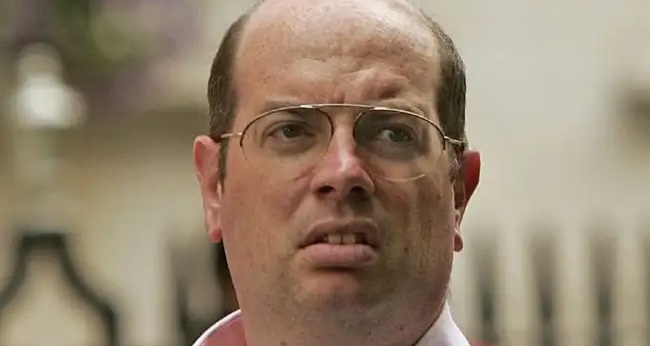
Not just a pretty face: Andrew Gilligan, award-winning journalist (and former political advisor to the former PM) | Photo: Scott Barbour / Getty

So, to answer the question that prompted this post, Gilligan’s exposé of the Leicester Muslim activist seems reliable.


Gilligan, Blair and the Iraq war

Contents🔺

Misguided Muslim criticism of Gilligan

Andrew Gilligan’s 2014 report of a Leicester Muslim activist as an Islamist was apparently one of many such exposés he made at that time. His anti-Islamism mission attracted some Muslim criticism – but that criticism was misguided.

Gilligan was criticised by Muslim websites including prominent British Muslim news website 5Pillars for his relentless – possibly obsessive – pursuit of Islamism in the UK.

A 2015 5Pillars article indignantly listed the many people and organisations outed by Gilligan.

(The list notably excluded 5pillars favourite Majid Freeman, the Leicester Muslim activist exposed by Gilligan in 2014. Delusional stirrer Freeman was involved in the 2022 Leicester riots and in 2024 was charged with terror offences.)

The 5Pillars article offered no refutations, only saying Gilligan’s campaign, mainly conducted, apparently, in the Torygraph, caused Islamaphobia:

    What is of greater concern is how The Telegraph … has allowed Gilligan to feed the general public with this dangerous rhetoric, which has played a significant role in the rise of Islamophobia and anti-Muslim hatred in the UK.

5Pillars and other Muslim websites criticised Gilligan for exposing Islamism, but they should have thanked him – for defending their religion. As with Hindutva and Hinduism, Islamism poisons Islam.

The controversial 5Pillars could address anti-Muslim feeling by rooting out Islamism themselves (and by not publishing homophobic material and false-flag conspiracy theories about Islamist terror attacks).

It’s not Gilligan’s anti-Islamism campaign that’s caused Islamophobia – it’s Islamism that does that.

The supportive or ambivalent attitude towards Islamism shown by some UK Muslims doesn’t help. Neither do the misconceived denials issued by Muslim representatives after Islamist atrocities.

What’s missing is a public campaign by UK Muslims against Islamism. They’d have to start by admitting that Islamism comes from Islam – but the insecure Muslim diaspora hates to admit fault.


Contents🔺

Top🔺

End

Fear of Islamophobia

In which I write a robust, generalised, secular humanist critique of Islam in the UK without being Islamophobic

image
Nice art – shame about the self-segregation Photo: Mohammad Reza Domiri Ganji

Warning: the following article contains strong opinions. Devout Muslims of simple faith may wish to move along; anyone else, please read on…

Am I Islamophobic, frightened of Islam? If I believed the many rabid anti-Islamic websites out there, saying that Muslim immigration is a Trojan horse, about to destroy democracy, I probably would be. But I dont; and I’m not.

Meanwhile, back in the real world, here in the UK, I’ll explain why I don’t much like Islam as it is at the moment; and how that doesn’t make me Islamophobic.

Fact: Oil-rich Saudi Arabia spends billions of dollars on the international promotion of Wahhabism/Salafism, widely recognised as one of fundamentalist Islam’s most extreme movements. Much of the money funds children’s education in British faith schools and mosques.

Fact: A headteacher friend told me that in her mainly-Muslim state primary school the day after 9/11, Muslim children were singing pro-Osama bin Laden chants.

Fact: There were demonstrations in London by Muslims against the war in Iraq and against offensive cartoons, but there have been no demonstrations against al-Qaeda or Isis. PR statements of condemnation and claims that Islam is a religion of peace are made, but Muslims have not accepted any responsibility for the brutal terrorism coming from within their religion. Many Muslims resort to elaborate conspiracy theories or blame foreign policy to justify denial.

Fact: A UK opinion poll has indicated significant support amongst Muslims for young Muslims who leave the UK to join fighters in Syria. Another poll showed that a significant number of UK Muslims believe the 2005 7/7 London bombings were justified because of the west’s war on terror.

Does writing those things in a blog make me Islamophobic?

Fact: Muslims are taught that they shouldn’t live in a non-Muslim country, but if they do, they shouldn’t befriend non-Muslims. (Actually, despite being a native non-believer – I’m agnostic – I find UK Muslims friendly. But the teaching is there.)

Fact: A religious message has been circulated calling for Muslims to foster or adopt refugee Muslim orphans to save them from the ‘alien environment’ of non-Muslim homes. (Many ‘alien’ non-Muslims had come forward, but very few righteous Muslims had done so.)

Is it Islamophobic to say those things?

Fact: According to supposedly reliable contemporaneous reports, the prophet Muhammad at the age of 54 began having penetrative sex with a nine-year old girl, who’d been his ‘wife’ since the age of six.

Islamophobia?

The accusation of Islamophobia is the knee-jerk defensive response by Muslim spokespeople to any criticism of Islam. This is like the accusation of antisemitism made in response to any criticism of Israel or Zionism. (See my blog on the weird word ‘antisemitism‘.)

Words matter. As a critic of Islam, am I Islamophobic? The suffix ‘phobia’ can mean ‘aversion’, but it’s usually taken to mean ‘irrational fear’ (as in ‘claustrophobia’, meaning fear of enclosed spaces). The widespread use of the word ‘Islamophobia’ deflects criticism. Critics must be either irrational or fearful or both, so they can be ignored. Say the magic word, and the criticism doesn’t need to be addressed.

Am I irrationally frightened of Islam? We all could be rationally frightened of Islam, after the horrors of 9/11 and 7/7. (I say ‘we all’, because some of the victims were Muslims.) But personally, in spite of that, I’ve got no fear of Islam – rational or irrational – or of Muslims in general. So no, I’m not Islamophobic.

Anti-Islamic‘ is better than ‘islamophobic’, but that’s not quite right either for a liberal critic of Islam. What if you don’t like Islam as it is, but you’re not actually against it? There should be a suffix or prefix for ‘dislike it as it is at the moment’ – but there isn’t.

There’s a long-term grumbling undercurrent in the British host community of semi-coherent resentment of the post-war immigration project. The sudden influx of large numbers of foreign people, many with foreign languages and religions, was a shock.

If the host community had been consulted and had agreed to mass immigration, there might gave been a more welcoming and trusting environment, which might have made integration more successful.

(My post, Patriotism – for scoundrels addresses the current policy of trying to promote integration by teaching ‘British values‘ in schools.)

When resentment and distrust are aimed at Muslims, as they sadly often are, ‘Islamophobia’ is as good a word as any to describe it. But it won’t do as a blanket response to any criticism.

Openly anti-Islamic racist groups in the UK and Europe try to stir up fear of Islam, but fortunately they have little support in the UK. However, any western criticism of Islam inevitably risks conflation with racism. Most UK Muslims are of Pakistani or Bangladeshi origin and are therefore, like all immigrant communities, victims of racism.

Victimhood can become a bad habit – hence, perhaps, the over-use of the provocatively misleading word ‘Islamophobia’ – but the victims aren’t to blame. As the Archbishop of Canterbury has said, racism is deeply embedded in British culture. Liberal critics of Islam should tread lightly.

(Racism is a different – albeit, related – subject, with its own deep-rooted complexity. See my post Racism explained as a redundant instinct, which includes a detailed account of the racism-provoking self-segregation practised by a large minority of UK Muslims.)

Is there such a person as a moderate Muslim? Google it, and you find many writers and thinkers, both Muslim and non-Muslim, saying ‘No’. The Muslim ‘No’ argument is that it’s not acceptable to be moderately dedicated to Islam; ‘moderate’ Muslims are on the slippery slope to apostasy and Hell.

Ordinary Muslims – decent, honest and friendly – are moderate, aren’t they? Thats what an anxious host community would like to think. But a powerful and communal ideological commitment combined with a sense of being beleaguered can nudge the most ordinary person into a bunker mentality.

(UK Muslims’ sense of being beleaguered, or even persecuted, is somewhat ridiculous when compared to real persecution. See my article about the previously saintly Aung San Suu Kyi and her Myanmar goverment’s brutal persecution of the Rohingya Muslims, Halo Goodbye, Suu – the Rohingya crisis.)

Moderate or not, Muslims say that Islam isn’t just a religion, it’s a way of life – one which must be preserved, and not be contaminated by integration with the decadent host community. This reluctance to integrate is the cause of most of the criticism, and of the consequent paranoid accusations of Islamophobia.

Symptoms of the host community’s supposed decadence include our acceptance of homosexuality and equality for women, and our lack of religious faith.

Young UK Muslims are often torn between the Islamic lifestyle – which secures their position in their extended family and the wider Muslim community – and the western lifestyle, which isn’t really that decadent, and which has attractions other than the merely material – mainly, the freedom to live how you want, within the protective barrier of reason and secular law.

This tension is expressed in a few cases by joining Isis (to escape temptation and see the world); or lapsing; and in most cases isn’t expressed at all, but simply bubbles under the surface. Perhaps surprisingly, many Muslim families have one or more lapsed or semi-lapsed members who are still very much part of the family.

In any case, the non-western lifestyle of most UK Muslims is not purely Islamic. Pakistani and Bangladeshi cultural traditions – north Indian, as they were for centuries before partition – are mixed with Islamic principle. For instance, most Islamic weddings ignore Quran-ordained simplicity in favour of expensive three-day celebrations with lavish gifts of gold jewellery and clothes.

Other unislamic traditions are less benign. Most UK ‘honour’ killing victims from 2009 to 2014 were of Pakistani origin. (1)

Muslims are entitled, of course, to preserve their way of life (within the law of the land), whether it’s strictly religious or not. There are other insular ethnic-religious groups in the UK that insist on keeping to a special lifestyle – for example, orthodox Jews. But Muslims are the only such group who’s religion is associated with worldwide sectarian and anti-west violence.

Muslims often say that the violence is unislamic. Even if that’s accepted (perhaps with some scepticism), there’s a worrying tendency for the culture of Islam in the west to self-segregate into an ideological supremacist fortress – nicely symbolised by the provocative wearing of eye-slit face veils.

Secular humanists look on with wariness and some distaste – but not Islamophobia.

Top 🔼

Footnote

(1)’Honour’ killing victims: Of the 22 out of 29 reported cases of ‘honour’ killings and attempted killings in 2010 where the ethnicity of the victim was known or alleged, 15 were of Pakistani origin (3 were Indian, 1 was Bangladeshi, 1 Palestinian/Syrian, 1 Kuwaiti and 1 white British) – The Henry Jackson Society database – reported cases of ‘honour’ killings and attempted killings in the UK between 31 December 2009 and 31 December 2014.

(The neoconservative HJS has form for being anti-Islamic, but these statistics appear to be sound.)

Back to link

Top 🔼

Postscript 1

I put this to some Muslim scholars, liberals and reformers. So far, there have been two respondents, both reformers. They say that Islam needs to shed man-made sects (Sunnism, Sufism and Shiitism), disregard the extra texts (hadiths) and rely on the Quran, the interpretation of which is human and fallible. However, reform can have a bad side. The Wahabi/Salafi movement is a reformist movement, albeit an ultra-conservative Sunni one. Christian Reformation’s Martin Luther, a nasty piece of work, was calling for the burning of synagogues some 500 years ago. Thank goodness for the Enlightenment.

Muhammad’s nine-year old ‘wife’

One respondent said that the hadith about Muhammad having sex with his nine-year old ‘wife’, Aisha, is fabricated. However, there are apparently many supposedly reliable hadiths attesting to this ‘consummation of marriage’.

Some Muslims argue that Aisha was aged between 15 and 19 when the marriage was consumated, but most Muslims seem to accept that it happened when the girl was nine. Many Muslims apparently deal with criticism about it by saying that in a tropical climate, as in Arabia, girls reach puberty earlier, and that the nine-year-old must have been sexually mature.

I haven’t found any scientific evidence of earlier female puberty due to a hot climate. (I found some contradictory evidence: that girls mature later in hot climates.)

In any case, the idea of a 54-year-old man having sex with a nine-year-old girl, even if by by some freak of nature she’d reached puberty, seems profoundly wrong – at any point in history.

(There are also claims in anti-Islamic sites that Muhammad practised ‘thighing‘ on his child bride before she was nine. None of the ‘evidence’ links work. This appears to be a complete fabrication.)

Back to link

Top 🔼

Postscript 2

A UK Guardian article by political editor Anushka Asthana reported the concerns of a leading expert on race and integration that British society is increasingly divided along ethnic lines, with segregation in schools, neighbourhoods and workplaces. In another article in the same edition, Labour MP Chuka Umunna warned of a ‘more ethnically segmented nation‘. Neither article explicitly mentioned Muslim communities, but both mentioned Oldham, a town in Greater Manchester which in 2001 was the scene of violent ethnically-motivated rioting between between local and Muslim communities.

So how come two commentators gave views on increasing segregation without mentioning the Muslim community?

The first Guardian article mentioned above gave the views of Professor Ted Cantle. I emailed Cantle, Chukka Umunna and Anushka Asthana, asking if they’d avoided mentioning Muslims. Umunna and Asthana haven’t replied (but see Update 2, below). Cantle replied, saying: ‘I would very much like details of the extent of segregation of Muslim and other faith communities. Unfortunately most of the analysis is in relation to ethnicity. I suspect that Muslim communities have become more isolated, as they feel somewhat beleaguered, and other communities have moved away from Muslim-associated areas.’ (My bolding.)

On this blog article, he said: ‘I am wary of over-generalisations about the Muslim community. I have learnt over the last 15 years just how diverse it is – theologically, culturally, politically, nationally, socially etc. I thought your blog failed to represent this diversity, even if some of the points may have been fair comment.’ Ouch.

On the first point, surely ‘Pakistani’ is effectively synonymous with ‘Muslim’, so if you know that people’s ethnicity is Pakistani, you know their faith is Muslim; and it’s common knowledge that Muslim communities tend to choose segregation, especially in the case of education, for religious reasons.

I put this to Prof Cantle. He said that (contrary to what I was suggesting) most Muslims are not Pakistani. He referred me to a residential-pattern analysis of the 2011 census figures, which does indeed show that in 2011 there were 2.7 million Muslims, but only 1.1 million people of Pakistani origin. That’s a surprisingly (surprising to me, anyway) low 40%. (A further 646,000 people were of Bangladeshi, Turkish or Somali origin, and there were about 100,000 converts, leaving about 900,000 Muslims of unknown ethnic origin. Apparently.)

Fair enough – the census has spoken. So why did I think that most UK Muslims were of Pakistani origin? I think it’s because whenever Muslims appear in the UK media, whether ordinary people, politicians, community leaders, writers, artists, actors, musicians or TV pundits, they’re nearly always of Pakistani origin. In other words, UK Muslim culture is represented by people of Pakistani origin. So arguably, when analysing UK trends, ‘Pakistani’ and ‘Muslim’ are effectively interchangeable.

Also, the census analysis addresses residential segregation; but what about educational segregation? That subject was discussed at length in the Guardian article – without any mention of faith groups. Can there really be no details available of the extent of educational segregation of Muslim and other faith groups? It’s well known that Muslims choose educational segregation for religious reasons, and that this has been a matter of high-profile public concern for some time (eg, the murky but inconclusive Trojan Horse affair). So it’s difficult to see how this can be overlooked in an in-depth expert review of the subject. (And what about the Wahabi/Salafi oil money funding UK faith schools?)

Other faiths have their own conservative schools, of course, most of which are funded by the state – whereas Muslim schools, on the whole, aren’t. The solution, though, is not to have more state-funded Muslim schools, but to end all state-funded faith schools, and enforce the teaching of the Enlightenment values of liberty, self-determination and personal responsibility that Western liberal democracy is built on. Western values, if you like. (Just dont call them ‘British’ values. See more on the legislation requiring the teaching of British values in my blog article, ‘Patriotism – for scoundrels‘.)

In any case, Muslim self-segregation applies to other areas of life as well.

I’ve since found that, contrary to what Prof Cantle said, there is published research on faith-based segregation. But for whatever reason, Cantle, Umunna and The Guardian are not discussing this. I suspect that the reason is their fear of being thought to be Islamophobic or – even worse – politically incorrect.

Top 🔼

Update 1

Another integration expert, Professor Tariq Modood, has told me that only 7% of Muslims choose Muslim faith-schools as compared with 50% of Jews.

However, that may be a function of the very low number of state-sanctioned Muslim schools as compared with other faiths. Also, the perception of educational segregation comes not so much from the numbers as from the illiberal Wahabi/Salafi teaching that is sought to be imposed.

Top 🔼

Update 2

Guardian polical editor Anushka Asthana (see Postscript 2, above) has finally replied (after some prompting) to my question about the two Guardian articles that discussed segregation without mentioning Muslims. She didn’t refer to the Chukka Umunna article; but she said that in her article, Prof Cantle did mention faith schools. However, I think the Guardian should set things right by explicitly addressing Muslim self-segregation.

Top 🔼

Please feel free to comment