
Whatever happened to Andrew Gillingham?
August 2023 | 1,250 words | Contents
Gilligan, Blair and the Iraq war
Contents
Introduction
The ‘dodgy’ dossier
Gilligan’s Today report – and its aftermath
The Hutton inquiry
Fake intelligence and war
Whatever happened to Andrew Gilligan?
Misguided Muslim criticism of Gilligan
Gilligan, Blair and the Iraq war
Introduction
In my post about the 2022 anti-Muslim Hindutva march in my home city of Leicester, UK, I said a Muslim activist who’d muddied the waters with misinformation had been exposed in 2014 as an Islamist. The reporter who exposed him was Andrew Gilligan.
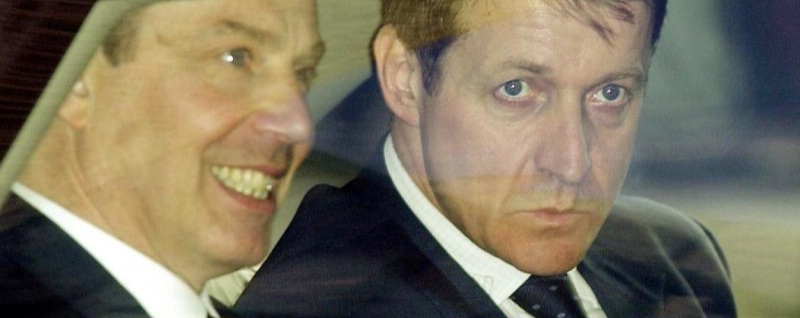
Gilligan was the BBC reporter who in 2003 famously broke the ‘dodgy’ dossier story in the UK shortly after the Iraq war began. His report kicked off a massive row with the Labour government of premier Tony Blair.
Tragically, Gilligan’s source, civil servant David Kelly, committed suicide after being outed by Blair’s spin doctor, Alastair Campbell. Criticised by the inquiry into Kelly’s death, Gilligan was forced to resign from the BBC.
So was Gilligan a good journalist? Was his Islamism exposé reliable?
And whatever happened to him?
Gilligan, Blair and the Iraq war
The ‘dodgy’ dossier
In 2002 in the wake of al-Qaeda’s 2001 9/11 attack on New York, idiotic US president George W Bush was planning to attack Iraq – and sought the UK’s support. Sychophantic UK premier Tony Blair agreed immediately, famously writing to Bush, ‘with you, whatever’.
In February 2003, UK government director of communications Alastair Campbell released a dossier assessing weapons of mass destruction (WMD) in Iraq. Crucially, Blair’s foreword to the dossier, referring to Iraqi president Saddam Hussein, said:
- ‘His military planning allows for some of the WMD to be ready within 45 minutes of an order to use them.’
[My bolding]
In March 2003 sychophant Blair took the UK to war – without waiting for specific UN approval, and in spite of an anti-war protest in February in London by over one million people.
Gilligan, Blair and the Iraq war
Gilligan’s Today report – and its aftermath
On 29 May 2003, Andrew Gilligan, then defence correspondent for Today, the BBC’s flagship radio news programme, reported that the February dossier’s ‘WMD in 45 minutes’ claim was unreliable, but had been added to make the dossier ‘sexier’.
After the broadcast, furious government director of communications Campbell went into spin overdrive; and went on the hunt for Gilligan’s source. But Gilligan and the BBC stood firm.
In June a newspaper article by Gilligan was titled:
- ‘I asked my intelligence source why Blair misled us all over Saddam’s weapons. His reply? One word: Campbell‘.
[My bolding]
On 8 July spin doctor Campbell, having found Gilligan’s source, outed him to the media. The source was David Kelly, a top UK government weapons expert.
On 15 and 16 July, Kelly was questioned by parliamentary committees. Some of the questioning was overtly hostile.
On 17 July, Kelly died, supposedly by suicide.
Gilligan, Blair and the Iraq war
The Hutton inquiry
In August 2003 the government appointed judge Brian ‘Lord’ Hutton to hold an inquiry into the circumstances surrounding the death of whistleblower David Kelly.
In his report in January 2004, Hutton concluded Kelly died by suicide.
As for the ‘circumstances’, Hutton’s BBC-bashing, government-whitewashing report deliberately missed the point: Blair’s dodgy dossier.
Ignoring most of the evidence presented, Hutton ridiculously exonerated the government of blame (apart from criticising them for not warning Kelly he was about to be named); and – even more ridiculously – said Andrew Gilligan’s original accusation was ‘unfounded’.
In the face of Hutton’s anti-BBC nitpicking, Gilligan admitted careless note-taking, and asserting some uncorroborated facts; and the BBC admitted editorial lapses.
Gilligan, the BBC chair and the BBC director-general resigned. In his resignation statement, Gilligan said:
- This report…seeks to hold reporters, with all the difficulties they face, to a standard that it does not appear to demand of, for instance, Government dossiers.
Gilligan, Blair and the Iraq war
Fake intelligence and war
Despite the minor errors uncovered by the blinkered cavilling of Brian Hutton’s inquiry, Andrew Gilligan’s shocking report, far from being ‘unfounded’, as Hutton ridiculously claimed, was substantially true.
As David Kelly briefed and Gilligan reported, the dossier’s WMD claim was known to be highly unreliable but was nevertheless included to boost the case for war.
The ‘WMD in 45 minutes’ claim turned out to be, in fact, completely untrue – as did every single allegation in the dossier. The dossier had been cobbled together from various plagiarised non-intelligence sources.
Tony Blair claims he didn’t know the ‘intelligence’ was dodgy, but he’s widely disbelieved. Hence his nickname: Bliar.
Idiot Bush also used fake intelligence in the build-up to war. False information about al-Qaeda in Iraq was obtained by torture. The real US motive for the war was lucrative oil deals and private military contracts for idiot Bush’s billionaire friends.
World-wide protests by ten million people and Gilligan’s revelation of fake intelligence had no effect on the progress of the coalition’s ‘shock and awe’ bombardment.
UK operations ended in 2009. The US finally withdrew in 2011. By the end of the war, hundreds of thousands of people had died needlessly.
A brutal regime was deposed, but the unplanned aftermath, like the eight-year war, was a shambles. 12 years later, the country’s still ruined.
Blair’s reputation was deservedly destroyed.
Gilligan, Blair and the Iraq war
Whatever happened to Andrew Gilligan?
Since the Iraq war controversy, Andrew Gilligan, having presumably improved his journalistic technique to avoid repeating the errors famously detailed in the Hutton report, has recovered his maligned reputation.
He’s been nominated for five awards, one of which he won.
In 2008 Gilligan was named Journalist of the Year by the UK Press Awards panel for his investigative reports into cronyism and corruption by Labour London mayor Ken Livingstone’s administration.
Gilligan’s award-winning work was described as ‘relentless investigative journalism at its best’.
In 2016, Gilligan lost his job as London editor of the right-wing Torygraph in a wave of redundancies. He joined Murdoch rag The Sunday Times.
In 2023, having held several policy adviser posts, Gilligan became a ‘special adviser’ (aka ‘spad’) – one of about 40, each on about £100k of tax-payers’ money! – to (useless) Tory prime minister Rishi Sunak.
As a spad, Gilligan’s credited with persuading Sunak to drop the northern extension of super-rail vanity project HS2.
(The electorate kicked the useless Tories out in July 2024.)
Having specialised in advising on transport, Gilligan, now a freelance journalist, writes articles on, for instance, why Labour’s rail nationalisation won’t work.
Gilligan’s also a ‘senior fellow’ and head of transport and infrastructure at Policy Exchange, the influential, anti-democratic, neoliberal, far-right, big-oil-funded, lobbyist ‘thinktank’.
So Gilligan’s a right-wing neoliberal. He’s a close friend of disgraced superclown Bonzo Johnson (former PM and self-seeking Tory liar); and his two most well-known journalistic targets were Labour politicians.
But despite that, and despite Hutton’s criticism, Gilligan’s basically a good journalist. He was right about Blair’s dodgy dossier – and he’s won a major journalism award.
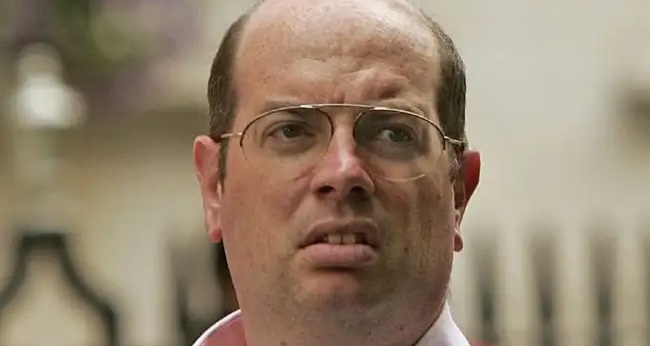
So, to answer the question that prompted this post, Gilligan’s exposé of the Leicester Muslim activist seems reliable.
Gilligan, Blair and the Iraq war
Misguided Muslim criticism of Gilligan
Andrew Gilligan’s 2014 report of a Leicester Muslim activist as an Islamist was apparently one of many such exposés he made at that time. His anti-Islamism mission attracted some Muslim criticism – but that criticism was misguided.
Gilligan was criticised by Muslim websites including prominent British Muslim news website 5Pillars for his relentless – possibly obsessive – pursuit of Islamism in the UK.
A 2015 5Pillars article indignantly listed the many people and organisations outed by Gilligan.
(The list notably excluded 5pillars favourite Majid Freeman, the Leicester Muslim activist exposed by Gilligan in 2014. Delusional stirrer Freeman was involved in the 2022 Leicester riots and in 2024 was charged with terror offences.)
The 5Pillars article offered no refutations, only saying Gilligan’s campaign, mainly conducted, apparently, in the Torygraph, caused Islamaphobia:
-
What is of greater concern is how The Telegraph … has allowed Gilligan to feed the general public with this dangerous rhetoric, which has played a significant role in the rise of Islamophobia and anti-Muslim hatred in the UK.
5Pillars and other Muslim websites criticised Gilligan for exposing Islamism, but they should have thanked him – for defending their religion. As with Hindutva and Hinduism, Islamism poisons Islam.
The controversial 5Pillars could address anti-Muslim feeling by rooting out Islamism themselves (and by not publishing homophobic material and false-flag conspiracy theories about Islamist terror attacks).
It’s not Gilligan’s anti-Islamism campaign that’s caused Islamophobia – it’s Islamism that does that.
The supportive or ambivalent attitude towards Islamism shown by some UK Muslims doesn’t help. Neither do the misconceived denials issued by Muslim representatives after Islamist atrocities.
What’s missing is a public campaign by UK Muslims against Islamism. They’d have to start by admitting that Islamism comes from Islam – but the insecure Muslim diaspora hates to admit fault.
End
 soothfairy