
An investigation
Begun April 2022 | 3,000 words | Contents
Digest
Q: Where has Black Lives Matter gone?
A: It’s disappeared back down the postmodern rabbit hole of intersectional identity politics it came from – but the antiracist flame it sparked burns on.
Update, 2025: Psycho Trump is trying to blow the flame out.

Whatever happened to Black Lives Matter?
Contents
- Introduction
- Coming apart?
- BLM’s postmodern mission
- What’s wrong with postmodernism?
- What next?
- Update: the Transparency Center
Whatever happened to Black Lives Matter?
Introduction
Started outstanding

In 2020, Black Lives Matter was big. Huge. Then it kind of faded. What was it? Was it a hashtag, a slogan, a protest movement, a campaign – or what? And what happened to it?
The Black Lives Matter movement was started in the US in 2013 by a small group of radical black feminists after the acquittal of a neighbourhood watch coordinator who shot and killed an unarmed black 17-year-old, Trayvon Martin.
The hashtag #BlackLivesMatter spread on social media, and the project expanded into a national network of local ‘chapters’.
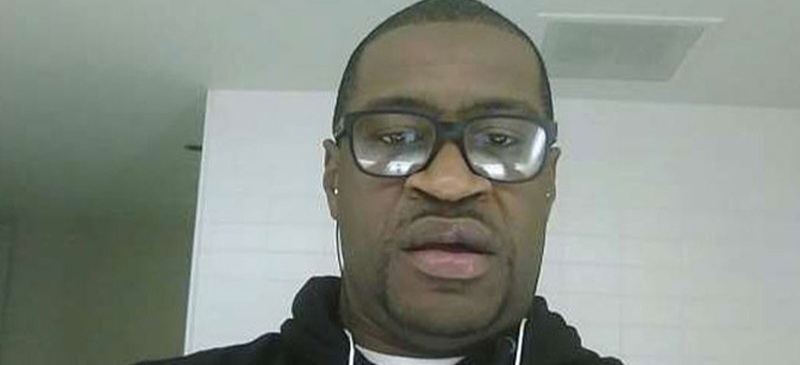
The movement returned to the headlines in 2020 when an unarmed black man, George Floyd, was killed by a police officer. There was widespread disgust, and BLM grew into an international campaign.
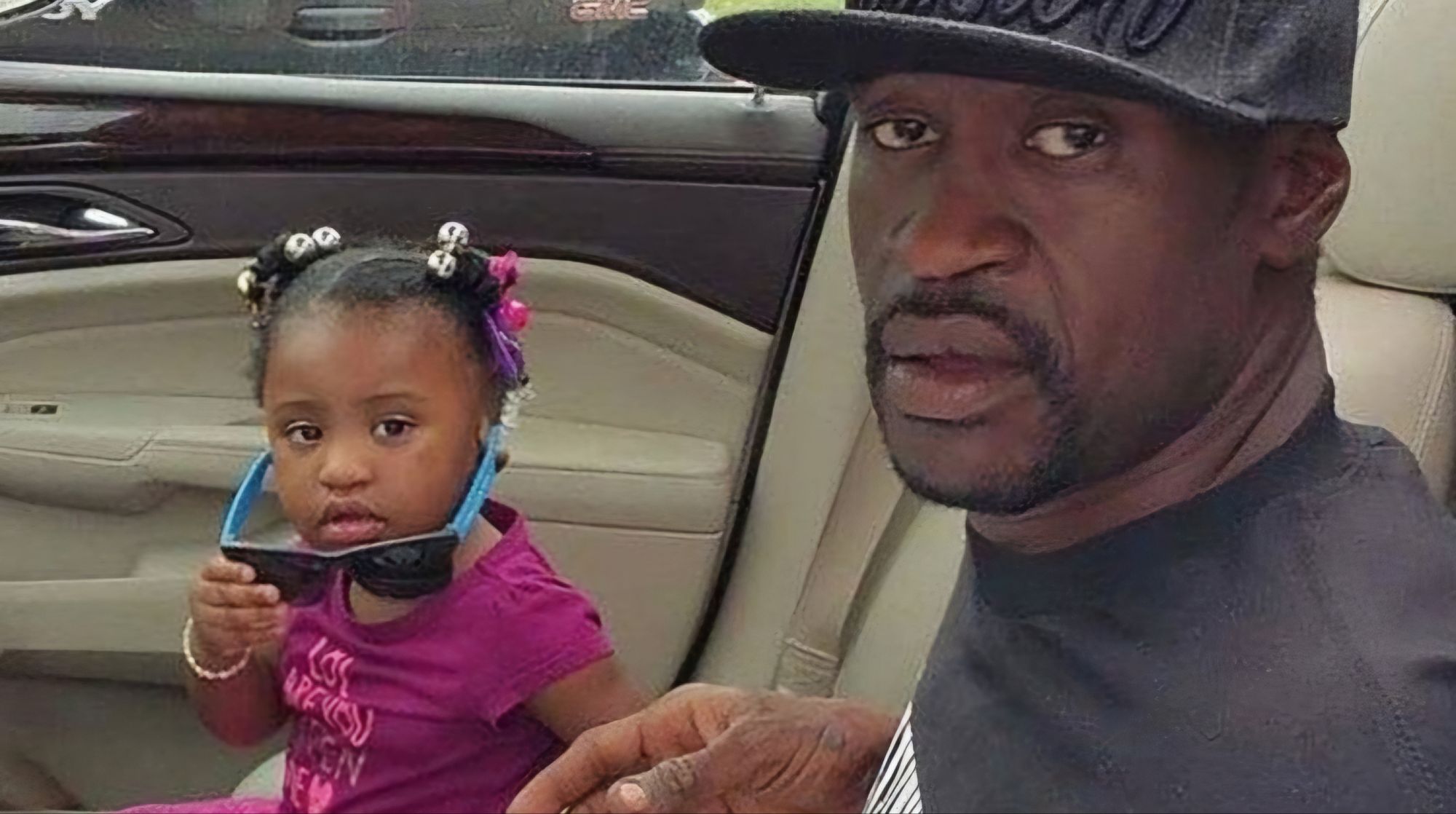
Here in the UK, BLM got much support – and some opposition. Racists promoted the smug counter-slogan ‘White Lives Matter’ and the more insidious ‘All Lives Matter’.
As a white anti-racist (-Hi!-), I’ve written a long-form blogpost on racism. I added a section about the racist slogan, White Lives Matter.
Whilst updating that section, I looked into what had happened to Black Lives Matter and discovered this tale of the unexpected. I put it in a footnote and then this separate post.
Despite white allyship being controversial, I considered myself a white ally of BLM. Now, I’m not so sure. Next time the badge falls off, I might not put it back.
(Update, June 2022 – the badge fell off. I didn’t put it back on my jacket. Knowing what I know now, I’d feel a fool. I put it on the shelf: a memento of innocent enthusiasm.)
Whatever happened to Black Lives Matter?
Coming apart?
The centre didn’t hold
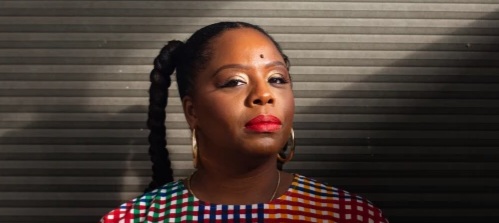
After the killing of George Floyd in 2020, some $90m was donated to Black Lives Matter. Yes. 90. Million.
BLM grew fast – perhaps too fast for the small group of organisers to keep up. A year later, the disorganised organisation started to come apart.
BLM’s main organisation is the Black Lives Matter Global Network Foundation. There’s also an international network of locally based chapters.
In February 2021 the foundation said it gave $21.7m to BLM chapters, and its expenses were $8.4m. That left about $60m unexplained.
In May 2021 Patrisse Cullors, one of the three BLM founders, announced she was standing down as executive director of the foundation.
In February 2022 in a UK Guardian interview*, Cullors tearfully explained she resigned after the movement got black criticism for lack of transparency about the donations.
An April 2022 Washington Post column* criticised BLM’s use of its donations, including the secret purchase in 2020 of a $6m house in California.
The WP column drew on an April 2022 investigative article* on New York magazine news website Intelligencer about the BLM house, a 6,500-square-foot compound in Studio City, Los Angeles.
The Intelligencer article is hidden from the hard-up (like me) behind a paywall, but according to WP, it reported a $6m shambles:
- BLM said the Studio City house was both a ‘safehouse’ and a place providing:
- ‘Recording resources and dedicated space for Black creatives to launch content online and in real life focused on abolition, healing justice, urban agriculture and food justice, pop culture, activism, and politics’.
- The article said the only content produced there was a few videos made by Cullors for her YouTube channel.
- On Twitter, in advance of the Intelligencer report, BLM urged followers:
- ‘Spread the word: we are redefining what it means to be an activist in this generation with our new Fellowship and Creator House‘.
- On Instagram, Cullors said the purchase hadn’t been announced earlier because:
- ‘The property needed repairs and renovation‘.
In a May 2022 AP News interview*, Cullors denied wrongdoing but acknowledged she’d used the Studio City compound for non-BLM purposes, hosting parties to celebrate the inauguration of Joe Biden and Kamala Harris, and her son’s birthday. She said:
* Lest it be suspected these pieces challenging BLM were by racist white hacks, they were all by award-winning black journalists: Nesrin Malik (Guardian), Karen Attiah (Washington Post), Sean Campbell (New York/Intelligencer) and Aaron Morrison (AP News).
There’s more. BLM leaders, friends and family have apparently had large consultancy payouts; and the $6m house was apparently bought from a developer friend who’d recently paid $3m for it.
Sorry – racist white hacks may well have been involved in the sources for the above paragraph: they’re both from the right-wing UK Daily Mail. The Mail refers to revelations in New York Magazine – but that’s behind the pesky paywall.
The impression given by the many articles and comments about all this – and by BLM’s defensive and obfuscatory response – is that BLM is more like a nepotistic cult than a well-run campaign organisation.
However, BLM’s financial irregularities seem a matter of incompetence and mission-drift with a dash of ‘looking after’ people, rather than full-on fraud. Cullors said:
- Black people in general have a hard time with money. It’s a trigger point for us.
In spite of the irregularities, Black Lives Matter hasn’t quite come apart.
The BLM website gives the impression that all is well. But it’s not – as its mixed-up mission statement shows.
Whatever happened to Black Lives Matter?
BLM’s postmodern mission
Down the rabbit hole

So what’s Black Lives Matter about? Supporters may have assumed its idea was to oppose racist violence and institutional racism – but it’s more complicated than that.
According to BLM’s About page, its mission is to:
- Eradicate white supremacy and build local power to intervene in violence inflicted on Black communities by the state and vigilantes
So far, so on-point. But the About page then gets more radical:
- We affirm the lives of Black queer and trans folks, disabled folks, undocumented folks, folks with records, women, and all Black lives along the gender spectrum. Our network centers those who have been marginalized within Black liberation movements.
There’s more like that: support for black people marginalised in black movements. Fair enough – but is that what the millions of BLM supporters and donors signed up for?
According to a thoughtful 2021 National Affairs article, BLM’s founders have said their ideology is rooted in postmodern cultural theory. The article said:
- A few rabid souls have ferreted out what they regard as the Marxist foundations of BLM. But this gives its prime movers too much credit. BLM has been shaped more by post-modern cultural theory than by Marxism. By their own account, the three young women who ignited this proudly “leaderless” movement have been shaped primarily by feminism and queer theory. Hence their vitriolic critique of the male-dominated black church, not to mention the traditional family.
This analysis evokes the controversial phenomena of intersectional identity politics and critical race theory.
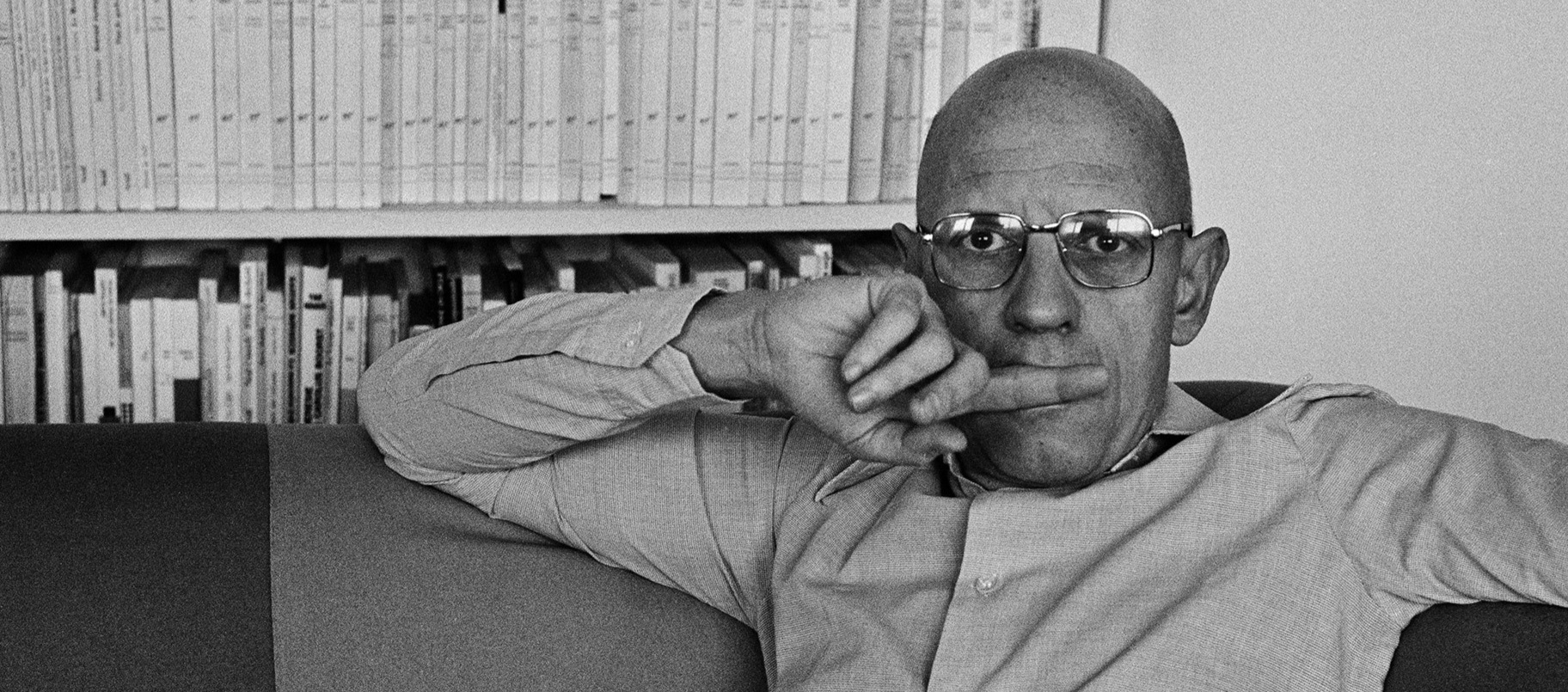
Identity politics emerged in the 1960s and 70s from French postmodernism (which emerged in the 1950s and 60s mainly from the writings of Michel Foucault and Jacques Derrida).
Identity politics enables people of a particular ethnicity or other identifying factor to develop a political agenda based on their identity and their sense of oppression.
Some advocates of identity politics take an intersectional approach, addressing the range of interacting systems of oppression which result from people’s various identities.
Apparently, the complex route from postmodernism to identity politics involved:
- Critique of modern reductionism
- Abstract universalism
- A kind of essentialism
- Foucault’s genealogical politics
(Foucault apparently wasn’t the godfather of identity politics. Although he challenged ideas of power structure and championed marginalised groups, he criticised ‘essentialism’ – where groups are defined by fixed characteristics – saying it limited freedom and reinforced inequality. Foucault said, controversially, ‘The self is not given…we have to create ourselves’.)
The fragmentation of the 60s ‘movement’ into 70s ‘new social movements’ led to the first written use of the term ‘identity politics’ – in a 1977 statement by US black, feminist, lesbian socialist group the Combahee River Collective. An excerpt:
- Our politics evolve from a healthy love for ourselves, our sisters and our community which allows us to continue our struggle and work. This focusing upon our own oppression is embodied in the concept of identity politics. We believe that the most profound and potentially most radical politics come directly out of our own identity, as opposed to working to end somebody else’s oppression.
My bolding
The radical BLM mission statement seems to continue the Combahee River Collective’s theme. BLM co-founder Patrisse Cullors has described herself and her fellow organizers as ‘trained Marxists’. BLM has been sarcastically dubbed ‘Black Lesbian Marxists’.
Critical race theory (CRT) – also a branch of postmodernism – first arose, like identity politics, in the 1970s. According to Wikipedia, it’s:
- a cross-disciplinary intellectual and social movement of civil-rights scholars and activists who seek to examine the intersection of race, society, and law in the United States and to challenge mainstream American liberal approaches to racial justice…A key CRT concept is intersectionality
My bolding
In 2022 US conservatives publicly complained about the supposed surge in critical race theory being taught in colleges and universities.
However, an Aljazeera online opinion piece by a US professor said CRT informs BLM and that’s what scares the conservatives:
- The significance of Critical Race Theory at this particular juncture in American history is the way a sustained course of the theoretical groundwork now informs … Black Lives Matter. This fruitful dialectic between an academic theory and a grassroots social uprising is what frightens the custodians of the status quo who are fighting tooth and nail to protect and preserve their race and class privileges.
My bolding
That was fine, but perhaps BLM supporters wanted to stop police killing black men rather than have a fruitful dialectic with an academic theory.
Supporters – and donors – might have sympathised with the complex and passionate ideas in BLM’s radical mission statement, but might have been surprised to learn BLM wasn’t the focussed and well-organised campaign against racist murder they – reasonably – expected it to be.
The Black Lives Matter mission, apparently inspired by postmodern intersectional identity politics, made BLM seem more like Snowflake City than a campaign coordinator.
Whatever happened to Black Lives Matter?
What’s wrong with postmodernism?
It betrays the oppressed

The ineffectiveness of the Black Lives Matter organisation is – partly, at least – the fault of postmodernism.
Postmodernism is playful, exciting and seductive, but when its theories inform and shape a campaign against racism, it’s a dangerous rabbit hole.
The danger of postmodernism in this context was nailed by the late Ambalavaner Sivanandan, a founder and director of UK anti-racist thinktank the Institute of Race Relations. Sivanandan accused postmodernists of betrayal.
In his book Catching History on the Wing – Race, Culture and Globalisation, Sivanandan wrote:
- The intellectuals have defected, and walled themselves up behind a new language of privilege… To justify their betrayal, the postmodernists have created a whole new language of their own which allows them to appropriate struggle without engaging in it.
My bolding
Taking on the job abandoned by the treacherous postmodernists, Sivanandan analysed the ‘market’-driven symbiosis of poverty and murderous racism with angry eloquence:
- Racism and imperialism work in tandem, and poverty is their handmaiden. And it is that symbiosis between racism and poverty that, under those other imperatives of multinational capitalism, the free market and the enriching of the rich, has come to define the “underclass” of the United States and, increasingly, of Britain and Western Europe… It is there, where the poorest sections of our communities, white and black, scrabble for the leftovers of work, the rubble of slum housing and the dwindling share of welfare, that racism is at its most virulent, its most murderous.
Sivanandan also criticised identity politics as an inward-looking, navel-gazing exercise.
In his 1990 collection, Communities of Resistance: Writings on Black Struggles for Socialism, Sivanandan (echoing Foucault’s reservations about ‘essentialism’) urged black and South Asian groups to look beyond their cultural identity in their struggle against racism:
- The whole purpose of knowing who we are is not to interpret the world, but to change it. We don’tneed a cultural identity for its own sake, but to make use of the positive aspect of our culture to forge correct alliances and fight the correct battles.
So what’s wrong with postmodernism? In this context, it’s that Black Lives Matter was entrusted to oppose racist murder, but the BLM postmodernist adherents of intersectional identity politics have lacked the necessary focus.
Like the postmodernists despised by Sivanandan, they’ve appropriated the struggle – and $90m in donations – but haven’t effectively engaged in it.
Whatever happened to Black Lives Matter?
What next?
Good question
By May 2022, the Black Lives Matter website gave no hint of any difficulties (except to say it’s a ‘target of disinformation’). However, it continued its mixed message.
On the one hand there was a robust response to US government plans to advance racial justice:
- One of the greatest systemic factors affecting the livelihood of Black communities is the continued over-policing, brutalization, and incarceration of our people. Violence by police tears our families apart; leaves emotional, logistical, and financial gaps in our communities; and steals the lives of so many of our loved ones before they get the chance to achieve their dreams. We need the next phase of the action plan to explicitly address how federal agencies will update their policies to hold officers and departments at the local, state, and federal level accountable for the way they engage with Black people.
On the other hand, there was some deep woo*:
- Healing justice…a portal for revolutionary visions of Black freedom…something we deserve…something we own…something we embody…something each and everyone of us must have. This month our center is ‘Collective Imagination: The Art of Healing Part III.’ We turn our conversation to sacred and luminous practices of creativity and imagination in the healing journeys of Black people. Our healers examine…the multiple ways to access Spirit and wholeness through the individual and collective body. We affirm that healthy connections hold spaciousness for healing and love…sacred healing practices…can support the transformation of individual and collective grief into collective imaginings, futures, and liberation for cultivating sovereignty and co-sovereignty.
* Woo: short for woo-woo, a sarcastic term meaning unconventional beliefs regarded as having little or no scientific basis, especially those relating to spirituality, mysticism, or alternative medicine
The esoteric beliefs expressed in the BLM woo above were presumably meant to benefit activists who felt oppressed because of their intersectional identity.
But such beliefs seemed out of place in a campaign expected by its supporters to concentrate on protecting ordinary black people – Trayvon Martin, George Floyd and many others – from racist murder by state and vigilante enforcers.
What next? Could Black Lives Matter have been saved from disappearing up its postmodern woo-woo arsehole*?
* I’m English – I can’t write ‘asshole’. Sorry 😉
Maybe it just needed organising properly – with mission focus and financial transparency.
Maybe BLM could have kept the spirit of radical activism, but hived off the woo and postmodern cultural theory to a new sister organisation
(Black Snowflakes Matter? A suitable role for Patrisse Cullors, perhaps.)
I asked the Black Lives Matter Global Network Foundation for their comments. They didn’t reply.
Whatever happens with this complicated and troubled organisation, the central Black Lives Matter idea of opposition to racist murder lives on – and still has the reach and momentum to help make racism history.
Whatever happened to Black Lives Matter?
Update, June 2022
BLM’s Transparency Center
See-through blackwashing seen through

In June 2022 the Black Lives Matter website announced a ‘Transparency Center‘ which would address some of the issues raised. It said:
-
We are embracing this moment as an opportunity for celebration, accountability, healing, truth-telling, and transparency. We aim to move forward into this next chapter with the lessons learned, achievements underscored, and a renewed commitment to justice and powerbuilding in service to our community.
The BLM announcement said returns had been filed with the IRS (the US internal revenue service). It said the foundation spent far less on costs than other similar organisations; and went on to say:
-
An independent audit has revealed that Black Lives Matter’s finances are strong, the organization is financially sound, and its leaders have been good stewards of the people’s donations.
The BLM announcement said the foundation had been fully reimbursed for private events held at the ‘Creator’s House’ (the $6m LA house). It said:
-
The Creator’s House was purchased as a space of our own, with the intention of providing housing and studio space for recipients of the Black Joy Creators Fellowship in service of Black culture and the movement.
My bolding
(There was an interesting report on the Black Joy Creators Fellowship – a fellowship for black artists and influencers who live in the Creator’s House – by conservative watchdog Capital Research Center.)
The BLM announcement said three new board members ‘with an extensive background in racial justice work’ had been appointed.
That sounded good, but googling showed one of the three had a history of financial delinquency, all three were financially linked through consultancy payments, and all three were connected to BLM co-founder Patrisse Cullors.
Cronyism, mismanagement, consultancy payments – it looked as though nothing much had changed, and the ‘transparency’ was mainly whitewashing. Or should that be blackwashing?
The BLM Transparency Center announcement attacked ‘misinformation from the right wing’, saying:
-
The right has taken up this cause, hoping to sow mistrust in our work via their media outlets. They have spread misinformation and have taken what is really an important conversation for our community, trashed it, and used their coverage as some sort of validation of their racist allegations. We hope that this is the beginning of a real conversation for our people about the dynamics of our power and our relationship to money.
My bolding
It was disingenuous of BLM to characterise the tsunami of black criticism as a ‘conversation for our community‘ which had been ‘trashed’ by misinformation from the racist right.
The black criticism wasn’t, as the announcement implied, a cosy private conversation. It was a public condemnation which fell on BLM like a ton of bricks. It caused co-founder Cullors to resign.
The racist right put the boot in, of course, but BLM, in portraying the devastating black criticism as a trashed ‘conversation’, was fudging the issue and swerving the criticism.
The BLM transparency centre announcement was mainly disappointing. In 2020 I was an enthusiastic white ally of Black Lives Matter. In 2022, as a critic of BLM, I’d like to have wished the newly would-be-transparent organisation well. But it wasn’t looking good.
Again, I asked the Black Lives Matter Global Network Foundation for their comments. They didn’t reply.
The End

This post is also a footnote in my longform antiracist post, Racism explained as a redundant instinct
Please feel free to comment…
(I’ll answer all comments.)

 soothfairy