

Contents
- Introduction
- The Red Telephone by Love, 1967
- We Are Normal by The Bonzo Dog Doo-Dah Band, 1968
- Sad bit at the end
- Funny bit at the end
We’re all normal and we want our freedom
Introduction
Stoned haze de-stoned
Back in the album-listening 60s and 70s I vaguely wondered through the stoned haze how come I was hearing that unusual line, ‘We’re all (or We are) normal and we want our freedom‘, in two different songs on albums by two very different artists.
The songs were:
- The Red Telephone, on the album Forever Changes (1967) by Love
- We Are Normal, on the album The Doughnut in Granny’s Greenhouse (1968) by The Bonzo Dog Doo-Dah Band.
Decades later, I finally looked it up. The line’s from Marat/Sade, the famous 1963 play by Peter Weiss. The play’s full title is:
- The Persecution and Assassination of Jean-Paul Marat as Performed by the Inmates of the Asylum of Charenton Under the Direction of the Marquis de Sade
Set in 1808 in the Paris asylum in which the notorious Marquis de Sade was incarcerated in real life, the play features de Sade staging a (fictional) play-within-a-play about the (real-life) murder of Jean-Paul Marat, using his fellow inmates as actors. In Act 1, Scene 6, the inmates chant:
- We’re all normal and we want our freedom!
The play, said to draw on the ideas of Bertold Brecht and Antonin Artaud, was directed for theatre and film by theatre god Peter Brook. His award-winning production reportedly shocked audiences.
In 1967 Love’s Arthur Lee must have seen Marat/Sade and borrowed that line for The Red Telephone.
Then in 1968 The Bonzo Dog Doo-Dah Band’s Viv Stanshall must – coincidentally – have done the same thing for We Are Normal. Or perhaps he borrowed the line from Lee’s song.
We’re all normal and we want our freedom
The Red Telephone by Love, 1967
A relatively meaningless stand-in title, apparently
The wistful and melancholic song The Red Telephone on Love’s brilliant and timeless 1967 album Forever Changes was written by Arthur Lee.
According to Love forum contributor and music writer Mike Shaw, Lee moved in 1966 to a house in Laurel Canyon, the Los Angeles area renowned in the 60s and 70s for its community of folk-rock musicians.
The house (which featured in Roger Corman’s 1967 film The Trip*, starring Peter Fonda and Dennis Hopper, written by Jack Nicholson) has a panoramic view over LA.
* The Trip also starred Salli Sachse, later to inspire Jackson Browne’s song Something Fine (on his eponymous debut album) whilst having a brief affair in London with him shortly before his notorious 1972 affair with Joni Mitchell. In Laurel Canyon.
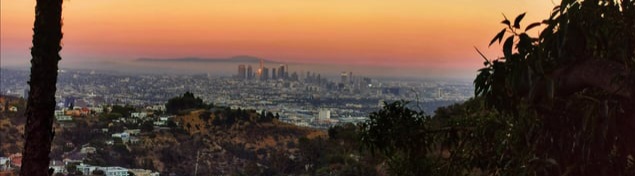

Lee wrote The Red Telephone there. Regarding the gloomy opening line, ‘Sitting on a hillside, watching all the people die’, Shaw imagines Lee hearing ambulance and police sirens in the distance as he gazed down at the city.
In 1967, the Marat/Sade film was showing in the US (and there was a much-praised Broadway theatre production in New York). In LA, Lee must have seen the film and borrowed the Marat/Sade line for The Red Telephone.
Near the end, The Red Telephone (echoing the style and rhythm of the 1966 novelty hit They’re Coming to Take Me Away, Ha-Haaa! by Jerry Samuels, aka Napolean XIV) segues into an ominous marching chant, repeated several times:
- They’re locking them up today
- They’re throwing away the key
- I wonder who it’ll be tomorrow, you or me?
Lee then gives a plaintive spoken rendition of the Marat/Sade line:
- We’re all normal and we want our freedom
We’re all normal and we want our freedom
We Are Normal by The Bonzo Dog Doo-Dah Band, 1968
My pink half
The wierd and wonderful song We Are Normal on the Bonzo’s brilliant and bonkers 1968 album The Doughnut in Granny’s Greenhouse was written by Viv Stanshall and fellow Bonzo Neil Innes.
During the recording of Doughnut, Dadaist Stanshall, wearing a rabbit’s head and underpants, interviewed passers-by in a nearby London street. On We Are Normal, an interviewee is heard saying, ‘He’s got a head on him like a rabbit.’
Stanshall apparently said they got the ‘normal’ line from Love’s song. Innes has said they got it from Marat/Sade (the theatre and film versions of which were on in London in 1968). Perhaps they got it from both sources.
The Bonzo’s We Are Normal is part sound experiment with cut-up vox pop and Miles-like trumpet, and part cod heavy rock. The only lyric is a close paraphrase of the Marat/Sade line, sung repeatedly and assertively in the rock section:
- We are normal and we want our freedom!
Stanshall slips in a cracking rhyme: ‘We are normal and we dig Bert Weedon‘ – but he adds a sarcastic laugh, as if to say although he couldn’t resist the joke, such humour was out of place in a serious experimental artwork.
We’re all normal and we want our freedom
Sad bit at the end
Sadly, both geniuses died prematurely. Viv Stanshall died aged 51 in 1995 when an electrical fire broke out as he slept. Arthur Lee died of leukemia aged 61 in 2006.
Update, 2023: Typically, Stanshall left a chaotic legacy of unfinished work which only now, 18 years after his death, has born fruit.
We’re all normal and we want our freedom
Funny bit at the end

A punk stopped me on the street. He said, ‘You got a light, Mac?’ I said, ‘No – but I’ve got a dark brown overcoat.’
From Big Shot, on the Bonzos’ 1967 debut album, Gorilla. (Not to be confused with Hev Yew Gotta Loight, Boy? by The Singing Postman.)

 soothfairy