Seeing defiant Hamas fighters on TV during the January 2025 hostage releases, I wondered if, given the havoc Hamas has provoked, Gazan people still supported them. Amazingly, some did.
Hamas fighters pictured during a hostage release | Photo: Reuters
Amazingly, some Gazans still support Hamas Contents 🔼
Introduction
The horror
We western liberals looked on in horror as the news broke of the brutal October 2023 attack by Hamas. We continued looking on in horror and frustration as news of the even more brutal Israeli war on Gaza rolled on.
Our frustration was due to the powerlessness of the international community. The so-called United Nations (with its veto-hampered Security Council) was more toothless than usual as its US paymaster continued to give unconditional support to Israel and the lawless IDF – the Israel ‘Defense’ Forces.
Some western support for the Palestinian cause shaded into misplaced support for Hamas. (See below.) That didn’t help.
In November 2024 the International Criminal Court (ICC) issued an arrest warrant against Israeli premier Benjamin Netanyahu. The court accused Netanyahu of war crimes and crimes against humanity:
ICC charges against Netanyahu
War crimes
Starvation as a method of warfare
Intentionally directing an attack against the civilian population
Crimes against humanity
Murder
Persecution
Other inhumane acts
The Israeli military used those criminal tactics to destroy Gaza whilst trying to destroy Hamas. But, as shown in the January 2025 hostage release videos, Hamas wasn’tdestroyed – they were still there.
Hamas was still there – and making a point of looking in charge. But given their deliberate provocation of Israel’s destructive response, I wondered: what did battered Gazan civilians really think of Hamas?
Amazingly, some Gazans still support Hamas Contents 🔼
What do Gazans think of Hamas?
Open criticism
Video of hostages being released by Hamas fighters
19 January 2025 | Forbes
In videos of hostages being released during the ceasefire that began in January 2025, the Hamas fighters in charge displayed a defiant and confident ebullience.
That display suggested buoyant support for Hamas in Gaza – or a cowed population. Gazan civilians werereportedly cowed – as might be expected under the rule of Hamas’s ultra-sharia political-Islamist government.
In the 2006election in Gaza, Hamas won against the more moderate Fatah by 37 to 32 percent. International observers said the election was ‘open and fairly contested’.
However, an electoral system described as ‘skewed’ meant Fatah got no seats. A unity government was formed but in 2007 it collapsed when Hamas ousted Fatah by force and imposed authoritarian rule.
(The US and the EU, considering Hamas to be a terrorist organisation, didn’t accept the 2006 election result. A 2021election due in Gaza and the West Bank was postponed indefinitely by Palestinian president Mahmoud Abbas.)
Hamas rules Gaza through oppression, using arrests and torture to suppress dissent. Gazans widely loathe its internal General Security Service, which surveils and keeps files on people, stamps out protests, intimidates journalists, and tracks people accused of “immoral acts”.
As for popular support for Hamas in Gaza, it was sinking rather than buoyant. A September 2024 poll found that although 39 percent of Gazans still supported Hamas, that had fallen in three months from 64 percent.
Open criticism of Hamas has been growing in Gaza, both on the streets and online. Some have publicly criticised Hamas for hiding the hostages in apartments near a busy marketplace, or for firing rockets from civilian areas.
The BBC article quoted an educated Gazan man speaking angrily on video about the Hamas leadership:
I am an academic doctor. I had a good life, but we have a filthy leadership. They got used to our bloodshed, may God curse them. They are scum! We could have avoided this attack.
Quote from a video (apparently no longer available) of a man, his face and clothes covered with blood, speaking outside a hospital filled with hundreds of casualties after an Israeli operation to free hostages from central Gaza.
Distressed Gazan civilian criticising Hamas | Screenshot of viral video, June 2024 | Photo: UGC
A senior Hamas government employee, who asked to remain anonymous, told the BBC the Hamas attack was a ‘crazy, uncalculated leap’. He said:
The Hamas government prepared well for the attack militarily, but it neglected the home front. They did not build any safe shelters for people; they did not reserve enough food, fuel and medical supplies.
The BBC article concluded:
Criticism of Hamas is growing sharper, and long-buried divisions over Hamas rule in Gaza are becoming clear. Out of the destruction left by Israel’s battle with Hamas, a new war is emerging: a battle for control of public opinion within Gaza itself.
Amazingly, some Gazans still support Hamas Contents 🔼
Hamas hoped to spark regional war
Daft as a brush
What did Hamas think would happen when they launched their October 2023 attack?
The attack – a brutal assault on a lightly defended peacenik kibbutz – wasn’t, as might be thought, an unplanned outburst. Despite the assault’s shambolic execution, training and planning had been going on for weeks. So what was the purpose?
The attack by Hamas was apparently intended to spark regional war. A Hamas spokesman said the attack was intended to provoke a strong Israeli response and a consequent regional war against Israel.
The regional war didn’t happen – and had no chance of happening. Middle Eastern Muslim countries may support Palestinian resistance groups with money, weapons and training, but they have no interest in waging war against Israel, the US-backed regional superpower.
In fact some regional Muslim countries, including well-armed Saudi Arabia, had been busy establishing diplomatic links with Israel.
Was the Hamas leadership – perhaps made gullible by ideology – misled by callous regional partners into believing the attack would result in war? Did Hamas expect Palestinian victory, with Gazan deaths being glorious martyrdom?
Did Hamas think embeding themselves amonst Gazan civilians would deter Israeli aggression?
Whatever their thinking, Hamas’s childish strategy – poking the angry Zionist bear and then hiding amongst civilians – inevitably caused Gazans to suffer mass death, injury, destruction and displacement for – as Hamas should have realised – an unachievable end.
In spite of that, a December 2023 poll found only 19 percent of Gazans blamed Hamas for their post-attack suffering. That showed a stubborn loyalty – but Gazans deserved better.
Amazingly, some Gazans still support Hamas Contents 🔼
Donald Chump’s Nazi plan for Gaza
Insane in the brain
It could be said the Hamas attack succeeded in raising the profile of Gaza and the wider Palestinian cause – but raised it to what end? There was still no prospect of Israel being persuaded to accept a two-state solution or to end its aggressive settler expansion.
Also, unfortunately for Gaza, its raised profile caught the eye of rampaging newly re-elected US president Donald Chump.
Within weeks of his January 2025 inauguration, Chump announced an insane Nazi plan for Gaza. The US would take control and ownership of Gaza, deport the people and turn it into a Middle Eastern Mar-a-Lago.
Chump embroidered the plan, but his team got the original idea from a July 2024 paper given them by rightwing economist Joseph Pelzman. (Apparently Pelzman offered it to team Biden first, but – understandably – they didn’t want it.)
Prof Pelzman’s highly detailed but quite bonkers paper said – in summary – that reconstructing Gaza would be too costly and the only solution was to remove the people, level the ground and start from scratch. He specified a tourist seafront. Chump the real estate moron must have loved that.
Pelzman said the country carrying out his plan should be granted a 50-year lease. Typically, Chump took that to mean the US should assume ownership of Gaza.
Anyone hoping Chump has a tiny spark of sanity or conscience should watch his gobsmacking Nazi-propaganda-style AI-generated Chump Gaza video. He clearly hasn’t got a spark of anything worthwhile.
To be fair to Chump (even a narcissistic sociopath deserves that), his bullying style apparently brought about the Gazan ceasefire and hostage releases that began in January 2025.
But that ceasefire was an incidental silver lining to Chump’s deliberate cloud of confusion and crisis. Chump talks cheesily about wanting peace, but his real concern is to ensure he and his felllow-billionaires can continue profiteering from crisis.
(Candidate Chump promised to ‘drain the Washington swamp’, but he and his parasitical class – served, ironically, by ‘swamp’ lobbyists – are actually draining the economy, hollowing it out to enhance their obscene wealth.)
Ceasefire update | March 2025
To keep power, Benjamin Netenyahu, Israeli premier and wanted war criminal, reneged on the second part of the ceasefire agreement, in which all hostages were to be be freed and all Israeli forces were to leave. Instead, the mass death and destruction resumed. Idiot Chump colluded with Netenyahu’s return to war. Reuters reported that after a White House meeting with released Israeli hostages on 5 March Chump posted:
I am sending Israel everything it needs to finish the job, not a single Hamas member will be safe if you don’t do as I say. Also, to the People of Gaza: A beautiful Future awaits, but not if you hold Hostages. If you do, you are DEAD! Make a SMART decision. RELEASE THE HOSTAGES NOW, OR THERE WILL BE HELL TO PAY LATER!
My bolding (Chump’s caps!)
Most of the ‘people of Gaza’ – distiguished by Chump’s ‘also’ from Hamas – had nothing to do with the holding of hostages. Threatening civilians with death is a war crime.
Amazingly, some Gazans still support Hamas Contents 🔼
The future for Gaza and Hamas
Better leadership
Best friends: the war criminal and the psychopath | Photo: Reuters
Donald Chump and his new pal, rightwing Israeli premier and wanted war criminalBenjamin Netanyahu, would presumably have to drop their fantasy Nazi ethnic-clearance ‘Riviera’plan for Gaza.
In which case, if and when the Israeli military left Gaza, a caretaker government could supervise reconstruction – and would need to implement elections.
Hamas’sstupid strategy inevitably brought nothing but death and destruction to the people of Gaza. Gazans deserve better leadership – one that pursues the Palestinian cause but also protects civilians.
Despite its show of defiance in the hostage videos, Hamas seemed a spent force. Whether at the hands of the avenging Israeli military or a dissatisfied Gazan electorate, Hamas’s days in power were surely numbered.
Seaside genocide | Photo: AP/Getty
Amazingly, some Gazans still support Hamas Contents 🔼
Addendum
Western support for Hamas
Terror error
As well as still having some support in Gaza,Hamas had some support in the liberal west, where righteous support for the Palestinian cause sometimes shaded into misplaced support for the Islamist group.
…an organisation that is dedicated towards the good of the Palestinian people and bringing about long-term peace and social justice and political justice in the whole region
Ismail Patel, zealous Muslim founder of UK political-Islamist campaign group Friends of Al-Aqsa (listed as an extremist group by the UK government in March 2024) has made speeches at UK Palestine demonstrations unconditionally praising Hamas for standing up to Israel.
In 2024, foolish Leicester Muslim campaigner Majid Freeman was charged with the terrorism offence of supporting Hamas online. (In 2021, the political and military wings of Hamas were proscribed as a single terrorist organisation by the UK.)
Hamas’s extremism and recklessness harmed the Palestinian cause. However, some international supporters of that cause continued to support Hamas as a legitimate response to Israeli oppression.
Such misguided support would no doubt encourage Hamas as it clung to power.
The End Top 🔼 Feel free to comment. (I answer all comments.)
It’s suggested life somehow developed by means of a series of random chemical interactions – but that’s implausible. Super-complex DNA must have been designed.
During a recent UK BBC Radio 4 discussion, a top scientist working on the origin of DNA (deoxyribonucleic acid), the source of all life, suggested it ‘somehow’ resulted from random chemical interactions of increasing complexity. The scientist’s ‘somehow’ said it all – the suggestion is implausible.
As biochemistry’s understanding of the mind-boggling complexity of DNA has proceeded, so understanding of its origins has receeded.
It’s normal for scientists to fudge this issue. For instance, Prof Brian Cox, the well-known UK physicist and TV science promoter, says:
On our planet we have seen active geology encourage carbon atoms to form into long chain molecules that encode information.
Cox is wrong to imply the formation of DNA is understood. Despite many years of experimental research, all we’ve actually seen is biochemists offering implausible and unproved theories.
Wikipedia’s entry on abiogenesis (the study of how life originated) duly relates the various theories, but says:
…the transition of non-life to life has never been observed experimentally, nor has there been a satisfactory chemical explanation.
Quite so. Without the post-DNA driving force of natural selection, there’s no way random chemical interactions could have gradually increased in complexity to the point of – somehow – ending up as the massively complex, self-replicating, information-coding molecule we call DNA.
Elsewhere in this blog, I’ve suggested DNA is the result of a universal designerless design process analogous to evolution but – like Cox – I was fudging the issue. I was avoiding the difficult but inevitable explanation: the appearance of DNA implies a designer.
The only possible explanation is that DNA was designed and made by a conscious and resourceful entity, which might as well be called ‘God’ – God not as presented by religion but as implied by the sudden and inexplicable appearance of the mystery molecule.
The bonkers idea of Creationism can safely be ignored, but it’s impossible to avoid the idea of Intelligent Design (ID). The covertly religious, evolution-denying ID movement offers mostly slippery pseudoscience. However, DNA’s origin is a special case.
Such special pleading is normally considered a reasoning error, but in this case, as it’s impossible for science to provide a plausible account of the origin of DNA, intelligent design, however improbable, is the only explanation.
ID movement missionaries invoke DNA’s information coding, saying it’s a message from God. That’s nonsense, of course. The code’s not a message – it’s a blueprint for life. DNA’s staggering complexity and purpose is all the proof needed for intelligent design.
Unlike the ID movement’s supernatural God, DNA’s actual intelligent designer must be a natural entity, but one which is currently – perhaps permanently – beyond scientific understanding (as are the probably related – and interrelated – subjects of consciousness and the ultimate nature of matter).
The question inevitably arises: if the life molecule was designed, why? To produce some sort of consciousness singularity event? Humanists can only speculate.
Given that we’ve evolved the amazing ability to control our environment, but seem about to destroy it, it’s a poignant question for us. Are we a failed experiment?
Anyway, I’ll try to enjoy life as far as I can whilst facing the prospect of apocalypse – and the selfish gene’s built-in death sentence – but I’ll respectfully regard life’s mysterious maker with the utmost caution.
Some sayRNA (ribonucleic acid), a similar but single-strand molecule currently synthesised from DNA, appeared first, and DNA evolved from RNA. RNA is thought to be capable of self-replication.
However, the appearance of RNA in a hypothesised pre-DNA RNA world presents the same problem: the unexplained appearance of a massively complex molecule.
The fringe theory of panspermia suggests DNA was brought to Earth from elsewhere either by microbes on trans-galactic debris or – as proposed by Francis Crick, the Nobel prize-winning co-discoverer of DNA’s double-helix structure – by aliens.
In either case, the problem of DNA’s origin remains – albeit in a different place.
If, as seems probable, someone or something made DNA to seed life, what might you call them if you’re not religious?
The AI promptly suggested 12 terms:
There are several non-religious terms that scientists and philosophers have proposed to describe the hypothetical entity or entities that might have created or seeded life on Earth:
Scientific perspectives
1. Panspermia initiators: This term suggests a natural, cosmic origin for life.
2. Primordial engineers: Implies a deliberate, intelligent design.
3. Cosmic architects: Suggests a grand, universe-scale design.
Philosophical and theoretical frameworks
1. The simulator: Inspired by the simulation hypothesis, proposing an advanced civilization.
2. The seeders: Simple, straightforward term for hypothetical life-seeding entities.
3. The originators: Emphasizes their role in initiating life.
Scientifically inspired speculation
1. Advanced extraterrestrial civilization: Assuming intelligent life elsewhere.
2. Quantum fluctuation entity: Considering the role of quantum mechanics.
3. Multiverse inhabitants: Suggests inter-universal travel or influence.
These terms avoid attributing motivations, intentions or supernatural qualities, focusing instead on the hypothetical entity’s role in sparking life.
[Edited by me: essential link added and excessive use of capital letters corrected]
That’s not bad for a souped-up chatbot. ‘The seeders’ has a nice ring to it, but I think I’d go for ‘Cosmic architects’. (‘LIE’ is the only acronym. Is the AI trying to say something? 😉)
Image: Dr Alice Pyne, University of Sheffield | Published in PCCP paper, November 2024
Dancing DNA
Six feet of DNA is crammed into each cell. The consequent stress makes the molecule twist and writhe in dance-like movements. (Adult humans have about 35 trillion cells – that’s 40 billion miles of DNA per person.)
Video: Scientists at the Universities of Leeds, Sheffield and York combined high-resolution images with simulation | Published in Nature Communications paper by Alice Pyne and others, February 2021
(There’s a non-embeddable but less cluttered version of the Dancing DNA video here.)
In which Baby Jesus, Santa Claus and a pagan shaman debate the true meaning of Christmas.
Image by Alsopinion
Once upon a time, dear Reader – last year, actually – in the nearby dimension where mythical beings live, the house called Christmas had an unexpected visitor.
In the house called Christmas, Baby Jesus lived in the attic with his mother. Santa Claus lived in the main part with Mrs Claus and some elves. A pagan shaman lived in the cellar.
(The absentee landlord, God, lived in a mansion on a nearby mountain. Mother Nature lived next door.)
Many of the beings in that dimension had chosen human form – for the craic. That included the residents of the house called Christmas.
It was a big house, with grounds, paddocks, stables, and outhouses. The residents had their own appartments but there was a shared ground-floor kitchen-diner.
One day, shortly before Christmas, a human called Helen tripped through a gap in the continuum and found herself outside the house.
It was snowing, and the snow lay deep, crisp and even. A sign on the door said “Christmas”. Helen rang the bell – a sleigh bell.
An elf opened the door. “Come in”, he said. “They’re all in the kitchen.” The elf gestured down the hallway, went into a side room and shut the door behind him.
Helen stared after the elf. She heard shouting coming from down the hall and walked towards the sound. A gruff voice shouted, “Fuck you, you fuckin’ little bastard!” She opened the door.
AI illustration by me/Canva
Baby Jesus, with his halo, and Santa Claus, with his red suit, were sitting at a large kitchen island. Baby Jesus was in a high chair. They each had a glass of red wine. There were two empty wine bottles in front of them. A speaker was playing Jingle Bells on the Multiversal Matrix station.
Baby Jesus looked like a baby, but he thought, spoke and drank like an adult. He was drunk, as was Santa.
“Fuck you, yer fucking fat twat!” Jesus slurred angrily at Santa. “You don’ even know where yer from. Is it Greece? Or fuckin’ whatsit, Anatolia? Or the fuckin’ North fuckin’ Pole?!”
Helen, standing in the doorway, cleared her throat. They both looked at her. “Hello,” she said. “Sorry to barge in. I was lost, so I rang the bell. An elf let me in. I’m Helen.”
“Hi,” said Jesus. “Hullo,” said Santa.
Helen looked around. Mary, Baby Jesus’s teenage mother, was slumped in an armchair with a cigarette and a glass of wine.
AI illustration by me/Microsoft Generator
“‘Twat’ isn’t a nice word, darling,” Mary said to Jesus. She waved at Helen.
A Central-Asian-looking man, the shaman, sat at one end of the island, chopping mushrooms. He said, “What about ‘fucking’? Is that a nice word?” Jesus grunted. The shaman winked at Helen.
Mrs Claus sat at a large dining table, rolling a joint.
As supernatural beings, they didn’t need food or drink – or intoxicants. But in their human form, they’d got into the habit. The elves supplied their groceries and dope.
“Hello, dear. Don’t mind them,” said Mrs Claus to Helen. “They’re always like this at Christmas. Come in, have a seat. We get the odd human visitor every now and then.”
AI illustration by me/Craiyon – sorry about the hands
Helen stared at Baby Jesus. He hiccuped. “So,” said Helen to Mrs Claus, “you’re not … human?”
“No dear,” said Mrs Claus. “You’ve strayed into a different world. We’re mythical beings. But don’t you worry,” she added, “Our visitors usually get back – somehow or other.”
“The elves do it,” said the shaman to Helen. “Get you back.”
Helen sat down next to Mrs Claus. “Have a glass of wine, dear,” said Mrs Claus to Helen. She poured one. Helen took a gulp. “Thanks,” she said.
“I’m sorry,” said Helen to Jesus. “I interrupted you. Do please continue.”
“Yeah, well,” said Jesus. He drank some wine. “Thing is,” he added, “Christmas is mine!”
He pointed at Santa and shouted, “He fuckin’ stole it!“.
“Actually, it’s mine,” said the shaman to Jesus. “Your church stole it. Yule.”
“Well, yer’ve still got yer fuckin’ yule log,” sneered Jesus. “Anyway,” he muttered, “I never wanted the fuckin’ church in the first place.”
“But the point,” he went on, “the fucking point is, it’s s’posed to be about my fuckin’ birthday!”
“The clue’s in the fuckin’ name!” he shouted.
“Ah, but,” said Santa. “They don’t say ‘Christ-mas’, with the ‘t’, do they. They say ‘Chris-mas’. Tha’s me – Chris. Chris Kringle.”
Jesus snorted. “Bollocks!” he said. “Tha’s from the German, whatsit, Christkindl. Means Christ child. Me!”
“Yeah, well, it’s me they go on about,” Santa said to Jesus. “Me. It’s Santa this an’ Santa that, innit. Not you. An’ cert’nly not you, Mr fuckin’ Yule.”
“I have my followers,” said the shaman.
“Yeah, a few new-age, sandal-wearin’, tofu-eatin’ hippies. Bless ’em.” said Santa. “Hardly mainstream like me, is it.”
“Mind you,” Santa said to Jesus, “they like your carols, I’ll give you that.”
“They used to be mine too,” said the shaman, sadly. “Kind of. The Holly and the Ivy still is.”
And,” said the shaman to Santa, “you got your red and white and the flying reindeer from me.”
“Matrix,” said the shaman. “Show it.” An image of a Siberian shaman feeding a reindeer appeared on a large wall screen.
Image: unknown
“We flew, tripping on magic mushrooms,” said the shaman.
“Wharever,” said Santa. “Christmas is mine now. So you can both fuck off.”
“You – yer’ve got too big fer yer… stupid fuckin’ boots!” shouted Jesus at Santa. He slumped back in his high chair. He sighed.
“I know,” said Jesus. “I know it’s yours. An’ I’m not gettin’ it back. But I’m better than you. People know that.”
Santa busied himself opening another bottle. The speaker played All I want For Christmas Is You by Mariah Carey. “I like this one,” said Mary.
Mrs Claus lit her joint, took a big hit and passed it to Helen. “Go on, dear,” she said. “It’ll take the edge off.”
Helen took a hit, coughed and passed the spliff back to Mrs Claus. She cleared her throat. “So, Jesus,” she said. He glared at her. “I mean, if you don’t mind me asking. Are you really the Baby Jesus?”
“Hah!” said Jesus to Santa, pointing at him. “She’s not asking you if you’re really Santa, is she?” Santa shrugged.
“‘S complicated,” Jesus said to Helen, “the mythical thing. But basically, yes. I’m a, er, a manifestation. Of the Son of God.”
“So what about Joseph?” asked Helen.
“Not here,” said Jesus. “Not mythical enough.”
“Like me,” said Mrs Claus. “I shouldn’t be here, really. But he can’t manage on his own.”
“Hah!” said Santa. “Probably true.”
“The elves got her in.” said the shaman. “Obviously, I’m not personally mythical,” he added. “More representative. And I help with the reindeer.”
“So you see,” Jesus said. “Helen,” he added. He cleared his throat. “As the Baby Jesus,” he said, with the careful enunciation of the drunk, “I’m here in this house – we’re all here – because of bloody Christmas!”
“What about Easter?” asked Helen. The shaman snorted. “Another one stolen,” he said.
“Ostara,” he said to Helen. “Or Ēostre.”
“Moan, moan, moan,” said Jesus to the shaman. “Yer still got yer soddin’ eggs. An’ yer stupid bloody rabbit.” The shaman sniffed.
“Easter. ‘S a different house,” said Jesus to Helen. Mary sighed.
The room fell silent, apart from the speaker playing Merry Christmas Everyone by Shakin’ Stevens. An elf came in and finished preparing their meal.
AI illustration by me/Adobe Firefly
Helen accepted Mrs Claus’s invitation to join them for dinner. Baby Jesus picked at his food. He’d become maudlin. Helen wished she hadn’t mentioned Easter. The conversation was mainly small talk about yule logs, reindeer and Helen’s family.
Helen wanted to ask Mary about the virgin birth, but didn’t like to. The speaker played Last Christmas by Wham! “Ooh, I like this one,” said Mrs Claus. “Me too,” said Helen. They giggled.
“Still,” said the shaman to Jesus, “Cheer up. You rose from the dead, didn’t you?”
AI illustration by me/Microsoft Generator
“Tha’s right,” said Santa to Jesus. “‘S why my, er, ancestor was doin’ all those miracles. In Anatolia. In your name.”
“S’pose so,” said Jesus.
“Cheer up, dear,” said Mary to Jesus. “It’s Christmas.” Jesus sniffed.
“Always look on the bright side of life,” sang the shaman.
Jesus laughed. “Hah! Very funny,” he said. The elf gave them each a glass of arak. “Anyway,” said Jesus. “Cheers.”
The mood and the conversation lightened. The elf served coffee and then tapped Helen on the shoulder. “You can go back now if you like,” he said. “OK, thanks,” said Helen.
“Follow me,” said the elf. Helen stood up. The others looked at her. “Well, thanks,” she said. “For the lovely meal. And everything. It was really nice to meet you all.”
“You too, darling,” said Mrs Claus. “All the best.”
Helen started to follow the elf, and then she turned back. “Can I just say,” she said. They looked at her again.
“We … humans, most of us, we’re not very religious these days, are we,” she said. “But Christmas is what it is because of all of you.” The others nodded thoughtfully. “So,” said Helen, “Happy Christmas.”
“Yeah, Happy Christmas,” they said, raggedly but agreeably.
‘Time for your nap, dear,’ said Mary to Baby Jesus. He nodded. ‘You too,’ said Mrs Claus to Santa. He grunted.
Helen followed the elf out of the door. The speaker was playing Fairytale of New York by the Pogues and Kirsty MacColl.
Clip from video for Fairy Tale of New York | Image: YouTube
Helen got back safely – the elves had a portal in the living room – and, dear Reader, they all lived happily thereafter.
Helen didn’t tell anyone about her visit to the house called Christmas. She thought they wouldn’t believe her. She died aged 95 in a post-apocalypse commune. (That’s another story.)
The mythical beings had to move further away when their dimension was demolished by the Xogon empire to make way for a new interdimensional highway. (Fortunately, our nearby dimension was just off the route.)
The house called Christmas re-manifested. Baby Jesus, Santa Claus and the shaman continued to debate the real meaning of Christmas. They still got the occasional human visitor. Most of them got back safely.
Christmas continued to the end of time, which was sooner than everyone expected.
In 2024 annoying Leicester activist Majid Freeman was charged with terror offences. It’s a tale of muddled ideology, self-promotion, possible abuse of power, and a new MP with links to extremism.
Majid Freeman goes to court in August 2024 | Aaron Chown/PA Media
Freemanfeatured in that post because during the 2022 riots he muddied the waters by posting inflammatory claims.
Two years later in July 2024, immediately after campaigning against prominent Labour MPJon Ashworth on the Gaza issue, Freeman was charged with terror offences, including supporting Hamas.
Although Freeman seems sincere in his beliefs, he’s an annoying stirrer and self-publiciser. He’s not a sympathetic character. But his prosecution seems unfair.
Separately, in September 2024 Freeman was jailed – also unfairly – for a public order offence dating back to the 2022 riots.
This tale, previously buried in a remote update to a post about events two years ago, deserves a post of its own
During the 2024 UK general election campaign Muslim campaigner Majid Freeman confronted Leicester South MP Jon Ashworth on video about Gaza. Two weeks later Ashworth lost his seat. Five days after that Freeman was charged with terror offences. Coincidence?
On 21 June, during the election campaign, Majid Freeman posted a video of his public confrontation with MP Jon Ashworth about the MP’s voting record on Gaza. The video went viral.
On 22 June independent candidate Shockat Adam, standing mainly on the issue of Gaza, reposted Freeman’s video with added anti-Ashworth comments.
Then…
On 4 July, Ashworth’s seat was unexpectedly lost to Adam.
On 9 July, Freeman was charged with terror offences including supporting proscribed Gaza group Hamas.
On 10 July, AshworthchallengedAdam about his apparent association with Freeman.
So… two weeks after Freeman’s video went viral Ashworth lost his supposedly safe seat to Adam. Five days after that Freeman was charged. The next dayAshworth angrily challenged Adam.
Q: Did an angry Ashworth abuse his power to get Freeman charged?
In July 2024 Majid Freeman was arrested and charged with terror offences. His trial was due to be held in Birmingham in September 2025.
(See Freeman’s September 2024 imprisonment for a separate public order offence below.)
On 9 July 2024Majid Freeman, aka Majid Novsarka, was arrested by Leicestershire Police and charged with two terrorism offences: encouragement of terrorism (re Hebdo) and supporting a proscribed organisation (Hamas).
At his first pre-trial hearing Freeman was given bail. His trial, due in 2025, was going to be in Leicester but has been moved to Birmingham.
ProsecutorLee Ingham said the move was needed because of ‘strong feelings’ in Leicester and because Freeman was ‘fairly well-known’ in the area as a ‘political activist’. However, the trial could safely be held in Leicester – Ingham’s concerns are largely misplaced.
There are certainly ‘strong feelings’ in Leicester – about Gaza. Hence Labour’s shock loss in Leicester South. Freeman clearly shares those feelings – and seeks to exploit them to enhance his public image. But his status as a ‘political activist’ with local support is exaggerated – by him.
Is Freeman, the self-styled political activist, ‘fairly well known’? As a self-appointed spokesperson for local Muslims, Freeman does get somelocal recognition. And Freeman’s posts and activities attract some media attention – which he apparently craves.
The mainstream media, too lazy for due diligence, sometimes gulliblyreport Freeman’s comments. The more partisan media feature Freeman occasionally and portray him according to their bias. Pro-Modi and Zionist media portrayFreeman as an Islamist devil; and Muslim mediaportray him as an altruistic angel. (Take your pick – or split the difference.)
So prosecutor Ingham’s assessment of Freeman as ‘fairly well known’ is accurate. But if his trial was in Leicester, there’d probably be no crowds of protesters with ‘strong feelings’.
However, Hindu-Muslim tension has simmered in Leicester since the 2022 unrest. During the unrest one of Freeman’s posts was notoriously inaccurate and inflammatory. So perhaps Ingham was right to err on the safe side.
As for the charges, Freeman’s alleged crimes are perhaps the product of muddled thinking rather than cohesive ideology. Freeman’s passion for Muslim causes, local or international, seems confused with his obsessive self-promotion.
Freeman’s alleged support for Hamas perhaps shows the problem with acting mainly alone. Unchecked, righteous support for the Palestinian cause can too easily shade into indefensible support for Hamas.
Supporters of Hamas say it’s a legitimate response to Israeli occupation. But such support became illegal in the UK when the political and military wings of Hamas were proscribed as a single terrorist organisation in 2021; and indefensible when Hamas’s military wing committed the October 2023atrocities.
The Hamas atrocities inevitably sparked a savage Israeli response, resulting, by August 2024, in an estimated 40-50,000 deaths and over 20,000 life-changing injuries. Many casualties were women and children.
That ‘collateral damage’ is the result of Israel’s de facto genocidal strategy (and the international community’s craven complicity). But it’s also the direct consequence of the brutal October 2023 attack by Hamas – the organisation Freeman allegedly supported.
The court was told Freeman‘s allegedly offending posts were mainly on Instagram and X. Freeman was given conditional bail: he was ordered not to use or access social media to post or transmit anything (with the exception of WhatsApp).
That must be frustrating for the dedicated self-publicist,
During the 2024 UK general election, Majid Freeman posted a video of his Gaza-related confrontation with MP Jon Ashworth. Five days after Ashworth lost his seat, Freeman was charged with two terror offences, one Gaza-related. Was Ashworth responsible?
In June 2024 during the general election, Majid Freeman campaigned against Leicester South sitting MP Jon Ashworth because of his voting record on Gaza.
On 21 JuneFreeman posted a video (his favourite means of self-promotion) of him haranguing Ashworth in the street about his Gaza voting record. The video went viral with over 1m views.
Freeman’s 100-second video shows Ashworth videoing Freeman videoing him whilst aggressively questioning him. Ashworth, clearly upset, doesn’t repond to Freeman’s questions but complains about Freeman’s ‘bullying’ and ‘intimidation’.
Screenshot of Freeman’s video
The next day, 22 June, independent Leicester South candidate Shockat Adam, who was standing mainly on the Gaza issue, reposted Freeman’s video with added anti-Ashworth comments.
Two weeks later on 4 July Ashworth unexpectedly lost his seat to Adam. Five days after that on 9 July Freeman was charged with terror offences. Was Ashworth responsible for that?
Ashworth had faced other street confrontations about his Gaza voting record. Was Freeman’s viral video and its reposting by Adam the last straw?
As a Leicester South constituent, Imet and briefly spoke with Ashworth towards the end of his campaign. He seemed badly rattled.
Did the pugnacious and well-connected Labour insider – upset, angry and massively piqued after losing his seat and his expected cabinet post – pull strings to get Freeman charged?
What strings might an angry Ashworth have pulled? He was a close ally of Kier Starmer, newly prime minister and former head of the UK prosecution service. That would have been a useful string.
Anger is said to be the second stage of grief, after denial. Perhaps Ashworth skipped denial and went straight to anger. The Wikipedia entry on the five stages of grief says of the anger stage:
The responses of a person undergoing this phase would be: ‘Why me? It’s not fair! How can this happen to me? Who is to blame?‘
[My bolding]
(The ‘five stages’ model was developed by psychiatrist Elizabeth Kübler-Ross to help understand and improve the mental health of patients with terminal illness. It was later extended to grieving friends and family; and then to anyone suffering serious loss. Like Ashworth.)
Freeman has history. He’s got form for foolish flirtation with extremism. But if he deserved prosecuting for it, it should have happened ten years ago.
In 2014 the Torygraph published a thorough and detailed exposé of Freeman as an online supporter of proscribed Islamist terror groups including Isis and al-Qaeda.
The article, by award-winning investigative journalist and – at that time – obsessive Islamist hunter Andrew Gilligan (of dodgy dossier fame), uncovered damning evidence and made serious accusations. Freeman was questioned by the police but not charged.
If Freeman wasn’t worth charging then, why make these flimsier charges now? Is it because angry Ashworth pulled strings? The timing makes that look likely:
21 June – Freeman posted his video of his aggressive confrontation with Ashworth about Gaza.
22 June – Freeman’s viral video was reposted by Gaza-focussed candidate Shockat Adam.
4 July – Adam unexpectedly won Leicester South, narrowly overturning Ashworth’s large majority.
9 July – Freeman was charged with terror offences, one Gaza-related.
10 July – Ashworth challenged Adam about his association with Freeman.
A week after losing his seat, Jon Ashworth publicly challenged new MP Shockat Adam to explain his apparent association with terror suspect Majid Freeman. Adam’s team dismissed the challenge as sour grapes.
On 10 July, the day after Majid Freeman was charged, Jon Ashworth (newly head of powerful centre-right Labour thinktank Labour Together) publicly challenged new Leicester South MP Shockat Adam to explain his apparent association with Freeman.
An angry Ashworth was implying Adam shared Freeman’s alleged support for Hamas. Ashworth’s challenge failed to get a direct answer from Adam – but it posed a fair question: was Adam associated with Freeman? Freemancampaigned against Ashworth on the Gaza issue central to Adam’s campaign – but that didn’t necessarily show a connection between Adam and Freeman.
Adam has denied any association. Asked about Freeman in an interview in September. Adam said:
He wasn’t even a supporter. He did not canvas for me. He did not campaign for me.
In reply to my request for comments, an assistant to Adam said:
From what we can tell from [Freeman’s] social media feeds he did not advocate for any one candidate (rather anyone but Mr Ashworth) and stated he was unsure who he would vote for and even stated Shockat should stand down in favour of The Green Party candidate.
But a reposted tweet suggests an association. On 22 June Adam reposted Freeman’s 21 Juneviral video of his Gaza-based confrontation with Ashworth.
According to a (paywalled) Financial Timesreport the reposted video – since removed from Adam’s X account – had anti-Ashworth comments added by Adam which supported Freeman’s line of questioning:
Adam wrote above the video, in a reference to the ceasefire vote, that Ashworth was “ashamed” of Labour’s “pro-genocide position”. “If you don’t want to be asked questions by the public when you are canvassing on our streets,” he wrote, “then maybe you should just stay at home.”
That immediate reposting of Freeman’s video complete with Adam’s approving message suggests a possible connection between Adam and Freeman.
Adam’s team dismissed Ashworth’s challenge about Freeman as mere ‘sour grapes’, but Ashworth’s implied criticism of Adam had some substance.
Adam – like Freeman – has history. He has personal, fraternal and campaign links to extremism.
In challengingShockat Adam about his apparent association with Majid Freeman immmediately after Freeman was charged with terror offences, Jon Ashworth implied Adam had links to extremism.
Adam may not be associated with Freeman but he does have links to extremism. He was Leicester chair of Muslim Engagement and Development (MEND) and his brother founded and runs Friends of Al-Aqsa (FOA). Both groups have been listed by the government as ‘extremist’.
Also, his campaign was backed by The Muslim Vote, a group with extremist links.
Until March 2024, Adam, then known as Shockat Adam Patel – regarding his change of name, see below – was the Leicester chair of Muslim Engagement and Development (MEND), an organisation labelled by the previous UK government as extremist.
MEND’s stated aim is:
To empower and encourage British Muslims within local communities to be more actively involved in British media and politics.
However, MEND has been accused of promoting Islamist, anti-Jewish and anti-gay views.
Adam’s brother Ismail Patel – regarding their different surnames, see below – founded and runs Friends of Al-Aqsa (FOA), established in 1979 in Leicester. Like MEND, FOA was labelledextremist by the previous government.
FOA, prominent at Palestine demonstrations, says it demands political change for Palestine. But it’s connected (as is Hamas) to the political-Islamist Muslim Brotherhood.
Patel’s speeches at demonstrations show his support for political Islamism – that is, sharia government and law based on an extreme interpretation of Islam, as seen in Iran, Afghanistan and, under Hamas, Gaza. Patel has praised Hamas for standing up to Israel.
May 2024: Ismail Patel speaks at a Whitehall rally to mark the 1948 appropriation of Palestine | Mark Kerrison/In Pictures via Getty Images
Mend and FOA both contribute to separatism by misrepresenting all UK Muslims as victims of Islamophobia. (This oddly matches the Modi/RSS strategy of promoting Hindu nationalism by misrepresenting Hindus as victims of Hinduphobia.)
During Adam’s campaign, leaflets from The Muslim Vote were circulated in Leicester South.
The Muslim Vote has the declared aim of supporting candidates opposed to Conservative and Labour stances on the Israel–Hamas war. But the group is linked to extremists.
The Muslim Vote is linked to Hizb ut-Tahrir Britain, a proscribed terrorist organisation; and to the Cordoba Foundation, which has links to the political Islamist Muslim Brotherhood. and whose leader has publicly supported Hamas.
Leicestershire Police were investigating a possible breach of electoral law: the leaflets from The Muslim Vote didn’t say who funded them or which candidate was supported.
But that was a technicality – the main issue was that Adam’s campaign was boosted by leaflets from a group with extremist links.
Mend and FOA were listed as extremist organisations by the previous Tory government. I asked the new Labour government about the current status of such listings. In reply, they said:
This government takes the threat of extremism very seriously and will continue to work with partners to tackle extremism in all its forms. The rapid review ordered by the Home Secretary earlier this year is considering the current understanding of extremism, including Islamist and far-right extremism. Following its conclusion, the government will be setting out its strategic approach.
Shortly before the 2024 general election, Adam, then known as Shockat Adam Patel dropped the Patel surname he shares with his brother, Ismail, the founder of FOA. Adam’s full name is Shockat Hussain Adam Patel.
Patel’s usually a Hindu name, but it’s also the name of some Gujarati Memon Muslims whose ancestors converted from Hinduism. Adam’s a Memon Muslim.
Adam, campaigning mainly against the ethnic cleansing of Muslims in Gaza, may have dropped his Patel surname to prevent Muslim voters thinking he was Hindu.
But he may also have dropped it to mask his association with his brother’s extreme views – and with MEND.
Adam’s Palestinian cause is just, but his links to extremism might damage that cause. If, as it seems, he himself is not extremist, he should renounce these links.
He might lose some support, but with his history he can’t make the omelette of democratic integrity without breaking those eggs.
Jon Ashworth was wrong if he pulled strings to get Majid Freeman charged. Freeman might be guilty as charged, but he’s no terrorist.
No doubt the charges against Majid Freeman are tick-box accurate. But the prosecution – however brought about – is excessive.
Even if Freemandid provocatively urge terrorism and support a proscribed group, he’s clearly not a terrorist.
Nor is Freeman likely to influence anyone. He has some followers, but basically he’s a delusional loner. However, he’s not a dangerous lone wolf, more a sick puppy.
If Freeman’s convicted, a custodial sentence would be inappropriate. He should be (metaphorically) de-wormed, and sent home with a tag and a banning order. Deprived of social media, he might get a life.
To paraphrase Pope: Who breaks this butterfly upon a wheel? If it was angry Jon Ashworth, he should come clean to the court.
The authorities are right to pursue Islamism but Freeman’s alleged offence is small potatoes compared with the bigger and much more dangerous threat of imported Hindutva extremism.
Despite my criticism of Majid Freeman, we share concern about a major issue: the anti-Muslim Hindutva extremism being spread amongst UK Hindus by the Indian fascist RSS organisation.
It’s a shame the UK security services which have crushed annoying butterfly Freeman aren’t equally diligent in response to that much bigger threat.
Hindutva extremism is being actively propagated to the UK Hindu diaspora by these well-organised RSS agencies:
No charges have been brought against those responsible – perhaps because successive UK governments have cravenly sought a trade deal with the Indian government of RSS Hindutva fascist Narendra Modi.
Just to complicate things, on 9 September 2024 the bothersome Majid Freeman was jailed – harshly – for a separate minor offence dating from the 2022 riots.
On 17 September 2022 – on the day of the Leicester anti-Muslim Hindutva march – Muslim activist Freeman was arrested under the Public Order Act 1986 and charged with:
Using abusive words with the intention that violence would be provoked
Almost two years later at Northampton magistrates court on 19 June 2024 (two days before his video confrontation with Jon Ashworth) Freeman was convicted of the offence under section 4 of the act.
On 9 September, Freeman was sentenced in Northampton to 22 weeks in prison – close to the maximum of six months for a section 4 offence.
None of the mainstream media reported Freeman being jailed – not even local rag the Leicester Mercury or the borderline-racist Daily Mail.
It was only reported in partisan media: anti-Freeman Hindu and Jewish media, and pro-Freeman Muslim media. (The pro-Freeman 5pillars at least had some useful factual content.)
How Freeman’s prison sentence will affect the progress of his separate prosecution for terror offences remains to be seen.
There’s also, apparently, the question of whether reporting this case breaches the Contempt of Court Act 1981 by prejudicing Freeman’s terror trial. Having checked out the act, I don’t think it does – but watch this space.
(Is that Plod I hear approaching? Shall I be joining Freeman in deluded messianic martyrdom? As almost no one is reading this, probably not.)
Regardless of that, Freeman’s near-maximum prison sentence is ridiculous. Anyprison sentence for ‘abusive words’ would be harshly excessive. Free Freeman!
UK thinktank Labour Together, newly headed in July 2024 by defeated former Leicester South MP Jon Ashworth, began as a ‘unity’ project but has morphed into a powerful centre-right lobby group.
Originally named Common Good Labour, the group was set up in 2015 as a ‘unity’ project after the resignation of Labour Leader Ed Miliband following the party’s general election defeat.
After leftist Jeremy Corbyn won the Labour leadership election, the renamed centrist Labour Togetherplotted against him (as did Ashworth).
2019 general election run-up | Photo: Thierry Monasse/Getty Images
Labour Together’s fundamentally pompous deceitfulness was perfectly illustrated by its self-important but deeply flawed June 2020review of Labour’s 2019 general election disaster.
The Labour Together review ignored the elephant in the room:free movement from Eastern Europe.
Many Labour voters voted to leave the EU in the 2016 Brexit referendum. According to polls, the main reason was the high level of unrestricted immigration from poor east European countries under the EU’s free movement of people rule.
Having been loftily dismissed by metrocentric Labour as ignorant provincial racists, many of those ‘red wall’ Labour voters voted Tory in 2019. But the 153-page Labour Together review made no mention whatsoever of ‘free movement’ or ‘Eastern Europe’.
The Labour Together review discussed lost voters and immigration as an issue, but the free movement issue was ignored. EU free movement of people was still supported by Labour metrocentrics, including, as recently as January 2020, by then leadership front-runner Kier Starmer.
The Labour Together review nerdily resorted to statistics, claiming voters associated with the leave side had deserted in 2015 and again in 2017, so the 2019 result only needed a small shift. But the reason for them voting to leave was duplicitously ignored.
Since then, Labour Together has gone on to bigger and worse things.
Now funded by super-rich donors, parasitically implanted in the Labour government, and promoting neoliberal private-funding policies, Labour Together makes the Tories’ hated Tufton Street ‘shady’ lobbyists look like amateurs.
Update 2026 – Ashworth ‘resigned’
In July 2025 Ashworth left Labour Together. He claimed he resigned after only intending to stay for one year, but his departure followed reports (sorry – paywalled) of poor leadership and a mass exodus of staff.
It’s the annex that outgrew its source. It’s still there, but here it’s repurposed and enhanced as a separate post.
This necessarily detailed account of what’s known about Browne and Mitchell’s relationship and its aftermath is an inseparable part of the rumour about Browne and Hannah. Many people condemn Browne solely because they believe Mitchell’s accusatory song Not to Blame.
In forums and comments they say, in effect, referring to Not to Blame, ‘Browne’s an abuser who drove his wife to suicide. Joni Mitchell says so’.
Not to Blame’s believability depends on her relationship with Browne. Mitchell, known for her lyrical integrity, had an affair with Browne and knew him well – so it must be true, right?
I also love a lot of her other work, earlier and later. She’s complex and unique – a genius.
She’s a superstar and I’m a mere fan. I’m not worthy to lace her size-nine dancing shoes, let alone accuse her of misusing her art and platform out of anger to make a damaging and baseless accusation – but needs must…
Mitchell’s 1972 relationship with Jackson Browne in their Laurel Canyon paradise sounds like a match made in heaven. What could possibly go wrong? Well, quite a lot.
Their relationship and its unhappy ending led eventually to Mitchell releasing her accusatory song Not to Blame (on the award-winning 1994 album Turbulent Indigo).
Mitchell has denied her songs are autobiographical but Not to Blame, released in the wake of the rumour that Browne assaulted Daryl Hannah, is widely understood to be Mitchell’s condemnation of Browne as a wife-beater who drove his first wife, Phyllis Major, to suicide.
In 1976, after bizarrely gatecrashing Major’s funeral, Mitchell made a similar but coded accusation about Major’s suicide in Song For Sharon (on the album Hejira).
18 years later, in Not to Blame, Mitchell not only repeated the current rumour about Browne and Hannah, but – much more damagingly – she again implied Browne was responsible for Major’s suicide.
There was no basis for Mitchell’s accusation. Major had long-term mental health problems and before committing suicide she suffered severe postnatal depression.
Some of Browne’s songs show he and Major had serious relationship problems (see below), but no one apart from Mitchell has made the terrible accusation that Browne drove Major to suicide.
In Not to Blame, Mitchell, clearly directly addressing Browne, said he despised frail women and loved to drive them to suicide:
[She] had the frailty you despise
And the looks you love to drive to suicide
This post exposes that accusation as baseless – and probably libellous. Why would Mitchell do that? What went so wrong with her relationship with Browne?
Relationships are normally private but Mitchell’s shocking public accusation against her ex-lover made their relationship public. The scantpublished information available portrays a love affair that started well but ended badly.
Then came the aftermath: Mitchell’s lasting and overwrought hatred of Browne – a hatred vented some 20 years later in 1994’sNot to Blame.
Mitchell’s abiding hatred for Browne was also publicly aired some 40 years later with bitter comments made in a 2017 biography.
But it all began, dear Reader (or Skimmer), in 1972…
Joni Mitchell and Jackson Browne began their 1972 relationship whilst touring the US and Europe together.
The tour began in February 1972. Mitchell, 28, was promoting her upcoming fifth album, For the Roses (released in November 1972). Browne, 22, was opening for her and promoting his debut album, Jackson Browne (January 1972).
Manchester! I could have gone…
David Yaffe in Reckless Daughter says after Mitchell’s relationship with James Taylor (see below) had ended, she was…
…thrown on the road with Jackson Browne, another brooding singer-songwriter who was even more harmful to Joni’s already fragile emotional state. [P 167; my bolding]
Mitchell famously said about her thin-skinnedBlue period that she felt ‘like a cellophane wrapper on a pack of cigarettes’.
But Yaffe’s suggestion that Browne was more harmful to the fragile Mitchell than Taylor – whilst it matches Mitchell’s vicious character assassination of Browne in Yaffe’s book (see below) – isn’t borne out by accounts of their relationship.
Far from being harmful to Mitchell’s emotional state on the road, Browne apparently lifted it. According to Sheila Weller’sGirls Like Us:
When Jackson and Joni dueted on “The Circle Game”, fans saw a chemistry between them. By the end of the tour … “Joni and Jackson were together,” Danny Kortchmar [friend and session guitarist] recalls … “Jackson and I are in love” is how Joni put it to her old flame Roy Blumenfeld [drummer in The Blues Project] when he visited L.A. … “She just fell for him,” says a confidante. [P 406]
Chemistry | Photo: Gijsbert Hanekroot/Redferns
After the tour, back home in LA, they didn’t live together. After a while, their ‘dating’ relationship apparently became turbulent. It ended later the same year.
One possible reason for the turbulence in their relationship was that recently in their neighbourhood of Laurel Canyon, home since the 60s to many LA rock musicians, cocaine had replaced cannabis as the drug of choice.
Moreish cocaine can be addictive, and can cause violence. Did the – possibly cocaine-related – turbulence in their relationship manifest as violence?
There was apparently some violence in both directions (see below), but serious incompatibility seems to have been the main problem. Perhaps they were too different – or too similar.
Weller’s Girls Like Us:
By the end of 1972…things were not going well between her and Jackson. “It was a high-strung relationship,” says a confidante. Everyone in their crowd was “doing so much cocaine at the time,” and “Joni thrives on conflict, and not many guys can take that”. (“I’m a confronter by nature,” she’s admitted.)…Nonetheless, Joni remained in love with Jackson. [P 407; my bolding]
Mitchell’s song Car on a Hill (from her 1974 album Court and Spark), said to be about her relationship with Browne, described her growing anxiety and prescient feeling of loss:
I’ve been sitting up waiting for my sugar to show…
He said he’d be over three hours ago…
He makes friends easy, he’s not like me
I watch for judgement anxiously
Now where in the city can that boy be?
He’s a real good talker, I think he’s a friend…
It always seems so righteous at the start
When there’s so much laughter, when there’s so much spark
When there’s so much sweetness in the dark
Around that time, Browne met Phyllis Major, who would become his wife. (See below.) Weller says:
Jackson’s attention to Phyllis Major felt, to Joni, like “a great loss and a great mind-fuck,” says her confidante. [P 408]
It was Browne who ended his relationship with Mitchell. (See below.) This apparently caused Mitchell to have a nervous breakdown. She spent some time in residential therapy.
However, a scorned Mitchell was also furious. Love turned to hate and rage – and how! Weller:
Joni remained deeply angry at Jackson for years. Said percussionist Don Alias, who became her serious boyfriend for several years in the late 1970s, “She really had this hatred of Jackson Browne; the whole Jackson Browne thing was really heavy for her.” [P 410; my bolding]
Sad, but evidently true. Hence, 22 years later, Not to Blame.
There was apparently some violence in the relationship between Jackson Browne and Joni Mitchell, but it clearly wasn’t the habitual kind characteristic of an abusive relationship.
There was violence of some kind – allegedly in both directions – during Joni’s relationship with Browne. [P 343]
Sheila Weller’sGirls Like Us claims Browne hit Mitchell on one occasion.
According to Weller (as related in a 2008news report), Mitchell confided to a friend that Browne disrespected her on stage at LA club The Roxy, and they later had an argument, during which he hit her. [P 407]
Weller assured me her source was good. However, Mitchell cast doubt on the credibility of scenes related in Weller’s book when she vetoed a planned movie based on it.
In a 2014interview, Mitchell said she told the movie’s producer, ‘It’s just a lot of gossip – you don’t have the great scenes’. She also said:
‘There’s a lot of nonsense about me in books – assumptions, assumptions, assumptions.’
So there’s questionable hearsay evidence that Browne hit Mitchell on one occasion. On the other hand, Browne claimed Mitchell attacked him during their relationship.
In a 1997interview about his response to Mitchell’s Not to Blame, he described Mitchell as a violent woman who twice physically attacked him.
Browne has denied his songs are autobiographical – something, at least, he shares with Mitchell – but Fountain of Sorrow is widely believed to be about Mitchell. In a 2014interview, Browne was asked about the meaning of these lines from the song:
When you see through love’s illusion there lies the danger
And your perfect lover just looks like a perfect fool
Declining to say who it was about, he nonetheless replied (typically gnomically):
‘It’s about the fact that when you fall in love with someone, when you’re broken-hearted, you don’t see them as a person.’
Was Browne saying although he loved Mitchell he was still heartbroken from a previous relationship? Was it his continuing focus on a previous lover that so distressed Mitchell?
According to Sheila Weller’sGirls Like Us, Browne was a romantic who said he kept getting his heart crushed. Weller says in 1971 Browne had a brief love affair in London with actor and photographer Salli Sachse, who’d been official photographer for Crosby, Stills, Nash and Young. (P 405).
Sachse and Peter Fonda in The Trip, 1967 | Photo: AIP
Weller refers to Sachse as ‘Jackson’s pre-Joni girlfriend‘. [P 410] The ‘you’ in Browne’s Something Fine (from his 1972 debut album, Jackson Browne) is thought to be Sachse.
In a 2019interview*, Sachse (an artist living in California) said she left Browne to go to Holland, where she met and fell in love with an artist.
*Sorry – you have to scroll past many pages of rogue code to get to the interview.
Was Browne’s heart crushed again when Sachse left him and fell for another man? Was he on the rebound?
Maybe not. That’s speculation – and it was a short affair, lasting only about 10 days. But it would perhaps explain that strange remark of Browne’s:
‘When you fall in love with someone, when you’re broken-hearted, you don’t see them as a person.’
Or was that actually about Mitchell and James Taylor, Mitchell’s pre-Browne lover. Was it Mitchell who was broken-hearted and on the rebound? Mitchell and Taylor were together from 1970-71. For a while, according to Yaffe, they were very close. (P 127) Then, with Taylor’s growing heroin/opioid addiction and Mitchell entering her thin-skinnedBlue period (when, she’s said, she felt ‘like a cellophane wrapper on a pack of cigarettes’), the relationship declined.
James Taylor and Joni Mitchell, 1971 | Photo: Joel Bernstein
According to one account, the relationship was ended by Taylor after Mitchell complained about him flirting with female admirers, and after he’d started seeing Carly Simon.
However, according to Weller, when Taylor and Simon met, Taylor and Mitchell’s relationship had already ended. (P 359) Oddly, neither Yaffe nor Weller describe how it ended, but Weller, writing about Mitchell’s 1972 album For the Roses, said James’ ‘rejection’ got to her. (P 334)
Taylor (in choosing California as his favourite song from Blue) claimsMitchell ended things when she left him in an airport and flew back to California. (Is that what Blue’s This Flight Tonight is ‘about’?)
Who dumped who matters because it’s suggested Mitchell’s lasting anger at Browne stems from him dumping her. But if Taylor also dumped her, how come she’s not angry at him?
Anyhow…was Mitchell broken-hearted when her relationship with Taylor ended? Was Browne – a young, good-looking, cultured singer-songwriter, like Taylor – Mitchell’s rebound substitute? Was Browne referring to Mitchell not seeing him as a person?
Taylor married Carly Simon in November 1972. Did that make the breakup with Browne even worse for Mitchell?
Happy couple: Carly Simon and James Taylor at their wedding, 1972 | Photo: Peter Simon (Carly’s late brother)
However, if Mitchell’s relationship with Browne was a relatively insignificant rebound relationship, why would she remain so intensely bitter towards him 20, 40 years later?
There was a 20s age gap between Joni Mitchell and Jackson Browne – she was 28, he was 22. Browne’s relative immaturity probably contributed to the breakdown of their relationship.
Browne has said he was lacking in emotional maturity at that time. He was talking about his song, Ready or Not (on his 1973 album For Everyman).
Ready or Not is about Browne’s first wife Phyllis Major, who he met around the time of his break-up with Mitchell. The song is funny, honest and slightly flippant.
Two verses refer to Major’s apparently unintended pregnancy and to Browne’s uncertainty about settling down:
Now baby’s feeling funny in the morning
She says she’s got a lot on her mind
Nature didn’t give her any warning
Now she’s going to have to leave her wild ways behind
She says she doesn’t care if she never spends
Another night running loose on the town
She’s gonna be a mother
Take a look in my eyes and tell me, brother
If I look like I’m ready
I told her I had always lived alone
And I probably always would
And all I wanted was my freedom
And she told me that she understood
But I let her do some of my laundry
And she slipped a few meals in between
And the next thing I remember, she was all moved in
And I was buying her a washing machine
The Songfacts page on Ready or Not (click on the ‘artistfacts’ tab) quotes a Mojo interview* with Browne:
‘She [Major] hated that song. She said, “I wasn’t having a baby to get you. And the bullshit about the washing machine is just insulting. So fuck you.” And she was right. I should have said in that song, “Oh shit, I’m about to become a parent and I have no idea how to do this.” But I was not emotionally mature enough.’ [My bolding]
* The interview date isn’t given, and there’s no online archive for Mojo.
In a filmed interview*, a 1970s-looking Browne described Ready or Not as glib, and said – generously – he learned from Mitchell the need to write deeper songs. (And he did – with his next album, the timeless Late for the Sky.)
* The interview was possibly in a TV documentary about Laurel Canyon. Unfortunately, I haven’t been able to find it again.
Those comments show Browne considered himself relatively immature at that time. With Mitchell, perhaps this was inevitable given the awkward younger-man 20s age gap.
He was, as he sang in Fountain of Sorrow, ‘one or two years’ – six, actually – and (apparently) ‘a couple of changes’ behind her.
Ready or Not portrayed Browne as torn between settling down and freedom. No doubt the immaturity and commitment-aversion shown in the song and acknowledged in his comments on it – along with the age gap – contributed to his apparent incompatibility with Mitchell.
Browne’s casually entitled sexism, as shown in Ready or Not‘s jokey reference to Major doing laundry and cooking meals can’t have helped.
(There was a lot of that around – despite the proclaimed hippy ideals of equality and liberation.)
Jackson Browne’s relationship with Joni Mitchell was ended by Browne in 1972 shortly before or after he met his future wife Phyllis Major. Apparently Mitchell was incensed it was Browne who ended it.
She was also apparently distraught. According to Sheila Weller’s 2008 Girls Like Us, a confidante of Mitchell said she attempted suicide by taking pills and she threw herself at a mirror, badly cutting herself. (P 408)
Mitchell has denied this. According to David Yaffe’s 2017 Reckless Daughter, the breakup was ‘less eventful than has been reported elsewhere’ (P 167). Mitchell told Yaffe:
‘I read a page in one of those books. It said when Jackson Browne dumped me I attempted suicide and I became a cutter. A cutter! A self-mutilator! I thought, Where do they get this garbage from? I’m not that crazy. I’m crazy, but not that crazy.’ (P 237)
Hmm.
After a period in residential therapy, Mitchell moved into the home of her – and Browne’s – friend and manager, David Geffen.
I asked Geffen about Mitchell’s alleged suicide attempt. He replied to say:
‘Everything written about it is either wrong or completely made up … I am not going to talk about Joni’s private life other than to say Jackson is not violent in any way and the end of relationships are always messy.’
(I told Geffen I was asking about Mitchell’s alleged suicide attempt in the course of my investigation into the rumour that Browne assaulted Daryl Hannah. In his reply, Geffen added, ‘Jackson never assaulted Hannah’.) Yaffe’sReckless Daughter quotes Larry Klein, Mitchell’s husband from 1982 to 1994, as saying:
‘Joni had a great deal of anger towards Jackson … Maybe it stems from the fact that he was the one to end the relationship … I think that’s a pattern in her life. She would do things that would lead to the end of the relationship … and then feel unjustly abandoned.’ [P 167; my bolding]
In late 1972, around the time he ended his relationship with Joni Mitchell, Jackson Browne met the woman who was to become his first wife, the actor and model Phyllis Major.
They met in the LA Troubadour club. Apparently Major was being harassed, and Browne intervened. His song Ready or Not (from For Everyman, 1973) included his jaunty account of meeting Major:
I met her in a crowded barroom
One of those typical Hollywood scenes
I was doing my very best Bogart
But I was having trouble getting into her jeans
I punched an unemployed actor
Defending her dignity
He stood up and knocked me through that barroom door
And that girl came home with me
Soon after meeting, they began a serious relationship. Their son Ethan was born in 1973. They married in 1975.
Oddly – apparently for no reason – Browne ends Walking Slow (from Late for the Sky, 1974) with these doleful lines:
I’m feelin’ good today
But if I die a little farther along
I’m trusting everyone to carry on
Tragically, it was, of course, Major who died a little farther along and Browne who had to find a way to carry on.
Major had long-term mental health problems and suffered severe postnatal depression. She attempted suicide in 1975, and committed suicide in March 1976 by taking an overdose of barbiturates.
🌷 🌷 🌷
In Not to Blame, Mitchell said Browne drove Major to suicide. (See below.) That terrible accusation is unfounded and uncorroborated – but Browne and Major were apparently having problems.
As a free-spirited and dedicated musician, no doubt Browne was sometimes an absent husband and parent. And Major had a history of mental health issues.
But – as with the relationship between Browne and Mitchell – no one else really knows what went on. I haven’t found any published information about their relationship – apart from in songs.
Disregarding Not to Blame’s uncorroborated accusation, three of Browne’s songs refer to difficulties in his relationship with Major.
1974’s Walking Slow, despite its breezy tone and its opening lines about being happy and feeling good, refers to marital discord:
I got a pretty little girl of my own at home
Sometimes we forget we love each other
And we fight for no reason
Browne added, presciently:
I don’t know what I’ll do if she ever leaves me alone
Things were apparently worse than typical marriage tiffs. Sleep’s Dark and Silent Gate, written soon after Major’s suicide, has a verse about their relationship:
Never shoulda had to try so hard
To make a love work out, I guess
I don’t know what love has got to do with happiness
But the times when we were happy
Were the times we never tried
It took Browne many years to write a whole song about what went wrong. 1986’s In the Shape of a Heart is very moving – and painfully revealing:
I guess I never knew what she was talking about
I guess I never knew what she was living without …
There was a hole left in the wall from some ancient fight
About the size of a fist, or something thrown that had missed
And there were other holes as well, in the house where our nights fell
Far too many to repair in the time that we were there …
It was the ruby that she wore, on a stand beside the bed
In the hour before dawn, when I knew she was gone
And I held it in my hand for a little while
And dropped it into the wall, let it go, heard it fall …
Speak in terms of a life and the living
Try to find the word for forgiving
Browne’s reference to ‘a hole left in the wall from some ancient fight about the size of a fist, or something thrown that had missed‘ implies him hitting the wall in frustration or her throwing something at him.
The reference to ‘other holes as well in the house where our nights fell, far too many to repair in the time that we were there‘ is clearly metaphorical.
Browne’s not confessing to domestic violence. He’s expanding Walking Slow’s ‘we forget we love each other, and we fight for no reason’ and Sleep’s Dark and Silent Gate’s ‘had to try so hard to make a love work out’ to In the Shape of a Heart’s account of his struggle to cope:
Jackson Browne met his first wife, Phyllis Major, around the time he ended his relationship with Joni Mitchell in 1972. Tragically, Major committed suicide in 1976. (See above.)
In two of her songs, Mitchell has accused Browne of driving Major to suicide.
The epic Song For Sharon (on the album Hejira) was released in 1976 soon after Major’s suicide. In one of the song’s ten verses, Mitchell implied Browne drove Major to it.
The accusatory Not to Blame (on the award-winning album Turbulent Indigo) was released in 1994 in the wake of the rumour that Browne beat Hannah. In addition to boosting that rumour, Mitchell repeated her smear about Major’s suicide more openly – and with spurious detail about Browne and Major’s three-year-old son.
(Not to Blame is analysed in detail in the next section.)
Mitchell was apparently acquainted with Major before Browne met her. In David Yaffe’sReckless Daughter, she described Major as ‘a sensitive, artistic, beautiful girl, who was passed from guy to guy to guy‘, and said when she learned Major was with Browne, she thought:
‘Here comes another one – the worst one of all. The very worst one. And all that shit that she’s gone through to fall into his clutches.’ [P 238 – Yaffe’s italics; my bolding]
(In Yaffe’s book, Mitchell harshly criticised all her exes, but was especially – gratuitously – vicious about Browne. See below.)
According to Sheila Weller’sGirls Like Us, Mitchell angered Browne by attending Major’s funeral. Weller says Mitchell saw a parallel with her ownsuicide attempt and included a coded implication in Song For Sharon that Browne was responsible for Major’s suicide. (P 411)
At the time of writing, Wikipedia‘s description of Song For Sharon – in its entry on the album Hejira – cites Weller’s claim that the song alludes to Major’s suicide. Wikipedia relates Weller’s observation that the song asks if the suicide was a means of ‘punishing someone’.
Mitchell’s beautiful Song For Sharon is a long and rambling autobiographical catch-up (nominally – as it were – addressed to an old friend, Sharon). However, the song’s poetic and sonic beauty conceals an ugly bitterness. Verse five (of ten) is a coded account of Mitchell’s vengeful response to the news of Major’s suicide.
Although Major died from a barbiturate overdose, the verse refers cryptically to a woman who ‘just drowned herself’. It says she was ‘just shaking off futility’ – ie of life with Browne – ‘or punishing somebody’ – ie Browne, presumably for his supposed mistreatment of her:
A woman I knew just drowned herself
The well was deep and muddy
She was just shaking off futility
Or punishing somebody
My friends were calling up all day yesterday
All emotions and abstractions
It seems we all live so close to that line
and so far from satisfaction
In Yaffe’s Reckless Daughter there’s no comment from Mitchell about the coded accusation in Song For Sharon. Nevertheless, Yaffe, perhaps referring to unpublished parts of his conversations with Mitchell, describes her emotional compulsion to make that accusation:
A woman [Major], who had been married to an ex-lover [Browne], commits suicide. She [Mitchell] feels bad. And she can’t let go of her bitterness toward the man who surely drove her to it, which makes her feel even more sympathy, more anger … She is sad, she is angry, she takes umbrage. She would like to be above settling scores, yet she is compelled to do so. It all came rushing back. Jackson had the nerve to dump her. Then she had such a vivid sense of what was wrong with him, and she could see what he was doing to the women who came after. [P 236-7; my bolding]
(Not to Blame is analysed in detail in the next section.)
The bitterness in Song For Sharon was coded and muted. However, 18 years later Mitchell was still bitter – and she let rip.
Mitchell’s song Not to Blame (on the award-winning album Turbulent Indigo), released in 1994 in the wake of the Browne-Hannah rumour, openly and angrily repeated her accusation that Browne drove Major to suicide.
The first two verses of Not to Blame were about Browne and Hannah, but the last verse, cruelly padded with spurious detail about Browne’s son, addressed Major’s suicide:
I heard your baby say
When he was only three
‘Daddy let’s get some girls
One for you and one for me’
His mother had the frailty you despise
And the looks you love to drive to suicide
Not one wet eye around
lonely little grave
Said ‘He was out of line girl
You were not to blame’
The spurious detail (‘I heard your baby say …’) referred to Browne and Major’s three-year-old son. Interviewed about Not to Blame in 1997, Browne said:
‘It was abusive to employ that image of my son as somebody who treated his mother’s death light-heartedly. I mean, he was a three-year-old baby, you know. This is inexcusable.’
Major took her own life after apparently suffering long-term mental health issues and extreme postnatal depression.
Browne’s songs Walking Slow, Sleep’s Dark and Silent Gate and – especially – In the Shape of a Heart refer to the difficulties they had in their relationship. (See above.)
Those difficulties may have been known to Mitchell – theirs was a small world. However, no one apart from Mitchell (and forum contributors who believe Mitchell’s accusation) has suggested Browne mistreated Major and drove her to suicide.
There’s no corroboration for the nasty accusation Mitchell made in those two songs and – despite Yaffe’s empathic explanation for Song For Sharon‘s coded accusation – no excuse.
In 1994, in the wake of the Jackson Browne-Daryl Hannah rumour – 22 years after her relationship with Browne had ended – Joni Mitchell released her accusatory song Not to Blame (on the award-winning album Turbulent Indigo).
This section offers a detailed analysis of the song, the part it’s played in the rumour about Browne and Hannah, and its reference to the suicide in 1976 of Browne’s first wife, Phyllis Major.
(Mitchell’s twisted take on Major’s suicide in Not to Blame and in the earlier Song For Sharon is also separately addressed above.)
Not to Blame is often invoked in discussion forums and comments as proof Browne’s a wife-beater.
It’s no such thing, but some people seem to think Mitchell’s condemnation of Browne trumps Browne’s protestation of innocence – perhaps because of Mitchell’s stronger reputation and her ‘weaker’ sex.
It doesn’t help, of course, that Browne refuses to explain what happened with Hannah.
Not to Blame offered no proof Browne assaulted anyone or drove them to suicide. Mitchell repeated and embroidered the gossip about Hannah, and she accused Browne of causing Major’s suicide. But the song provided no hint of corroboration or evidence.
For instance, she made no reference to her brief relationship with Browne 20 years previously, despite that being the last time she’d known him.
(Mitchell did talk about their relationship in David Yaffe’s 2017 autobiography, Reckless Daughter. She was highly critical of Browne – see below – but she notably didn’t mention Not to Blame; nor did she repeat her accusations about Hannah’s injuries or Major’s suicide.)
If Not to Blame reveals any truth, it’s not that Browne’s a wife-beater, it’s that Mitchell’s a grudge-holder – and that there’s no rage like love turned to hate.
Not to Blame is beautifully sung over sparse piano chords and sexy bass, with a light, slightly breathless, beguiling purity. Mitchell’s lyrics sound utterly convincing. She doesn’t sound angry or bitter – she sounds like, say, a Norwegian ice-maiden crooning light jazz.
But the song’s dulcet beauty belies its ugly theme: banal vengeance with a poisonous sting.
Not to Blame was released in 1994, when the rumour that Browne beat Hannah was still in the news. The US‘uncle’ letters about Hannah (see above) had been published that year.
Despite Mitchell’s flimsy pretence that Not to Blame wasn’t about anyone in particular, it was clearly about Browne – and was perfectly timed to twist the knife.
The first verse repeated and embellished the rumour of abuse. The second verse addressed domestic abuse in general (and obscurely accused Browne of ‘perversity’). Then, after that banal bluster, came the madness.
The venomous spite of the third verse was openly aimed at Mitchell’s real target: Browne and Major – albeit cloaked with fake sympathy for Major.
Browne left Mitchell for Major in 1972. Mitchell apparently never got over it.
Major committed suicide in 1976. In the same year, in Hejira’s Song For Sharon, Mitchell implied that Browne caused it.
18 years later, in Not to Blame’s final verse, Mitchell returned to Major’s suicide, accusing Browne of despising women’s frailty and loving to drive them to suicide.
Why did she do that?
In David Yaffe’s autobiography, Reckless Daughter, Yaffe often apparently channels Mitchell in order to explain without quoting. (See, for instance, Yaffe’s explanation for Mitchell’s comment on Major’s suicide in Song For Sharon.)
In that spirit, here’s my channelled explanation for Not to Blame’sthird verse:
Jackson had left her – genius Joni – for airhead* Phyllis. The shallow bastard! Then Phyllis killed herself. Joni gatecrashed the funeral. She pretended to feel sorry for Phyllis so she could blame Jackson. Her bitterness towards him festered. Now, years later, here was the Daryl Hannah rumour – a chance too good to miss! It had to be his fault! Like Phyllis’s suicide! Like how he left her!! Bastard! Stab! Stab! Stab!
Or something like that. But however you slice it, Not to Blame’s third verse is quite the Psycho scene.
The first verse got right to it. Jackson Browne had already been damaged by the gossip about Daryl Hannah. Now Joni Mitchell put the boot in by repeating – and embroidering on – the rumour.
The first verse says:
The media said Browne beat Hannah
His philanthropy was hypocritical
She had his fist marks on her face
His friends said it was her fault and he was not to blame
The story hit the news from coast to coast
They said you beat the girl you loved the most
Your charitable acts seemed out of place
With the beauty, with your fist marks on her face
Your buddies all stood by
They bet their fortunes and their fame
That she was out of line
And you were not to blame
In Yaffe’sReckless Daughter there was no comment from Mitchell on Not to Blame, but Yaffe misleadingly implied the song was Mitchell’s revenge for Browne’s alleged violence against her:
There was violence of some kind – allegedly in both directions – during Joni’s relationship with Browne, and this song [Not to Blame] finds her carrying a grudge 20 years later. [P 343; my bolding]
Allegations of violence in a relationship must be taken seriously, but the alleged occasional two-way violence in their relationship (see above) was clearly not the persistently repeated one-way assault typical of domestic abuse.
In 1994, Mitchell’s 20-year grudge resulted in Not to Blame‘s accusation that Browne was a physical abuser. The grudge, however, can’t have been about physical abuse in their relationship – because the infrequent two-way violence in their relationship clearly didn’t amount to that.
Mitchell’s fiercely derogatory comments on Browne in Yaffe’s book (see below) revealed a long-held grudge (over 40 years by that time) but in the book, she notably – perhaps advisedly – didn’t repeat Not to Blame’s physical abuse smear.
Yaffe was wrong to suggest Mitchell’s grudge was about ‘violence of some kind’ in her relationship with Browne. More accurately, Yaffe went on to describe the song as a ‘violent and personal attack‘. (P 344)
The second verse of Not to Blame was less directly accusatory:
Six hundred thousand doctors
Are putting on rubber gloves
And they’re poking at the miseries made of love
They say they’re learning how to spot
The battered wives among all the women
They see bleeding through their lives
I bleed for your perversity
These red words that make a stain
On your white-washed claim
That she was out of line
And you were not to blame
However, the second verse seemingly gave a coded explanation for the damning accusation in the third verse – that Jackson Browne despises women’s frailty and habitually makes them suicidal.
In the second verse, Joni Mitchell said, ‘I bleed for your perversity‘. That apparently referred to Browne’s obstinacy in insisting he wasn’t to blame. But was wordsmith Mitchell also implying sexual perversity?
Was Mitchell suggesting Browne was secretly gay and his hiding it was a perversion? Was she saying his secret gay misogyny made him despise women’s frailty and beauty and want to drive them to suicide? Yaffe’sReckless Daughteropenly suggested Browne was secretly gay. According to Mitchell, Browne’s mother said to her:
‘I wondered what form your perversion would take’. (P 167)
Explaining that gnomic comment (a family trait?), Yaffe, apparently channelling Mitchell, said:
Joni eventually came to feel she was being given a heads-up. Maybe there was something off about Jackson’s relationships. And he did seem to be more giddy with his male friends than he could ever be with a woman… This guy had issues. [P 167-8; my bolding]
Yaffe told me he got most of the people involved to tell their side of the story, but Browne’s management didn’t respond.
However, it seems likely that whatever Browne’s mother was on about, whatever was ‘off’ in Browne’s relationship with Mitchell, and whatever ‘issues’ he had, he’s not secretly gay.
Perhaps Mitchell was pursuing her vendetta against him by slinging any mud that came to hand.
Whether or not Mitchell subtly loaded all that onto the word ‘perversity’, her accusation that Browne loved to drive beautiful women to suicide couldn’t be justified in any case – it was clearly absurd.
Another accusatory element in the second verse was the phrase ‘battered wives’.
Not to Blame implied Browne beat Hannah, but it didn’t imply he beat Mitchell or any other women. The song’s reference to ‘battered wives’ was ostensibly a general comment about doctors not recognising domestic abuse.
However, ‘battered wives’ might also have been a subtle dig at Browne. A few months before the release of Not to Blame, Daryl Hannah’s uncle, Haskell Wexler, in his much-publicised angry letter to monthly film and music magazine US, said:
I was with her in the hospital … The doctor was shocked by the severity and noted Daryl as ‘a badly battered woman’. [My bolding]
In his reply to Wexler, Browne threatened to go public unless allowed to privately ‘describe Daryl’s actions’. Wexler’s subsequent silence suggests he heard Browne’s explanation and found it plausible – but that wouldn’t have fitted with Mitchell’s bitter preconception.
(Also, Wexler or the doctor may have been exaggerating. According to a contemporaneous People report, although Hannah was seen in New York days after the incident with a bandaged hand and a black eye, 10 days after the incident, the ‘badly battered woman’ was pictured in a paparazzi video ‘smooching’ with JFK Jr in Manhattan.)
Perhaps Mitchell, having seen Wexler’s letter, felt entitled to subliminally enhance her anti-Browne message with the phrase ‘battered wives’.
💔💔💔 Not to Blame 🔼
Verse 3
Stab! Stab! Stab!
In Not to Blame’sthird verse, Joni Mitchell finally thrust home the poisoned point: her hatred for Jackson Browne after he left her for Phyllis Major in 1972. In this verse, Mitchell got well and truly Psycho on Browne’s ass.
After Major’s suicide in 1976, Mitchell gatecrashed the funeral. This verse was her twisted account of it, and her even more twisted explanation for Major’s suicide:
I heard your baby say when he was only three
‘Daddy let’s get some girls
One for you and one for me’
His mother had the frailty you despise
And the looks you love to drive to suicide
Not one wet eye around her lonely little grave
Said ‘He was out of line girl
You were not to blame’
In two crazy and vicious lines, she suggested not only that Browne despised his wife’s frailty and drove her to suicide but also that he made a habit of it:
[She] had the frailty you despise
And the looks you love to drive to suicide
Major took her own life after apparently suffering long-term mental health issues and extreme postnatal depression.
Browne and Major apparently had relationship problems. (See above.) That may have been known to Mitchell. But no one apart from Mitchell has suggested Browne drove Major – or any other women – to suicide.
Mitchell’s vengeful accusation was a cheesy, melodramatic lie. Such is art made to serve congealed rage.
Mitchell also callously referred to Browne and Major’s three-year-old son:
I heard your baby say when he was only three
‘Daddy let’s get some girls
One for you and one for me’
If Mitchell, the unwelcome guest at Major’s funeral, heard those words, they were clearly the foolish words of a baby.
Using those words, whether true or invented, to suggest Browne was a womaniser and his three-year-old son was aware of that and was colluding with it at his mother’s funeral was bizarre. It showed the twistedness of her anger.
‘It was abusive to employ that image of my son as somebody who treated his mother’s death light-heartedly. I mean, he was a three-year-old baby, you know.’
Joni Mitchell should withdrawNot to Blame’s very damaging baseless accusation. It’s not too late for her to put it right. (See my appeal to Mitchell, below.)
In his 1997 interview, Jackson Browne expressed frustration at not being able to talk to Mitchell about Not to Blame.
He said it was inexcusable for her to believe the tabloid gossip, and he was tired of people assuming she was an authority on his life despite not having known him for 20 years.
He said he wrote to Mitchell after hearing the song, but she didn’t reply. He’d tried not to conduct a public defence against Mitchell’s song, but was tired of having to accept her bitter attack.
So Browne had his say – but the song continued to damage him.
In Not to Blame Mitchell used her poetic artistry and her beguiling voice to create the baseless impression of a man who mistreats women, who despises their frailty and loves to drive them to suicide.
The angry and personal tone of the third verse will have convinced some that Browne must be guilty of something terrible. Such is the power of an accusation made by someone of stature.
Mitchell’s reputation – sealed with her unparalleled album, Blue – as the foremost truthful songwriter of her generation, together with her brief but intimate knowledge of Browne, gave Not to Blame an impressive veneer of credibility.
However, behind that cool, authentic exterior, Mitchell was wildly stabbing at Browne like a vengeful goddess* re-enacting the Psycho shower scene.
This song and the unfair damage it’s done to Browne should fade to grey in the limbo reserved for such defamatory fits of passion.
* Thanks to commenter Alan Smith for that apposite epithet.
Typically tight-lipped, Jackson Browne has said very little about his relationship with Joni Mitchell other than in response to Not to Blame and in contemporaneous lyrics, some of which he’s – kind of – explained.
In a 1997interview about Not to Blame, Browne described Mitchell as a violent woman who twice physically attacked him during their relationship.
Browne has also spoken about the ‘differences’ alluded to in Fountain of Sorrow (from his 1974 album Late for the Sky), believed to be about Mitchell.
In his spoken introduction to a 2014videoed performance of Fountain of Sorrow, Browne explained he wrote it for an ex-lover. He’d run into her sometime after they separated, was impressed by her beauty, remembered ‘all the good stuff’, and wrote the song for her. His introduction concluded:
‘But as time went on, as years went on, it turned out to be a more generous song than she deserved‘.
The audience’s knowing and sympathetic laughter showed they got Browne’s drily understated reference to Mitchell and her vengeful song, Not to Blame.
Weirdly, however, Fountain of Sorrow isn’t a generous celebration of an ex-lover’s good points at all – it’s a typically deep and soulful meditation on relationships, memory, and loneliness.
I’m just one or two years and a couple of changes behind you
In my lessons at love’s pain and heartache school
Where if you feel too free and you need something to remind you
There’s this loneliness springing up from your life
Like a fountain from a pool
Asked in a 2014interview about that introduction to Fountain of Sorrow, Browne said:
‘The things that come to bear in that song are the healing and acceptance of each other’s differences. That’s what I meant by it being more generous than she deserved.’
Hmmm. In the same interview about Fountain of Sorrow Browne was asked about the meaning of these lines:
When you see through love’s illusion there lies the danger
And your perfect lover just looks like a perfect fool
He replied, gnomically:
‘It’s about the fact that when you fall in love with someone, when you’re broken-hearted, you don’t see them as a person.’ (See above.)
The equally brilliant and moody song Late for the Sky – ‘Looking hard into your eyes, there was nobody I’d ever known‘ – is also thought to be about Mitchell.
Such were Browne’s thoughtful – if not particularly ‘generous’ – reflections on their relationship. Mitchell’s take on it, however, seemed increasingly angry.
In 1972, Jackson Browne ended his relationship with Joni Mitchell. Apparently permanently furious ever since, she’s trashed him implicitly in two songs and explicitly in a recent biography.
In 1976, Mitchell’s Song For Sharon, released soon after the suicide of Browne’s first wife Phyllis Major, included a coded implication that Browne caused Major’s suicide.
In 1994, Mitchell’s uncompromisingly vicious Not to Blame, released in the wake of the Browne-Daryl Hannah rumour (22 years after Mitchell’s relationship with Browne had ended), openly implied Browne was a wife-beater who drove his wife to suicide.
More recently, in David Yaffe’s 2017 biography Reckless Daughter, published 45 years after her relationship with Browne, Mitchell – apparently consumed by bitterness like a modern-day Miss Havisham – brutally dismissed Browne as a worthless nonentity.
Yaffe’s book drew on conversations he recorded in 2015 shortly before Mitchell’s aneurysm.
Surprisingly – perhaps advisedly – Yaffe’s book contained no comments by Mitchell about Not to Blame. (Readers had to rely on the author’s flawed explanation.)
However, Mitchell wasn’t holding back in Yaffe’s book. She lashed out at Browne, describing him as ‘a leering narcissist‘, ‘just a nasty bit of business‘ and ‘the very worst one’.
Some of Mitchell’s comments about Browne in Yaffe’s book were merged with those about her previous lover, singer-songwriter James Taylor.
Taylor and Browne seemed to have almost fused in Mitchell’s mind into a single lump of uselessness – but while she excused Taylor as a junkie, she condemned Browne as actively vile.
Mitchell made the ‘leering narcissist’ comment when speaking about her love not being returned:
‘I did love, to the best of my ability, and sometimes, for a while it was reciprocated, and sometimes … they were incapable. James numbed on drugs and Jackson Browne was never attracted to me … when [Jackson] spoke about old lovers, he leered. He was a leering narcissist.’ (Yaffe, P 167)
The ‘nasty bit of business’ comment occurred when Mitchell explained how her sadness was caused by having her self-worth undermined:
‘I wasn’t mentally ill. I was sad … When someone’s undermining your self-worth, it’s not a healthy situation. Well, it’s not James’s fault, he’s fucked up. And Jackson’s just a nasty bit of business.’ (Yaffe, P 169)
The ‘very worst one’ comment was about Browne meeting Phyllis Major at the time he ended his relationship with Mitchell. She described Major as ‘a sensitive … girl, who was passed from guy to guy to guy’ (see above), and claimed a horrified concern:
‘Here comes another one – the worst one of all. The very worst one. And all that shit that she’s gone through to fall into his clutches.’ [Yaffe, P 238 – Yaffe’s italics; my bolding]
There’s more of this from Mitchell in Yaffe’s and Weller’s books. Yaffe told me he was able to get most of the people involved to tell their side of the story but Browne’s management didn’t respond.
That was probably for the best. Browne must have had his faults, but Mitchell seems to have constructed an alternative reality in which fault is one-sided, exaggerated and vilified.
In forum discussions and comments, people say Joni Mitchell’s song Not to Blame shows Jackson Browne assaulted Daryl Hannah and drove his wife Phyllis Major to suicide. But they’re wrong.
My inquiry into the Browne-Hannah rumour, and this detailed post about the Browne-Mitchell relationship and its aftermath shows Not to Blame is an unjustified accusation made in anger.
In 1976 in Song For Sharon, released soon after the suicide of Browne’s first wife, Phyllis Major, Mitchell implied Browne drove her to it.
In 1994 in Not to Blame, released in the wake of the Browne-Hannah rumour, Mitchell boosted that rumour; and, this time, openly accused Browne of driving Major to suicide.
💔
Why did Mitchell lash out in Not to Blame with those damaging smears, 20 years after their relationship had ended? What was it about that brief relationship that made her so vengeful?
Was it simply that Browne didn’t sufficiently return her feelings (perhaps because it was a rebound relationship) and – perhaps even worse – that he ended it?
Was Mitchell inconsolably enraged because he dumped her? Possibly, but James Taylor (Mitchell’s pre-Browne lover) also, apparently, dumped her and they’ve stayed friends – whereas in 2015 she described Browne as ‘just a nasty bit of business’.
He’s got a friend – even if he did dump her | Photo: Marcy Gensic (2018) | Thought bubble: Yaffe [P 169]
Also, Browne and Taylor are apparently good friends. As of late 2021, they were planning to tour together. This suggests Taylor doesn’t share his friend Mitchell’s bad opinion of Browne.
Best of friends: Mr Nasty and Mr Fucked-up | Photo: Taylor’s selfie?
If there’s more to it than the indignity of Browne being the one to end it, perhaps it’s the depth of Mitchell’s feelings for Browne – feelings apparently not fully returned – and the depth of her despair when he ended their relationship.
In 2017 in David Yaffe’sReckless Daughter, Mitchell angrily dismissed Browne as deeply selfish and unpleasant – ‘the very worst one’.
No one else has publicly said such things about Browne. Mitchell’s unsupported criticism, so bitter after over 40 years, raises the possibility that in denigrating him she was hiding a painful truth.
Perhaps Browne wasn’t the despicable nobody she portrayed to Yaffe, but was actually the lost love of her life. To paraphrase the poet, there’s no fury like that of a woman scorned and no rage like love turned to hate.
Mitchell’s previous lover, James Taylor, was handsome enough, but Browne was undeniably a very good-looking young man.
Browne in 1971. Handsome is … | Photo: Henry Diltz
Was Mitchell entranced by Browne’s combination of talent and beauty – and hopelessly in love with him? As she’s said, ‘I’m a fool for love’.
Perhaps closer to the truth than Mitchell’s bitter comments in Yaffe’s book are her poignant – and erotic – lines about the start of their relationship from Car On A Hill:
It always seems so righteous at the start
When there’s so much laughter
When there’s so much spark
When there’s so much sweetness in the dark
Did Browne inadvertently get through Mitchell’s defences like no one else – and leave her permanently embittered when he ended their relationship?
In his 1997 interview about Not to Blame, Browne said, ‘She and every one of her friends knows – it’s all about carrying a torch’.
💔
Is that the explanation for Mitchell’s lasting bitter anger and its expression in Not to Blame‘s spiteful slur?
We’ll probably never know – Browne has mainly kept quiet about their relationship, and Mitchell’s heated outbursts have shed little light.
Whatever happened and whatever Mitchell’s state of mind, her relationship with Browne gave Not to Blame considerable credibility.
That song’s defamatory message, boosted by Mitchell’s renown as the truthful songwriter and by her more recent expression of lasting hatred in Yaffe’s biography (see above), has continued to damage Browne’s reputation. Sheila Weller’s 2008 biography Girls Like Us recounts a brief meeting in 2004:
Mitchell ran into Browne in a grocery store. He told her he couldn’t bear the animosity between them and the two reportedly buried the hatchet. [P 497]
However, Mitchell’s bitter comments on Browne in Yaffe’s biography (made shortly before her 2015 anneurism) showed the hatchet was buried alright – in Browne’s head.
Joni Mitchell has said she was thin-skinned and exposed when recording Blue in 1971. If she was still vulnerable in 1972, perhaps the relatively immature Jackson Browne got under her thin skin and accidentally did some lasting damage.
In Not to Blame she used her art to hurt him back. Her more recent comments in David Yaffe’s biography, Reckless Daughter, inflamed the wound.
After all this time, perhaps she could forgive him and retract her claws. Some healing would be good. Not to Blame‘s baseless accusation should be withdrawn…
Its false note resonates dissonantly
It should be silenced, allowed to fade away
It’s a bad spell woven with lurid colours
It should be undone, allowed to fade to grey
It’s a bad smell. Light a candle, hey?
Apparently, Joni Mitchell doesn’t use the internet, but a friend might show her my impudent but well meant direct appeal:
Dear Joni
You’ve said some terrible things about Jackson – and many people believe you.
After Phyllis’s suicide, you implied in Song For Sharon it was his fault.
After the Daryl Hannah incident, you accused him in Not to Blame of being a violent man who drove his wife to suicide.
In that song you said to Jackson, about Phyllis’s death:
[She] had the frailty you despise
And the looks you love to drive to suicide
That was baseless and cruel. But a lot of people believe you. In forums and comments, they say, in effect:
He’s a wife-beater and he drove his wife to suicide. Joni Mitchell says so.
In David Yaffe’s biography, you said Jackson was a ‘leering narcissist’, a ‘nasty bit of business’ and the ‘very worst one’.
No one else has said such extreme things about him. Would your discerning friend James Taylor, who presumably knows Jackson pretty well, be his friend if he shared your view of him?
What d’you say, Joni? You and Jackson were lovers for a while – you know what he was like. Was he really that bad?
If not, however embarrassing it might be after all that bombast, you owe him an apology – as a debt of honour.
Before you die would be good. (Flinch not, dear younger Reader. Those of us over 70 may try to deny it – I do – but we know we’re facing death.)
OK, he pissed you off. He seems to have a knack for doing that. Maybe he broke your heart, and you’ve been lashing out ever since. But don’t take this grudge to the grave.
You guardedly conceded to Cameron Crowe in 1979 that ‘Jackson writes fine songs‘. (Faint praise? Like the grocery where you reportedly ran into each other in 2004, a mere purveyor of fine goods?)
Perhaps he’s not as good as you. Perhaps he’s the Monet to your Manet. But he writes beautiful songs. Like this one – about you:
Fountain of sorrow, fountain of light
You’ve known that hollow sound of your own steps in flight
You’ve had to struggle, you’ve had to fight
To keep understanding and compassion in sight
You could be laughing at me, you’ve got the right
But you go on smiling, so clear and so bright
C’mon, Canada – let it go.
🌷
Cat lady in red: Joni and Bootsy, 2020 | Photo: PR
In 1971, Rolling Stone magazine insulted Joni Mitchell by calling her ‘Old Lady of the Year’. A year later, the magazine insulted her again in its ‘Hollywood’s Hot 100’ chart by putting her name in a lipstick kiss.
Those two creepy incidents are detailed here as an addendum partly because they’re so well known, and partly because the second one happened around the time Mitchell got together with Jackson Browne.
They’re not directly relevant to Mitchell’s bitter vendetta against Browne, but they may have worsened her self-confessed downward spiral during that time – when the seeds of bitterness took root.
The two Rolling Stone items are featured on the official Joni Mitchell website, with the Hot 100 introduction and facsimiles of both items.
In February 1971, Joni Mitchell was insultingly dubbed ‘Old Lady of the Year’ by Rolling Stone magazine and its famously misogynist co-founder and editor, Jann Wenner.
From Rolling Stone, 4 February 1971 (#75) Editor: Jann Wenner
In a would-be-humourous 4-page section titled It Happened in 1970: Rolling Stone Annual Awards for Profundity in Arts and Culture, Mitchell got this citation:
Old Lady of the Year: Joni Mitchell (for her friendships with David Crosby, Steve Stills, Graham Nash, Neil Young, James Taylor, et al.)
(‘Old lady’ was hippie slang for girlfriend – with, in this case, a snide hint of groupie.)
As it happens, despite the award’s lewd implication, Mitchell’s love life wasn’t promiscuous: it was serial. Crosby and Nash were Mitchell’s exes; and at that time, she was in a relationship with Taylor.
And if a female artistwaspromiscuous, so what? In the age of free love, sexual equality and the contraceptive pill, it would have been deeply hypocritical to shame her for it.
Stills and Young, also named, were friends of Mitchell. Wenner used the word ‘friendships’ suggestively, leeringly adding the Latin phrase ‘et al’ meaning ‘and others’.
(‘Et al’ is used in academic publications when naming authors. Wenner dropped out of university.)
Perhaps Wenner thought his targeted misogyny was daringly funny. Tastefully adjacent to Mitchell’s award was Wenner’s award for ‘Old Man of the Year’:Charles Manson, for his ‘friendships’ – with his murderous female acolytes. Hilarious, Jann.
In February 1972, a year after smearing Joni Mitchell as ‘Old Lady of the Year’, Rolling Stone struck again. Its now-infamous Hollywood’s Hot 100 chart insulted her again – by gratuitously putting her name in a lipstick kiss.
The Hollywood’s Hot 100 chart mapped LA musicians’ musical and ‘romantic’ links. Its introductory text described the LA scene as an ‘incestuous’ society whose members came from several ‘families’.
From Rolling Stone, 3 February 1972 Chart: Jerry Hopkins | Editor: Jann Wenner Zoomable facsimile
The Hot 100 chart had solid lines for musical links. These links were (and still are) fascinating to music lovers. (The brilliant series of rock family trees by UK journalist, author and historian Pete Frame are similarly fascinating.)
More questionably, the chart had dotted lines for ‘romantic’ links. The dotted lines had heart symbols for existing relationships and broken hearts for previous ones.
The chart linked Mitchell musically to James Taylor, David Crosby, Stephen Stills and Neil Young.
Mitchell was linked ‘romantically’ – by dotted lines with broken hearts – to exes Crosby, Graham Nash and Taylor.
(Mitchell’s 1972 relationship with Jackson Browne hadn’t yet begun – and although Browne was part of that scene and his debut album had just been released, he wasn’t on the Hot 100 chart.)
The Hot 100 chart’s prurient mapping of ‘romantic’ connections was cheesy – but apparently accurate. It could be argued the musical and romantic connections were inseparable parts of the story. As such, the chart was borderline-acceptable.
However, the Hot 100 chart crossed the line by singling Mitchell out for some bizarrely puerile and insulting treatment.
The names of all the other female artists on the chart were printed normally. But Mitchell’s name was printed at an angle inside a large lipstick kiss, with the words ‘Kiss Kiss’ printed three times.
The Hot 100 chart, uncredited in the magazine, was drawn by the late Jerry Hopkins, author and journalist, who’d been Rolling Stone’sLA correspondent in the late 1960s. Hopkins died in 2018.
In Joe Hagans’s 2017 biography of Wenner, Hopkinssaid he drew the chart as a joke, and it was Wenner who insisted on publishing it. Hopkins said:
I was horrified, but not nearly so much as Joni was. I am grateful only that my name was not attached. Joni – if you see this, I’m sorry.
Why didn’t the horrified Hopkins refuse to let his chart be published? Was it owned – perhaps commissioned – by Wenner?
It seems unlikely that Hopkins produced his carefully detailed chart of musical connections as a joke. Perhaps his ‘joke’ comment referred to the chart’s ‘romantic’ connections. Or perhaps he was referring only to Mitchell’s ‘kiss kiss’ lipstick treatment.
But if Hopkins did that as a ‘joke’, then who was the joke meant for? Was it meant to complement his good friend Wenner’s apparent disdain for the LA folk-rock scene and his sniggering ‘Old Lady of the Year’ sense of humour?
Hopkins said he was sorry the chart was published. But was he sorry for the chart’s leeringly crude kiss graphic – which implicitly libelled Mitchell?
Hopkins died in 2018 after a long illness. Perhaps, when he was asked about it for Hagans’s 2017 biography of Wenner, he genuinely regretted that nasty ‘joke’.
In any case, by printing Hopkins‘ offensive Hollywood’s Hot 100 chart in Rolling Stone, Wenner was attacking Mitchell again. But why?
Why did Rolling Stone editor Jann Wenner insult Joni Mitchell by calling her Old Lady of the Year and printing the Hollywood’s Hot 100 chart with her name in a kiss graphic?
Was it gay misogyny? Although Wenner was married at that time to Rolling Stone co-funder Jane Wenner and was supposedly bisexual, he eventually emerged as gay. Male gay misogyny is a well-kept secret (masked, for instance, by the phenomenon of gay men tolerating straight women claiming close friendship).
Beauty and the Beast: the Wenners, 1968 | Baron Wolman
But those smears – and other later ones, such as saying ‘The Hissing of Summer Lawns’ was the worst album title of the year in 1975 – showed something more focussed than generic gay misogyny.
They showed Wenner’s obsessive personal animosity towards Mitchell (albeit unconvincingly presented as edgy humour). San Francisco-based Wenner apparently scorned the LA folk-rock scene. (Rolling Stoneslammed albums by CSNY, Neil Young and David Crosby.) But something beyond that must have irrationally wound him up.
As the necessarily forceful owner and editor of an internationally successful magazine, perhaps Wenner became autocratic and delusional – and felt entitled to indulge what was apparently his whimsical dislike of Mitchell.
Wenner’s future cultural rehab group session: ‘Hi – I’m Jann. I’m an delusional autocrat with an irrational dislike of Joni Mitchell.’
(Mitchell’s: ‘Hi – I’m Joni. I’m holding on to my bitterness and my irrational hatred of Jackson Browne.’)
Whatever its cause, Wenner’s anti-Mitchell campaign showed he had no respect for her widely acknowledged artistry.
That disrespect was life-long. The crass remarks Wenner made about Mitchell some 50 years later helped get him thrown off the board of his beloved Rock and Roll Hall of Fame. (See below.)
Back then, understandably offended by Wenner’s smears, Mitchell boycottedRolling Stone for many years. Supposedly, she later threw tequila at Wenner during an awards ceremony and was then apparentlyblacklisted by the magazine – as described in her song Lead Balloon (on Taming the Tiger, 1998).
In 1979, because of her friendship with Rolling Stone writer Cameron Crowe, Mitchell broke her boycott and gave the magazine an interview. She dismissed Rolling Stone’sobsessive interest in her relationships as ‘ludicrous’.
Rolling Stone’smistreatment of Mitchell continued, but eventually the tide turned. In 2017 Wenner sold his stake in Rolling Stone; and in 2023, the magazine celebrated Mitchell’s overdue ‘Jonissance’ recognition; and belatedly repented its misogynist past.
Also in 2023, Wenner got his overdue comeuppance. Promoting his book of interviews (with exclusively white, male musicians), he vented his disrespect for Mitchell and his disdain for black musicians.
Those remarks led to Wenner’s removal from the board of directors of the Rock and Roll Hall of Fame – which he’d co-founded. Wenner’s editorial animosity was an obstruction on Mitchell’s long and winding road to superstardom. But in the end, she won her righteous feud with Wenner. Hoo fucking rah!
(Now she should end her pointlessfeud with Browne.)
In March 2024, at an awardtribute concert for Elton John and Bernie Taupin, Joni Mitchell sang a jazzy, swing version of I’m Still Standing – with her own lyrics.
The song wasn’t, as might be expected, about Mitchell’s ongoing recovery from her 2015 aneurysm. It was apparently her revenge for mistreatment by former Rolling Stone editor Jann Wenner – and her celebration of his downfall.
In September 2023, Wenner, the man behind Rolling Stone’s damaging 1970s anti-Mitchell smear campaign, was sacked from the board of directors of the Rock and Roll Hall of Fame (which he’d co-founded) after he made derogatory remarks about black musicians – and about Mitchell.
For her performance of I’m Still Standing, Mitchell – apparently with the permission of John and Taupin – rewrote the song’s three verses.
Taupin’s lyrics express bitterness about the ending of a relationship. Mitchell’s lyrics – perhaps not her best work – were thematically similar to Taupin’s. They were equally bitter – and aimed at someone who’d wronged her:
You’ll never know what love is like
You’re too self-centred and you’re too uptight
You’re cold and distant and you don’t care
I’ve seen the ugly side you hide behind that mask you wear
You’re not happy ’til you make me cry
That’s not gonna happen – look, my eyes are dry
And my heart’s not broken and my path is clear
And you were just a bumpy little detour, Dear
[Chorus]
You think you won, you think I lost
You’d get the sunshine and I’d get the frost
My life gets better for me every day
And I’m still standing while you just fade away
[Chorus]
[Bold: Taupin]
It might be thought Mitchell’s triumphal put-down was about Jackson Browne – keeping the hate warm after 50 years (and ignoring – or, to be fair, probably completely unaware of – this post’s appeal to her to let it go).
But whatever Mitchell thought of Browne, he clearly wasn’tjust fading away. Like Mitchell, he was still standing. So it probably wasn’t about him.
The song could have been about the downfall of anyone who’d crossed Mitchell, but the timing of her exultant performance, just six months after her nemesis Wenner was humiliatingly sacked from the board of the Rock and Roll Hall of Fame, makes him the likely target.
Also, the ‘bumpy little detour’ from Mitchell’s ‘path’ matched this post’s description of Wenner’s campaign as an obstruction in Mitchell’s road to superstardom.
Mitchell can certainly hold a grudge.
Mitchell, who resumed public performances in 2021, was (still) standing on this occasion – with a stick – and was on good form.
The swing arrangement was very catchy, and (apart from some mistiming in the final chorus) Mitchell sang well. In spite of the caustic lyrics, she didn’t sound bitter – she sounded amused!
Mitchell’s eyes were shielded by tinted glasses, but she had a mischievous glint; and she was laughing and smiling. It was good to see.
Not bad for a post-aneurysm 80-year-old. She’s now truly Old Lady of the Year. Take that, Jann!
Smiling assassin, March 2024 | Taylor Hill/WireImage
Still friends: Crowe and Mitchell, November 2022 Photo: Bruce Glikas/Getty Images
There’s going to be a biopic about Joni Mitchell – but will her feud with Jackson Browne be included?
In 1979, Mitchell broke her anti-Jann Wenner boycott of Rolling Stoneby giving an interview to Cameron Crowe. (See above.) After the interview, Mitchell and Crowe became friends.
Crowe became a filmmaker, writing and directing films such as award-winners Almost Famous and Jerry Maguire (and controversial flop Aloha).
In 2023 Mitchell and Crowe, still good friends, were reported to be planning a biopic film about Mitchell.
That was good news – but what about Browne? Would the film defame him, as Mitchell has? Or would it ignore her brief relationship with Browne and its 45-year aftermath?
With Mitchell apparently having an editorial say, the film seemed unlikely to tell the truth about her and Browne.
To complicate things, Crowe was friends with Browne. There was Crowe’s friendly 1974Rolling Stone cover interview with Browne; in 1982 Browne co-wrote Somebody’s Baby for Crowe’s screenwriting debut, Fast Times at Ridgemont High; and in 2016 Browne guested on Crowe’s flop TV drama Roadies.
So Crowe might understandably prefer to airbrush his friend Browne out of the Mitchell picture. (Like he airbrushed Mitchell out of his 1974 interview with Browne.)
I’ve asked Crowe for his comments on this.
Also…
How about another film from Crowe – about Browne? (With Mitchell airbrushed out, presumably.)
And…ahem…if Crowe or anyone else wants to make a film based on this post – as I write, it’s had over 70,000 views – I’m open to offers. It’s registered with the Writers Guild of America. In my (deluded) imagination, I see it as a heightened docudrama.
Jackson Browne’s relationships with Joni Mitchell, Phylis Major and Daryl Hannah suggest not that he was an abusive man who liked to drive women to suicide, but rather that he was attracted to troubled women. It happens. Happily, he’s now apparently in a comparitively untroubled relationship.
Joni Mitchell, meanwhile, continues unrepentantly to be… Joni Mitchell. She should repent – if only for her own sake – of her pointless grudge against Browne. But she seems bitterly determined to take it to the grave, like a Norwegian snow-queen version of Miss Havisham.
Dear Reader, this sorry tale is told. Browne and Mitchell, briefly together in beautiful youth, then two middle-aged gods at war, are now ageing artists facing the dying of the light.
This post has sought to counter Mitchells’s libellous anti-Browne campaign. But perhaps in the long run it signifies nothing other then a sad story of love turned to hate. I wish the best to both of them.
Page numbers from Sarah Crichton Books paperback, 2018
(There’s an excellent review of Yaffe’s book in Goodreads.)
Weller interviewed confidantes of her three subjects. Yaffe drew mainly on his conversations with Mitchell, recorded in 2015 shortly before her aneurysm.
The two biographies both get one thing wrong when writing about Mitchell’s Not to Blame. They both wrongly say Daryl Hannah accused Browne of assaulting her.
Weller (P 411):
Browne’s longtime girlfriend, actress Daryl Hannah, accused him of beating her up
Yaffe (P 343):
Hannah claimed that Browne beat her badly enough to put her in a hospital
That’s careless – Hannah made no such explicit accusation. The only public statement made was a carefully worded press release issued on the day of the incident:
‘Daryl Hannah received serious injuries incurred during a domestic dispute with Browne for which she sought medical treatment.’
That clever wording implies Browne assaulted her but doesn’t actually say so.
(Why not? I conclude she probably got those injuries when Browne defended himself against her autistic rage attack.)
The unhelpful Rolling Stone interview and the missing book
There’s not much published information available about Jackson Browne’s life in the 1970s. There’s an unhelpfulRolling Stoneinterview – and a rare out-of-print book.
The unhelpful Rolling Stone interview
Baby love: Jackson and Ethan Browne on the cover of the Rolling Stone | May 1974 | Photo: Annie Leibovitch
The 1974Rolling Stone cover interview with Browne by Cameron Crowe was well researched, but only selectively revealing. (RS is paywalled – there’s a transcript here.)
The interview relayed Browne’s open, rambling recollections of his teenage years (including his 1960s New York encounters with Nico, Leonard Cohen and Lou Reed), but was less revealing about his more recent life.
Crowe briefly mentioned Browne’s relationship with Phyllis Major (referring to her only as ‘Phyllis’), but although Browne spoke about their baby, Ethan, he didn’t mention Major at all.
There was also no mention in the interview of Browne’s 1972 affair with Joni Mitchell
The interview highlighted the January 1972 release of Browne’s eponymous debut album. But, bizarrely, the interview stopped abruptly short of relating the international promotional tour Browne then did with Mitchell.
The US and European tour began in February 1972. Browne opened for Mitchell, who was promoting her upcoming fifth album, For the Roses (released in November 1972). Their relationship began during the tour.
But the interview censored that. After reporting the release of Browne’s first album in January 1972, Crowe skipped ahead a year and a half to Browne’s next album, For Everyman, released in October 1973.
Browne spoke about how fame made him self-conscious, Crowe wrote about Browne’s friends and collaborators, Browne recalled meeting Dylan – and that was it.
1972 was a big year for Browne:
His first album was released.
He toured internationally.
He began and ended an intense relationship with Joni Mitchell.
He met the woman he was now living with, with whom he had a baby.
But 1972 was almost completely airbrushed out of the 1974 Rolling Stone interview. Weirdly, there’s nothing in the interview about Browne and Mitchell.
Apparently it’s good. But it’s out of print and it’s $50 or more for a used paperback. My blog’s (deliberately) un-monetised, I’m retired – and I can’t afford it. (Cue violins.) If anyone can send me a copy, please let me know.
I’ve also found much useful material on Mitchell’s official website, a comprehensive labour of love started, managed, maintained and mainly funded by Les Irvin, the fan who knows (almost) everything about Mitchell.
In my post about the 2022 anti-Muslim Hindutva march in my home city of Leicester, UK, I said a Muslim activist who’d muddied the waters with misinformation had been exposed in 2014 as an Islamist. The reporter who exposed him was Andrew Gilligan.
Gilligan was the BBC reporter who in 2003 famously broke the ‘dodgy’ dossier story in the UK shortly after the Iraq war began. His report kicked off a massive row with the Labour government of premier Tony Blair.
Tragically, Gilligan’s source, civil servant David Kelly, committed suicide after being outed by Blair’s spin doctor, Alastair Campbell. Criticised by the inquiry into Kelly’s death, Gilligan was forced to resign from the BBC.
So was Gilligan a good journalist? Was his Islamism exposé reliable?
In 2002 in the wake of al-Qaeda’s 2001 9/11 attack on New York, idiotic US president George W Bush was planning to attack Iraq – and sought the UK’s support. Sychophantic UK premier Tony Blair agreed immediately, famously writing to Bush, ‘with you, whatever’.
In February 2003, UK government director of communications Alastair Campbell released a dossier assessing weapons of mass destruction (WMD) in Iraq. Crucially, Blair’sforeword to the dossier, referring to Iraqi president Saddam Hussein, said:
‘His military planning allows for some of the WMD to be ready within 45 minutes of an order to use them.’
[My bolding]
In March 2003 sychophant Blair took the UK to war – without waiting for specific UN approval, and in spite of an anti-war protest in February in London by over one million people.
On 29 May 2003, Andrew Gilligan, then defence correspondent for Today, the BBC’s flagship radio news programme, reported that the February dossier’s ‘WMD in 45 minutes’ claim was unreliable, but had been added to make the dossier ‘sexier’.
After the broadcast, furious government director of communications Campbell went into spin overdrive; and went on the hunt for Gilligan’s source. But Gilligan and the BBC stood firm.
In June a newspaper article by Gilligan was titled:
‘I asked my intelligence source why Blair misled us all over Saddam’s weapons. His reply? One word: Campbell‘.
[My bolding]
On 8 July spin doctor Campbell, having found Gilligan’s source, outed him to the media. The source was David Kelly, a top UK government weapons expert.
On 15 and 16 July, Kelly was questioned by parliamentary committees. Some of the questioning was overtly hostile.
In August 2003 the government appointed judge Brian ‘Lord’ Hutton to hold an inquiry into the circumstances surrounding the death of whistleblower David Kelly.
In his report in January 2004, Hutton concluded Kelly died by suicide.
As for the ‘circumstances’, Hutton’s BBC-bashing, government-whitewashing report deliberately missed the point: Blair’s dodgy dossier.
Ignoring most of the evidence presented, Hutton ridiculously exonerated the government of blame (apart from criticising them for not warning Kelly he was about to be named); and – even more ridiculously – said Andrew Gilligan’s original accusation was ‘unfounded’.
In the face of Hutton’s anti-BBC nitpicking, Gilligan admitted careless note-taking, and asserting some uncorroborated facts; and the BBC admitted editorial lapses.
Gilligan, the BBC chair and the BBC director-general resigned. In his resignation statement, Gilligan said:
This report…seeks to hold reporters, with all the difficulties they face, to a standard that it does not appear to demand of, for instance, Government dossiers.
Despite the minor errors uncovered by the blinkered cavilling of Brian Hutton’s inquiry, Andrew Gilligan’s shocking report, far from being ‘unfounded’, as Hutton ridiculously claimed, was substantially true.
As David Kelly briefed and Gilligan reported, the dossier’s WMD claim was known to be highly unreliable but was nevertheless included to boost the case for war.
The ‘WMD in 45 minutes’ claim turned out to be, in fact, completely untrue – as did every single allegation in the dossier. The dossier had been cobbled together from various plagiarised non-intelligence sources.
Tony Blair claims he didn’t know the ‘intelligence’ was dodgy, but he’s widely disbelieved. Hence his nickname: Bliar.
Idiot Bush also used fake intelligence in the build-up to war. False information about al-Qaeda in Iraq was obtained by torture. The real US motive for the war was lucrative oil deals and private military contracts for idiot Bush’s billionaire friends.
World-wide protests by ten million people and Gilligan’s revelation of fake intelligence had no effect on the progress of the coalition’s ‘shock and awe’ bombardment.
UK operations ended in 2009. The US finally withdrew in 2011. By the end of the war, hundreds of thousands of people had died needlessly.
A brutal regime was deposed, but the unplanned aftermath, like the eight-year war, was a shambles. 12 years later, the country’s still ruined.
Since the Iraq war controversy, Andrew Gilligan, having presumably improved his journalistic technique to avoid repeating the errors famously detailed in the Hutton report, has recovered his maligned reputation.
He’s been nominated for five awards, one of which he won.
In 2008 Gilligan was named Journalist of the Year by the UK Press Awards panel for his investigative reports into cronyism and corruption by Labour London mayor Ken Livingstone’s administration.
Gilligan’s award-winning work was described as ‘relentless investigative journalism at its best’.
In 2016, Gilligan lost his job as London editor of the right-wing Torygraph in a wave of redundancies. He joined Murdoch rag The Sunday Times.
In 2023, having held several policy adviser posts, Gilligan became a ‘special adviser’ (aka ‘spad’) – one of about 40, each on about £100k of tax-payers’ money! – to (useless) Tory prime minister Rishi Sunak.
As a spad, Gilligan’s credited with persuading Sunak to drop the northern extension of super-rail vanity project HS2.
(The electorate kicked the useless Tories out in July 2024.)
Having specialised in advising on transport, Gilligan, now a freelance journalist, writes articles on, for instance, why Labour’s rail nationalisation won’t work.
Gilligan’s also a ‘senior fellow’ and head of transport and infrastructure at Policy Exchange, the influential, anti-democratic, neoliberal, far-right, big-oil-funded, lobbyist ‘thinktank’.
So Gilligan’s a right-wing neoliberal. He’s a close friend of disgraced superclown Bonzo Johnson (former PM and self-seeking Tory liar); and his two most well-known journalistic targets were Labour politicians.
But despite that, and despite Hutton’s criticism, Gilligan’s basically a good journalist. He was right about Blair’s dodgy dossier – and he’s won a major journalism award.
Not just a pretty face: Andrew Gilligan, award-winning journalist (and former political advisor to the former PM) | Photo: Scott Barbour / Getty
So, to answer the question that prompted this post, Gilligan’s exposé of the Leicester Muslim activist seems reliable.
Andrew Gilligan’s 2014 report of a Leicester Muslim activist as an Islamist was apparently one of many such exposés he made at that time. His anti-Islamism mission attracted some Muslim criticism – but that criticism was misguided.
Gilligan was criticised by Muslim websites including prominent British Muslim news website 5Pillars for his relentless – possibly obsessive – pursuit of Islamism in the UK.
A 20155Pillarsarticle indignantly listed the many people and organisations outed by Gilligan.
(The list notably excluded 5pillars favourite Majid Freeman, the Leicester Muslim activist exposed by Gilligan in 2014. Delusional stirrer Freeman was involved in the 2022 Leicester riots and in 2024 was charged with terror offences.)
The 5Pillars article offered no refutations, only saying Gilligan’s campaign, mainly conducted, apparently, in the Torygraph, caused Islamaphobia:
What is of greater concern is how The Telegraph … has allowed Gilligan to feed the general public with this dangerous rhetoric, which has played a significant role in the rise of Islamophobia and anti-Muslim hatred in the UK.
5Pillars and other Muslim websites criticised Gilligan for exposing Islamism, but they should have thanked him – for defending their religion. As with Hindutva and Hinduism, Islamism poisons Islam.
The controversial5Pillars could address anti-Muslim feeling by rooting out Islamism themselves (and by not publishing homophobic material and false-flag conspiracy theories about Islamist terror attacks).
It’s not Gilligan’s anti-Islamism campaign that’s caused Islamophobia – it’s Islamism that does that.
The supportive or ambivalent attitude towards Islamism shown by some UK Muslims doesn’t help. Neither do the misconceived denials issued by Muslim representatives after Islamist atrocities.
What’s missing is a public campaign by UK Muslims against Islamism. They’d have to start by admitting that Islamism comes from Islam – but the insecure Muslim diaspora hates to admit fault.
During the Leicester riots, a self-important stirrer turned out to be an Islamist supporter. But could the reporter who exposed him be trusted after what the Hutton report said about him?
The reporter was Andrew Gilligan, the BBC journalist who in 2003 exposed the Iraq war’s famous dodgy dossier. He was criticised by Hutton and forced to resign.
I checked Gilligan out and concluded that having won a UK Journalist of the Year award, he could (despite being right-wing and a close friend of disgraced superclown Boris ‘Bonzo’ Johnson) be trusted as a journalist.
Re the case of the dodgy dossier, Gilligan had taken on egomaniac Labour PM Tony Blair (high on his sycophancy to US toytown president George W Bush) and his feral PR rottweiler Alastair Campbell.
It didn’t go well for Gilligan. (It went worse for his source, government weapons expert David Kelly, who – supposedly – killed himself.) But Gilligan recovered – unlike the now disgraced Blair.
As if Blair’s balls-up in Iraq wasn’t bad enough, there’s also Brexit, Britain’s disastrous 2016 decision to exit the European Union. That was also Blair’s fault.
Blair’s enthusiastic 2004 promotion of EU enlargement and the consequent unrestricted free-movement mass immigration to the UK from Eastern Europe – unrestricted because Blair chose not to use the permitted restrictions that, for instance, Germany and France used – led inevitably to grass-roots precariat pressure for a referendum and to the leave result.
Whilst double-checking I was right about Blair and Brexit – I was! – I came across an excellent 2016 article by Dr Erica Consterdine in the UK edition of international explanatory journalism magazine The Conversation:
your mind disintegrates
you’ve lost control
of your bodily functions
you cling to the wreckage of your mind
you’re living with dementia
advanced dementia
your ego’s shattered
let it go
you’re accidentally Zen
a thread survives, the thread
your core being
you breathe, it answers
follow the guide
follow your breath
let go of the wreckage for a while
float a while
in the ocean of bliss
and forget the forgetting
Hugo Brucciani | 2021
Editor’s note: In a rare interview, Brucciani said he got the idea for this poem from his haphazard hippie studies of Eastern mysticism. “If we’re not our minds or our memories, it should be OK to lose them.”
I’ve removed all instances of ‘tw*t’ (as an insult) from this blog. It’s not as obvious, but it’s the same as the c-word. I realised (too late) men saying ‘tw*t’ as an insult is wrong. It’s crude – in a bad way. (Unless you’re a poet like John Cooper Clarke.) But there’s no satisfactory non-genitalia-related alternative. Twit? Prat? Not quite the same meaning. And ‘tw*t! is such a satisfing expletive to explete! For the last time: Twat!
At a 2023 UK conference on artificial intelligence, visiting US multi-billionaire Elon Musk – owner of Tesla and X – put forward a good idea: universal high income. But it’s not original.
100 years ago the UK Social Credit movement said (in effect – there was some complex economic and religious theory) that technology could mean leisure if the state paid a ‘dividend’ to all.
The dividend wouldn’t have been a handout. It’s owed to the people for the underpaid contribution made by them and their ancestors to the current wealth. (That debt still hasn’t been paid.)
Back then, it never happened (apart from some half-baked Canadian experiments), and the movement all-but fizzled out.
At the 2023 AI conference, Musksaidartificial intelligence means no one will need to work, but only if they get a universal high income – a universal basic income would be insufficient.
Unusually for Musk, this makes sense: a state-provided universal high income (UHI) could replace wages, thereby allowing civilisation to continue without wage-slavery.
And there’s no need to hang it on the futuristic threat of mass job-losses caused by AI. We can do it right now.
But how can a UHI be funded? At, say, £20,000 a year for all adults, it’ll cost the UK over £1tn a year – which obviously can’t be tax-funded.
A UHI can only be funded by the state issuing money as social credit – meaning money issued as credit for the good of society – rather than banks issuing money as profit-making debt.
States currently – historically – outsource their legal responsibility for issuing money: they delegate it to banks. Almost all money is issued by banks as debt – and is then lent to the state! It’s legalised bank robbery: robbery by the banks.
But states can reclaim their responsibility for issuing money and end the environment-destroying debt economy by issuing all money as social credit.
Such social credit will replace income tax and state borrowing. It can fund a UHI and all social spending: green energy, transport, water, health, care, housing, justice, education, infrastructure, defence, etc.
All debt, personal and business, can be forgiven – it’s a new start.
£2tn a year should do it for the UK. The Bank of England can finally make itself useful and stop kowtowing to neoliberal ‘market forces’.
The £200bn or so a year currently invested in UK businesses can be given interest-free to monitored business accounts on receipt of sound business plans including green, social and inclusive considerations.
The UK stock market will reform to facilitate this. Savings accounts and pension funds can contribute to investment by trading in the reformed stock market and sharing the profits of successful companies.
However, the ‘growth’, consumerism and built-in obsolescence needed to service debt will no longer drive business policy.
Privatised utility shareholders can be paid off and utilities run as non-profits.
The unconditional UHI will replace benefits and the state pension. People will, of course, be free to take whatever work is available or to run businesses – for extra money or for personal fulfillment.
There’ll be no hyperinflation: the social credit money issued wil be spent into the economy in a virtuous cycle.
There there’s the pleasure of telling the international money market, the World Bank and the IMF to go fuck themselves. A nation’s social credit money will be intrinsically acceptable for international trading purposes.
One loss will be bankers’ bonuses. What a shame. (Deprived of their scam, banks will have to find a more useful – if less lucrative – role.)












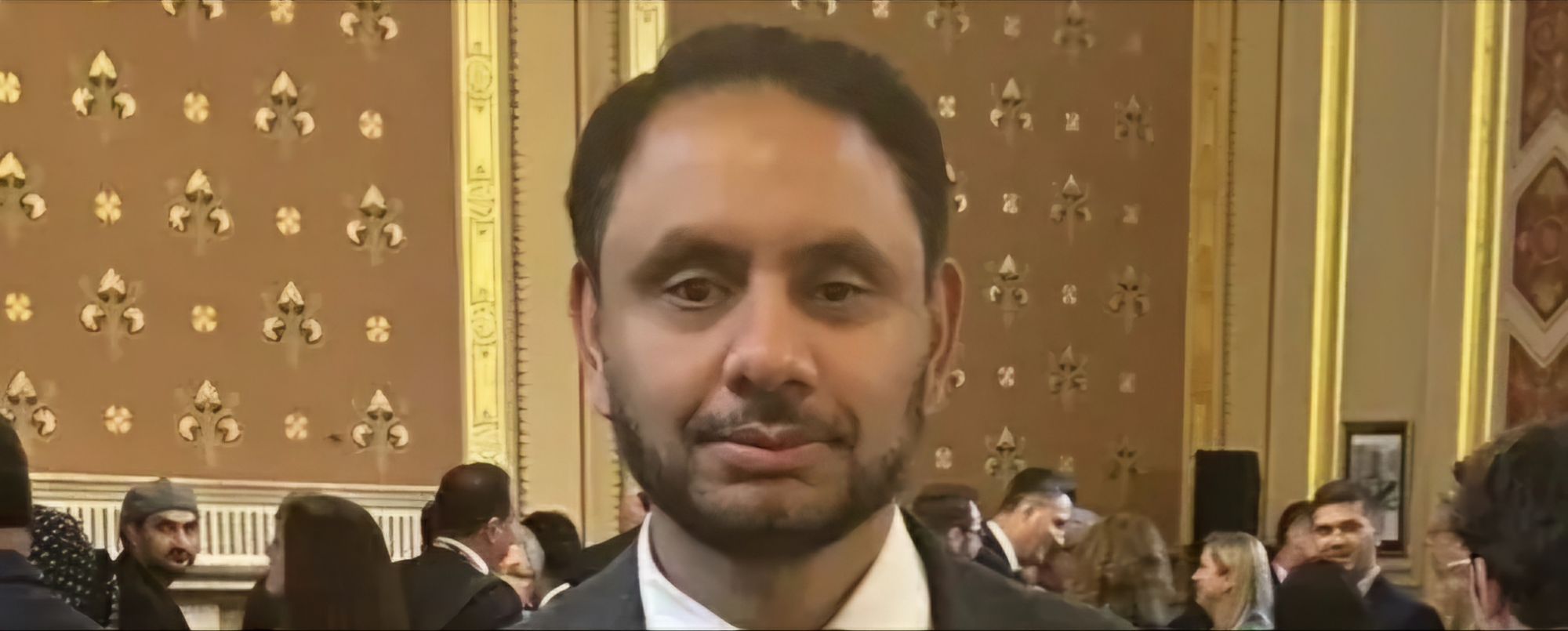




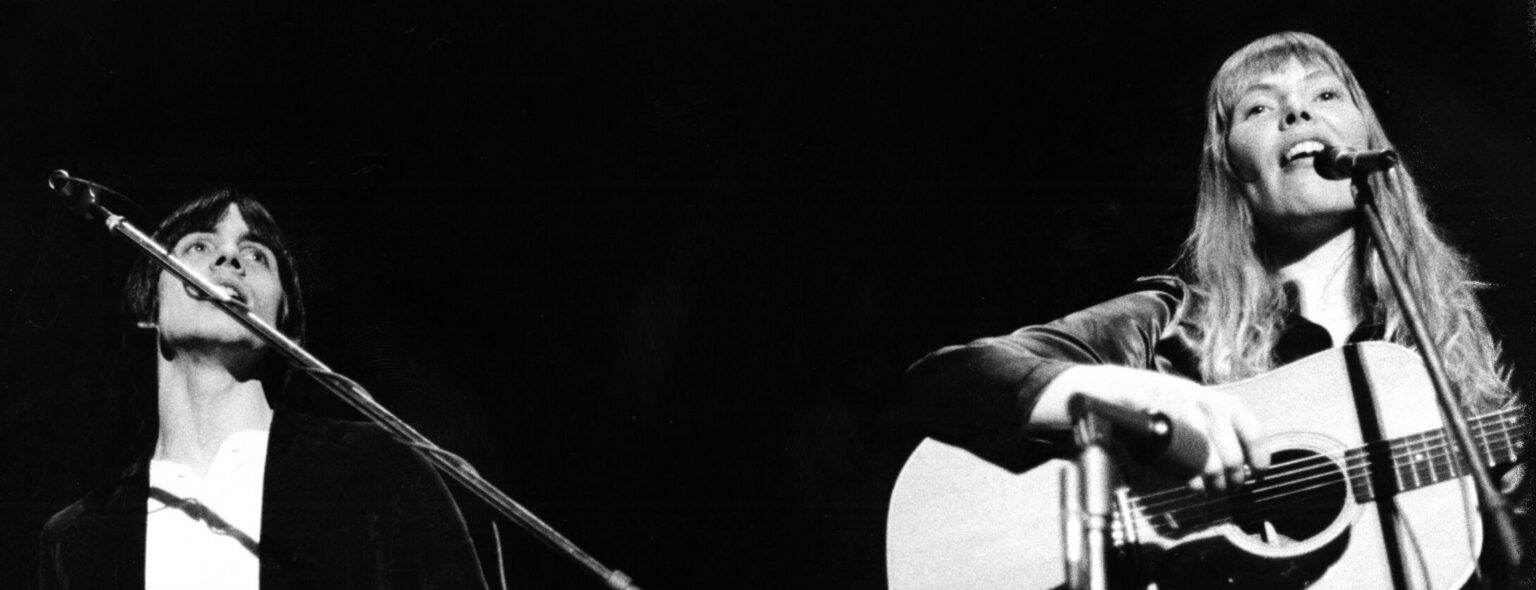

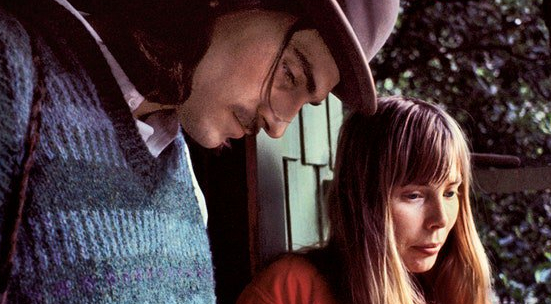

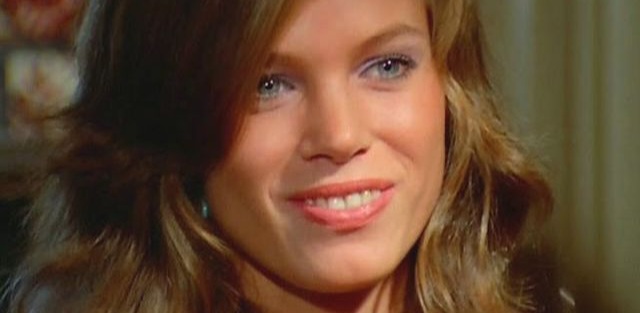


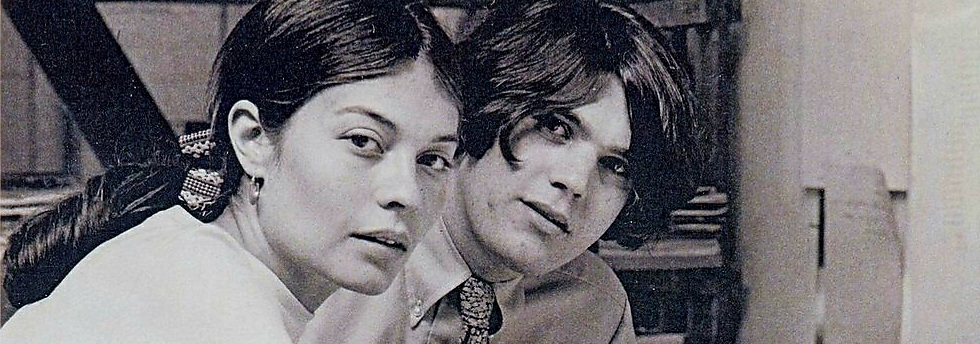

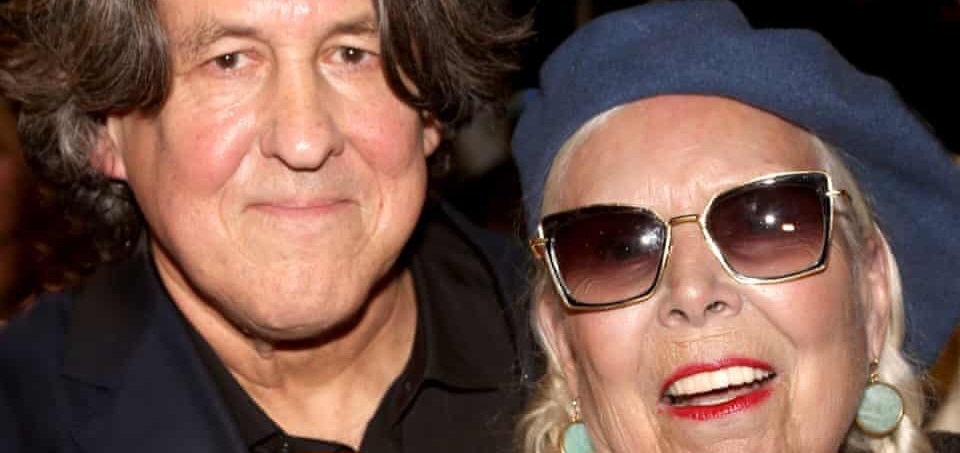
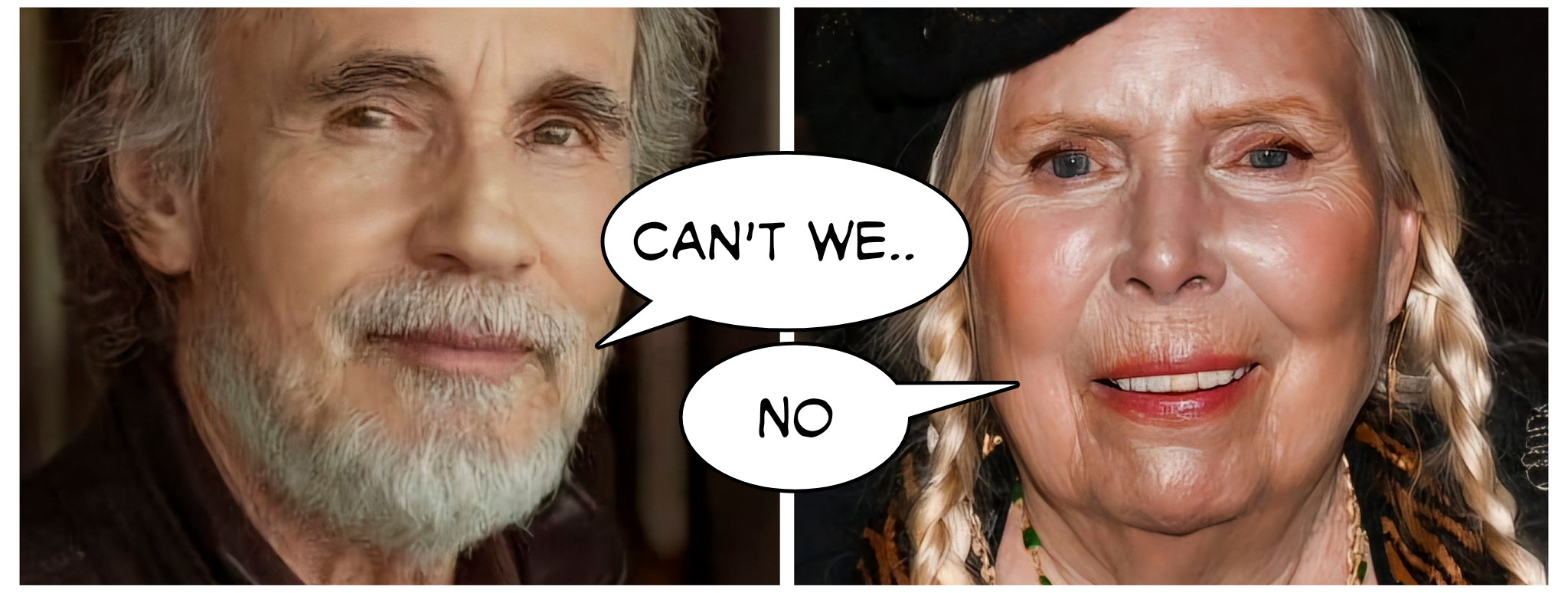


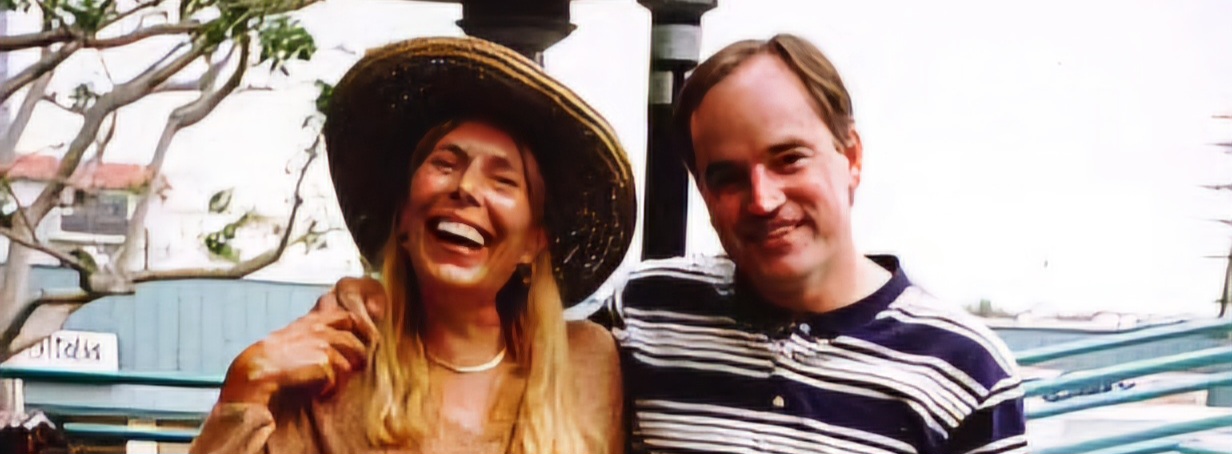
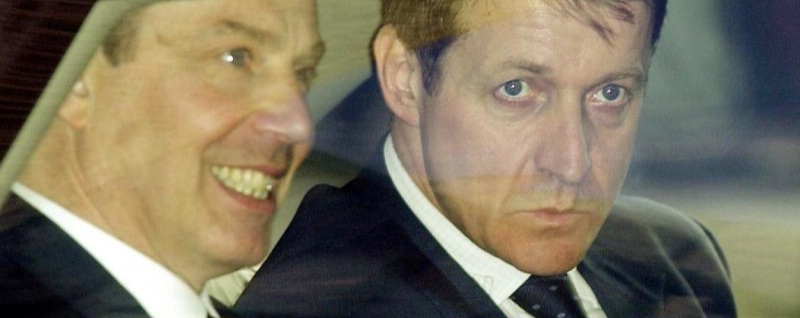
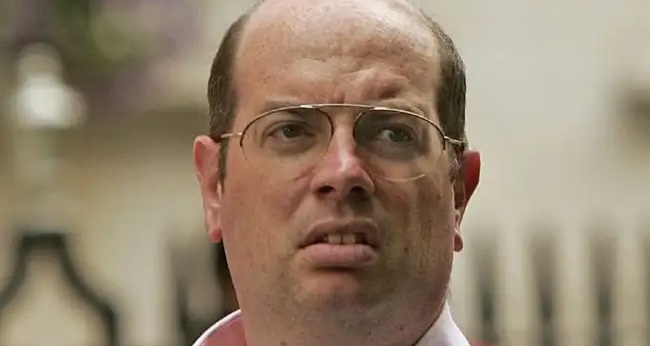



 soothfairy