Asian, Indian, Pakistani: what’s in a name?

Begun 2016 | 6,500 words | Contents

Q: Why do Britons with ethnic origins in the Indian subcontinent call themselves ‘Asian’?

A: It’s short for ‘South Asian’. Apparently. And it’s considered inoffensive.

UK Guardian letter, Dec 2022 (Chris Hughes)

Detail of illustration: 15 positions in 15 months of lockdown ’20-21 by Apoorva Singh


Asian, Indian, Pakistani – what’s in a name?

Top 🔺

Contents

Postscripts

  1. Nationalism and English racism
  2. It’s different in the US
  3. Guardian wrong shock
  4. Partition – don’t blame Jinnah

Comments


Asian, Indian, Pakistani – what’s in a name?

Contents 🔺

Preamble

A pre-ramble

Why am I, a white English man (hi!), writing this? Am I a closet racist, annoyed by having large numbers of brown-skinned people living here, and having to call them ‘Asian’? No. And yes.


Asian, Indian, Pakistani – what’s in a name?

Preamble 🔺

Meaningless abbreviation

Annoyingly wrong

Does ‘Asian’ annoy me? Yes. Call me a pedant – I suppose I am – but that’s why I started writing this post. It’s clearly wrong to identify your regional origin as ‘Asian’, but everyone says it as though it’s perfectly reasonable.

It’s apparently short for ‘South Asian’, but the abreviation to ‘Asian’ makes it annoyingly meaningless.

Some abbreviations are meaningful in context. For instance, the self-description ‘mixed’, used as an abbreviation for mixed race or mixed ethnicity, keeps the meaning. The abbreviation ‘mixed’ meaningfully describes that person’s ethnic identity.

But even when the context makes ‘Asian’ obviously an abreviation of South Asian, it remains annoyingly meaningless. The abbreviation ‘Asian’ doesn’t meaningfully describe that person’s regional or ethnic identity.

There’s no problem with naming the UK’s black Caribbean ethnic group. There’s been some debate about wording and hyphenation, but ethnic identity has always been clear from the name.

But there has been a problem with clearly naming and identifying the UK’s other main ethnic minority. The solution has been to use the politically correct but inaccurate name, ‘Asian’.

The phrase ‘political correctness’ may be a casualty of the culture wars but it survives, and – properly applied – protects minorities. So PC is OK by me – but the meaningless inaccuracy isn’t.

It’s been overlooked because ethnicity’s a sensitive issue. But what the hell – I’m going to look at it. Sensitively.


Asian, Indian, Pakistani – what’s in a name?

Preamble 🔺

Colour me anti-racist

Me and my id

Am I a closet racist? No. I’m an anti-racist and pro-immigration liberal. I support multiculturalism and diversity. My wife’s a Muslim with family roots in what’s now Pakistan.

However, I think we’re all unconsciously racist because of a redundant but revived evolved behaviour: an anti-stranger prejudice evolved to protect against communicable disease.

The ancient anti-stranger instinct was revived and twisted by white-supremacist colonialists, who – encouraged by ‘Enlightenment’ philosophers such as Immanuel Kant – viewed the darker-skinned people they subjugated as inferior.

(See my post, Racism explained as a redundant instinct.)

Differences in facial appearance and skin colour presumably enhance ‘strangerness’. That manifests as white-on-black prejudice (because racism is prejudice plus institutional power).

In the postcolonial world, institutional power is still held by the white West – and so is the associated prejudice against people of colour.

So I have racist feelings, based on an anti-stranger instinct twisted by colonial culture into colour prejudice – but I don’t want those feelings and there’s no justification for them.

Having acknowledged and understood those racist feelings, I choose not to indulge them but to live above them – and to oppose racism in others as best I can.


Asian, Indian, Pakistani – what’s in a name?

Preamble 🔺

They’re here because we were there

Home improvement

As for having large numbers of South Asian (and African) people living in Britain, it’s fine by me – they’ve livened things up no end. But not everyone thinks so.

Postwar mass immigration provoked widespread racism, unconscious in origin but consciously ‘justified’.

It’s a liberal’s quandary: if you speak about this, you can be accused of victim-blaming. But I’ll speak – or write – about it anyway.

Mass migration to the UK began in 1948 after World War Two when a patrician government, without consulting the people, enabled and encouraged large-scale immigration from some countries in the colonies and the Commonwealth.

This was said to be needed to rebuild Britain’s shattered economy and to boost falling population numbers.

Poignantly, many immigrants say they expected a welcoming atmosphere. Instead, they faced hostility, personal racism and an unofficial colour-bar, meaning, for instance, exclusion from lodgings, pubs and churches.

In the face of that racism, a pithy ripost emerged: ‘We’re here because you were there’ – meaning postwar mass immigration was a postcolonial phenomenon.

If the British people had been consulted and had agreed mass immigration was needed, and if both natives and immigrants had been better prepared for two-way integration, there might have been a more welcoming atmosphere.

Currently, 13% of people in the UK are black, South Asian or mixed-ethnicity.

Despite anti-racist progress, the racism that began 70 years ago persists and still blights the lives of many black and South Asian people.

But for anti-racist multiculturalist natives like me, the presence of postwar immigrants and their descendants has improved life in Britain immeasurably.


Asian, Indian, Pakistani – what’s in a name?

Preamble 🔺

The name of the rose 🌷

A thorny subject

In Shakespeare’s best known play, Romeo and Juliet, teenager Juliet is forbidden to see Romeo because of a family feud. He’s a Montague and she’s a Capulet. A frustrated Juliet exclaims:

    What’s in a name? That which we call a rose, by any other name would smell as sweet.

Juliet’s right, of course, to say a rose’s human-given name doesn’t affect its nature-given smell. But she’s wrong to suggest naming’s unimportant.

Her passionate plea disregards the problem of nominative versus universal names, as expounded by William of Ockham (he of Occam’s razor).

In what we call reality, there’s no universal flower. Real flowers have different smells. The significance of nomination is that the name of the flower and of its variety – the name of the rose (!) – indicates its unique characteristics, including its particular sweet smell.

Likewise, Romeo’s Montague heritage couldn’t be so easily dismissed. The differences indicated by the lovers’ family names had tragic consequences (albeit compounded by the play’s melodramatic chain of events).

So, what’s in a name? Quite a lot, actually…


Asian, Indian, Pakistani – what’s in a name?

Preamble 🔺

Say my name

The name’s Asian – South Asian | Image: Reddit user DocPBJ007

Naming of flowers (or families) is one thing – but naming of human ethnic groups is another matter. Why do they have to be named? We’re all human. Is it racist?

There are no human races, just human populations with differences which, apart from single-gene disorders, are genetically superficial.

Dodgy lyrics aside, Blue Mink were right: what we need is a great big melting pot. That’s happening – people are now ‘mixed’.

(That brings different naming issues. See my post, Is it OK to say ‘mixed-race’? No. But….)

But that mixing is only happening in relatively small numbers. In the UK (and elsewhere in the west) there are large ethnic minorities – with names.

UK post-immigration communities still face racism. So the names matter.

People might say, ‘Asian, South Asian – does it really matter?’ But it does matter.

‘Asian’ may be in widespread use, but it’s wrong. ‘South Asian’ is right, but it’s confusing – partly because so few people use it.

Preamble🔺


Asian, Indian, Pakistani – what’s in a name?

Contents 🔺

Introduction

A linguistic legacy of partition

British South Asian people call themselves ‘Asian’ when referring to their ethnic community, and when formally identifying their ethnicity.

They talk about ‘Asians’; and they voluntarily identify as Asian British or British Asian in ethnicity surveys used for the census and to monitor discrimination.

How did that start? It started because of two instances of clumsy colonialism: postwar mass immigration and the 1947 Partition of India.

Postwar mass immigration was made possible by the British Nationality Act 1948, which gave citizens of British colonies and the Commonwealth (a voluntary association of former colonies) the status of Citizen of the United Kingdom and Colonies, and recognised their right to work and settle in the UK and to bring their families.

This allowed the UK government to sponsor large-scale immigration to help rebuild the British economy and replace falling population numbers after WW2.

This typically clumsy piece of social engineering had many unforeseen consequences, one of which – the subject of this post – is that UK citizens with origins in the former colony of India ended up calling themselves ‘Asian’.

From 1948 onwards, many people from British colonies and former colonies answered the call and came to the UK. Many people came from the former colony of India.

But following the partition of India in 1947 (another – more tragic – piece of clumsy social engineering by the British), there’s been a problem with how people from that part of the world are described here in the UK.

Many UK citizens are of Pakistani, Indian or (since 1972) Bangladeshi origin. Before partition, they could all have been described as ‘Indian’.

But after partition, Pakistanis were offended if called Indian, Indians if called Pakistani, and Bangladeshis if called Indian or Pakistani. And Sri Lankans if left out.

The solution has been to use the name ‘Asian’. Call yourself ‘Asian’ if you want. But it’s just wrong. And using it could invite ridicule:

    What, you’re “Asian”? You from Asia then?


Asian, Indian, Pakistani – what’s in a name?

Contents 🔺

Asia’s a big continent

Some geography

image
Asia – a big continent

The obvious problem with people of Pakistani, Indian or Bangladeshi origin calling themselves ‘Asian’ is, of course, the absurd geographical and linguistic inaccuracy.

So, OK, ‘Asian’ in this context is clearly a careless contraction of the more accurate and occasionally used ‘South Asian‘ – but the contraction is annoyingly meaningless.

It’s not an abbreviation, carrying the meaning of the full expression – it’s just meaningless and wrong!

Asia’s a huge continent, stretching from Turkey to the eastern edge of Russia. With this careless contraction, three countries occupying about one twentieth of Asia’s land mass have, in effect, hijacked the name of the whole continent.

The geographic region of South Asia includes Pakistan, India and Bangladesh, as well as Sri Lanka, Bhutan, Nepal, Afghanistan and the Maldives. (There are quibbles: some say Iran is included; some say Afghanistan isn’t, it’s in West or Central Asia.)

The six geographic Asian regions are North Asia, Central Asia, East Asia, Southeast Asia, West Asia (confusingly, part of the Middle East) and South Asia.
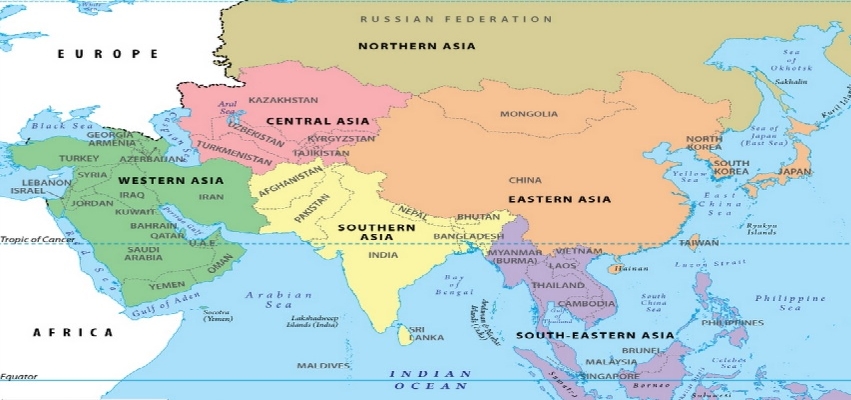
The six regions of Asia, including South (or Southern) Asia | Mapsofworld

‘South Asian’ has a tiresome extra word – but unlike ‘Asian’, it makes sense. It’s used in the UK mainly in the media* to mean Pakistani, Indian or Bangladeshi.

It’s not much used in everyday speech, except by a few politically correct pedants like me. It’s easier to say ‘Asian’, sure – but it’s meaninglessly inaccurate!

* UK newspaper the Guardian insists – wrongly – in spelling it ‘south Asian’ with a small ‘s’. See below.


Asian, Indian, Pakistani – what’s in a name?

Contents 🔺

From the Indian subcontinent

Some more geography

The main polite alternative to ‘Asian’ or ‘South Asian’ is ‘from the Indian subcontinent‘. This occasionally used phrase is geographically accurate but somewhat politically incorrect.

The Indian subcontinent is a geological entity: the terrestrial part of the Indian Plate, which separated from supercontinent Gondwana about 100 million years ago, drifted North and collided with Asia 55 million years ago. (The collision created the Himalayas.)
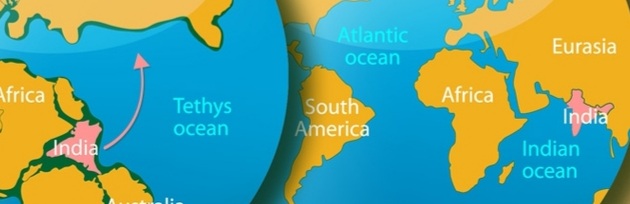
Drifted together – before and after | iStock

‘Subcontinent’ is a geographical term meaning subdivision of a continent – in this case Asia. It’s Asian now, innit.

Humans are thought to have arrived in the Indian subcontinent about 50,000 years ago.

The Indian subcontinent now homes the nations of Pakistan, India and Bangladesh, as well as Sri Lanka, Bhutan, Nepal, and the Maldives. It’s South Asia minus Afghanistan.

‘From the Indian subcontinent’ is more accurate than ‘Asian’ or even ‘South Asian’, and it’s useful when it might be unclear to say ‘South Asian’ (for instance in the Q&A, above), but it sounds clumsy, and can smack of Orientalism and empire.

A politically correct version of the name, the South Asian subcontinent, sounds equally clumsy. The simplified – and enigmatic – ‘from the subcontinent’ is cooler. Man.


Asian, Indian, Pakistani – what’s in a name?

Contents 🔺

Where are you from?

A microracist question

There’s an enhanced version of this section in a separate post.
Shutterstock

Where are you from 🔺

Introduction

Othering

Britons with brown or black skin are often asked, ‘Where are you from?’. British South Asian people can hardly say, ‘I’m Asian. I’m from Asia’. Nor are they likely to say, ‘I’m from South Asia‘.

How should South Asian people respond to that loaded question? It’s a social minefield.

A white Briton asking that question of a brown or black Briton who’s a stranger or casual acquaintance is a bad idea. ‘Where are you really from?’ is much worse.

Such questions are inconsiderately intrusive and, at best, microracist.

Unpicked – though the questioner might not consciously realise it – the question is likely to mean:

    Your skin colour and facial appearance suggests your ethnic origin isn’t north European. In which country are your family origins? Actually, though, I don’t really care where you’re from. My question is mainly rhetorical and microracist. I’m really just drawing attention to your otherness.

A 2022 high-profile incident involving a UK royal aide and a black British charity worker is a good example of this phenomenon.

Former royal aide Susan Hussey | Photo: Getty

The aide, ‘Lady’ Susan Hussey, widow of former BBC chairman ‘Baron’ Hussey, close friend of ‘King’ Charles, ‘Queen’ Camilla and the late ‘Queen’ Elizabeth, and godmother to heir ‘Prince’ William, resigned after the incident.

The incident supports Meghan Markle’s implied claim of racism in the royal household; and implies widespread casual racism amongst the ruling class.

If the question, as in that case, seems offensively rhetorical, the asker’s bluff can be called: ‘Why do you want to know?’


Where are you from 🔺

Not so easy to answer

It can get complicated

If the question seems genuine, and worthy of a helpful response, it might nevertheless be not so easy to answer.

For an answer to be accurate – and understood – both parties need good geopolitical and historical awareness. It can get complicated.

For instance, If a British person of South Asian appearance is known to be a Muslim, they might not be of Pakistani or Bangladeshi origin. Many UK Muslims have origins in the Indian state of Gujerat. (Almost one in five Indian people are Muslim.)


Where are you from 🔺

Kenya and Uganda

Out of East Africa

Many South Asian people came to the UK from Kenya and Uganda. South Asian communities were established before partition in East Africa and the Caribbean, mainly in Kenya, Uganda and Trinidad. They were there because of another piece of clumsy and careless social engineering by the Brutish Empire: indentured servitude.

Between 1834 and 1917, many people were induced to move from India to other colonies as indentured labourers for the empire. Unsurprisingly, the conditions were harsh and the wages low. The workers were derogatively called ‘coolies’.

Indian indentured labourers, seeking to escape the poverty and famine frequent during colonial rule, came mainly from the Punjab and Bengal regions (both later severed during partition).

On completing their indenture, some stayed on in Africa or the Caribbean. They were joined by family members and formed thriving expatriate communities, albeit protected by the brutal stranglehold of empire.

After those colonies gained independence, many South Asian residents moved to the UK. Those in Uganda were famously expelled by Idi Amin. In Kenya, harsh changes to citizenship rules prompted mass voluntary emigration.

Those UK immigrants, whilst identifying by religion, often also identify by their diaspora community. For instance, people may identify as Kenyan Muslims.

My South Asian Muslim wife, when asked ‘Where are you from?’, sometimes says ‘Nairobi’. Her ethnicity is Punjabi but she was born in Kenya and spent her childhood there.

The person asked that question could give an informative reply, such as:

    My family origins are Punjabi Muslim in what’s now Pakistan. In the late 1800s my grandfather went from the Punjab to work in what’s now Kenya. Our family lived there before coming to the UK in the late 1960s.

They could summarise it: ‘Pakistan’. But the question is more likely to provoke a passive-aggressive and deliberately obtuse reply, such as, ‘I’m from Leicester – where are you from?’ (or the deliberately annoying ‘from my mother’s womb’).


Where are you from 🔺

Why are you here?

Racism is never far below the surface

The question ‘Where are you from?’ might seem like casual curiosity framed as a friendly enquiry, but it’s microracism – at best.

To unpick it further, behind that innocent-seeming question – though, again, the questioner might not consciously realise it – lies a worse one: ‘Why are you here?’

The questioner might therefore reasonably be told to fuck off, or be given the pithy retort that emerged from antiracist immigrant activism:

    If you’re asking why I’m here, we’re here because you were there’.


Where are you from 🔺

Why don’t you go back there?

Racism is never far below the surface

The hidden question, ‘Why are you here?’ at least offers the possibility of debate and reason; but behind that lurks the racist rhetorical question: ‘Why don’t you go back there?’

For postwar immigrants to the UK and their descendants, such racism is never far below the surface.

Note: My post Racism explained as a redundant instinct suggests racism is a redundant anti-stranger instinct revived and twisted by colonialism and postcolonialism – and, sadly, provoked by the postwar mass immigration carelessly engineered by a patrician government. We anti-racists choose to reject and oppose that twisted impulse and to embrace our brilliant multicultural society.


Where are you from 🔺

White Brits: don’t ask

It’s rude

Considerate white Brits, whether aware of all that or just wary of the social minefield, don’t ask that awkward question, ‘Where are you from?’

And if they need to refer to the ethnicity of someone apparently having origins in the Indian subcontinent, they’ll usually follow the (inaccurate) convention of referring to such people as ‘Asian’.


Where are you from 🔺

Conclusion

Don’t answer

If I was a British person of colour asked by a white person, ‘Where are you from?’, and the question seemed intrusive, I’d want to challenge it, but it in a non-hostile way.

I’d initially bat it back by – politely – saying, ‘How do you mean?’ If they indicated they were asking about my ethnic origin rather than my place of residence, I’d ask – still politely, if possible – ‘Why do you want to know?’

The questioner might well find it difficult to explain themselves. Serves them right.

British people of colour people also ask the question, ‘Where are you from?’ of each other. The purpose is to find out the other’s origins: their country, religion, region, town, and caste or class.

That’s a different can of worms – and it doesn’t excuse white Brits asking that question. As always, context is crucial. The context is the white west and – as always – racism is prejudice plus power.

Where are you from 🔺


Asian, Indian, Pakistani – what’s in a name?

Contents 🔺

When did it start?

A brief history

The convention of calling people from India, Pakistan or Bangladesh ‘Asian’ apparently began in the 1950s and became widespread in the UK after the launch of the BBC Asian Network radio station in 1989.

A PHD thesis, Connecting with new Asian communities: BBC Local Radio 1967-1990 (2019) by Liam McCarthy, University of Leicester, gives several contemporaneous examples of ‘Asian’ from 1960 to 1990.

McCarthy’s thesis includes a photo of a 1960 Radio Times of Kenya page showing an Asian National guide.
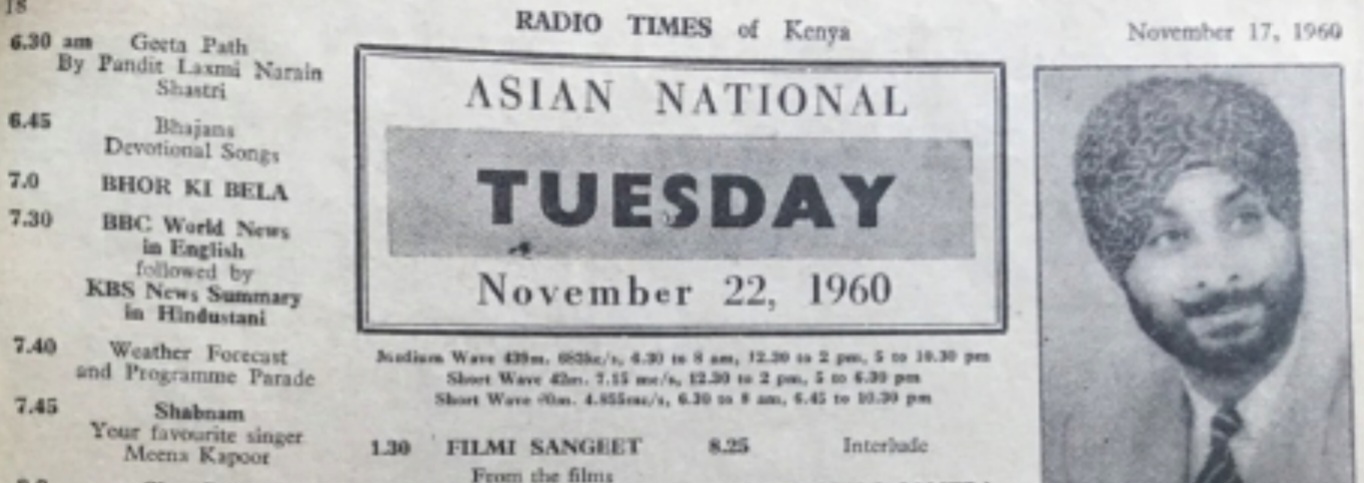
Photo: Liam McCarthy

British colony Kenya was home to a large South Asian community. The Kenyan Asian National radio service apparently ran from the 1950s to the late 1960s.

Most examples of ‘Asian’ in McCarthy’s thesis, dating from the 1960s to the late 1980s, are from BBC documents and radio programme names. However, a Leicester vox pop example from 1975 shows there was also some common usage during that time.

In 1989 the use of ‘Asian’ became more widespread after the BBC launched its Asian Network radio station to provide:

    ‘…speech and music output appealing to British Asians’

    My bolding

Asian Network’s music was specified as being from Pakistan, India, Bangladesh and Sri Lanka.

By 1995, the Guardian newspaper was using both ‘Asian’ and ‘South Asian’ in this context. (However, the Guardian bizarrely insisted – and still does – on spelling the ‘South’ in ‘South Asian’ wrongly – with a small ‘s’. See below.)

In 2001, the UK census first used ‘Asian’ in this context, with the heading ‘Asian or Asian British’. The options were Indian, Pakistani or Bangladeshi (and, confusingly, ‘Any other Asian background’).

Since the late 1970s, UK police identity codes known (tautologically) as IC codes have been used to identify over radio the apparent ethnicity of suspects and victims. Currently, IC4 is ‘Asian’, meaning people apparently of Indian, Pakistani or Bangladeshi ethnicity.

So, although ‘Asian’ became more widespread after 1990, it’s apparently been in use since the 1950s, close to the causation point: the 1947 partition of India.

(If anyone knows how it arose in the first place – presumably in the early 1950s – please tell me.)


Asian, Indian, Pakistani – what’s in a name?

Contents 🔺

Don’t call me ‘Asian’

But resistance was useless

‘Asian’, meaning from India, Pakistan or Bangladesh, has been in widespread use since 1989 – but there’s been some resistance.

A 2002 Asian Network poll found most UK South Asian people disliked being called ‘Asian’. A Guardian report on the station and its poll said South Asian people would prefer to be described by their country of origin.

Description by country of origin would work on self-identification forms, but there’d be difficulties with how South Asian people are referred to by others. (How would people know, without asking that toxic question: ‘Where are you from?‘)

Also, the three main South Asian communitiesIndian, Pakistani and Bangladeshi – aren’t the same. (They campaign for the differences to be understood.) But how should they be referred to collectively when necessary?

Apparently, some people of Pakistani origin said they’d rather be called ‘Indian’ than ‘Asian’ – because that would at least convey a regional cultural identity.

(Some young people of Pakistani origin use ‘Indian’ with deliberate irony to mean anyone or anything from either India or Pakistan. See below.)

However, in spite of such understandable reservations, UK South Asian people, presumably aware of the difficulties for all concerned (and perhaps subconsciously yearning for subcontinental unity), seem mainly willing to accept the collective ‘Asian’ identification.


Asian, Indian, Pakistani – what’s in a name?

Contents 🔺

It’s Indian, innit

The yoof of today

Not long ago, Pakistan was India, and some British people – lazily or nostalgically – still think of ‘India’ as the name of the region. So the most likely way to cause offence (now the racist P-word has become as unacceptable as the N-word) is to inadvertently call someone who happens to be of Pakistani origin ‘Indian’ or vice versa.

However, young UK people of Pakistani origin often use ‘Indian‘ themselves – knowingly ironically – when referring to anyone or anything from either India or Pakistan, as in the catchily assonant (and internally alliterative) meme, ‘It’s Indian, innit‘ (optionally said with a culturally appropriated Jamaican rudeboy accent).

It’s probably best not to try this if you’re not young and South Asian – or West Indian (!) (It’s complicated, innit, postcolonial, geopolitical cross-cultural urban slang.)


Asian, Indian, Pakistani – what’s in a name?

Contents 🔺

Asian English, anyone?

Apparently not

Do UK South Asian people living in England ever identify as Asian English, or do they prefer ‘Asian British’?

In 2014 researchers found most South Asian people in Scotland preferred to be known as ‘Scottish Asian’ rather than ‘Asian British’. They also found minority groups are more likely to claim a Scottish identity in Scotland than an English identity in England.

I’ve never come across anyone identifying as Asian English – and Googling it gives no relevant results. Does a person living in England and identifying as Asian British, who’s family roots are in, say, Pakistan, understandably think of themselves as Pakistani rather than English?

There’s one good reason for British South Asian people to avoid Englishness: it’s been tainted by association with anti-immigrant groups.

Far-right, racist, nationalist groups have claimed to defend England against Islam and other immigrant cultures.

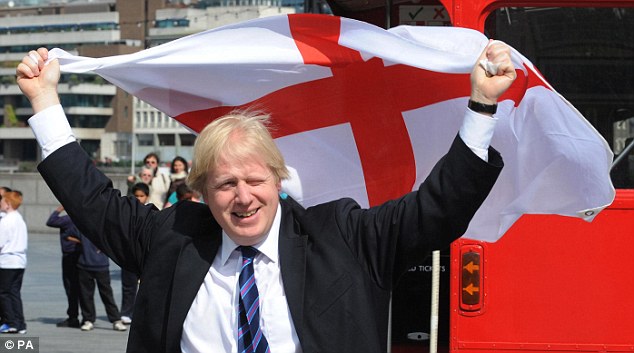
The previously little-used English flag, the red cross of St George (a not-very-English Roman soldier of Turkish-Greek origin serving in Palestine), has been hijacked by the racist Right.

The current widespread use of the English flag in support of the England football team – you don’t see it in photos of England’s 1966 world cup victory – might well cause concern in immigrant communities.

1966 – plenty of racism then, but no St George flags / PA

The UK ‘Union Jack’ flag as shown above was used in the logo of racist party the National Front. The NF, big in the 1970s, has all but disappeared. Current racists groups favour the red-cross English flag.

Perhaps British South Asian people do well to steer clear of the complicated issue of Englishness. It’s probably best left to the indigenous English.


Asian, Indian, Pakistani – what’s in a name?

Contents 🔺

Postscript 1

Nationalism and English racism

Engerland the fatherland

Research shows British South Asian people are unlikely to claim English identity. One possible reason is that Englishness has been hijacked by flag-waving nationalist neo-Nazi groups.

Those groups have freely used the provocative Crusader red cross of the ‘St GeorgeEnglish flag in their campaigning, and have claimed to ‘defend’ England against Islam and other immigrant cultures.

Nationalist racists began organising against Jews in the 1930s, and were later keen to exploit the tension which followed postwar mass immigration to the UK.

That immigration, ordained for economic and demographic reasons with no consultation and no concern for the social wellbeing of immigrant or host communities, inevitably disturbed the locals. There was widespread racism.

The far right tried to exploit that, with some limited success – the National Front was quite big in the 1970s – but it’s never had much support in the phlegmatic UK. Enoch Powell was wrong.

Powell’s notorious 1968 ‘rivers of blood’ speech warning of mass civil disturbance was false prophecy. Powell quoted a Roman poet foreseeing the River Tiber ‘foaming with blood’, but – despite occasional ‘race riots’ caused by racist injustice – there’s been no foaming of blood in the UK.

Thanks to common sense and goodwill, and to anti-racist campaigning and legislation, most citizens of all ethnicities have accepted a pragmatic mixture of multiculturalism and integration.

There’s been talk recently, in the face of illiberal teaching in some segregated faith schools, of promoting British values – but the values prescribed aren’t exclusively ‘British’. They’re the European Enlightenment values that underpin modern liberal democracy.

The solution to segregation is not for immigrant communities to be made to somehow acquire ‘Britishness’ – it’s for those communities to stop self-segregating. Britishness is what happens when you live here without segregating yourself.

If there are ‘British values’, one of the best, ironically, is a stoical indifference to national pride and flag-waving patriotism. (See my post, Patriotism – for scoundrels.)

There was a disturbing spike in racism following the UK’s EU referendum in 2016 (in effect, the UK’s first public consultation on immigration) but younger people generally seem far less racist than previous generations.

Despite that lessening of inter-ethnic tension, black and South Asian Britons continue to face prejudice and discrimination, both personal and institutional.

The Black Lives Matter movement raised awareness of that conscious and unconscious racism, and has encouraged antiracists to speed up the UK’s slow progress towards ending racism.

Apart from the Saudi-exported Salafi self-segregation practised by some UK Muslims (which damages women and children and provokes racism), multicultural England doesn’t need defending against immigrant cultures – it’s made of them.

Racist nationalists who claim to defend England can shove their flags, and crawl back under their stone.

Nationalism: a rant

It’s natural to feel affection for your country, but nationalism, with its flag-waving banality and its dangerous, narrow-minded ideology is an unnatural abomination.

The danger of nationalism is shown by the murderous religious conflict in India associated with the rise of populist prime minister Narendra Modi, his Hindu nationalist BJP party and the Hindu nationalist RSS paramilitary group he belongs to.

(The RSS also operates internationally, promoting its Hindu-supremacist ideology, Hindutva, to the Indian Hindu diaspora. See my blogpost about the 2022 Leicester riots, The riots: Hindutva in Leicester.)

Globally, the nation state’s had its day. The big states are powerful but can’t stop global warming. The so-called United Nations is toothless – it helps victims but pussyfoots with perpetrators.

To right nationalism’s wrongs – environmental destruction, poverty, corruption, disease and war – what the world needs now is love, tough love: transnational federated World government. With teeth.


Asian, Indian, Pakistani – what’s in a name?

Contents 🔺

Postscript 2

It’s different in the US

‘Asian’ the American way

Left: Asian woman, UK. Right: Asian man, US | Getty Images

In the UK, ‘Asian’ is used to refer to anyone apparently of South Asian ethnicity. However, in the US, ‘Asian’ refers to people of East Asian ethnicity. This avoids offending Japanese people by calling them Chinese, and vice versa. As with Pakistan and India, there’s historical enmity between the two countries.

‘Asian’ in the US – as blatantly inaccurate as the UK version – is apparently a careless contraction of ‘East Asian’. The geographic region of East Asia includes China and Japan as well as South Korea, North Korea, Taiwan, and Mongolia.

In the UK, ‘Asian’ and ‘Asian British’ mean the same: South Asian. But in the US, ‘Asian American’ has a more formal and broader meaning than ‘Asian’ – it means having ethnic origins in one of three Asian regions: South Asia, Southeast Asia or East Asia.

(Southeast Asia is Myanmar, Thailand, Laos, Cambodia, Vietnam, Malaysia, Singapore, Indonesia, Brunei, the Philippines and East Timor.)

‘Asian American’ and ‘Asian British’ are both carelessly innacurate, perhaps reflecting imperialist arrogance.

‘Asian British’ excludes the five other geographic Asian regions. ‘Asian American’ is slightly less innacurate, only excluding three Asian regions.


Asian, Indian, Pakistani – what’s in a name?

Contents 🔺

Postscript 3

Guardian wrong shock – it should be ‘South Asian’ with a capital ‘S’

Welcome to Pedants Corner


Asian, Indian, Pakistani – what’s in a name?

Guardian wrong shock 🔺

What they do

Never do what they do

The centre-left Guardian, the UK’s most-read quality daily newspaper, bizarely insists on writing ‘south Asian’ with a small ‘s’, as in this 2021 headline:

    Gene common in south Asian people doubles risk of Covid death, study finds

However – shock, horror – the Guardian‘s got it wrong. It should, of course, be ‘South Asian’ with a capital ‘S’.

This isn’t one of the ‘typo’ errors the Guardian used to be famous for (giving it the nickname the ‘Grauniad). The paper has deliberately printed ‘south Asian’ with a small ‘s’ since it first started using the epithet a few decades ago. (See, for instance, this 1993 article.)

It’s not just an issue of grammar. The Guardian‘s idiosyncratic lower-case ‘s’ effectively demeans South Asian people. That’s clearly not the liberal Guardian’s intention – but it’s the inevitable effect of the paper’s grammatical anomaly.

I’m a long-time Guardian reader, but I only recently noticed the ‘south Asian’ spelling. I turned to the A-Z Guardian style guide, normally a shining beacon of omniscient clarity – but it was disappointingly flawed.

The Guardian style guide had no entries for ‘Asian’ or ‘South Asian’. This was a surprising omission by a liberal paper (rightly) championing multiculturalism. ‘South Asian’, meaning Indian, Pakistani or Bangladeshi, is a sensitive, circuitous, polite, and politically correct element of multiculturalism. Its use in the Guardian deserves a clear explanation.

The main problem, however, is the Guardian‘s bizarre insistence on spelling ‘south Asian’ with a small ‘s’.


Asian, Indian, Pakistani – what’s in a name?

Guardian wrong shock 🔺

Why they do it

Why? Bad reasoning

I complained to the Guardian about their ‘south Asian spelling. In reply, they quoted this, from the style guide G section:

    geography
    distinct areas are capped up: Black Country, East Anglia, Lake District, Midlands, Peak District, Potteries, West Country, etc; but areas defined by compass points are lc: the north, the south-east, the south-west, etc.

This is nonsense as an explanation for their ‘south Asian’ spelling. Defined geopolitical areas such as South Asia are ‘distinct areas’. They’re not ‘areas defined by compass points’ – the compass point is part of their proper name.

The Guardian style guide S section has several entries beginning ‘south’. For ‘South America’, the compass-point element is capitalised, but for ‘south-west England, the south-east, south Wales, etc’, it isn’t.

According to geographic definition, there are six geopolitical Asian regions (see above):

  • South Asia
  • East Asia
  • Southeast Asia
  • North Asia (sometimes included in Europe)
  • West Asia (part of the Middle East)
  • Central Asia

Only two Asian regions are mentioned in the Guardian style guide. The guide’s E section gives ‘east Asia’ and ‘south-east Asia’.

The Guardian rule seems to be that capitals for compass-point elements are allowed in the names of Guardian-defined ‘distinct areas’ (eg East Anglia) or continents (eg South America) but are denied in the names of ‘areas defined by compass points’, (eg, the north).

That denial is apparently extended to major geopolitical regions with a compass-point element in their name (eg ‘south Asia’).

According to its own fuzzy logic, the Guardian should consistently spell the names of all Asian regions the same way. However, in the section heading shown below, ‘Central Asia’ is spelt correctly – with a capital ‘C’!


Edit July 2022: They’ve ‘corrected’ it! FS…
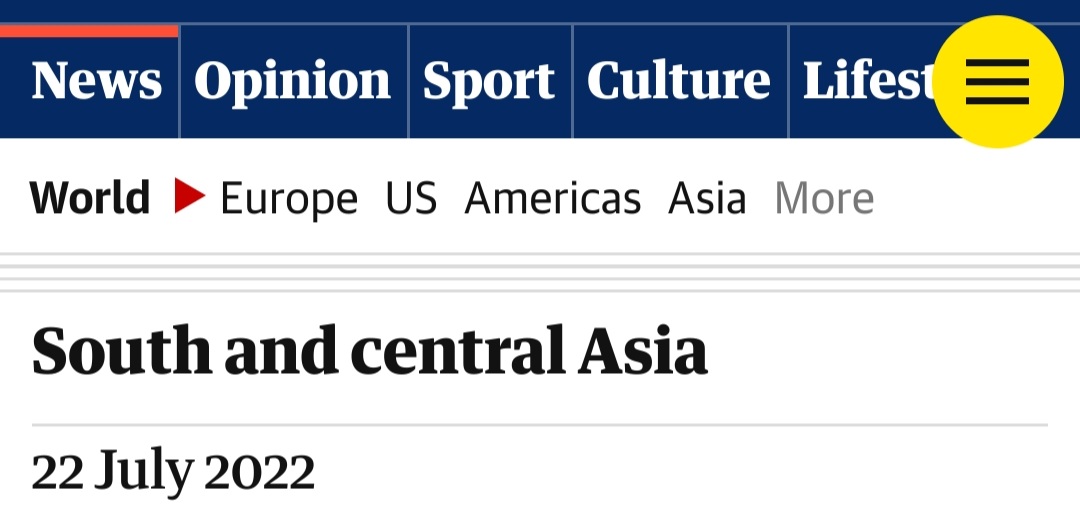

Asian, Indian, Pakistani – what’s in a name?

Guardian wrong shock 🔺

Why it’s wrong

Wrong, wrong, wrong

It’s probably pointless (geddit?) to explain why the Guardian‘s wrong to write ‘south Asian’ with a lower-case ‘s’, so here goes nothing.

All major broadcasters and publishers, including Gov.uk, the BBC, Wikipedia and National Geographic, write ‘South Asia’ with a capital ‘S’. They give proper-name status to all such major geopolitical regions.

  • Gov.uk’s style guide has no entries for ‘Asian’ or ‘South Asian’, but the website uses capital ‘S’ throughout for South Asia.
    Gov.uk article title:

    Overcrowding in South Asian households: a qualitative report

  • BBC News style guide, S section:
  • ‘South Asia, ie both words are always capped’

    BBC programme title:

    The South Asia nuclear standoff

  • Wikipedia style manual, capitalising – compass points:
  • ‘Points of the compass…are capitalized…when they form part of a proper name…If [a region] is consistently capitalized in reliable sources…then the direction word in it is capitalized’

    The Wikipedia entry for South Asia capitalises both words throughout.

  • National Geographic style manual, Asia:
  • ‘South Asia: Capitalize’

    National Geographic article headline:

    A water crisis looms for 270 million people as South Asia’s glaciers shrink

Everyone else also apparently disagrees with the Guardian. I googled ‘south asian’, and in the first five pages of results, all instances except two – a total of 44 (disregarding those where ‘South Asian’ began a sentence) – were spelt with a capital ‘S’. The two exceptions were from the Guardian.

The Guardian prides itself on its independence, but this looks like a bad case of They Were All Out of Step But Jim (as in the humorous American World War I song).

The Guardian style guide is instructively unhelpful. Its C section, under ‘capitals’, lists sixteen ‘main principles’ for its policy of minimising the use of capitals – but there’s no principle listed for capitalising regions such as South Asia.

The guide’s G section, under ‘geography’ (see above), does at least address the issue. It allows capitals for ‘distinct areas’ (such as, apparently, East Anglia) but denies them for ‘areas defined by compass points’.

The Guardian apparently puts South Asia in the latter category. That’s nonsense. If East Anglia qualifies as a ‘distinct area’, then surely South Asia does – it’s a major geopolitical region comprising eight countries (see above); and ‘South Asian’ is used in the UK media to mean Pakistani, Indian or Bangladeshi.

Geographically and politically (in either sense), South Asia clearly deserves proper-name status – as do all Asian regions. Proper names should, of course, be capitalised.

The Guardian‘s current minimal-capitals versions, ‘south Asia’ and ‘south Asian’, lack definition. They’re not proper names – they’re effectively vague and vacuous. The reader might understandably wonder what part of Asia is being referred to.

If I were South Asian (in the UK sense of having Pakistani, Indian or Bangladeshi ethnicity), I might well feel – perhaps subliminally – somewhat downgraded and mildly insulted. (Is that what you want, Guardian? ‘Cause that’s what’ll happen.)

The Guardian style guide section on the use of capitals says:

    We aim for coherence and consistency, but not at the expense of clarity

Clarity requires ‘South Asian’ to have a capital ‘S’ – and so does history. The Guardian, liberal flagship of the British media, should consider that the need to use a regional name as a collective proxy for British South Asian people arises from the British-organised partition of India.

If the Guardian were to fall in line with all other media and give proper-name status to South Asia, it’d be a small measure of historical restitution – and a large measure of common courtesy.

I love the Guardian, but they’ve got this wrong.


Asian, Indian, Pakistani – what’s in a name?

Guardian wrong shock 🔺

Hi ho, silver lining

A glimmer of hope

When I asked the Guardian about this, their response, in quoting their style guide entry on geography (see above), was – perhaps predictably – dismissively and obtusely defensive.

However, in response to my point that the Guardian style guide should have an explanation of the use of ‘South Asian’ to mean Indian, Pakistani or Bangladeshi, they said they might consider adding ‘a specific entry for south Asia’.

That was begrudging – and stubbornly ungrammatical – but it was a start.

However, it was also an end. They haven’t changed the spelling – and they haven’t added ‘a specific entry for south Asia’. Hi fucking ho.

Guardian wrong shock 🔺


Asian, Indian, Pakistani – what’s in a name?

Contents 🔺

Postscript 4

Partition – don’t blame Jinnah

Another brief history

We say ‘Asian’, meaning South Asian, because people of South Asian ethnicity might be ‘from’ India, Pakistan or Bangladesh (formerly East Pakistan).

Pakistan was created in 1947 by the devastating partition of India, Britain’s clumsy and careless division of two Indian provinces, the Punjab and Bengal, which inevitably led to the violent deaths and forced relocation of millions of people.

The perfidious British rulers were mainly to blame for the partition disaster – but who else was to blame? Was it Muslim leader Muhammad Jinnah?

It’s often assumed partition happened because Jinnah insisted on a Muslim nation. Jinnah’s Muslim League did vote for separation in 1940, but that’s not the whole story.

Jinnah, a secular leader, was determined to protect Muslims from political isolation. His preference was for a federated India, but that idea was blocked by Indian National Congress leader Jawaharlal ‘Pandit’ Nehru, leaving Jinnah no choice but separation.

That’s a shame – it could have been the USI, with the Punjab and Bengal as multicultural federal states instead of being ripped apart by partition.

Saying ‘Asian’ or ‘South Asian’ is a small reminder of that big tragedy. When remembering it, however, don’t blame Muslim pragmatist and man of principle Jinnah.

Blame the real villain: Hindu nationalist and colonial colluder Nehru.

    Blame poisons the blamer
    The cure is justice
     Lao Tzu

The End
Contents 🔺

Please feel free to comment
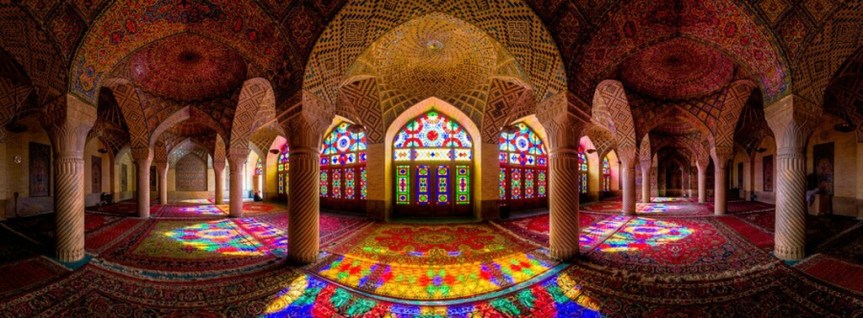
Fear of Islamophobia

In which I write a robust, generalised, secular humanist critique of Islam in the UK without being Islamophobic

image
Nice art – shame about the self-segregation Photo: Mohammad Reza Domiri Ganji

Warning: the following article contains strong opinions. Devout Muslims of simple faith may wish to move along; anyone else, please read on…

Am I Islamophobic, frightened of Islam? If I believed the many rabid anti-Islamic websites out there, saying that Muslim immigration is a Trojan horse, about to destroy democracy, I probably would be. But I dont; and I’m not.

Meanwhile, back in the real world, here in the UK, I’ll explain why I don’t much like Islam as it is at the moment; and how that doesn’t make me Islamophobic.

Fact: Oil-rich Saudi Arabia spends billions of dollars on the international promotion of Wahhabism/Salafism, widely recognised as one of fundamentalist Islam’s most extreme movements. Much of the money funds children’s education in British faith schools and mosques.

Fact: A headteacher friend told me that in her mainly-Muslim state primary school the day after 9/11, Muslim children were singing pro-Osama bin Laden chants.

Fact: There were demonstrations in London by Muslims against the war in Iraq and against offensive cartoons, but there have been no demonstrations against al-Qaeda or Isis. PR statements of condemnation and claims that Islam is a religion of peace are made, but Muslims have not accepted any responsibility for the brutal terrorism coming from within their religion. Many Muslims resort to elaborate conspiracy theories or blame foreign policy to justify denial.

Fact: A UK opinion poll has indicated significant support amongst Muslims for young Muslims who leave the UK to join fighters in Syria. Another poll showed that a significant number of UK Muslims believe the 2005 7/7 London bombings were justified because of the west’s war on terror.

Does writing those things in a blog make me Islamophobic?

Fact: Muslims are taught that they shouldn’t live in a non-Muslim country, but if they do, they shouldn’t befriend non-Muslims. (Actually, despite being a native non-believer – I’m agnostic – I find UK Muslims friendly. But the teaching is there.)

Fact: A religious message has been circulated calling for Muslims to foster or adopt refugee Muslim orphans to save them from the ‘alien environment’ of non-Muslim homes. (Many ‘alien’ non-Muslims had come forward, but very few righteous Muslims had done so.)

Is it Islamophobic to say those things?

Fact: According to supposedly reliable contemporaneous reports, the prophet Muhammad at the age of 54 began having penetrative sex with a nine-year old girl, who’d been his ‘wife’ since the age of six.

Islamophobia?

The accusation of Islamophobia is the knee-jerk defensive response by Muslim spokespeople to any criticism of Islam. This is like the accusation of antisemitism made in response to any criticism of Israel or Zionism. (See my blog on the weird word ‘antisemitism‘.)

Words matter. As a critic of Islam, am I Islamophobic? The suffix ‘phobia’ can mean ‘aversion’, but it’s usually taken to mean ‘irrational fear’ (as in ‘claustrophobia’, meaning fear of enclosed spaces). The widespread use of the word ‘Islamophobia’ deflects criticism. Critics must be either irrational or fearful or both, so they can be ignored. Say the magic word, and the criticism doesn’t need to be addressed.

Am I irrationally frightened of Islam? We all could be rationally frightened of Islam, after the horrors of 9/11 and 7/7. (I say ‘we all’, because some of the victims were Muslims.) But personally, in spite of that, I’ve got no fear of Islam – rational or irrational – or of Muslims in general. So no, I’m not Islamophobic.

Anti-Islamic‘ is better than ‘islamophobic’, but that’s not quite right either for a liberal critic of Islam. What if you don’t like Islam as it is, but you’re not actually against it? There should be a suffix or prefix for ‘dislike it as it is at the moment’ – but there isn’t.

There’s a long-term grumbling undercurrent in the British host community of semi-coherent resentment of the post-war immigration project. The sudden influx of large numbers of foreign people, many with foreign languages and religions, was a shock.

If the host community had been consulted and had agreed to mass immigration, there might gave been a more welcoming and trusting environment, which might have made integration more successful.

(My post, Patriotism – for scoundrels addresses the current policy of trying to promote integration by teaching ‘British values‘ in schools.)

When resentment and distrust are aimed at Muslims, as they sadly often are, ‘Islamophobia’ is as good a word as any to describe it. But it won’t do as a blanket response to any criticism.

Openly anti-Islamic racist groups in the UK and Europe try to stir up fear of Islam, but fortunately they have little support in the UK. However, any western criticism of Islam inevitably risks conflation with racism. Most UK Muslims are of Pakistani or Bangladeshi origin and are therefore, like all immigrant communities, victims of racism.

Victimhood can become a bad habit – hence, perhaps, the over-use of the provocatively misleading word ‘Islamophobia’ – but the victims aren’t to blame. As the Archbishop of Canterbury has said, racism is deeply embedded in British culture. Liberal critics of Islam should tread lightly.

(Racism is a different – albeit, related – subject, with its own deep-rooted complexity. See my post Racism explained as a redundant instinct, which includes a detailed account of the racism-provoking self-segregation practised by a large minority of UK Muslims.)

Is there such a person as a moderate Muslim? Google it, and you find many writers and thinkers, both Muslim and non-Muslim, saying ‘No’. The Muslim ‘No’ argument is that it’s not acceptable to be moderately dedicated to Islam; ‘moderate’ Muslims are on the slippery slope to apostasy and Hell.

Ordinary Muslims – decent, honest and friendly – are moderate, aren’t they? Thats what an anxious host community would like to think. But a powerful and communal ideological commitment combined with a sense of being beleaguered can nudge the most ordinary person into a bunker mentality.

(UK Muslims’ sense of being beleaguered, or even persecuted, is somewhat ridiculous when compared to real persecution. See my article about the previously saintly Aung San Suu Kyi and her Myanmar goverment’s brutal persecution of the Rohingya Muslims, Halo Goodbye, Suu – the Rohingya crisis.)

Moderate or not, Muslims say that Islam isn’t just a religion, it’s a way of life – one which must be preserved, and not be contaminated by integration with the decadent host community. This reluctance to integrate is the cause of most of the criticism, and of the consequent paranoid accusations of Islamophobia.

Symptoms of the host community’s supposed decadence include our acceptance of homosexuality and equality for women, and our lack of religious faith.

Young UK Muslims are often torn between the Islamic lifestyle – which secures their position in their extended family and the wider Muslim community – and the western lifestyle, which isn’t really that decadent, and which has attractions other than the merely material – mainly, the freedom to live how you want, within the protective barrier of reason and secular law.

This tension is expressed in a few cases by joining Isis (to escape temptation and see the world); or lapsing; and in most cases isn’t expressed at all, but simply bubbles under the surface. Perhaps surprisingly, many Muslim families have one or more lapsed or semi-lapsed members who are still very much part of the family.

In any case, the non-western lifestyle of most UK Muslims is not purely Islamic. Pakistani and Bangladeshi cultural traditions – north Indian, as they were for centuries before partition – are mixed with Islamic principle. For instance, most Islamic weddings ignore Quran-ordained simplicity in favour of expensive three-day celebrations with lavish gifts of gold jewellery and clothes.

Other unislamic traditions are less benign. Most UK ‘honour’ killing victims from 2009 to 2014 were of Pakistani origin. (1)

Muslims are entitled, of course, to preserve their way of life (within the law of the land), whether it’s strictly religious or not. There are other insular ethnic-religious groups in the UK that insist on keeping to a special lifestyle – for example, orthodox Jews. But Muslims are the only such group who’s religion is associated with worldwide sectarian and anti-west violence.

Muslims often say that the violence is unislamic. Even if that’s accepted (perhaps with some scepticism), there’s a worrying tendency for the culture of Islam in the west to self-segregate into an ideological supremacist fortress – nicely symbolised by the provocative wearing of eye-slit face veils.

Secular humanists look on with wariness and some distaste – but not Islamophobia.

Top 🔼

Footnote

(1)’Honour’ killing victims: Of the 22 out of 29 reported cases of ‘honour’ killings and attempted killings in 2010 where the ethnicity of the victim was known or alleged, 15 were of Pakistani origin (3 were Indian, 1 was Bangladeshi, 1 Palestinian/Syrian, 1 Kuwaiti and 1 white British) – The Henry Jackson Society database – reported cases of ‘honour’ killings and attempted killings in the UK between 31 December 2009 and 31 December 2014.

(The neoconservative HJS has form for being anti-Islamic, but these statistics appear to be sound.)

Back to link

Top 🔼

Postscript 1

I put this to some Muslim scholars, liberals and reformers. So far, there have been two respondents, both reformers. They say that Islam needs to shed man-made sects (Sunnism, Sufism and Shiitism), disregard the extra texts (hadiths) and rely on the Quran, the interpretation of which is human and fallible. However, reform can have a bad side. The Wahabi/Salafi movement is a reformist movement, albeit an ultra-conservative Sunni one. Christian Reformation’s Martin Luther, a nasty piece of work, was calling for the burning of synagogues some 500 years ago. Thank goodness for the Enlightenment.

Muhammad’s nine-year old ‘wife’

One respondent said that the hadith about Muhammad having sex with his nine-year old ‘wife’, Aisha, is fabricated. However, there are apparently many supposedly reliable hadiths attesting to this ‘consummation of marriage’.

Some Muslims argue that Aisha was aged between 15 and 19 when the marriage was consumated, but most Muslims seem to accept that it happened when the girl was nine. Many Muslims apparently deal with criticism about it by saying that in a tropical climate, as in Arabia, girls reach puberty earlier, and that the nine-year-old must have been sexually mature.

I haven’t found any scientific evidence of earlier female puberty due to a hot climate. (I found some contradictory evidence: that girls mature later in hot climates.)

In any case, the idea of a 54-year-old man having sex with a nine-year-old girl, even if by by some freak of nature she’d reached puberty, seems profoundly wrong – at any point in history.

(There are also claims in anti-Islamic sites that Muhammad practised ‘thighing‘ on his child bride before she was nine. None of the ‘evidence’ links work. This appears to be a complete fabrication.)

Back to link

Top 🔼

Postscript 2

A UK Guardian article by political editor Anushka Asthana reported the concerns of a leading expert on race and integration that British society is increasingly divided along ethnic lines, with segregation in schools, neighbourhoods and workplaces. In another article in the same edition, Labour MP Chuka Umunna warned of a ‘more ethnically segmented nation‘. Neither article explicitly mentioned Muslim communities, but both mentioned Oldham, a town in Greater Manchester which in 2001 was the scene of violent ethnically-motivated rioting between between local and Muslim communities.

So how come two commentators gave views on increasing segregation without mentioning the Muslim community?

The first Guardian article mentioned above gave the views of Professor Ted Cantle. I emailed Cantle, Chukka Umunna and Anushka Asthana, asking if they’d avoided mentioning Muslims. Umunna and Asthana haven’t replied (but see Update 2, below). Cantle replied, saying: ‘I would very much like details of the extent of segregation of Muslim and other faith communities. Unfortunately most of the analysis is in relation to ethnicity. I suspect that Muslim communities have become more isolated, as they feel somewhat beleaguered, and other communities have moved away from Muslim-associated areas.’ (My bolding.)

On this blog article, he said: ‘I am wary of over-generalisations about the Muslim community. I have learnt over the last 15 years just how diverse it is – theologically, culturally, politically, nationally, socially etc. I thought your blog failed to represent this diversity, even if some of the points may have been fair comment.’ Ouch.

On the first point, surely ‘Pakistani’ is effectively synonymous with ‘Muslim’, so if you know that people’s ethnicity is Pakistani, you know their faith is Muslim; and it’s common knowledge that Muslim communities tend to choose segregation, especially in the case of education, for religious reasons.

I put this to Prof Cantle. He said that (contrary to what I was suggesting) most Muslims are not Pakistani. He referred me to a residential-pattern analysis of the 2011 census figures, which does indeed show that in 2011 there were 2.7 million Muslims, but only 1.1 million people of Pakistani origin. That’s a surprisingly (surprising to me, anyway) low 40%. (A further 646,000 people were of Bangladeshi, Turkish or Somali origin, and there were about 100,000 converts, leaving about 900,000 Muslims of unknown ethnic origin. Apparently.)

Fair enough – the census has spoken. So why did I think that most UK Muslims were of Pakistani origin? I think it’s because whenever Muslims appear in the UK media, whether ordinary people, politicians, community leaders, writers, artists, actors, musicians or TV pundits, they’re nearly always of Pakistani origin. In other words, UK Muslim culture is represented by people of Pakistani origin. So arguably, when analysing UK trends, ‘Pakistani’ and ‘Muslim’ are effectively interchangeable.

Also, the census analysis addresses residential segregation; but what about educational segregation? That subject was discussed at length in the Guardian article – without any mention of faith groups. Can there really be no details available of the extent of educational segregation of Muslim and other faith groups? It’s well known that Muslims choose educational segregation for religious reasons, and that this has been a matter of high-profile public concern for some time (eg, the murky but inconclusive Trojan Horse affair). So it’s difficult to see how this can be overlooked in an in-depth expert review of the subject. (And what about the Wahabi/Salafi oil money funding UK faith schools?)

Other faiths have their own conservative schools, of course, most of which are funded by the state – whereas Muslim schools, on the whole, aren’t. The solution, though, is not to have more state-funded Muslim schools, but to end all state-funded faith schools, and enforce the teaching of the Enlightenment values of liberty, self-determination and personal responsibility that Western liberal democracy is built on. Western values, if you like. (Just dont call them ‘British’ values. See more on the legislation requiring the teaching of British values in my blog article, ‘Patriotism – for scoundrels‘.)

In any case, Muslim self-segregation applies to other areas of life as well.

I’ve since found that, contrary to what Prof Cantle said, there is published research on faith-based segregation. But for whatever reason, Cantle, Umunna and The Guardian are not discussing this. I suspect that the reason is their fear of being thought to be Islamophobic or – even worse – politically incorrect.

Top 🔼

Update 1

Another integration expert, Professor Tariq Modood, has told me that only 7% of Muslims choose Muslim faith-schools as compared with 50% of Jews.

However, that may be a function of the very low number of state-sanctioned Muslim schools as compared with other faiths. Also, the perception of educational segregation comes not so much from the numbers as from the illiberal Wahabi/Salafi teaching that is sought to be imposed.

Top 🔼

Update 2

Guardian polical editor Anushka Asthana (see Postscript 2, above) has finally replied (after some prompting) to my question about the two Guardian articles that discussed segregation without mentioning Muslims. She didn’t refer to the Chukka Umunna article; but she said that in her article, Prof Cantle did mention faith schools. However, I think the Guardian should set things right by explicitly addressing Muslim self-segregation.

Top 🔼

Please feel free to comment

Driverless cars would need sci-fi AI

image

Science fact or fiction? | Photo: Mercedes

Post started 2016. Last updated 2025

A 2016 newspaper report said Volvo would test its driverless cars in the UK in 2018 using real families in fully ‘autonomous’ cars on public roads.

The report said the UK government hadn’t signed the international convention requiring a driver to be in the front seat of a car, but was working on its own regulation.

Perhaps the government should have considered the serious problems to be solved before such cars can safely run on public roads.

Volvo’s beguiling PR phrase, ‘autonomous driving’ tells us not to think ‘driverless’ but to think ‘independent’.

But PR can’t solve the problem of how a computer can ‘read’ the ‘map’ – the live, continuous, 360-degree, 3D digital model, overlaid on a previously-scanned model of the road and it’s surroundings. The models are made by integrating information from an array of cameras and sensors.

The cleverly-produced model is no use without the ability to meaningfully – and accurately – understand it.

Can the computer distinguish between, say, a child standing still at the side of the road and something else about the same size that wasn’t there during the pre-scanning, when travelling at 30 mph in poor visibility – like a driver could?

Such an ability would need a level of artificial intelligence – or rather artificial consciousness – found only in science fiction.

This is yet another fine example of the media swallowing PR guff about driverless cars.


Postscript 1

The UK government has now promised to introduce legislation to enable driverless cars to be insured under ordinary policies. The transport minister said:

    ‘Driverless cars might seem like science fiction but the economic potential of the new technology is huge, and I am determined the UK gets maximum benefit.’

(£100m of taxpayers’ money was being wasted in pursuit of this illusory pot of gold.)


Postscript 2

I put this to some driverless car experts and computer vision academics. The only respondent, a driverless car expert, said there’s no problem with image recognition.

Hmm. See Postscript 9, below, nine years later.


Postscript 3

In a TED talk, Google’s head of self-driving cars said of computer vision:

    ‘It’s really just numbers at the end of the day. How hard can it really be? It’s really a geometric understanding of the world.’

Really? Tw*t.


Postscript 4

Wikipedia’s article on computer vision, under the heading Autonomous vehicles, says:

    Several car manufacturers have demonstrated [vision] systems for autonomous driving of cars, but this technology has still not reached a level where it can be put on the market.

Quite. But the marketeers – and their useful idiots in media and government – can’t wait.


Postscript 5

December 2022: Unsurprisingly, four years on from Volvo’s ‘2018’ there’ve been no live tests in the UK.


Postscript 6

A September 2023 article on US financial news website TheStreet, Engineering whistleblower explains why safe Full Self-Driving can’t ever happen, says that according to engineer Michael DeKort (who exposed Lockheed Martin’s subpar safety practices in 2006):

    Artificial general intelligence (an AI with human-level intelligence and reasoning capabilities) does not exist. So the AI that makes self-driving cars work learns through extensive pattern recognition. Human drivers, he said, are scanning their environment all the time. When they see something, whether it be a group of people about to cross an intersection or a deer at the side of the road, they react, without needing to understand the details of a potential threat (color, for example).

    “The problem with these systems is they work from the pixels out. They have to hyperclassify,” DeKort told TheStreet. Pattern recognition, he added, is just not feasible, “because one, you have to stumble on all the variations. Two, you have to re-stumble on them hundreds if not thousands of times because the process is extremely inefficient. It doesn’t learn right away.”

Exactly. The article went on:

    Self-driving cars would have to clock billions to hundreds of billions of miles using their current methods to achieve a fatality rate in line with that of human drivers: one per 100 million miles, a 2016 study by Rand found…Tesla’s beta version of FSD [full self-driving], according to Elon Musk, has covered some 300 million miles; the company would have to scale up mileage by 100 to 1,000 times to create a system that is as good as human, according to Rand’s calculations.

Well, we can trust Musk to behave sensibly, can’t we? 🤪


Postscript 7

May 2024 – In spite of the obvious dangers, the UK government blithely ploughed ahead with its ill-informed, gung-ho promotion. A ‘news story’ on information website gov.UK, Self-driving vehicles set to be on roads by 2026 as Automated Vehicles Act becomes law, said:

    Self-driving vehicles could be on British roads by 2026, after the government’s world-leading Automated Vehicles (AV) Act became law.

Jesus. In July 2024 a pseudo-pragmatic Labour government took over from the daft Tories. But the gung-ho self-driving bandwagon would probably self-drive on.


Postscript 8

But… what about robot taxis? Alphabet/Google’s fully autonomous Waymo Driver taxis are operating in some US cities within specific, pre-defined geographical areas, known as ‘geo-fenced areas’. In December 2024, Waymo analysed liability claims related to collisions from 25 million fully autonomous miles and claimed:

    The Waymo Driver demonstrated better safety performance when compared to human-driven vehicles, with an 88% reduction in property damage claims and 92% reduction in bodily injury claims. In real numbers, across 25.3 million miles, the Waymo Driver was involved in just nine property damage claims and two bodily injury claims. Both bodily injury claims are still open and described in the paper. For the same distance, human drivers would be expected to have 78 property damage and 26 bodily injury claims.

So Alphabet says Waymo is statistically safer than human-driven cars. But would you trust it? It was reported in May 2024 that the US NHTSA (National Highway Traffic Safety Administration) was investigating incidents in which autonomous taxis behaved erratically and sometimes disobeyed traffic safety rules or were involved in crashes.

The NHTSA learned of 22 incidents in which self-driving Waymo cars ‘exhibited driving behavior that potentially violated traffic safety laws’ (according to a document posted by NHTSA), including situations in which the vehicles ‘appeared to disobey traffic safety control devices.’ In some cases, the vehicles collided with stationary objects such as gates and chains. This sometimes happened after the vehicles ‘exhibited unexpected behaviors.’

The NHTSA also investigated Zoox, the autonomous technology subsidiary of Amazon. In two separate incidents, self-driving cars operated by Zoox braked suddenly and unexpectedly, and then were rear-ended by motorcyclists. In one case, a motorcyclist was injured. The NHTSA investigators were looking into the Zoox self-driving system’s ‘behavior in crosswalks around vulnerable road users, and in other similar rear-end collision scenarios.’

Er, no thanks.

In February 2025 the NHTSA, which is investigating the ‘full self-driving’ software in 2.4 million Tesla cars after four collisions including a 2023 fatal crash, suffered a four-percent staff cut – coinciding with Elon Musk’s ‘DOGE’ cuts across the federal government.

Tesla is developing its own Cybercab robotaxi. How much easier with less regulation!


Postscript 9

Google search, AI Overview, March 2025:

    Moving Images: While AI is improving in analyzing moving images, it still struggles with complex, changing scenes compared to human perception.

You don’t say.

Top 🔺

Please feel free to comment

Antisemitism: anti-what??

image
SuperSemite?
Illustration: Michael Capozzola

During campaigning for the 2016 London mayoral election and ever since, much media coverage has been given to accusations of racism against Labour party members whose expression of support for the Palestinian cause and criticism of Israeli Zionism had allegedly shaded into anti-Jewish racism.

The media coverage inadvertently highlighted a problem with the word used to describe that racism –  ‘antisemitism’. We know what it means  – but it doesn’t mean what it says. Call me pedantic, but Arabs are ‘Semitic’ as well as Jews, aren’t they? So why do we use the word to refer only to anti-Jewish racism?

The dodgy origin of the word ‘antisemitic’ is instructive. The word was invented by 19th-century German proto-Nazi ‘race’ theorists to provide a scientific-sounding substitute for the word they were using: ‘Judenhass‘, meaning Jew-hatred.

‘Semite’ (derived from the biblical character Shem, one of the sons of Noah) was a term in use then – but now considered obsolete – for people who speak Semitic languages.

330 million people currently speak Semitic languages. The world’s Jewish population is 14 million.

Hebrew and Arabic are both Semitic languages. So, in the original (now obsolete) meaning of the word, Arabs and Jews are indeed both Semitic. It’s therefore ironic – and ridiculous – that supporters of (Arab) Palestine accused of anti-Jewish racism are described as antisemitic. After all, no one calls Jewish people Semitic people.

The word ‘antisemitic’ is clearly pretentious and racist pseudo-scientific nonsense. Nevertheless, despite having been disputed as inaccurate and misleading since the 1930s, it’s been in common use ever since.

Racism is a difficult enough problem without complicating it with linguistic tripwires. (See my analysis of racism, Racism explained as a redundant instinct.)

Information about the offensive and deceptive origin of this mealy-mouthed misnomer is easily available. Continuing to shelter behind its bland euphemism is a lazy and bad habit.

We should say what we mean. Anti-Jewish racists should be called ‘anti-Jewish‘. Anti-Jewish racism should be called ‘anti-Judaism.

I put this to some Jewish anti-racism campaigners. Disappointingly, the replies all said the same thing: it’s an irrelevant and confusing distraction from the cause.

Admittedly, addressing this issue would mean making costly changes to campaign names, websites and literature.

However, words matter. The continuing use of the confusing misnomer ‘antisemitic’ will continue to muddy the debate. Perhaps campaigners and their supporters should accept some transitional cost and confusion for the sake of long-term clarity.


Top 🔺

Please feel free to comment
Somehow, consciousness

Bad trip or what? | Photo: Ken Russell/Altered States

A 2016 UK Guardian article about films that show how the mind works included an analysis of Ken Russell’s Altered States by radical psychologist Sue Blackmore. She said there isn’t really a ‘hard problem of consciousness’*. She said that ‘somehow’, we should see the mind and brain as the same thing.

If we’re allowed to think that something might ‘somehow’ be true, we might also consider the possibility suggested by radical biologist Rupert Sheldrake: that the brain is a receiver for consciousness, which – somehow – exists outside it.

(Sheldrake is written off as “woo” by some, but for those who bother to read him he makes a good case.)

* The hard problem of consciousness
The name given in neuroscience/consciousness studies to the unsolved problem of how and why sensations acquire characteristics, such as colours and tastes. (See, for instance, this Guardian article on the subject.)

Postscript
I emailed Sue Blackmore. Her reply showed she’s dedicated to opposing the duality that sees consciousness as something separate. Sadly, she doesn’t think much of Sheldrake’s ideas.


Top 🔺

Please feel free to comment.

All fur coat and trousers

Do say: He’s all mouth and trousers
Don’t say: He’s all mouth and no trousers

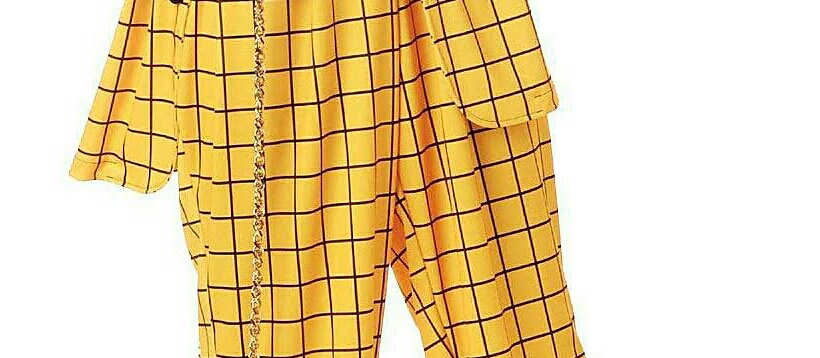
You know what they say – big mouth, big trousers Photo: Rubies.com

A frequently – and annoyingly – misspoken phrase is ‘He’s all mouth and no trousers‘, which should, of course, be ‘He’s all mouth and trousers‘.

The misspeakers are over-excitedly confusing it with – and accidentally borrowing the form of – the racy phrase, ‘She’s all fur coat and no knickers‘.

Despite being a mistake (or misspeak), ‘All mouth and no trousers’ has unfortunately entered into common usage, and must therefore be allowed some meaning, if possible.

It could, perhaps, mean a braggart who’s shortcomings are inadvertently exposed by his metaphorical (and, presumably, accidental) lack of trousers. However, presumably he’d be wearing metaphorical underpants – which would conceal any shortcomings.

Or perhaps the embarrasing lack of trousers shows that his boastful claims can’t be taken seriously, because they lack the substance that would be metaphorically indicated by his dressing properly – ie, by wearing trousers.

Neither explanation makes much sense. The wrong version has no real meaning, is clearly a corruption of the original phrase, and lacks the original’s muscular metaphorical resonance.

It’s clear that the misspeakers don’t understand the meaning of the correct phrase. The sister phrase, ‘All fur coat and no knickers‘ needs no explanation – but ‘all mouth and trousers‘ apparently does.

What it means is that the man referred to is inclined to bragg (all mouth) and to exaggerate (all trousers).

So why does ‘all trousers‘ mean exaggeration? It refers, of course, to metaphorically voluminous trousers, concealing metaphorically uneceptional genitals, the size of which has been metaphorically exaggerated.

The loose trousers conceal the truth, and the supposedly large genitals are, in fact, ‘all trousers’ – just as a conjuror’s illusion is said to be ‘all smoke and mirrors‘.

Hence: all mouth and (all) trousers. Crude, certainly – but at least meaningful.


Afterthought: The metaphorical resonance of this phrase probably runs deep. Bragging of this sort perhaps goes back to early human mate-selection behaviour. Large genitals are traditionally associated with the desirable qualities of bravery and virility. Female discernment, as perhaps expressed by this phrase, is an essential part of finding a suitable mate. Nah, not him – he’s all mouth and loin cloth. (Mating/dating tip for insecure modern men: honesty is also a desirable quality.)


Postscript: Even sadly-departed master wordsmith Terry Pratchett (author of the mostly brilliant but snobbishly underrated Discworld series) got it wrong.

In Raising Steam, engineer Dick Simnell tells conman/entrepreneur Moist Lipwig that when he first met him, he thought he was all mouth and no trousers. There’s not even an amusing footnote about how people get that wrong. That’s disappointing.

RIP, though, Sir Terry.

Fellow Pratchett fans may object that any such mistakes should be excused, because Raising Steam was published in 2011, four years after Pratchett had been diagnosed with early-onset Alzheimer’s disease. He had a rare form of posterior cortical atrophy (PCA).

However, In 2012 Pratchett stated in an interview that the cognitive part of his mind was untouched, and that his symptoms were physical.

This is apparently normal for people living with PCA. (However, PCA can spread, causing loss of cognition.)

In 2008, Pratchett revealed he found it difficult to write. Subsequently he used dictation, or speech recognition software.

Let’s blame the software – and Pratchett’s editor, who shall be nameless (mainly because I can’t be bothered to find out their name).

Top 🔼

Please feel free to comment.

Artificial stupidity again

image
Image: Futurama

April 2016

A recent newpaper report on robot reporters that are supposedly able to write financial reports and TV previews, gave an example:

‘We catch up with our dastardly group along the rippling waters of the Riverlands.’

If that’s a fair example, journalists’ jobs are safe. When will human journalists stop swallowing the latest ridiculous claim for AI?


Update, April 2023

ChatGPT

Seven years later, (seems like only yesterday!) Chatbot ‘AI’ has made a significant breakthrough with ChatGPT. Although it has no real understanding, it can produce relevant, well-written text.

For instance, my post on racism, Racism explained as a redundant instinct addresses the unhelpful entrenched conflict between evolutionary psychology and cultural psychology. I asked ChatGPT about it, and it produced an excellent response.

ChatGPT is controversial – but it makes claims for AI less ridiculous.

Top 🔺

Please feel free to comment.


Patriotism: for scoundrels

In which I criticise the misguided attempt by a reputable UK historian to get liberals interested in patriotism (and in which I get criticised in turn for my alleged misuse of Dr Johnson’s ‘scoundrels’ quote)

image
Castles made of sand fall in the sea, eventually Photo: Jonathan Hordle/Rex Features / Lyric: Jimi Hendrix

British historian Timothy Garton Ash wrote a thought-provoking newspaper column in April 2016 (just before the Brexit vote) calling for liberals to reclaim patriotism from the political right. He meant well – but it was never going to happen.

What’s great about England (Britain/Great Britain/the UK/whatever) is that we’re not particularly patriotic. (We can’t even be bothered to sort out a proper name.) Perhaps it’s one of the few worthwhile legacies of empire, giving us the confidence not to care much about what the world thinks of us.

In any case, we liberals regard the nation state with justified suspicion. It’s a relatively recent artificial construct, convenient for the purpose of civic organisation and worth being defended, but not a cause of natural affection.

It’s natural to feel sentimentally attached to your immediate vicinity, but not to a nation. The UK happens to be an island nation which is clearly geographically defined (apart from Northern Ireland, with its southern land border) but other nations are more arbitrarily defined, and therefore even less likely to inspire patriotism. (For instance – I knew my O level History would come in handy one day – how much national pride in France should the people of Alsace Lorraine be expected to feel?)

Cry God for Boris, St George and England Photo: Stefan Rousseau/PA Wire

The English flag, aka the ‘flag of St George‘ – despite the brave attempt in 2009 by then mayor of London Boris Johnson to rescue it – is tarnished by its association with the racist far right.

(For my analysis of racism, see Racism explained as a redundant instinct.)

Waving the UK flag, aka the Union Jack, isn’t much better. The best British value is our near-total indifference to national pride and flag-waving.

A good example of how patriotism is just not British is the 2014 government guidance on promoting the teaching of secular ‘British values‘ when teaching SMSC (spiritual, moral, social and cultural) development. This resulted from concern about the teaching of conservative religious values in state-funded schools. (See Guardian report.)

A schools minister said they wanted every school to promote basic British values:

  • the rule of law
  • individual liberty
  • mutual respect and tolerance for those of different faiths and beliefs

A department for education document says: ‘Actively promoting the values means challenging opinions or behaviours in school that are contrary to fundamental British values.’

However, the values prescribed by the guidance aren’t exclusively ‘British’. They’re the European Enlightenment values that underpin modern liberal democracy, freedom and rule of law: the conditions that motivate people to migrate to many western countries – not just Britain – from more unstable, lawless and repressive regimes.

The question of patriotism – and Garton Ash’s call for liberals to rescue it – has presumably arisen because of the perceived need for segregated immigrant communities to be more ‘British’, and our consequent knicker-twisting about ‘what it means to be British‘. Let’s just admit it: we don’t know – and that’s a Good Thing.

The solution to segregation is not for immigrant communities to be made to somehow aquire the mysterious property of ‘Britishness’ (which we’d first have to define). It’s for those communities to stop self-segregating. Britishness is simply what happens naturally when you live here without segregating yourself.

There’s no need for liberals to reclaim patriotism, Timothy. We can manage quite nicely without it, thank you.

Let’s leave patriotism to the insecure and racist.

Top 🔼


Postscript
The pedantic professor puts me right about the good doctor

Whilst trying to find research on faith-based segregation in the UK for my critique of Islam in the UK, ‘Fear of Islamophobia‘, I was kindly helped by Professor Tariq Modood, a multiculturalism expert and prominent Muslim – and we briefly discussed the issue of the teaching of ‘British values’ (see above).

(Having scan-read some of Prof Modood’s excellent published writings, and exchanged several enlightening emails with him, I’d summarise his view on the teaching of British values as follows: although he disgrees with the current legislation requiring the promotion of secular British values when teaching SMSC development, he doesn’t reject the idea of an educational ethos grounded in national values, but calls for a new nationalism – a more inclusive ‘Britishness’ that welcomes religious and secular diversity. I hope I’ve got that right.)

In the context of our discussion about teaching British values, I invited the professor to read this post. His only comment was to nit-pickingly point out an alleged error in my article’s title. I was wrong, he said, to enlist Dr Samuel Johnson (who famously said that patriotism is the last resort of the scoundrel) in support of my anti-patriotism argument.

image
Portrait: Joshua Reynolds Tate Gallery

The professor rightly surmised that I’d wrongly assumed – as do most people – that the famous saying meant that Johnson thought of patriotism as a disreputable thing, fit only to be used as a last resort by scoundrels. But as not many people know, the professor continued, Johnson wrote elsewhere of patriotism as an admirable love of one’s country, and clearly thought of it as a virtue.

Stung by the criticism, I googled the 1775 ‘scoundrels’ quote. Apparently, it was reported by Johnson’s amanuensis James Boswell without any context; and it’s not known what Johnson meant by it. However, as he apparently held patriotism in high esteem, he presumably didn’t mean what most of us think he meant, in our ill-read ignorance.

OK, its a fair cop, Prof (if lacking clear evidence). Thanks for the free lecture. However, I’m not going to change the title. The apparent misinterpretation of Johnson’s famous quote has now passed into common use, and in his many pronouncements on the subject he frequently commented on the devious misuse of patriotism, so I feel en-titled (geddit?) to refer to the quote in token support of my own belief – as independently argued above – that patriotism is a Bad Thing, and is indeed generally used by scoundrels for disreputable purposes.


Top 🔺

Please feel free to comment.

Shall I compare thee to a lump of clay?

Shakespeare in love – with himself

Shakespeare’s most famous love poem isn’t a love poem – it’s an advert. It’s beautifully written, but it’s a device to promote his bardic skills. His subject might as well be an unsculpted lump of clay.

Begun 2016 | 2,300 words | Contents | They say…

Guardian letter, April 2016  (Chris Hughes)

The (disputed) ‘Cobbe’ portrait | Painter: unknown, photo: Lefteris Pitarakis/PA

Shall I compare thee to a lump of clay?

Top 🔺

They say…


Quotes from emails about this post

I think I partly agree

Professor Raphael Lyne
Cambridge University, UK

I thoroughly enjoyed reading your post. I like your analysis – the wry tone is fun.

Professor Patricia Buchanan
Salem State University, Massachusetts, US


Shall I compare thee to a lump of clay?

Top 🔺

Contents

Preamble

Casually heartless

Consolation prize

Poverty of meaning

The emperor’s new clothes

Stream of consciousness?

Art to enchant

Comments


Shall I compare thee to a lump of clay?

Contents 🔺

Preamble


Beer with Berkoff

In the late 1990s I went to Skyros, the Greek island known for its creative holiday resort.

The resort has the knack of getting famous people to teach classes there for free – for bed, board and the pleasure of being there. (Pop singer Toyah was there, teaching radio production – presumably a phase she went through.)

I did reciting Shakespeare with radical actor (and Bond baddie) Steven Berkoff. Our text was the famous Sonnet 18 – ‘Shall I compare thee to a summer’s day?’

Studying it, I realised that, for all its beauty, it isn’t the love poem it’s supposed to be – it’s actually a paean of self-praise.

I put this to Berkoff over a beer on the terrace, but he was concerned about having left a notebook on the plane. He seemed disappointingly uninterested in my fascinating theory.

    Everyone else also seems uninterested. At the time of writing this afterthought preamble (June 2022), my post’s had only 41 views, no Likes and no Comments. (After reading this, a friend took pity and added a Comment. Thanks, Nige.)

    By (another!) comparison, my most-viewed post, Jackson Browne & Daryl Hannah (about the unfounded rumour of domestic abuse), has had over 50,000 views in about the same time. Obviously, the time’s out of joint!. 😉

Anyway…some 20 years after my beer with Berkoff, a 2016 article in the UK Guardian on the 400th anniversary of Shakespeare’s death said Shakespeare’s sonnets show his belief that art can give immortality.

I remembered my Skyros epiphany. That’s true, I thought, and Sonnet 18 shows that in claiming immortality for his art, Shakespeare could be heartless and selfish – oddly so, for the writer of what’s supposed to be a wonderful love poem.

I fired off a letter to the Guardian, and wrote this post.


Shall I compare thee to a lump of clay?

Contents 🔺

Casually heartless


Youth-fetishising bardic taxidermist

Shakespeare’s much-admired Sonnet 18 has a rapturous opening:

  • Shall I compare thee to a summer’s day?
  • Thou art more lovely…

But it doesn’t go on like that. Sonnet 18, digested:

    You’re more lovely than a summer’s day at the moment, but soon you’ll wither and age. However, luckily for you, my brilliant poem about you will live forever.

Having alluded in detail and with cruel eloquence – ‘Rough winds do shake the darling buds of May’ – to the lovely one’s imminent ageing (see below), Shakespeare gets to the point: the immortality of his poem.

Death shan’t brag, but the poet shall:

  • …thy eternal summer shall not fade
  • Nor lose possession of that fair thou ow’st
  • Nor shall death brag thou wander’st in his shade
  • When in eternal lines to time thou grow’st

The poem shows the writer’s love not for the supposed beloved, but for his own poetic skill in preserving their youthful beauty in his eternal lines. It’s Shakespeare, the self-aggrandising youth-fetishising bardic taxidermist!

The question then arises: did Shakespeare write the sonnet as himself, or as a persona?

Oxford University Shakespeare specialist Professor Jonathan Bate, in the Guardian article that prompted this post, wrote:

    [Shakespeare] clearly believed that love is a powerful and complicated thing, that poetry is an effective way of exploring its many dimensions, and – if his lines are to be taken at face value – that creative art is a way of achieving a kind of immortality for the beloved and perhaps for creative artists themselves. But his lines are not necessarily to be taken at face value. The “I” who speaks a poem, even an intimate love poem, is not synonymous with the person who writes the line. All poets rejoice in creating a persona.

Just so. But Shakespeare, aged about 30 when he wrote Sonnet 18, was becoming a successful and popular writer who wanted social advancement for himself and his family. Why risk that by creating a persona so casually heartless?

However, if, on the other hand, Shakespeare wrote Sonnet 18 as himself, then how come he wrote such a disturbingly narcissistic poem?

Cambridge University Shakespeare specialist Professor Raphael Lyne, replying to my email about this post, said:

    Can anything make the perfection last? It’s an offer – maybe a poem can. It’s also staking a claim, and aiming for a poem that will last forever. I think there is a selfish claim involved, but it’s a knowing exchange, not pretending that writers are innocent when they make memories last, because they gain too.

Good point. But whoever the ‘I’ is in ‘Shall I compare thee…’, whatever the writer’s motives, and however knowing the poem is, the problem is: if the writer loved the addressee of his poem, he’d say he’d always love them even when they got old and wrinkled.

Instead, he crows about how his precious sonnet will immortalise their youthful beauty.

Sonnet 18’s language is beautiful but the message isn’t. Was Shakespeare a crazy, mixed-up 30-year-old? Did he have emotional deprivation disorder. Or was he just full of it?

To be fair, Sonnet 116 does better:

  • Let me not to the marriage of true minds
  • Admit impediments. Love is not love
  • Which alters it when alteration finds

100 sonnets on and maybe a few years later, had Shakespeare found his emotional intelligence?


Shall I compare thee to a lump of clay?

Contents 🔺

Consolation prize


Good Will

Still being fair, can Shakespeare be given the benefit of the doubt about his poetry-plugging sonnet (the first of a series assuring the loved one poetry would preserve their beauty)?

Sonnet 18 seems heartless in saying, Never mind your lost beauty – it’ll live on in my timeless poem. (To which the appropriate response would be, ‘Well thanks for nothing’).

But perhaps Shakespeare was just being honest about a young person’s beauty and its inevitable fading. Perhaps such honesty would please a lover by reflecting their own feelings about their looks.

It might not please a childish romantic, but perhaps it’d comfort a mature young person.

So, Sonnet 18, re-digested (after a generous slug of the antacid of goodwill):

    Sadly, your youthful loveliness will fade – but let me console you by preserving it in my eternal lines.

In that reading, the implication is:

    You’ll lose your looks, but please accept my flawless poem as your consolation prize. I give you my love by giving you my art.


Shall I compare thee to a lump of clay?

Contents 🔺

Poverty of meaning


Something twisted this way comes

With extreme leniency and goodwill, Shakespeare’s famous Sonnet 18 can be seen as a heartfelt romantic gesture, rather than heartless PR.

But even then, it shows an uncharacteristic shallowness by addressing only the beloved’s skin-deep good looks, and pandering – perhaps with the desperation of an obsessed suitor – to the vanity of beautiful youth.

However you slice it, the sonnet’s richness of language obscures a fundamental poverty of meaning.

Other Shakespeare sonnets are more meaningful. They show the beloved as a real person – not just a pretty face. So perhaps emotional deprivation disorder (see above) is the wrong diagnosis. Perhaps, rather, the genius was on the autism spectrum – or bipolar.

Having scanned the sonnets (sorry – life’s too short), I’d say: they’re supposed to be love poems – but they’re actually dense and gloomy! They’re obsessed with desire, time and ageing. At times, they read (scan) like the diary of a mad man.

Perhaps Shakespeare was as sane and neurotypical as the next man (Christopher Marlowe). But the lavishly dressed emptiness of Sonnet 18 suggests there was something twisted about him.


Shall I compare thee to a lump of clay?

Contents 🔺

The emperor’s new clothes


The king is in the altogether

This critique of Sonnet 18 as heartless self-promotion isn’t entirely original, of course – nothing written about Shakespeare can be.

However, most analyses which mention the self-praise also propagate the sonnet’s widespread but undeserved reputation as a great love poem.

This reputation rests entirely on the first line and a half. The whole 14-line poem hypnotises with dizzying imagery but the opening is especially ecstatic:

  • Shall I compare thee to a summer’s day?
  • Thou art more lovely…

It’s a brilliant start to a love poem – but that’s it. Instead of moving on to a lovingly sculpted likeness, the artist leaves us with a barely sculpted lump of clay. There’s no love for the addressee, only self-love for the poet.

After that lovely opening, it levels off with the dull…and more temperate‘, then, although the enchanting language continues to mesmerise, it’s all relentlessly downhill:

  • Rough winds do shake the darling buds of May
  • And summer’s lease hath all too short a date
  • Sometime too hot the eye of heaven shines
  • And often is his gold complexion dimm’d
  • And every fair from fair sometime declines
  • By chance or nature’s changing course untrimm’d

Those six lines of doom, albeit beautifully written, cruelly overwhelm the opening enconium. Then comes the cocky twist:

    But it’s OK. My brilliant poem (with its line and a half of praise) will make your loveliness last forever:
  • So long as men can breathe or eyes can see
  • So long lives this, and this gives life to thee

That astonishingly confident forecast of longevity has come true. Over 400 years later, the sonnet has not only survived – it’s world-famous.

By far the most popular of Shakespeare’s 154 sonnets, Sonnet 18 is famous because of its sublime opening, and because it’s beautifully written. But it’s beautifully written rubbish.

Millions laud it as a great love poem, but they’re wrong. They’re a bit like the townsfolk in the fable about a magical suit of new clothes made for a king.

The clothes don’t exist – they’re a confidence trick – but the townsfolk, wanting to believe the magic and not wanting to disrespect the king, go along with it.

In the Hans Christian Anderson version, The Emperor’s New Clothes, one child, uncautioned, shouts out what he sees.

In the Danny Kaye song The King’s New Clothes from the 1952 movie musical Hans Christian Anderson, the child excitedly cries out:

  • Look at the King! Look at the King! Look at the King, the King, the King!
  • The King is in the altogether!
  • But all together the all together
  • He’s all together as naked as the day that he was born.

It’s not Shakespeare – it’s by award-winning Broadway songwriter Frank Loesser – but it’s the truth about the king’s supposed new clothes, and, in this (possibly overexcited) analogy, it’s the truth about Shakespeare’s supposed love poem.

Sonnet 18 is all mouth and no trousers.

(Yes, I know: it should be ‘all mouth and trousers’ – see my post All fur coat and trousers – but for once the misspoken version of that phrase is apt.)


Shall I compare thee to a lump of clay?

Contents 🔺

Stream of consciousness?


Life is but a dream

Salem State University Shakespeare teacher Professor Patricia Buchanan replied to my email about this post. She said:

    I think you’re a bit hard on Will – you’re ignoring the stream of consciousness element in the poem. I.e: You’re as beautiful as a summer day. Hmm. Maybe not the best comparison after all because sometimes summer can be hot and unpleasant and then it doesn’t last very long even when it’s nice.

I took this to mean he was riffing on his metaphorical summer’s day and its pros and cons, without meaning to be cruel. But the poem is more carefully structured than that. It’s focussed on self-promotion.

Stream of consciousness is usually associated with more modern and less structured writing. Wikipedia suggests Laurence Sterne’s 1757 Tristram Shandy as the earliest example.

Shakespeare broke the rules and made them. He’s said to have used SOC in Macbeth. But can Sonnet 18’s summers-day riff be seen as SOC?

In Sonnet 18 – the first of a series about poetry preserving beauty – Shakespeare briefly introduces a lovely young person, quickly moves on to how their loveliness will fade, and, having hammered that home in great detail, ends by trumpeting his poem’s immortality, bizarrely inviting the young person to share his exultation at their youthfull beauty being poetically embalmed.

There’s not much room there for stream-of-consciousness. I put this to Professor Buchanan. She replied:

    I was using [SOC] rather loosely — more in the vein of “hmm, let me think about what I just said.”

I don’t want to be too hard on Will. Perhaps his summer’s-day riff can be seen – loosely – as a stream of consciousness rather than calculated cruelty.

He compares a lovely young person to a summer’s day, then – consciousness a-streaming – realises his charming metaphor actually leads to thoughts of ageing. Oops! He offers his ageless poem as loving consolation.

🤨 Hmm…


Shall I compare thee to a lump of clay?

Contents 🔺

Art to enchant


Smoke and mirrors

How has Shakespeare’s Sonnet 18 fooled so many people and become the world’s best-loved love poem?

It can only be that we’re all entranced by those magical opening lines:

  • Shall I compare thee to a summer’s day?
  • Thou art more lovely

The End


Shall I compare thee to a lump of clay?

Contents 🔺

Comments

Feel free to comment – I answer all comments.
To add a Comment, scroll to the end of the Comments.