Here comes a snowflake! | photo: Anest / istockphoto
In the UK and the US the traditional left-right two-party political system seems to be running out of steam. Things are fragmenting. Consider the hot potato of identity politics.
Identity politics originated in France, was first applied in America, and has been exported back to Europe. The concept enables people of a particular ethnicity or other identifying factor to develop a political agenda based on their identity and their sense of oppression.
Some advocates of identity politics take an intersectional approach, addressing the range of interacting systems of oppression which result from people’s various identities.
Identity politics emerged in the 1960s and 70s from the hotbed of French postmodernism, which emerged in the 1950s and 60s mainly from the writings of Michel Foucault and Jacques Derrida.
Michel Foucault, Paris, 1978 | Photo: Martine Franck / Magnum
Apparently, the complex route from postmodernism to identity politics included:
Critique of modern reductionism
Abstract universalism
A kind of essentialism
Foucault’s genealogical politics
However, although Foucault challenged ideas of power structure and championed marginalised groups, apparently he’s not the Godfather of identity politics. He criticised ‘essentialism’, where groups are defined by fixed characteristics, saying it can limit freedom and reinforce inequality.
Our politics evolve from a healthy love for ourselves, our sisters and our community which allows us to continue our struggle and work. This focusing upon our own oppression is embodied in the concept of identity politics. We believe that the most profound and potentially most radical politics come directly out of our own identity, as opposed to working to end somebody else’s oppression.
[My bolding]
Liberal critics of identity politics say reaction against its supposedly strident demands contributed to the 2016 US election of populist psycho Donald Trump. Trump voters were said to have voted ‘white’.
Leftist critics of identity politics (eg Ambalavaner Sivanandan) say it’s a distraction from the class struggle. Other critics say the idea fosters inherently wrong or unnecessarily divisive notions of identity, or an unhelpfully exaggerated sense of victimhood.
Some identity politics groups, snarkily dubbed snowflakes, are criticised for being quick to take offence and being vindictive in their ‘cancel culture‘ pursuit of offenders.
Identity politics has been famously dismissed by batty best-selling author and psychologist Jordan Peterson. He echoes fellow bat Ayn Rand (author of Atlas Shrugged) in asserting the primacy of the individual over the group.
Alt-right white supremacists have their very own version of identity politics, ‘identitarianism’, which asserts the right of white people to Western culture and territories claimed to belong exclusively to them. Bless.
The oppression elephant in the identity politics room is racism. Does identity politics address racism? Is there such a thing as black identity politics?
There’s clearly a need for a collective political agenda to challenge the oppression of systemic colour prejudice, but I googled ‘black identity politics’ and got no meaningful results (in the first five pages).
Apparently the hot potato of identity politicsdoesn’t address racism. Perhaps a cooler and less fragmentary political movement is needed for that.
Edit: Sadly – and surprisingly (to me, anyway) – it seems the Black Lives Matter organisation, rather than being the focussed and well-organised campaign supporters and donors might expect, is actually a perfect example of overheated identity politics, and has consequently disappeared down that rabbit hole.
It’s 1919. Here in the UK, in 2016, we voted to leave the European Union. We haven’t actually done it yet, but there’s a crucial general election coming up. The Tories are promising to ‘get Brexit done’. Labour’s offering a second referedum.
As a UK citizen, I suggest a compromise solution to Brexit: be in and out. Ie, if Labour wins, stay in (promise reform of EU free movement of people to the UK, then get a remain result from a second referendum) but be the outsider.*
The 2004 neo-liberal experiment of allowing virtually unrestricted access to the UK of people from poor east European countries (pushed by then UK Labour premier Tony Blair) upset many locals. Boosted Euroscepticism led to the referendum, which was, in effect, the first public consultation on mass immigration. Result: split nation: loquatious liberals versus a taciturn precariat.
Offered a binary choice in 2016, I voted to remain – but was actually undecided. As a left-liberal who welcomes immigration, I nevertheless sympathise with the overlooked precariat – who have been wrongly dismissed by the metrocentric liberal establishment as ignorant provincial racists.
But it’s madness to abandon a good trading deal with our near neighbours in exchange for environment-destroying air and sea miles, and a sweetheart deal with corporate USA involving chlorinated chicken and a garage sale of the UK’s National Health Service.
So, let’s stay in and, firstly, use the rules – the same EU rules that Germany and France have used – to restrict the “free movement” of people. (Mobility of cheap labour is no freedom.) Then vote for reforming the sh*t out of the corrupt, bloated, neo-lib EU gravy train. Then, with harmony and unity restored, we can resume our previous blissful sense of indifference.
*Update: the 2019 UK general election gave the Conservatives a large majority, so staying in was out. Harmony could now only be achieved by keeping as close as possible to the single market. Premier Boris Johnson, no Brexit idealogue (he flipped to Brexit in 2015 for reasons of personal advancement), might do that.
European Union Brexit official Guy Verhofstadt was shown in a 2019 TV documentary making an extraordinary defence of the post-EU-enlargement version of the free movement of people.
The free movement of people, one of the supposedly sacrosant four freedoms of the EU’s single market, morphed in 2004 into the unrestricted mobility of cheap labour when EU ‘enlargement’ into eastern Europe, led by UK ‘New’ Labour premier Tony Blair, allowed mass immgration to the UK.
Although widespread resentment of unrestricted immigration from eastern Europe was one of the main causes of the leave result in the UK’s 2016 EU referendum, EU officials, in their post-referendum negotiations with the UK, held blindly to the untouchable indivisibility of the four freedoms.
As shown in Lode Desmet‘s fascinating fly-on-the-wall documentary, Brexit: Behind Closed Doors (shown in the UK on BBC Four’s Storyville in May 2019), Verhofstadt, Brexit coordinator and chair of the Brexit steering group for the European parliament, pompously and melodramatically – if unconvincingly – lectured a 2018 UK parliamentary home affairs committee on the supposed sanctity of the free movement of people.
MEP Verhofstadt – who, unlike fellow EU Brexit officials Tusk, Juncker and Barnier, was at least elected – duly preached the 4F credo to the committee:
‘You cannot pick and choose one element out of this concept and say, “We like everything, services, goods, capital, but not people. We don’t like people. They cannot come. Our goods can go out, our capital can go out, services can go out, but not people”. That is not the single market…
‘Everybody on the continent understands that when you’re talking about the single market, it can not only be the freedom of movement of goods or services or capital, but that it also needs to be the freedom of movement of people…
‘There are some countries in the single market who are specialised in goods. So they have an advantage on the single market with their goods. Some countries are specialised in services. I think we are here in the centre, in the capital of a country that is specialised, that has a huge advantage in services…
‘Other countries have an advange in that single market, because of their work force. And if you want to take out one of these elements, you destroy the concept itself of the single market.’
Transcript of edited scene provided by Lode Desmet, and ammended according to official report
In other words, rich west-European countries could export goods, services and capital. Poor east-European countries could export cheap labour. Anyone who challenged this – as, say, a mutant version of the original notion of the free movement of people, typical of neoliberalism at its grubby worst – was threatening to destroy the very concept of the single market.
Verhofstadt did point out that the UK hadn’t bothered to use the restrictions available under EU rules for EU citizens immigrating with no jobs – the same restrictions that his home country of Belgium had applied. Similar restrictions have been used by Germany and France.
This was a good point, but made too late. Grassroots dissatisfaction with unrestricted immigration from poor east European countries was a main reason for the referendum’s leave result. It was also the main reason for the ‘red wall’-turned-blue Conservative victory in the 2019 UK general election.
The London-centric UK liberal establishment, including the Labour Party, wrongly dismissed that dissatisfaction as ignorant provincial racism.
In Verhofstadt’s evidence to the home affairs committee (and earlier on the same day to the parliamentary Brexit committee), he wielded statistics – as many UK liberals do – to loftily downplay the disturbing scale and effect of unrestricted immigration from eastern Europe to the UK.
Verhofstadt’s blind post-enlargement loyalty to the principle of the free movement of people as an essential component of the single market was intellectually shoddy. Such obstructionism, based in condescension and wilful ignorance, showed the arrogance typical of EU Brexit negotiators.
Perhaps that arrogance was a defensive reaction to the Brexistential challenge. Stronger negotiation by post-Brexit UK premier Theresa May might have countered that, but she weakened her position by calling the 2017 snap general election and losing her majority.
If the EU negotiators had looked beyond their offended sensibilities, and had understood the scale of UK grassroots resentment of post-enlargement mass immigration, they might have offered to reform the free movement of people.
Assuming a general election would still have been needed to decide how Brexit would be completed, ‘Red wall‘ Labour leave voters might then have voted in 2019 for Labour’s proposed second referendum. Labour might have won, and the second referendum might have resulted in a decision to remain.
That’s four levels of ‘might’, admittedly, but it was a plausible possibilty – and a lost opportunity.
In spite of his EU hauteur, I don’t blame Verhofstadt. Apart from his overblown free movement bombast at the committee hearing and his complicity in the EU’s high-handed negotiating stance, he came across in Desmet’s documentary as a likeable Anglophile and a decent politician who – like all concerned – was out of his depth.
I blame Tony Blair, the UK premier who led EU enlargement in 2004. Blair must have foreseen the mass immigration of cheap labour to the UK when he pushed for EU enlargement, but like the 1948 patrician government that facilitated postwar mass immigration, he didn’t consult the people and apparently had no concern for the social wellbeing of either the immigrant or the host community.
In both instances, if the host community had been consulted, had agreed that large-scale immigration was necessary, and had been prepared for two-way cultural integration, there might have been a more welcoming atmosphere.
The UK’s EU referendum, caused by grassroots pressure, was a direct consequence of Blair’s EU enlargement project. It was, in effect, the first UK public consultation on mass immigration. The people expressed their dissatisfaction and that was fair enough – but the result has left us out in the cold.
In a 2004speech Blair said, ‘Enlargement will increase stability, security and prosperity‘. How wrong he was. He apparently realised how wrong he was and tried to make amends when, in 2017, he called on the EU to reform free movement to show leave voters ‘their concerns are better met without the damage Brexit will do’. His belated appeal was ignored.
As a left-liberal supporter of internationalism and free trade, I voted in 2016 to remain. I hoped that the UK could reform the corrupt, bloated, neoliberal and over-bureaucratic gravy-train the EU had become.
Instead, post-Brexit, we faced the double-whammy dystopian prospect of exchanging free trade with our neighbours for a ‘trade deal’ with the US – allowing the UK Conservative party’s US billionaire friends to parasite the NHS (the UK’s National Health Service) and send us their chlorinated chicken and drug-riddled beef.
Amazingly, even after Brexit many of the UK liberal elite still agreed with Verhofstadt in supporting the (post-enlargement) free movement of people.
They should have learned their lesson: Blair’s neoliberal mobility of cheap labour was no freedom. It’s what brought us to this sorry state.
In which, as a remain voter, I detail the metrocentric liberal elite’s arrogant dismissal of white working-class leave voters’ concerns about EU free movement of people as provincial racism. Metrocentric Labour party leaders overlooked the elephant in the room and it cost the party in lost votes.
Brexit and free movement: the east European elephant Contents 🔼
April 2016
Introduction
East European rough sleepers in London | Photo: Jeremy Selwyn/Evening Standard
In the UK in 2016 we were facing a referendum on membership of the EU. Disturbing reports about the high number of rough sleepers in London could be seen to make a good case for the UK leaving.
Most of the rough sleepers were from eastern Europe, part of the recent unrestricted mass immigration to the UK allowed under the EU freedom of movement rule.
Some were working but unable to afford accommodation and not yet eligible for government support. Many were not working. Some had apparently been bussed in by criminal gangs to beg on the street. The police were having to deal with complaints of antisocial behaviour. There were reports of public urination and defecation.
The referendum was happening because Conservative prime minister David Cameron had been pressed byEurosceptics in his party (and by Conservative MPs worried about their seats being threatened by the rise of the populist anti-EU Ukip party) to put it in his manifesto for the 2015 general election.
Cameron’s negotiations, typically lacklustre, failed. The referendum, which Cameron had never wanted and had never expected to have to implement, was arranged to take place in June 2016.
As a middle-class left-liberal-Green, I had mixed feelings about the EU. I loved the noble internationalist free-trade idea, but disliked the corrupt neo-liberal bureaucratic gravy-train reality.
In my local café, here in the UK’s East Midlands, I heard the views of two older working-class white women about the EU freedom of movement rule.
They were reluctant to say so, aware their views might be considered ‘wrong’, but they deeply resented this change, imposed with no consultation. Their quiet, genuine and non-racist strength of feeling made a big impression on me.
East European immigrants who weren’t sleeping rough in London were gathering in ghettos elsewhere, mostly working and paying tax, but seen as lowering wages, and putting stress on services such as schools and hospitals.
Economic evidence suggests migrants make a positive contribution to the public purse and public services. However, perhaps people’s perception to the contrary arose from a direct experience of unfair competition for scarce resources.
Also, since before the referendum, non-EU immigration had been consistently higher than EU immigration. So why had EU immigration become such a contentious issue? Perhaps because most non-EU immigrants needed a visa; whereas most east European immigrants (mostly low-skilled workers and many with no jobs to come to) were allowed almost unrestricted entry to the UK .
This was breeding resentment amongst the indigenous white working class, whose traditional support for Labour was being transferred to Ukip. The media debate on the referendum was all about trade and jobs, but the elephant in the room was east European immigration.
People were reluctant to say what they thought about free movement for fear of being considered racist (or – just as bad, in some circles – politically incorrect).
There probably was racism at play here, but much of the blame for it lay with government. Mass immigration imposed without consultation was bound to provoke racism.
(We’re probably all potentially racist, but with awareness we can choose not to indulge it – whatever the provocation. See my analysis of racism, Racism explained as a redundant instinct.)
In any case, the referendum would be a secret vote!
Brexit and free movement: the east European elephant Contents 🔼
May 2016
Entered the elephant
With the referendum date in sight, east European immigration was in the news, as figures for EU immigrants were hotly disputed.
Brexit and free movement: the east European elephant Contents 🔼
May 2016
Labour’s ‘horrible racist’ row
(The Guardian print newspaper didn’t report this, despite a full report on the Guardian website.)
Labour shadow Europe minister Pat Glass had been pre-referendum door-knocking in Sawley, Derbyshire with a BBC local radio reporter. Thinking she was off-mic*, she said: ‘The very first person I come to is a horrible racist. I’m never coming back to wherever this is.’
The BBC said the man she was referring to later denied being a racist, but said in his conversation with the MP he’d spoken about a Polish family in the area who he thought were living on benefits, and whom he’d described as ‘spongers’.
Glass’s lazy, right-on metrocentric view showed how she and her bien-pensant political class had ignored – and belittled – the genuine concerns of the white working class about east European immigration. Labour, with its unconvincing remain campaign, ignored those concerns at the risk of losing support.
Glass later issued a grovelling apology (well, semi-grovelling – note the weaselly use of the bolded word ‘any‘), saying:
‘The comments I made were inappropriate and I regret them. Concerns about immigration are entirely valid and it’s important that politicians engage with them. I apologise to the people living in Sawley for any offence I have caused.’
Glass was promoted to the post of shadow education minister in June 2016, but resigned two days later. She stood down at the 2017 general election, citing the ‘bruising referendum‘ as a major cause. It’s unfortunate rising star Glass tripped over that ‘bruising’ reality. If she – and her party – had been more aware of the genuine concern about EU mass immigration amongst their voters, Glass might still be an MP.
(* Another off-mic racism-related post-interview comment is described in my blogpost about Aung San Suu Kyi and Myanmar’s persecuted Rohingya Muslims, Halo Goodbye, Suu – the Rohingya crisis. Suu Kyi made a racist off-air comment about BBC Today presenter Mishal Husain after losing her temper during a radio interview when Husain repeatedly asked her to condemn anti-Muslim violence. After the interview, Suu Kyi was heard to say: ‘No one told me I was going to be interviewed by a Muslim.’)
Brexit and free movement: the east European elephant Contents 🔼
23 June 2016
Referendum result and immigration
Metrocentral London: Remain
Most of the rest of country: Leave
(Me: Undecided, but voted: Remain)
The high turnout (72%) and the leave result (disconcertingly close at 52-48%) were unexpected.
It’s estimated24-30% of Labour voters voted leave.
Immigration was a major factor. Postwar mass immigration from UK colonies and former colonies and the more recent unrestricted free movement of people from Eastern Europe that followed 2004’s EU enlargement were allowed by governments for economic reasons with no consideration for the social wellbeing of either the immigrant or the host communities – and with no public consultation.
The EU referendum was, in effect, the first public consultation on immigration. Several polls confirmed immigration was a main reason for voting leave:
An Ipsos MORI poll taken just before the referendum showed immigration was seen as the biggest issue (48%) that would influence people’s vote. (The economy scored 27%.)
A Lord Ashcroft post-referendum poll found 33% of leave voters said the main reason was that leaving offered the best chance for the UK to regain control over immigration and its own borders. (Immigration was second. The highest scoring reason was sovereignty, at 40%.)
A July 2016 Economist analysis concluded high numbers of migrants didn’t bother Britons, but high rates of change did.
An April 2018 CSI poll found 40% of leave voters gave immigration as the main reason.
Brexit and free movement: the east European elephant Contents 🔼
October 2016
Post-result toxicity
The post-referendum debate turned toxic as metrocentric remainers railed against leave voters, whining stridently about the supposedly stupid people who’d ignored their expert advice.
The poor white leavers, they said, were like Trump supporters, incoherently attacking the establishment like, they implied, a zombie mob shuffling out of their northern housing estates towards the ivory towers of metroland.
But the metrocentrics were the stupid ones. They contemptuously dismissed the leave vote as an incoherent act of general resentment. But the leave vote was about issues – issues the metrocentrics, in their lofty arrogance, chose to ignore.
An April 2018 CSI poll asked leave voters to rank four reasons for voting leave. The poll report said:
‘Interestingly, “To teach British politicians a lesson” had by far the lowest average rank, being ranked last by a full 88% of leave voters. This contradicts the widespread claim that Brexit was a “protest vote”: i.e., people voted leave as a way of venting deep-seated grievances.’
(The CSI poll found immigration was the main reason for voting to leave. It was ranked first of the four reasons by 40% of leave voters polled.)
Brexit and free movement: the east European elephant Contents 🔼
October 2016
PM May tackled immigration – accused of xenophobia
Despite having promised to stay on whatever the result, UK prime minister David Cameronresigned after the referendum. He was replaced as leader of the Conservative Party and as PM by Theresa May.
May had campaigned for the UK to remain in the EU, but now promised to implement the leave result. At the post-referendum Conservative Party conference, she acknowledged the immigration elephant in the room, and confronted the metrocentric sneerers.
Pledging to crack down on immigration, May said some people don’t like to admit British workers can be out of work or on low wages because of low-skilled immigration.
Predictably, leading metrocentrics lashed back. Labour leader Jeremy Corbyn said May was fanning the flames of xenophobia and hatred. SNP leader and Scottish assembly first minister Nicola Sturgeon said May’s speech was the most disgraceful display of reactionary right-wing politics in living memory.
Admittedly, May had form. In her previous post as home affairs minister she implemented a Gradgrind approach to reducing immigration. She set ambitious targets which she then failed to meet. An excellent November 2018 Irish Times article links that policy to her post-referendum enthusiasm for ending free movement.
In 2010, home secretary May promised to cut net immigration. Instead it rose significantly. In 2012, she pledged to create ‘a really hostile environment for illegal migrants‘ and wrongly blamed the Human Rights Act for being unable to go further, earning a rebuke from senior judiciary. She ignored warnings about passport backlogs and chaos at border posts, and put ads on the side of lorries telling people to ‘Go home or face arrest‘. The ads were banned for inaccuracy – very few people could actually be arrested – and because of general public revulsion.
It was May’s incompetent and target-led ‘hostile environment’ that led to the shameful cruelty of the Windrush scandal.
So metrocentrics Corbyn and Sturgess arguably had reason to criticise May’s stance on immigration. However, they pointedly failed to acknowledge that this time, May was also voicing the feelings of Leave voters – many of whom were not Conservative voters – who weren’t necessarily xenophobic, but were genuinely concerned about having mass immigration imposed on them.
(If those influential metrocentrics stopped defending their moral high ground, got off their high horses, and got down to thinking about improving society, they might consider that the problems and concerns experienced by the increasingly large precariat underclass could be resolved by paying all adult citizens an unconditional state income. This would, of course, require effective border control – which we could now have. See my post, Robots could mean leisure.)
Brexit and free movement: the east European elephant Contents 🔼
December 2016
By-election blues for Labour
The chickens came home to roost at a by-election in deep-Brexit Lincolnshire. Having previously come second in this safe Conservative seat, Labour trailed fourth – behind Ukip.
Brexit and free movement: the east European elephant Contents 🔼
December 2016
Welsh leader: Labour’s ‘London-centric’ view of immigration could lose votes
Welsh assembly first minister Carwyn Jones, the most powerful Labour politician in government, disagreed with the position of Labour leader Jeremy Corbyn and shadow home secretary Diane Abbott, who’d defended freedom of movement.
‘The danger is that’s a very London-centric position. That is not the way people see it outside London. London is very different: it is a cosmopolitan city and has high levels of immigration. It has that history. It is not the way many other parts of the UK are.
‘People see it very differently in Labour-supporting areas of the north of England, for example. We have to be very careful that we don’t drive our supporters into the arms of Ukip. When I was on the doorstep in June, a lot of people said: ‘We’re voting out, Mr Jones, but, don’t worry, we’re still Labour.’ What I don’t want is for those people to jump to voting Ukip.’
Exactly. (Except they already were.)
Brexit and free movement: the east European elephant Contents 🔼
December 2016
Top Labour MP: immigration class divide – shadow home secretary: wrong
Labour cracks widened on the tricky subject of immigration. Leader Jeremy Corbyn continued to downplay the issue (even as Labour voters continued to drift towards Ukip), but some senior Labour politicians focussed on it.
They included northern Labour MP and political big beast Andy Burnham, former shadow home secretary and the then front-runner for the post of elected mayor – which he subsequently won – of northwest UK region Greater Manchester. Burnham joined Carwyn Jones (see above) in speaking up on the subject.
Writing in the Guardian, Burnham said Labour’s collective failure to tackle concerns over jobs, wages, housing and education linked to migration contributed to the loss of the referendum.
Burnham spoke of a ‘growing class divide‘, with middle-class Labour remain voters looking down on those who voted leave as ‘uneducated or xenophobic‘.
(That’s what I said.)
Stubbornly metrocentric Labour shadow home secretary and close Corbyn ally Diane Abbott then said Burnham had got it back to front, and was wrong.
Brexit and free movement: the east European elephant Contents 🔼
January 2017
Ukip’s post-Farage farrago of fiascos disadvantaged the dispossessed
The only good thing, from Labour’s point of view, was that Ukip, the party most likely to benefit from Labour’s metrocentric stance, was disintegrating following the resignation of leader Nigel Farage (the man the metrocentrics – with some reason – loved to hate).
However, this was a bad thing from the point of view of the dispossessed underclass. Ukip, under Farage’s effective leadership, boosted the Conservative Eurosceptic pressure that forced then prime minister David Cameron to promise the referendum. An effective Ukip could have maintained the necessary pressure to ensure the intentions of leave voters were honoured.
Prime minister May seemed to mean well, but without the pressure an effective Ukipcould have provided, she was at risk of followeing Cameron into the Brexit bin. Metrocentric remainers would then be free to dilute and delay the process until only a dog’s dinner was left.
However, May held firm. In January 2017 she announced Britain would leave the single market (the subject of much anguished hand-wringing amongst remainers) in order to control and strengthen sovereignty.
Brexit and free movement: the east European elephant Contents 🔼
January 2017
Corbyn waffled about free movement
In a major Brexit speech, UK Labour leader Jeremy Corbyn further toned down his already weak statement that Labour was ‘not wedded’ to free movement by adding that it hadn’t been ruled out.
According to an extract handed out the night before the speech – in leave-voting Peterborough – Corbyn was due to say he supported ‘reasonable management‘ of immigration after Brexit. That sounded like something that would happen after the end of free movement (ie, the end of unmanaged immigration). Corbyn was also due to say: ‘Labour is not wedded to freedom of movement for EU citizens as a point of principle.’
That was weak and weaselly. ‘Not wedded to the principle’? (Who wrote that?) Corbyn could just have said Labour’s position was that free movement would end. (He eventually did so in May 2017, before the general election. See below.)
Nevertheless, some thought this was a change of policy by Corbyn, who’d been under pressure from Labour MPs to address the concerns of Labour supporters and swing voters who’d voted leave.
However, in a round of interviews before the speech Corbyn insisted ‘it’s not a sea change at all’ – and complained his planned statement had been misinterpreted.
In the actual speech, after acknowledging many people had expressed deep concern about unregulated migration from the EU, Corbyn said:
Labour is not wedded to freedom of movement for EU citizens as a point of principle, but I don’t want that to be misinterpreted, nor do we rule it out. [Labour Party’s punctuation]
Corbyn went on to say EU immigration should be part of the negotiated attempt to keep full access to the EU single market.
Right. That was clear, then. As everyone knew by then, full access to the single market would mean accepting – as non-EU Norway does – EU free movement of people.
So, no misinterpretation possible after that gem of clarity, Jeremy.
Brexit and free movement: the east European elephant Contents 🔼
March 2017
Shadow home secretary: Labour must defend free movement
Adding to the confusion, the opposition Labour party’s shadow home affairs minister called for free movement to be defended, in apparent contradiction to her party leader’s (apparent) position (see above).
In her foreword, Abbott described criticism of EU free movement as reactionary and anti-immigrant. She said the labour movement couldn’t accept the attack on freedom of movement, and must stand to defend it.
Abbott, whose parents were Jamaican immigrants, clearly cares deeply about historical and recent injustices suffered by immigrants, but she showed no understanding of the concerns of leave voters about unrestricted immigration from poor east European countries under EU freedom of movement.
Brexit and free movement: the east European elephant Contents 🔼
April 2017
May called snap general election
UK prime minister Theresa May was on course for a sensible Brexit, having cruised past various remain obstacles, when she unexpectedly called a snap general election.
She said it was needed to ensure a smooth Brexit, but probably the real reason was that she wanted to take advantage of her party’s big polling lead before the economy – heading for higher inflation and depressed wages – tanked.
Ukip, having achieved Brexit, seemed to have vanished up its own arse, so dispossessed former Labour voters who wanted control over immigration would have to vote – Conservative!
Brexit and free movement: the east European elephant Contents 🔼
April 2017
Starmer: Labour would end free movement
The UK opposition Labour Party said they’d accept the referendum result, and would end free movement. That was big of them.
Labour shadow Brexit minister ‘Sir’ Keir Starmer (human rights lawyer, London MP and arch-remainer) said (presumably through gritted teeth) Labour would seek to end free movement. He added that Labour wouldn’t shut the door on the single market, the customs union or participation in EU agencies.
Despite Starmer’s controversial rider, that was clearer than his leader’s mystical miasma of a pronouncement in January.
Brexit and free movement: the east European elephant Contents 🔼
May 2017
Corbyn said it: free movement to end
Jeremy Corbyn, leader of the UK opposition Labour Party, said for the first time that under Labour the free movement of citizens between the UK and the EU would end with Brexit.
In January 2017, Corbyn said in a speech, somewhat cryptically, Labour wasn’t wedded to free movement but it hadn’t been ruled out.
Since then, the prospect of a general election seemed to have concentrated Corbyn’s mind – somewhat, if not wonderfully. He was asked in a TV interview what immigration controls Labour would implement. After some characteristic waffling, Corbyn said:
“Clearly the free movement ends when we leave the European Union but there will be managed migration and it will be fair.”
This confirmed what shadow Brexit minister Keir Starmer said in April (see above). Corbyn and Starmer were both said to favour free movement, but had apparently been persuaded to accept that it must end – to keep Labour and swing-vote leavers sweet. Hence the gritted teeth through which Corbyn’s and Starmer’s concessions were made.
Brexit and free movement: the east European elephant Contents 🔼
June 2017
Labour manifesto: free movement to end
The snap general election called by UK premier Theresa May had the benefit of clarifying the opposition Labour party’s position on free movement.
The 2017 Labour manifesto, in chapter 2, Negotiating Brexit, under the heading of Immigration, said:
‘Freedom of movement will end when we leave the European Union.’
Brexit and free movement: the east European elephant Contents 🔼
June 2017
May lost majority
UK Conservative premier Theresa May won her snap general election, getting more seats in parliament than Labour, but she unexpectedly lost her overall parliamentary majority. (Her general election campaign was rubbish, and Labour’s under Jeremy Corbyn was good.)
May managed to get the support of the Democratic Unionist Party, a tiny party in UK country Northern Ireland, to give her a small but workable majority. The DUP wanted a ‘soft’ Brexit, including a ‘soft’ land border with NI neighbour and EU member-state Ireland. (See footnote). An extra £1bn of spending for NI was part of the deal.
May also needed the parliamentary support of every Tory member, including the many EU remainers.
With Brexit negotiations due to begin very soon, May’s pre-election ‘hard’ Brexit plan looked likely to be abandoned – and white working class concerns about mass EU immigration seemed once again in danger of being ignored.
Brexit and free movement: the east European elephant Contents 🔼
July 2017
Labour weaved this way and that
Jeremy Corbyn, still leader of the Labour Party after his unexpectedly good performance in the general election, surprisingly announcedLabour would leave the EU single market.
This was a change from his previous statement that Labour would push to maintain full access to the single market.
Metrocentric remainers who wanted the UK to stay in the single market – or who simply wanted to derail Brexit – dominated the vocal section of the party. Perhaps Corbyn was thinking of the silent traditional Labour voters who voted leave because of their concerns about recent mass immigration.
Maverick Labour shadow trade minister Barry Gardiner, a remainer in the referendum, but who thought the result must be honoured, then wrote a Guardian article backing Corbyn and explaining why: people voted leave because they wanted UK borders controlled.
However, Labour metrocentric remainer MP and nobody Heidi Alexander in a Guardian.com article said Gardiner’s position was wrong, depressing and disingenuous. Alexander’s views were then reported by the Guardian in the print edition as ‘news‘.
Brexit and free movement: the east European elephant Contents 🔼
July 2017
Tory cabinet’s free movement squabble
After UK premier Theresa May’s disastrous snap election, her power had weakened. While she was on holiday, having left no deputy in charge, her ministers were squabbling about Brexit – and about free movement.
Finance minister and arch-remainer Philip Hammond said there should be no immediate change to immigration rules when Britain left the EU.
Trade minister and Brexiter Liam Fox said allowing free movement after Brexit would not keep faith with the referendum result. He said the government had not agreed on whether to keep free movement for a transitional period.
A spokesman for May then stepped in to say free movement would end in March 2019.
Brexit and free movement: the east European elephant Contents 🔼
August 2017
Labour remainers: defend free movement
A Guardian report said Labour remainer MPs including Clive Lewis and David Lammy had written an open letter calling for Labour to defend free movement.
The report said although Labour’s official position was that free movement would end at the point of Brexit in March 2019, Labour leader Jeremy Corbyn and his shadow home secretary Diane Abbott had always supported free movement.
Brexit and free movement: the east European elephant Contents 🔼
August 2017
Tories got it together, sort of
After the June general election, weakened prime minister Theresa May couldn’t purge her cabinet as she’d planned. Finance minister and arch-remainerPhilip Hammond escaped the chop – and had been making trouble.
However, all was now sweetness and light as Hammond collaborated with trade minister and arch-BrexiterLiam Fox to write a newspaper article meant to mend fences.
There’d been much discussion about a ‘transitional period’ after Brexit, with some remainers suggesting a minimum five-year period, during which free movement would continue.
In their joint article, Beavis and Butt-Head announced a time-limited transition period. They also made it clear that after Brexit in 2019, the UK wouldn’t be in the single market or the customs union.
Needless to say, liberal remainers objected to this sensible announcement. However, May’s ‘hard’ Brexit – amazingly – seemed to be back on track.
Brexit and free movement: the east European elephant Contents 🔼
August 2017
Labour went soft again
Labour leader Jeremy Corbyn swerved dramatically to the metrocentric remainer ‘soft’ Brexit side when he allowed his shadow Brexit minister Keir Starmer – a London MP and human rights lawyer – to announce that Labour wanted a two-to-four-year transition period after Brexit, during which the UK would fully participate in the EU single market and customs union.
This was the same Jeremy Corbyn who one month ago (see above) announced that Labour would leave the single market after Brexit.
Participation in the single market would mean accepting free movement. In April 2017, Starmer saidLabour would end free movement, but Labour’s new policy would mean up to four years more of free movement after Brexit – possibly until 2023.
With Ukipin shreds, many Labour leave voters who wanted to end free movement would probably now vote Conservative in the next general election, due in 2022.
Apparently, Corbyn – MP since 1983 for Islington North in the trendy north London heartland of metrocentricity – was happy to abandon those traditional Labour voters in the Midlands and the North.
Brexit and free movement: the east European elephant Contents 🔼
September 2017
Kofi Annan stuck his oar in
Influential Nobel Peace Prize winner and former UN secretary general Kofi Annan (on a flying visit from his Swiss HQ to northern UK city Hull to give a lecture) said in an interview with UK metrocentric national newspaper the Guardianthe UK should continue EU freedom of movement after Brexit.
Waffling meaninglessly about ‘choice‘, the formerly great man exposed his woefully inadequate understanding of the referendum result.
Annan needed to look at his own recent choice: to head a toothless commission of inquiry into Myanmar’s Rohingya Muslims. The commission produced a report full of good advice which was effectively shelved by the Myanmar government. It was clearly a cynical attempt to deflect international criticism from formerly saintly fellow Nobel Peace Prize winner and now badly compromised Myanmar government head Aung San Suu Kyi.
Their aim was to reinforce Labour’s recent swerve to a soft Brexit. The campaigners had drafted a resolution for the Labour conference, backing the continuation of free movement. They were encouraging local Labour parties to support the resolution.
An article backing the campaign on centre-left website LabourList by prominent Labour leftie Hugh Lanning apparently committed the campaign to free movement from everywhere – not just from the EU!
Left-wing website Left Futures (edited by Momentum founder Jon Lansman) ran a piece by teacher and writer David Pavett effectively demolishing the weird logic of Lanning’s article and the free movement campaign.
The main campaign backers were:
Clive Lewis, close Corbyn ally and shadow minister whose constituency in Norwich was an island of remain in Norfolk’s sea of leave
Siddiq spent most of her childhood in Bangladesh. (Controversial Bangladeshi prime minister Sheikh Hasina Wazed is Siddiq’s aunt.)
Cortes moved to the UK from British overseas territory Gibraltar to undertake further and higher education and forge his career.
Fair enough. However, they apparently had no understanding of the concerns of poor working class traditional Labour voters about the unrestricted immigration of even poorer east Europeans.
As Lewis had mixed heritage, Siddiq was South Asian, Lammy was black and Cortes was Spanish, they’d have experienced personal and institutional racism and xenophobia, and would have beeen sensitive to the element of racism in white Labour voters’ opposition to free movement.
However, they should have respected those people’s very real non-racist concerns and anxieties about free movement – concerns which made them vote leave.
‘…free movement of labour hasn’t worked for a lot of people. It hasn’t worked for many of the people in this country, where they’ve been undercut, who feel insecure’.
Lewis’s solution was for employers who brought in EU workers to be obliged to negotiate with a trade union to ensure wages of local workers weren’t undercut. But he’d apparently abandoned his support for the insecure precariat in favour of blanket metrocentric remainer obstructionism.
The Labour Party, having thus far survived the Corbyn crisis, might well have fallen apart over this issue, as both sides of the free movement divide dug in.
Brexit and free movement: the east European elephant Contents 🔼
September 2017
Corbyn to TUC: free movement to end
UK opposition leader Jeremy Corbyn confirmed free movement would end on leaving the EU. At the September 2017 annual UK Trades Union Congress (TUC) conference, Corbyn said:
‘When we leave the EU, the current free movement rules will end.’
It wasn’t clear what views – if any – trade unions collectively held on freedom of movement, or how that might have affected the Labour Party. The party was partly created (in 1900) by trade unions, which kept close links with the party and provided about half its funding through ‘affiliation‘.
Affiliation to the Labour Party used to give unions a block vote on policy and leader selection. The block vote for leadership elections was abolished in 1994, but lived on at the party conference (where votes were split 50:50 between union delegates and constituency Labour parties).
In February 2018, two of the biggest UK unions signed a Brexit statement which called for the UK to stay in the EU’s single market and customs union and called on the government to ‘uphold freedom of movement for skilled workers’.
The TUC, a federation (which isn’t itself affiliated to the Labour Party) of most trade unions in England and Wales, apparently preferred staying in the single market and accepting free movement, but applying previously unused EU controls. Its September 2018Brexit statement said:
‘If the outcome of negotiations with the EU was for the UK to stay in the single market in the longer-term…the UK should look at other EU countries’ models of free movement, and should use all the domestic powers at its disposal to manage the impact of migration.’
Brexit and free movement: the east European elephant Contents 🔼
September 2017
Government U-turn
In a speech in Florence, Italy, UK Conservative prime minister Theresa May turned around on her promise to end free movement when the UK leaves the EU.
In July 2017, May said free movement would end in March 2019, the scheduled date for Brexit.
However in her Florence speech, she now said free movement would continue for two years after March 2019 (albeit subject to a Belgian-style registration process).
May, weakened by her disastrous snap election, was either pandering to Conservative remainers led by finance minister Philip Hammond, or surrendering to unelected EU negotiator Michel Barnier. Or both.
Brexit and free movement: the east European elephant Contents 🔼
September 2017
Labour stayed in one piece
The Labour party avoided tearing itself apart over free movement at its annual conference (see above) – by avoiding the subject!
The powerful Corbyn-backing Momentum movement managed to block any debate about Brexit. They apparently thought it would be used to attack their man.
Brexit and free movement: the east European elephant Contents 🔼
October 2017
Conservatives swerved back to Brexit
In her recent Florence speech, Conservative UK premier Theresa May said free movement would continue for at least two years after Brexit in March 2019. (See above.)
However, in a speech at the Conservative annual conference, immigration minister Brandon Lewis (a remainer) said freedom of movement for EU migrants would end in March 2019.
Brexit and free movement: the east European elephant Contents 🔼
October 2017
Tory minister’s ‘tantrum’ smear
Conservative Europe minister and prominent remainer Alan Duncan insulted leave voters in a speech in Chicago by saying the leave result was caused by campaigners inciting prejudice about immigration. Duncan said leave voters ‘were stirred up by an image of immigration, which made them angry and throw a bit of a tantrum‘.
Multi-millionaire Duncan (who was reprimanded by the House of Commons fees office for claiming more than £4,000 over three years in expenses for gardening, including £600 to maintain his ride-on lawnmower) is MP for leave-voting Rutland and Melton. He might have some explaining to do to his constituents.
Some leave campaigners may have tried to stir up anti-immigrant prejudice. But most leave voters weren’t prejudiced and weren’t so stupid they could be manipulated by bigots.
They had real concerns about unrestricted migration from poor east European countries.
Before unexpectedly switching to the remain side in March 2016, Duncan tried to join the Vote Leave campaign after saying he’d ‘spent 40 years wishing we had never joined the EU’ since voting against membership in the last referendum in 1975.
Before switching, Duncan had said the question of immigration was ‘far more complicated than many have admitted’. Now he’s a remainer, things are much simpler.
Brexit and free movement: the east European elephant Contents 🔼
December 2017
Labour wanted ‘easy movement’
Shadow Brexit secretary Keir Starmer said on TV that Labour backed the ‘easy movement’ of EU workers after Brexit and was also prepared to consider ongoing payments. This would ensure, he said, that the UK kept the full benefits of the single market and the customs union.
Remainer Starmer said:
‘The end of free movement doesn’t mean no movement. Of course we would want people to come from the EU to work here, we would want people who are here to go to work in the EU.’
Asked if that was best described as ‘easy movement if not free‘, Starmer replied, ‘Yes, of course’.
Starmer agreed Labour was seeking a ‘Norway-style agreement for the 21st century‘. (The modern aspect was apparently a bespoke customs union.)
Brexit and free movement: the east European elephant Contents 🔼
March 2018
May surrendered to Barnier
In her September 2017 speech in Florence, UK premier Theresa May said free movement would continue for at least two years during the transition period after Brexit in March 2019. (See above.) Then in October, immigration minister Brandon Lewis said freedom of movement would end in March 2019. (See above.)
‘We are clear that as we leave the EU, free movement of people will come to an end and we will control the number of people who come to live in our country.’
Then, on 19 March 2018, a draft withdrawal agreement negotiated with unelected EU panjandrum Michel Barnier (and due to be rubber-stamped by the mostly sheep-like 27 member states) said free movement would continue during the transition period until December 2020.
So once again, precariat leave voters had been overlooked and ignored.
Apparently, the continuation of EU rules including free movement was a quid pro quo for allowing us to negotiate trade agreements during transition. That was kind of them.
Brexit and free movement: the east European elephant Contents 🔼
March 2018
Labour’s position: no one knew
Meanwhile, did anyone know what the view was of the UK opposition Labour Party and its leader Jeremy Corbyn on free movement?
Debate on the issue at Labour’s annual conference last year was smothered by the powerful Corbyn-backing Momentum movement to prevent it being used to attack their man. (See above.)
in September 2017 (see above), Corbyn told the TUC, ‘When we leave the EU, the current free movement rules will end. Labour wants to see fair rules and management of migration.’
Then in December 2017 (see above), shadow Brexit minister Keir Starmer, Labour’s chief remainer, diluted that commitment by saying on TV that the end of free movement didn’t mean no movement, and Labour would accept the ‘easy movement‘ of workers to secure the benefits of the single market and customs union.
Starmer also said Labour was seeking a ‘Norway-style agreement for the 21st century‘. How modern! However, Norway’s agreement with the EU involves acceptance of free movement.
As a blog writer, I asked Labour’s press office to clarify Labour’s position on free movement. I mentioned this post. They said my query had been forwarded to the office of Diane Abbott – the stubbornly metrocentric shadow home secretary. I had no reply.
Brexit and free movement: the east European elephant Contents 🔼
May 2018
Tories planned free movement lite
It was reported that the UK Conservative government planned to offer the EU a post-Brexit immigration plan very similar to current free movement rules. The plan would see a high level of access to the UK for EU citizens in the future, but would let the UK halt it in certain circumstances.
A government insider said civil servants had been looking at how to give the UK-EU talks some momentum, and dealing with this issue was a way to do it.
However, a government spokesperson said news of the offer wasn’t true, and went on to say:
‘People voted in the referendum to retake control of our borders, and that is the basis we are negotiating on. After we leave the EU, freedom of movement will end and we will be creating an immigration system that delivers control over who comes to the UK, but that welcomes the brightest and best who want to work hard and contribute.’
This was a clash between Brexit minister David Davis and Olly Robbins, Brexit advisor to prime minister Theresa May. Leaver Davis resented being undermined by a remainer civil servant. May had form for relying on dodgy advice – as in her disastrous 2017 snap election.
Brexit and free movement: the east European elephant Contents 🔼
June 2018
Tory minister backed free movement
Greg Clark, UK Conservative business minister, warned prime minister Theresa May that restricting the access of EU workers into the UK after Brexit could be as damaging as a hard trade border. He said firms’ fears that a tougher approach to immigration from Europe would affect their operations were being heard ‘loud and clear’ by his department.
Economist Clark’s concern was apparently about UK service industry workers needing to move freely to work in the EU. The UK service industry was worth 80% of UK gross domestic product.
In order to get those UK service workers into Europe, Clark seemed willing to accept continuation of EU freedom of movement as a quid pro quo. No doubt that would have pleased other industries that had come to rely on cheap imported labour.
Northerner Clark, son of a milkman, couldn’t be accused of ingrained metrocentric elitism. Clark added that not enough time had been spent talking about the movement of people compared to that of goods, following Britain’s exit. That was true.
However, in calling for continued free movement of labour, Clark was arrogantly disregarding the genuine concerns about mass EU immigration that underpinned the referendum result.
Brexit and free movement: the east European elephant Contents 🔼
July 2018
Chequers white paper: free movement to end
Following a crunch cabinet meeting at Chequers (during which ministers were required to hand in their mobile phones) Theresa May’s Conservative UK government issued a white paper on Brexit.
The Chequers white paper, under the heading of ‘Immigration’, welcomed the contribution that migrants bring to our economy and society, and went on to say:
‘5.3 However, in the last decade or so, we have seen record levels of long term [sic] net migration in the UK, and that sheer volume has given rise to public concern about pressure on public services, like schools and our infrastructure, especially housing, as well as placing downward pressure on wages for people on the lowest incomes. The public must have confidence in our ability to control immigration. It is simply not possible to control immigration overall when there is unlimited free movement of people to the UK from the EU.
‘5.4 We will design our immigration system to ensure that we are able to control the numbers of people who come here from the EU. In future, therefore, the Free Movement Directive will no longer apply and the migration of EU nationals will be subject to UK law.’
Some aspects of the Chequers agreement upset some cabinet Brexiteers. Political big beast and foreign affairs minister Boris Johnson, and Brexit minister David Davis both resigned.
This was a victory for unelected advisor Olly Robbins. (See above.) Robbins – paid more than the PM – was the key adviser behind the Chequers strategy which led to the resignations of Davis and Johnson. Davis had been working on his own strategy white paper, only to discover May and Robbins had side-lined him.
Needless to say, remainers put the boot in. However, in spite of many difficulties, May stuck to her guns: free movement would end.
EU unelected chief negotiator Michel Barnier was likely to also put the boot in, pompously maintaining freedom of movement was an uncrossable ‘red line’ – despite many EU member states questioning it.
The ‘negotiations’ for a UK-EU deal were an embarrassment. The ‘no deal’ option might cause difficulty and disruption, but would have the benefit of a clean break – and we could take our £40bn football home with us. (The UK might then be sued for the £40bn – but how would the court order be enforced?)
Brexit and free movement: the east European elephant Contents 🔼
September 2018
Abbott immigration speech: nothing on free movement
A speech on immigration by the UK opposition Labour Party’s shadow home affairs minister managed to completely avoid the toxic topic of free movement.
Labour’s stubbornly metrocentric shadow home secretary, Diane Abbott, made a speech in London on 13 September 2018 explaining Labour’s policy on immigration.
In her speech, Abbott announced a reformed work visa policy which would be available to ‘all those we need to come here, whether it is doctors, or scientists, or care workers, or others’.
However, apart from saying ‘anyone who arrived here under the Freedom of Movement provisions up to the exit date must continue to be accorded those same rights going forward’, Abbott’s speech had no reference at all to free movement, whether ending it or – as she previously advocated – defending it.
However, she referred several times to the possibility of immigration being part of a trade deal with the EU, or with others. She said Labour’s immigration policy would be ‘Brexit-ready’:
‘Brexit-ready means that our new system can be applied and can accommodate any new trade agreements. That is an agreement either with the EU itself or trade agreements with other countries…If access by our trade partners – and by us – is needed as part of any trade deal, our system can accommodate it. It will be Brexit-ready.’
Perhaps Abbott was hoping that, although it was apparently still Labour party policy to end her beloved free movement, it might be revived as part of some Frankenstein trade deal.
Brexit and free movement: the east European elephant Contents 🔼
September 2018
Belfast legal report: the Irish back door
A report published in Northern Ireland addressed the issue of back-door access for EU immigrants.
Brexit, Border Controls and Free Movement, a policy report by BrexitLawNI (a UK-government-funded collaboration between two university law schools and a human rights organisation), said advocates of further migration controls viewed the region as a potential ‘back door’ to the UK after Brexit.
The report said the UK had ruled out passport controls within the common travel area (CTA) agreed between the UK and Ireland, and intended to rely on UK ‘in-country‘ controls by, for instance, landlords and employers. This is the disastrous ‘hostile’ environment that caused the Windrush scandal.
Given the risk of ‘in-country’ controls being even more pronounced in NI, and given the potential ‘back-door’ problem, the report recommended the CTA be legally underpinned and continued EU freedom of movement into NI and across the CTA should be considered as an option.
However, given the government’s assurance that there’d be no border in the Irish Sea, wouldn’t that have been a front door to continued mass EU migration to mainland UK? bbb
Perhaps the back door – and the front door – could have been closed by giving Northern Ireland back to the Irish.
Given our brutal history of colonialism in Ireland, it’d be fair to give it back. The self-styled unionists – who want to keep Northern Ireland within the UK, but couldn’t actually care less about the UK – would object for a while, but they’d be fine.
We could have a referendum on it! (Admittedly, it’d be constitutionally challenging. Maybe we could buy the unionist majority out.)
Brexit and free movement: the east European elephant Contents 🔼
September 2018
Migration report: ‘End free movement’
An independent government-sponsored report on the impact of EU immigration to the UK recommended freedom of movement should end.
‘…we recommend moving to a system in which all migration is managed with no preferential access to EU citizens.
‘This would mean ending free movement… The problem with free movement is that it leaves migration to the UK solely up to migrants and UK residents have no control over the level and mix of migration. With free movement there can be no guarantee that migration is in the interests of UK residents.’
Manning made it clear his recommendation was based on immigration not being part of the negotiations with the EU and the UK deciding its future migration system in isolation. He apparently accepted ending free movement might be bargained away to get a trade deal.
However, as ending free movement was the current position of the government, the report should have strengthened its negotiating position – and weakened that of pompous obstructionist M Barnier.
Needless to say, business leaders, hooked on cheap east European labour, immediately started squealing. They’d had two and a half years to think about kicking their habit, and their lobbyists had squeezed out a further two-year ‘implementation period‘ during which free movement would pretty much continue. But like the pathetic junkies they were, they were hurting. Bless.
UK prime minister Theresa May was said to be planning to push the MAC report through her cabinet, despite opposition from remainers Philip Hammond (finance minister) and Greg Clark (business minister and lobbyist for the business squealers).
Brexit and free movement: the east European elephant Contents 🔼
November 2018
The Government published a draft withdrawal agreement (DWA) on Brexit, the final result of many months’ ‘negotiations’. The DWA would require the UK to follow EU rules during implementation period. Apparently, this included the free movement of people.
After getting agreement on the draft from her cabinet, UK premier Theresa Maysaid,
‘When you strip away the detail, the choice before us is clear: this deal, which delivers on the vote of the referendum, which brings back control of our money, laws and borders, ends free movement, protects jobs, security and our union – or leave with no deal. Or no Brexit at all.’
May said the deal would end free movement, but the DWA actually made no mention of free movement of people (except in a section on Gibraltar). However, it said the UK would continue to observe all EU rules during the implementation period.
Apparently, May’s claim that the DWA deal would end free movement merely referred to the DWA kindly allowing us to leave after the implementation period, and the UK then being able to take full control of immigration.
Over the last year or so, the government had been consistently inconsistent about exactly when free movement would end.
In July 2017 (see above), amid cabinet squabbling, a spokesman for May said free movement would end in March 2019.
In September 2017 (see above), May said free movement would continue for two years after March 2019, albeit subject to registration.
In October 2017 (see above), immigration minister Brandon Lewis said free movement would end in March 2019.
On 2 March 2018 (see above), May said free movement would end when we left the EU.
The main stumbling block for the DWA was the border between Ireland and Northern Ireland (yawn). The DWA’s compromised solution could apparently result in the UK being permanently stuck in the proposed temporary customs union.
Despite supposed cabinet agreement on the DWA, this contentious issue led to the resignation of several ministers soon afterwards, including Brexit minister Dominic Raab (who’d replaced David Davis for four short months after Davis’s resignation in July – see above).
A government white paper on immigration, awaited for over a year and supposedly due soon, was expected to say free movement would end.
Unelected panjandrum Michel Barnier, arrogant EU negotiator and obstructionist, was the chief architect of the humiliating DWA. Barnier twisted the knife still further by helpfully suggesting the UK could extend its implementation period by two years, at a cost of about £20bn (on top of the £40bn already agreed).
That would mean four more years of free movement. Merci beaucoup, Monsieur.
If, as seemed likely (given the opposition to the DWA from almost every side), that vote was to fail, then things would get messy. The options would then include a second referendum, a general election – or ‘no deal‘.
What would ‘no deal’ mean to leave voters concerned about free movement? No pollsters seemed to have asked.
Brexit and free movement: the east European elephant Contents 🔼
November 2018
Draft political declaration: free movement to end – draft documents approved by EU
The government published a full and final version of its draft political declaration (DPD) on Brexit. It confirmed their intention to end free movement, but wasn’t legally binding. This and the draft withdrawal agreement (DWA) – which was legally binding – were approved by the 27 other EU states, and then needed approval by parliament.
When the government published its Brexit DWA (see above), they also published a short DPD, which addressed the future relationship between the EU and the UK. They now published a new 26-page version of the DPD.
The DPD had been agreed by negotiators, and needed to be approved – along with the DWA – by the 27 other EU countries at a Brussels summit on 25 November, and then by the UK parliament in December.
The first, seven-page, DPD mentioned free movement just once, under the heading of ‘Security partnership‘. A very long non-sentence proposed:
‘…reciprocal law enforcement and judicial cooperation…taking into account…the fact that the United Kingdom will be a…country that does not provide for the free movement of persons.’
The new – better written – 26-page version didn’t mention free movement under ‘Security partnership‘. (That section merely said, ‘The [security] partnership will respect the sovereignty of the United Kingdom…’).
However, the new DPD mentioned free movement of people twice elsewhere. In the introduction, it said:
‘The future relationship will be based on a balance of rights and obligations …This balance must ensure…the sovereignty of the United Kingdom…while respecting the result of the 2016 referendum including with regard to…the ending of free movement of people between the Union and the United Kingdom.’
More specifically, under the heading of ‘Mobility‘, the new DPD said:
‘Noting that the United Kingdom has decided that the principle of free movement of persons between the Union and the United Kingdom will no longer apply, the Parties should establish mobility arrangements…’
However, the DPD, unlike the DWA was not legally binding. At the end of the implementation period in January 2021, that declared policy – that free movement of people would no longer apply – could be changed.
In spite of Spain having a hissy fit about Gibraltar and vainly threatening to derail EU approval, the EU 27 duly rubber-stamped both documents – the DWA and the DPD – at the summit.
The two documents then needed approval by the UK parliament at a vote due in mid-December. Speculation about what might happen if, as expected, it got voted down spiralled into seeming hallucinogenic madness. Welcome to Planet Panic.
In any case, we were legally bound to leave next March. The EU could allow an article 50 extension for a second referendum – but what would the referendum question be?
Suggested format for a second referendum
Please place a tick next to one of the following statements:
1. I’m an intelligent urban liberal who lost last time, but it wasn’t fair, so I’ve demanded a second referendum, and this time I want the obviously correct result: to stay in the EU.
2. I’m allegedly an ignorant provincial racist who supposedly got it wrong last time, but I haven’t changed my mind – and I resent being asked to vote again.
A new referendum might also address the Brexit Irish ‘question’ by asking: Should Northern Ireland be unified with Ireland? Yes or No.
Brexit and free movement: the east European elephant Contents 🔼
December 2018
Plan B touted: ‘Norway plus’ (includes free movement)
As panic increased in the UK political bubble known as Westminster (the London location of parliament) in advance of the vote on UK premier Theresa May’s Brexit ‘plan’, ie, the draft withdrawal agreement (see above) and the draft political declaration (see above), and as wild flowcharts filled newspaper pages, MPs’ thoughts turned to Plan B.
May was holding firm, echoing former UK premier Margaret Thatcher’s‘There is no alternative’. However, perhaps with May’s tacit approval, some of her cabinet colleagues (including tax-avoiding minister Amber Rudd) had joined with influential Labour MPs (including Europhile Stephen Kinnock) to tout ‘Norway plus‘, a scenario featuring continued free movement.
Norway isn’t a member of the EU but is in the European Economic Area (EEA), meaning it’s part of the European single market. It contributes to the EU budget, and has to follow most EU rules and laws, including the freedom of movement of goods, services, capital – and people.
Norway isn’t part of the EU customs union, so, to avoid a hard Irish border (yawn), a new customs union with the EU – a ‘Norway plus‘ solution – would be needed.
The UK wasn’t in the EEA. To get in, the UK would have to join EFTA – the European Free Trade Association, namely Norway, Iceland, Liechtenstein and Switzerland.
This plan was rejected by Heidi Nordby Lunde, an MP in Norway’s governing Conservative party, and leader of Norway’s European movement. Lunde, claiming her views reflected those of the governing party, said:
‘It is not in my country’s interests to have the UK aboard, and I cannot see how possibly an EEA/EFTA agreement could be in the interests of the UK As part of the agreement with the EU we accept migration and free movement, we have our own body of justice, but it is compliant with the European court of justice. We accept the rules and regulations of the single market.’
Kinnock said the EFTA court could diverge from the European court of justice, and the EFTA treaty allowed for an emergency brake on migration in exceptional circumstances. Not very convincing, Stephen.
Get a two-month Brexit extension to give time for second referendum.
Hold a second referendum, and if, as expected (now unrestricted immigration from poor east European countries had been stopped) the referendum delivered a remain majority, then –
Cancel Article 50 as allowed by a recent EU ruling.
Er, that’s it.
Brexit and free movement: the east European elephant Contents 🔼
December 2018
May cancelled vote on Brexit deal – then survived Tory confidence vote
UK Conservative premier Theresa May called off the crunch vote on her Brexit deal so she could go back to Brussels and ask for changes to it.
May admitted the deal would be rejected by a significant margin if MPs voted on it. She said she was confident of getting reassurances from the EU on the Northern Ireland border plan.
The following day, a confidence vote was triggered by Conservative MPs angry at May’s Brexit policy, which they said betrayed the 2016 referendum result.
May won the vote by 200 to 117 and is now immune from a leadership challenge for a year. Speaking outside her official residence in Downing Street, she vowed to deliver the Brexit ‘people voted for’ but said she had listened to the concerns of MPs who voted against her.
Brexit and free movement: the east European elephant Contents 🔼
December 2018
May: withdrawal agreement vote in January – Corbyn: no confidence
UK prime minister Theresa May announced a date for the postponed vote on the EU withdrawal agreement. Opposition Labour leader Jeremy Corbyn then tabled a motion of no confidence in the PM.
A week after cancelling the crunch vote on her Brexit plan, and then surviving a confidence vote by her own Conservative party, UK premier Theresa May announced the postponed vote on the withdrawal agreement would take place in mid-January.
May said she hoped for ‘further political and legal assurances‘ from the EU before the vote in January. She also urged MPs not to ‘break faith with the British people’ by demanding a second referendum.
Opposition Labour leader Jeremy Corbyn said putting off the vote until January was unacceptable. He tabled a motion of no confidence in the PM because of her failure to hold the ‘meaningful vote‘ immediately.
However, the government was able to simply refuse to allow parliamentary time for Corbyn’s motion – because it addressed May personally, not her government. Corbyn’s half-baked motion couldn’t lead to a general election (under the terms of the Fixed Term Parliament Act), so it was just ignored.
Brexit and free movement: the east European elephant Contents 🔼
December 2018
Immigration white paper: free movement to end, kind of
The UK government finally published its much delayed ‘white paper‘ on post-Brexit immigration policy. This policy document said free movement would end in 2021 after the implementation period (due to end on 31 December, 2020).
However, business squealers hooked on cheap east European labour and their pusher, business minister and lobbyist Greg Clark, had won a shoddy compromise: free movement lite – until at least 2025.
As a ‘transitional measure‘, unlimited numbers of low-skilled migrants from ‘low-risk countries‘ in Europe and elsewhere would be able to come to the UK without a job offer and seek work for up to a year.
The scheme was designed to fill vacancies in sectors such as construction and social care which are heavily dependent on EU labour and which ministers feared could struggle to adapt when free movement ended.
Poor things. Businesses have only had two and a half years so far, and they’ve only got a further two years up to and during the implementation period. It must be a terrible struggle doing absolutely nothing to adapt to the end of cheap foreign labour – for four and a half years.
The government – split over immigration – had caved in completely to the demands of industry while ignoring the strong public desire expressed in the referendum to end free movement.
The chief winners would be businesses, free to exploit the bonanza of a huge new pool of cheap labour from around the world, while continuing to avoid their responsibility to recruit and train local talent.
Low-skilled immigrants would have to pay an entry fee, wouldn’t get benefits, and wouldn’t be able to bring their family or switch to another migration scheme. There’d be a ‘cooling off period‘ after a year, meaning they’d be expected to leave and not to come again for another year.
However, there’d be no way of making sure people left after a year. Someone obliged to go back to their home country after a year could easily ‘disappear‘ under the radar, and take another low-paid job.
This scheme would continue the main free movement problem: large numbers of low-paid workers from abroad upsetting the locals and undercutting their wages.
Happy Christmas, dear Reader! 🎄
Brexit and free movement: the east European elephant Contents 🔼
January 2019
‘Failing’ Grayling succeeds – in backing the end of free movement
In a bid to boost support from Conservative voters (and, therefore, rebel Conservative MPs) for the Brexit withdrawal agreement (see above) ahead of the postponed crunch vote due on 15 January, loyal cabinet minister Chris Grayling gave a warning in right-wing UK newspaper the Daily Mail that if freedom of movement is allowed to continue, people may turn to extremism.
Brexiter Grayling, nicknamed ‘Failing‘ by left-liberal UK newspaper the Guardian because of his disastrous performance as transport secretary (especially with regard to Britain’s rubbish privatised railways), said:
‘If MPs who represent seats that voted 70 per cent to leave say, ‘Sorry guys, we’re still going to have freedom of movement‘, they [leave voters] will turn against the political mainstream … We would see a different tone in our politics – a less tolerant society, a more nationalistic nation … It will open the door to extremist populist political forces in this country of the kind we see in other countries in Europe.’
He could be right – about that, at least.
Happy New Year, dear Reader! 🥂
Brexit and free movement: the east European elephant Contents 🔼
January 2019
Corbyn: free movement negotiable
Interviewed on BBC TV current affairs programme the Andrew Marr Show, UK opposition Labour Party leader Jeremy Corbyn said free movement should end, but went on to say it should be negotiable:
‘Many workers that are vital in this country to agriculture, to the care sector, to the NHS and to education have either left or are contemplating leaving. We have 100,000 vacancies in the NHS. Our economy relies on people coming in from other countries. I want to keep that.’
That sounded a bit like the recent government white paper on immigration (see above), which proposed that after Brexit unlimited numbers of low-skilled migrants from Europe and elsewhere could to come to the UK to fill vacancies in sectors such as construction and social care.
Pushed repeatedly by Marr to say whether or not free movement should continue after Brexit, Corbyn eventually said it should be ‘open to negotiation’. Finally, he invoked Labour’s immigration policy, produced by shadow home secretary and stubborn metrocentric Dianne Abbott (see above), saying, ‘Diane Abbott has made it very clear our migration policy will be based on the needs and rights of people to work in this country’.
In her September 2018 speech explaining Labour’s immigration policy, Abbott made no mention of free movement, but emphasised the possibility of immigration being part of a trade deal with the EU, or with others.
Corbyn’s metrocentric waffle on free movement – the transcript
BBC transcript of that part of Corbyn’s interview by Andrew Marr.
(Marr’s aggressive line of questioning indicated under-researched kneejerk liberal-elite support for the free movement of people.)
AM: Let me ask you about another area which is the free movement of people. Why are you against the free movement of people?
JC: I’m not against the free movement of people. What I want to end is the undercutting of workers’ rights and conditions which has increasingly happened in some parts of western Europe, and I did in the referendum actually make quite a lot about the whole issue of what’s called the posting of workers directive on that issue.
AM: But in your own manifesto, not long ago you said, ‘freedom of movement will end when we leave the European Union.’ Why?
JC: Because we would not be in the European Union. We would obviously have an immigration based policy which would be based on the rights of people to move in order to contribute to the economy here. Obviously what’s happened with the uncertainty surrounding Brexit is two things. One is many EU nationals feel deeply uncertain. We would unilaterally legislate straight away to guarantee them all permanent rights of residence in Britain, including the right of family reunion. The second is that many workers that are vital in this country to agriculture, to the care sector, to the NHS and to education have either left or are contemplating leaving. We have 100,000 vacancies in the NHS. Our economy relies in people coming in from other countries. I want to keep that.
AM: It is in your gift right now to say that you would allow the free movement of people from the EU to continue after Brexit. It would make it much easier to negotiate and it’s something you could say and you could do right now.
JC: I think I’ve made it pretty clear the need for workers to go both ways, because obviously there are an awful lot of British workers that work in other parts of Europe. I meet them all the time as I’m sure you do.
AM: But you’re not saying that you would allow free movement to continue?
JC: What we’re saying is that we would want…
AM: Why not?
JC: …we’d want that migration to be able to take place, we’d want those conditions to take place, we would not be part of the European Union if we were outside it, so clearly that…
AM: But you could allow free movement as a non-member of the EU?
JC: It will be open to negotiation but the point has to be about the treatment of EU nationals in this country, which we would radically change straight away. Remember Andy Burnham proposed
AM: You can just say we’re going to end free movement [sic*], why not?
[*Perhaps this was a mistake by Marr or a transcript error. Metrocentric remainer Marr was clearly pushing Corbyn to say he’d allow the continuation of free movement.]
JC: Andy Burnham proposed straight after the referendum to guarantee rights of all EU nationals here. Government voted that down. They ignored the vote in parliament and then opposed it.
AM: I’m talking about you, not about the government and I’m just saying again, you could say we’re going to allow free movement of people to continue after Brexit. You could say it now, it will be clear – why not?
JC: Diane Abbott has made it very clear our migration policy will be based on the needs and rights of people to work in this country just as much as British people who work overseas and we will guarantee all those rights of EU nationals that are currently here and their rights of permanent residence and of family reunion.
Me: Thanks, Jeremy – clear as mud.
Brexit and free movement: the east European elephant Contents 🔼
January 2019
Pre-vote summary: the DWA, the DPD and free movement
The crunch vote on the UK government’s Brexit deal was due on Tuesday evening, 15 January, in UK’s parliament. The deal, widely expected to be voted down, came in the form of two documents: the draft withdrawal agreement (DWA) and the draft political declaration (DPD) – both already agreed by the EU (see above).
What did those apparently doomed documents say about EU free movement of people (still the elephant in the room)?
May said the DWA ended free movement. It didn’t – not directly. It said from January 2021 the UK could set its own rules.
The DPD also didn’t say free movement would end. Rather, it implied free movement would have already been ended, saying:
‘Noting that the United Kingdom has decided that the principle of free movement of persons between the Union and the United Kingdom will no longer apply, the Parties should establish mobility arrangements…’
Fortunately, the government’s recent white paper on immigration explained their policy: free movement would end in 2021 after the implementation period.
Unfortunately, the white paper also proposed what could be called free movement 2.0: for at least four years after 2021, unlimited numbers of low-skilled migrants from Europe and elsewhere could come to the UK to fill vacancies in sectors such as construction and social care.
So, May’s deal would have allowed the UK to set its own rules from 2021 and so control immigration. May’s policy was to end free movement in 2021, but then to run free movement 2.0 until at least 2025.
Brexit and free movement: the east European elephant Contents 🔼
January 2019
May lost Brexit deal vote – Corbyn lost no confidence vote
Unlike the last time, this motion was aimed at the government, meaning that if passed, it would trigger a general election. But on 16 January, the confidence motion was lost by a vote of 325 to 306.
When May postponed the Brexit deal vote in December, she said she’d go back to Brussels and ask for changes to the draft withdrawal agreement. She said she was confident of getting reassurances from the EU on the Northern Ireland border plan (yawn).
However, May only got a weak, waffley letter from unelected obstructionist EU panjandrums council president Donald Tusk and commission president Jean-Claude Juncker. In their final letter, they offered vague assurances but no real changes.
After the vote, Tusk said the UK should revoke the decision to leave the EU.
Dzięki, Donald, for your thoughtful suggestion. It’s a good idea, but perhaps you’ve forgotten how democracy works.
Brexit and free movement: the east European elephant Contents 🔼
January – July 2019
May resigns – Johnson becomes PM
UK premier Theresa May continued trying to ratify the Brexit deal but after losses in the European Parliament elections she resigned and was replaced by Boris Johnson.
The UK had been due to leave the EU in March 2019 – before the European Parliament election in May. But in March, the deadline for leaving was extended to April and in April it was extended to October. So the UK had to take part in the May European Parliament election.
After a poor result for the Conservatives in the European Parliament election, May resigned. On 24 July, Boris Johnson won the Conservative leadership election and became UK prime minister.
Brexit and free movement: the east European elephant Contents 🔼
September – October 2019
Revised deal agreed – general election arranged
New UK premier Boris Johnson eventually managed to get a revised Brexit deal agreed by the EU and an early general election agreed by the UK parliament.
Along with trying to revise May’s withdrawal agreement, Johnson made three attempts in September to hold a snap UK general election. All three attempts failed. Parliament insisted Johnson take a no-deal Brexit off the table first and secure a negotiated withdrawal agreement.
After failing to get a revised deal passed before the extension deadline of 31 October, Johnson got a further extension until January 2020. A revised withdrawal agreement with changes to the Northern Ireland protocol (yawn) was agreed at the European Council on 17 October. (It was finally ratified by the UK in January 2020.)
On 29 October an early general election act was passed by the UK parliament. The election was due to be held on 12 December.
Brexit and free movement: the east European elephant Contents 🔼
September 2019
Labour conference voted for free movement
Labour’s 2017 manifesto said: ‘Freedom of movement will end when we leave the European Union’ (see above) but Labour’s 2019 annual conference in late September passed a motion demanding a commitment to the free movement of people.
As at the 2017 conference (see above) the Labour Campaign for Free Movement drew up the resolution. In 2017 it was kept off the agenda (see above) but this time the campaign’s resolution was allowed in and was incorporated in a composite motion on immigration which passed by a show of hands.
The motion urged Labour to campaign at the next general election for, amongst other things, keeping and extending the free movement of people.
The stirringly metrocentric motion (paraphrased here) said:
Confronted with attacks on migrants, including Conservative plans to end free movement, we stand for solidarity, equality and freedom. Ending free movement is an attack on all workers. Labour will include in the manifesto pledges to campaign for free movement and to maintain and extend free movement rights.
A 2019 general election was looking highly likely, but despite the assertive tone of the motion, conference had no power to decide the contents of the Labour manifesto. That would be done – under clause 5 of the party’s constitution – by a small committee of the great and good.
Brexit and free movement: the east European elephant Contents 🔼
November – December 2019
2019 general election: Labour manifesto unclear on free movement
Following the October announcement of a December general election, Labour’s 2019 general election manifesto waffled for Britain on the subject of free movement.
The 2017 Labour manifesto said: ‘Freedom of movement will end when we leave the European Union’ (see above), but many Labour MPs continued to support free movement. Labour’s 2019 annual conference passed a motion instructing the party to keep and extend free movement (see above).
Labour’s November 2019 manifesto found the muddy middle ground. It said Labour would seek to ‘protect’ free movement rights and the benefits they’ve brought. Understandably, it more or less ignored the conference motion.
In its manifesto, Labour proposed a second referendum. It said free movement would continue if the UK remained in the EU following a second referendum. If the UK left, free movement would be subject to negotiation. Page 71 said:
If we remain in the EU, freedom of movement would continue. If we leave, it will be subject to negotiations, but we recognise the social and economic benefits that free movement has brought both in terms of EU citizens here and UK citizens abroad – and we will seek to protect those rights.
The electorate wasn’t impressed. In the 2019 general election on 12 December, the Conservatives won a majority of 80.
Brexit and free movement: the east European elephant Contents 🔼
January 2020
Chickens came home to roost – Labour lost its heartland
As I forecast, Labour leave voters in heartland constituencies (now known as the ‘red wall’), having been abandoned by metrocentric Labour leaders, voted Conservative. The December 2019 general election called by May replacement Boris ‘Bonzo’ Johnson gave him a massive 80-seat majority.
Johnson had tweaked May’s deal to make it more acceptable, and campaigned effectively on lies and ‘Let’s get Brexit done‘. Labour was ambivalent on free movement and failed to stir the electorate with its socialist dream.
The Tories under Johnson could now do more or less what they liked. Perhaps Bonzo would reward Tory-backing UK businesses hooked on cheap labour by implementing May’s post-Brexit free movement lite immigration policy.
Brexit and free movement: the east European elephant Contents 🔼
January 2020
Labour abandons its heartland – again
The candidates to replace failed Labour Party leader Jeremy Corbyn weren’t exactly encouraging Labour leave voters to return. Most were either metrocentric remainers or Corbynite clones. Only one candidate, northerner Lisa Nandy aimed to build a ‘red bridge’ to former ‘red wall‘ Labour voters.
However, Nandy may have pre-burned that bridge by supporting free movement. She said, ‘We should have been bold enough to defend free movement‘. Right. Most Labour front-benchers did just that. Eg Dianne Abbott.
Nandy added:
‘But this would have required recognising it has flaws, and not dismissing concerns about the operation of free movements as simply racist anti-immigrant sentiment. We should acknowledge that over decades governments have used the steady influx of skilled labour to cover up a lack of investment in skills and training in the UK, and we should address this.’
Fair enough – but perhaps too nuanced to build that bridge. Nandy was third favourite behind metrocentric Kier Starmer and Corby-clone Rebecca Long-Bailey.
Meanwhile, front-running lofty liberal Starmer ignored Labour’s lost voters by arguing for the return of free movement after Brexit.
Brexit and free movement: the east European elephant Contents 🔼
April 2020
Metrocentric remainer is new Labour leader
Metrocentric remainer Kier Starmer won the leadership contest for the UK opposition Labour party by a big margin, and said he wanted to reunite the party. He appointed third-placed northerner Lisa Nandy, who’d sympathised with Labour’s lost ‘red wall’ leave voters, to his shadow cabinet.
The coronavirus pandemic dominated political discourse, and ‘unskilled’ care workers – who’d be excluded under the Conservative government’s new immigration policy – were briefly the focus of attention.
Under the Conservatives, the fragmentation, privatisation and impoverishment of UK health and care services had led to reliance on cheap labour from poor east European countries to staff UK care homes. These brave, underpaid people were now risking their lives to help the people they cared for. That should have helped to reframe the issue.
But it didn’t. Labour had betrayed its leave voters. In turn, those voters had betrayed Labour by putting an uncaring Tory government in power. In that toxic atmosphere, health care workers were soon forgotten.
Brexit and free movement: the east European elephant Contents 🔼
June 2020
Labour review of 2019 election defeat didn’t mention elephant in room
Election Review 2019, the UK Labour Party’swidely reported major review of its disastrous electoral defeat – the Tories got a majority of 80 after promising to ‘get Brexit done’ – managed to avoid the elephant in the room: the free movement of people from Eastern Europe.
A search of the review shows no mention of ‘free movement‘ or ‘Eastern Europe‘. Apparently, the party still couldn’t handle that crucial hot potato.
The 153-page review was published by Labour Together, a unity project set up after the unusually divisive 2015 leadership election. It was written by a panel of MPs, union leaders, officials and activists.
The panel included two prominent metrocentric remainers: former party leader Ed Miliband and union leader Manuel Cortes. Cortes was a main backer of the Labour Campaign for Free Movement, formed in 2017 (see above) and still active at the time of writing (2020).
There was some discussion in the review about the problem of lost voters and about immigration as an issue, but the east European elephant was blanked – Labour deserters’ reasons weren’t analysed.
The defensively statistical discussion about the loss of traditional ‘red wall’ Labour leave voters pointed out that voters associated with the leave side had deserted in 2015 and again in 2017, so the 2019 result only needed a small shift – but the reason for that desertion was ignored.
On that, the review was cravenly silent. Thus spake brave Soothfairy: traditional heartland Labour voters left because of the party’s dismissal of their concerns about the free-movement mass immigration from Eastern Europe that followed the 2004 EU enlargement (a typically half-baked neoliberal project led by then UK Labour premier Tony Blair).
According to the review, for Labour to win next time, it would need the votes not only of existing supporters and younger voters, but also of leave-minded former Labour voters.
To reclaim those long-lost leave voters, the party could start by apologising for dismissing them as ignorant provincial racists. Otherwise, here’s to 2029.
We’re now stuck with UK premier Boris ‘Bonzo’ Johnson and his Tory wrecking crew for the foreseeable future. The lesson for the London liberal establishment is: you should get out more – out of your headland and into the heartland.
Brexit and free movement: the east European elephant Contents 🔼
November 2022
Bonzo gone; red wall goes off Tories; Starmer: free movement over
In 2022, his lies having found him out, Boris ‘Bonzo’ Johnson was replaced by the Tories – but red-wall disillusionment with the clown (and his useless successors) doesn’t mean votes for Labour, which remains as metrocentric as ever.
However, Labour leader Kier Starmer has finally said it, presumably through gritted teeth: Labour will not try to reinstate EU free movement of people.
Starmer spoke – quite bravely, it must be said – at a CBI meeting (Confederation of British Industry) about how business ‘immigration dependency’ had to change. (They’ve only had six years to kick the habit, poor things.)
It’s way short of the apology due for dismissing those red-wall voters as ignorant provincial racists – but given the Tories’ disastrous misrule, it might be enough for a Labour win at the next general election.
Brexit and free movement: the east European elephant Contents 🔼
November 2022
The End
This rolling blogpost rolls to a halt here. Its terrible warning came horribly true: Labour leave voters, dismissed by the metrocentric liberal establishment – including the Labour Party – as beyond the pale, voted Conservative.
After centuries of previous military incursions, the 1649-53 conquest of Ireland by Protestant mass murdererOliver Cromwell made Ireland a British colony.
The ‘Plantation of Ulster’ consolidated colonialisation. British landowners acquired land in the north of Ireland, mostly stolen from the Irish under 1652 legislation. The new landowners imported English and Scottish tenants and workers as ‘settlers’.
In the 18th and 19th centuries, more British settlers came to the north of Ireland from Scotland, forced out by the theft of land known as the Highland clearances.
ProtestantWilliam of Orange (formerly ruler of the Dutch Republic) had recently become William III of England and Scotland, deposing CatholicJames II in the so-called Glorious Revolution.
James’s ‘Jacobite’Irish army, mostly Catholic, hoped to reinstate James and resolve long-standing grievances about land ownership, religion and civic rights.
The crucial 1690Battle of the Boyne was fought for control of a ford on the River Boyne near Drogheda, north of Dublin. William won.
Having lost the battle and the war, James fled to France. The defeated Irish Jacobites were allowed to practice Catholicism after swearing loyalty to William.
(The 1745Jacobite uprising in Scotland was an attempt by James II’s grandson Charles Stuart, aka Bonnie Prince Charlie, to regain the British throne for his father James, aka the Old Pretender. The uprising collapsed at the 1746 Battle of Culloden.)
After several horrific famines and brutally suppressed rebellions including the 1917Easter Rising when almost 500 people died and 14 were executed, in 1921 the Irish Home Rule movement resulted in the Anglo-Irish Treaty, and Ireland was partitioned.
The main part of Ireland became the Irish Free State, a dominium of the British Empire. Six counties in the northeast chose to stay in the UK, and became known as Northern Ireland.
In 1927, the UK was renamed the United Kingdom of Great Britain and Northern Ireland.
In 1937, following the brief Irish Civil War and its bitter aftermath, the Irish Free State was granted full independence as Ireland (or Éire). Ireland was officially declared a republic in 1949.
Brexit and free movement: the east European elephant
Since the establishment of Northern Ireland in 1921, there’s been constant conflict there between the mostly Protestantunionist majority and the mostly Catholicrepublican minority. Unionists – mostly descendants of English and Scottish‘settlers’ – claim loyalty to the United Kingdom. Republicans – mostly descendants of Irish indigenes – want Northern Ireland to leave the UK and join the Republic of Ireland.
This republican policy, known as unification, is sometimes wrongly called reunification. Ireland’s never been formally unified, so can’t be reunified.
It’s important to get that right – and to distinguish between unionism and unification. It’s not at all confusing. It’s Irish.
Brexit and free movement: the east European elephant
In the 1960s, the violent unrest known as the Troubles broke out in Northern Ireland. 30 years of armed conflict between republican and unionist groups and the British army resulted in over 3,000 deaths.
The Troubles ended in 1998 with the Good Friday Agreement, which brought an uneasy but lasting peace.
A power-sharing government was set up: the Northern Ireland Assembly at Stormont in east Belfast. It’s been suspended a number of times. Between 2002 and 2007, Northern Ireland was run from London.
Relations between the two main parties, the Democratic Unionist Party (DUP) and the republican Sinn Féin, broke down again in 2017, and the assembly wasn’t restored until 2020. In 2022 the DUPvetoed the Assembly in protest against the Brexit NI protocol. In 2024 the government was restored.
Brexit and free movement: the east European elephant
In 2020, a Northern Irelandopinion poll showed 47% in favour of staying in the UK, and 45% in favour of a united Ireland. (The same poll was run in Ireland: 71% favoured unification.)
On the whole, the rest of the UK couldn’t care less about Northern Ireland – it’s an embarrassing colonial hangover – and NI Protestants, despite their proclaimed ‘loyalism’, couldn’t really care less about the UK – they just want to preserve their postcolonial privileges.
Considering this horrible history, it’d be better and fairer all round if Ireland was unified. Sure, the Protestants would protest, but they’d be fine. They’d be a protected minority – in an EU country, lucky sods.
Unification would, of course, also solve the otherwise intractable Brexit Irish border problem.
Note to Taoiseach: take Northern Ireland – I mean, actually take it, please!
The western world had high hopes for Suu Kyi but she disappointed with her shamefully indifferent attitude to the persecuted Rohingya.
Remember Aung San Suu Kyi, darling of western liberals, heroine of democracy and human rights, under house arrest in Burma for 15 years before being triumphantly elected as her country’s leader? Well, treasure the golden memory – the reality has become disappointingly tarnished.
Photo: Reuters / Soe Zeya Tun
Suu Kyi’s saintly image suffered badly at an internationally-covered election campaign press conference in November 2015. Questioned about the ethnic cleansing of Rohingya Muslims in Myanmar (the new name for Burma), she shocked her worldwide fans by saying only that it was important not to exaggerate.
As the informed watching world knew, it would have been hard to exaggerate the problems faced by the Rohingya people. They’d been violently persecuted for many years by state-backed Buddhists in Myanmar’s western state of Rakhine. They were one of the most persecuted minorities in the world. (The UN is supposed to have said that. Apparently they didn’t, but in any case it was evidently true.)
Also, adding insult to injury, the Rohingya were excluded from voting in the general election – for which Suu Kyi was campaigning!
After that press conference shocker, Suu Kyi’s image went from bad to worse. She won the election as expected, and became Myanmar’s ‘state counsellor’ – effectively its prime minister.
Despite her government being dominated by unelected junta leftovers, Suu Kyi was in a position to help the Rohingya by at least speaking out about their plight.
Instead, as the violence continued, so did Suu Kyi’s shameful indifference. The Nobel peace prize winner didn’t make peace. Known as The Lady, she wasn’t ladylike.
She gracelessly and callously did nothing about the Rohingya issue – apart from criticising the critics and telling them to give her government ‘space‘.
The history of the Rohingya Muslims in Myanmar is complex and contested but they’ve been there since the twelfth century. In 1954 they were given regional status but since 1962 the ruling junta has marginalised and persecuted them.
There was clearly widespread hostility in Myanmar towards the one-million-plus Rohingya Muslims then living in Rakhine State – including from within Suu Kyi’s own party.
Myanmar not only didn’t recognise the Rohingya as an ethnic group, it denied them citizenship and basic rights. The military junta – which, despite Suu Kyi’s entry into government, kept a stranglehold on Myanmar’s constitution – called them ‘Bengalis’, implying they were illegal immigrants from Bangladesh.
In fact, the Rohingya had a well established presence in the country dating from the twelfth century.
The history of the Rohingya was the subject of academic disagreement in the region. Some academics supported the Myanmar government propaganda, claiming that the name ‘Rohingya’ was a political invention by Bengali immigrants who had no particular ethnic identity.
Other academics with more integrity and independence argued that the name dated back centuries, and that – despite historical migrations to and from what’s now Bangladesh – the Rohingya had a long history in Rakhine and a distinct ethnic identity and language.
Under the British Empire, from the 1870s to the 1930s, many people were persuaded to move from Bengal (now Bangladesh) to Arakan (now Rakhine State) to grow more rice for India. They integrated and intermarried with the native Rohingya.
During World War Two, Buddhists in Arakan backed the Japanese, while the Rohingya backed the British. Both sides were given arms, and tensions present in Arakan before the war erupted. As well as fighting their nominal enemies, they fought each other. Many thousands died on both sides.
After the war, Burma gained independence. Some 13,000 Muslims who’d fled during the war and were living in refugee camps in India and East Pakistan weren’t allowed to return. Those who did were considered illegal immigrants.
Rohingya activists wanted northern Rakhine State to be annexed to East Pakistan (now Bangladesh), but this was rejected by Pakistan. They then sought the right to live as full citizens in an autonomous Muslim area in Rakhine; and an end to discrimination by the Buddhist officials who replaced colonial administrators.
In 1954 the Burmese government acknowledged the Rohingya and established a Muslim-majority administrative zone comprising most of the present North Rakhine State. However, after Burma’s military junta took control of the country in a 1962 coup, the Rohingya were systematically deprived of their political rights.
Neighbouring Muslim-majority Bangladesh also didn’t allow Rohingyas citizenship. In the late 1970s some 200,000 Rohingyas fled to Bangladesh, after the Burmese army forcibly evicted them, amid widespread army brutality, rape and murder. Bangladesh negotiated their return and encouraged it by restricting food supplies.
In the early 1990s more than 250,000 Rohingya refugees fled to Bangladesh from forced labour, rape and religious persecution at the hands of the Burmese army. They were brutally repatriated to Burma, a process shamefully overseen by the UN. Respected non-governmental organisation Human Rights Watch gives the background and history of these events.
There’s a complex history(2) of conflict over land and resources in Rakhine. In 2012 this led to waves of mob violence against the Rohingya led by hardline Buddhist priests and politicians, and covertly backed by the state. Hundreds of Rohingya were murdered. No one has been prosecuted for the killings.
Buddhist compassion | Photo: Preedee Ponchevin
More than 100,000 Rohingya were forced to flee their homes and live in decrepit internment camps where they were denied medical services and adequate food. Thousands tried to escape to Malaysia, Indonesia or Thailand on rickety boats. Many Rohingyas, having reached Malaysia and Thailand, were held in detention centres there.
In 2015, the International State Crime Initiative argued in a report that the violence and forced removal amounted to ethnic cleansing (4), and had reached stage four of six(5) in the process of genocide.
Also in 2015, Genocide Watch(6) said the Myanmar regime’s gross human rights abuses and its persecution of the Rohingya persisted alongside a pervasive culture of impunity; and the situation had reached stages nine and ten of their ten-stage model of genocide(7).
In 2016, Suu Kyi entered government. Disappointingly, she continued the junta’s policy of claiming that the Rohingya were illegal immigrants. Predictably, Min Aung Hlaing, smiling head of Myanmar’s powerful military, said in 2016 at a press conference, ‘As we have said before, there are no Rohingya.’
Photo: Htet Naing Zaw / The Irrawaddy
Many desperate Rohingya were victims of human trafficking. In July 2017, after a two-year trial in Thailand, dozens of individuals (including a senior army general and a wealthy businessman and former government official) were found guilty of forcible detention leading to death; trafficking and rape; and belonging to transnational organised crime networks.
The trial followed the discovery of mass graves in a squalid jungle camp where hundreds of migrants had been brutally exploited. Many Rohingya and Bangladeshis paid people smugglers to get them to Malaysia or Thailand. When they arrived, the court heard, they were detained in bamboo pens and had to beg their families to pay a ransom for their release.
The case led to a crackdown on smuggling networks. Smugglers, fearing arrest, then abandoned boatloads of migrants. The UN refugee agency estimated that hundreds died at sea, mainly as a result of starvation, dehydration and beatings by boat crews.
In 2017, aid agencies estimated that over one million Rohingya fled Myanmar in the previous 40 years as a result of persecution. (3)
After becoming Myanmar’s nominal premier, Suu Kyi revealed an anti-Muslim bias, asked western diplomats not to use the name ‘Rohingya’ and asked critics to give Myanmar ‘space’.
Photo: BBC
Most disappointingly for her former fans, Suu Kyi herself seemed to be anti-Muslim. In March 2016, shortly after taking office, she made an off-key off-air comment after being interviewed by Mishal Husain, Muslim presenter of Today, the UK’s flagship BBC radio news programme.
Suu Kyi lost her temper during the interview when Husain repeatedly asked her to condemn the anti-Muslim violence in Myanmar. She answered angrily and evasively, and after the interview was heard to say, ‘No one told me I was going to be interviewed by a Muslim.’
In May 2016, Suu Kyi’s ministry of foreign affairs asked the US ambassador to stop using the name ‘Rohingya’ because it was ‘controversial’. To the US’s credit, the ambassador refused, saying he’d continue to use ‘Rohingya’, because that’s what they called themselves.
The European Union, by comparison, cravenly caved in to Suu Kyi’s demand. (See below).
John and Suu have an awkward conversation | Photo: Nyein Chan Naing
When US secretary of state John Kerry delicately raised concerns about human rights during a visit in May 2016, Suu Kyi responded: ‘All that we are asking is that people should be aware of the difficulties we are facing and to give us enough space to solve all our problems.’
Weasel words. Suu Kyi’s halo was slipping – off. What would Dave Lee Travis think? What did the world – previously her oyster, thanks to massive international support – think?
Sadly, the world thought Suu Kyi had gone from saintly reformer to either hypocritical racist or, at best, paralysed pragmatist. The world thought her main concern now was either to hang on to power or, at best, to preserve Myanmar’s so-called nascent democracy.
Suu Kyi squandered the world’s good will. The world now thought that, whatever she’d become and whatever her motives, she was willingly fronting one of the worst governments in the world, with self-indulgent brutal race hatred at its rotten heart.
(I think we’re all racist, and it doesn’t take much to provoke it; but if we understand the deep roots of our racism, we can choose not to indulge it. See my post about racism, Racism explained as a redundant instinct.)
Claiming Rohingya insurgents killed 15 security personnel, Myanmar launched a disproportionate ‘clearance operation’. At least 1,000 Rohingya men, women and children were killed. Women were raped, villages razed. At least 70,000 were forced to flee to Bangladesh. The world stood by.
Claiming that nine police officers and five soldiers were killed by Royinga insurgents at border posts, Myanmar government forces responded disproportionately by killing Rohingya villagers, looting and burning villages and carrying out helicopter gunship attacks. At least 100 Rohingya were killed.
The Myanmar government claimed their forces were attacked by men with guns, spears, machetes and wooden clubs and they responded with a ‘clearing’ operation. Quite.
Muslim homes burned by security forces in Warpait village, Rakhine State | Photo: Ye Aung Thu / AFP / Getty Images
Images and videos on social media showed women and children among those killed. The army was accused of raping Rohingya women. Unbelievably (in both senses) the government said the ‘insurgents’ burned their own homes to discredit the army.
During the conflict, Slippery Suu avoided journalists and press conferences. However, on a Japanese jaunt to get an honorary doctorate she was challenged by the Japanese foreign minister. Suu Kyi replied that the military in Rakhine were operating according to the ‘rule of law‘. Nice one, Doc.
Satellite images released by Human Rights Watch (an NGO known for its impartial reporting) showed that more than 1,200 homes were razed in Rohingya villages during the military operation.
The UN estimated that 30,000 Rohingya were forced to flee their homes into Bangladesh. Bangladesh turned many refugees back from the border, and complained to the Myanmar government.
Rohingya refugees from the 2016-18 military crackdown joined the many thousands who’d fled Myanmar to Bangladesh over the last 40 years . Estimates of the number of Rohingya refugees living in Bangladesh before the 2016-18 displacement vary wildly from 35,000 to 500,000. The unreliability of the estimates is a sad indication of the world’s neglect. Most of the refugees in Bangladesh, as with most Rohingya refugees elsewhere, live in squalid camps, lacking adequate food and medical care
Rohingya children near the Kutupalang refugee camp in Cox’s Bazar, Bangladesh | Photo: Reuters / Mohammad Ponir Hossain
The UN called for an investigation into alleged human rights abuses. A senior UN official said Myanmar was seeking the ethnic cleansing of the Muslim Rohingya minority from its territory. Suu Kyi announced a government-led investigation. Big deal.
Muslim-majority Malaysia spoke up, describing the violence against the Rohingya as ‘ethnic cleansing’. At a solidarity rally in Kuala Lumpur, prime minister Najib Razak asked the angry crowd, ‘What’s the use of Aung San Suu Kyi having a Nobel prize?’ Good question.
Suu Kyi’s government investigation found – unsurprisingly – that the security forces had followed the law. So that was alright, then. However, a report by Amnesty International accused the Myanmar military of ‘crimes against humanity’. The Amnesty report called on the Myanmar government and Suu Kyi to order a stop to the violence, publically condemn rights violations, allow unimpeded access to Rakhine and launch an impartial investigation with the UN. Yeah, right – dream on.
ASEAN regional leaders met in Yangon (Myanmar’s largest city, formerly its capital, also known as Rangoon) for emergency talks on the violence. Pressured by neighbouring Muslim-majority states Indonesia and Malaysia, Suu Kyi reluctantly addressed the meeting – only to repeat her ridiculous assertion that the army action was legitimate.
The Myanmar government invited Kofi Annan’s advisory committee (see above) to look into the violence. Disappointingly, Annan reportedly said observers should be ‘very, very careful‘ when using the word genocide. He said Suu Kyi’s government should be given ‘a bit of time, space and patience’. Oh dear – there was that weasel word again.
Annan was possibly right to describe ‘genocide’ as an exaggeration, but perhaps the great (now, sadly, late) man should himself have been ‘very, very careful’ – not to blow his credibility. He sounded worryingly like Suu Kyi, with her ‘Don’t exaggerate’, and her ‘Give us space’. At that rate, next thing, Annan would refuse to use the name ‘Rohingya’. (And guess what? He did just that, at Suu Kyi’s request. See above.)
Annan’s fuller views on the conflict were given in the introduction to his commission’s interim report. (See March 2017, below.)
It was widely reported that – for what it was worth (not much) – 23 of the great and good wrote an open letter to the (useless) UN security council about the action, describing it as ethnic cleansing, and demanding the council put it on their to-do list. More than a dozen of Suu Kyi’s fellow Nobel laureates signed, including Desmond Tutu and Malala Yousafzai.
The letter was wordy but well meant and heartfelt. Perhaps they hoped to stir the dozy security council into action, or at least add to the embarrassment factor for Suu Kyi. (However, our former human rights heroine seemed unembarrassable.)
Suu Kyi’s commission of investigation said there was no evidence of genocide against Rohingya Muslims in Rakhine state. In its interim report, the commission, led by hardline former regional military ruler and current co-vice president Myint Swe, also said there wasn’t enough evidence to support widespread rape allegations. It didn’t address claims that the security forces had killed many people.
The UK’s secondary parliamentary body, the House of Lords, held a debate on a question tabled by activist and Labour peer Baroness Glenys Kinnock about the Rohingya, and the UK government’s response to their current plight. Four baronesses, three lords and one bishop made knowledgeable and compassionate speeches.
UK government minister Baroness Annabel Goldie replied in a similar tone of concern, but spoiled it by saying the UK government would, in effect, do nothing.
Goldie said UK ministers had raised this issue in parliament and in direct discussions with the Myanmar government. She said the UK government was deeply concerned about the recent military action and the lack of humanitarian access.
Goldie said the government didn’t find Myint Swe’s commission of investigation (see above) credible, and had expressed its concerns to the UN security council. However, she ended by saying the UK government was wary of doing anything which might impede Myanmar’s ‘legitimate democratic development’.
That wasn’t good enough. As elsewhere, the UK bears considerable historical colonial responsibility for the mess left behind. It should have been clear that the diplomatic approach had failed, the junta-heavy Myanmar government was no democracy, and the UK government was defending a dictatorship wearing Suu Kyi like a window dressing.
If we accepted our historical and moral responsibility, we’d instead have been actively defending the Rohingya.
For a further example of shameful British gutlessness, see below.
The Bangladeshi government showed great compassion for its oppressed Muslim neighbours by planning to forcibly relocate the recently arrived Rohingya refugees to an even more squalid site. A push to attract tourists was the reason for the move, which had the backing of controversial prime minister Sheikh Hasina Wazed.
The squalid refugee colony, home to the newly exiled Rohingya, is near the world’s longest unbroken beach – and Bangladesh’s largest resort. Officials feared the refugees might put off would-be holidaymakers, and ordered the forced relocation of the Rohingya to a vulnerable island before being repatriated to Myanmar.
The island, flooded by several feet of water at high tide, has no roads or flood defences. It was formed about a decade ago by sediment from a river. Nice. Thanks, Hasina, for your generous hospitality.
Bangladesh asked the UN and the international community to support its plan to relocate Rohingyas to an uninhabitable island, Thengar Char (see above).
The briefing was attended by some 60 ambassadors, high commissioners, heads of missions and representatives of various diplomatic missions, as well as representatives from the office of UN resident coordinator Robert D. Watkins, the International Organization for Migration (IOM), UNHCR and other UN agencies.
UN officials estimated that the death toll from the government ‘clearance’ operation was closer to 1,000. The number who had fled to neighbouring Bangladesh was now thought to be 70,000.
The Myanmar government said its ‘clearance operation’ had ‘ceased‘. Suu Kyi’s office issued this statement:
‘The situation in northern Rakhine has now stabilised. The clearance operations undertaken by the military have ceased, the curfew has been eased and there remains only a police presence to maintain the peace.’
That was nice, Suu – to describe as ‘peace‘ the aftermath of the army’s 1,000 killings (including the killing of women, children and babies), gang rape, the looting and burning of homes, and the displacement of 70,000 people.
It was reported that the Bangladesh government strongly discouraged the distribution of aid to Rohingya refugees. Bangladesh banned three NGOs from distributing aid, saying it would encourage more refugees to cross the border. The Bangladeshi interior and foreign ministries apparently declined to comment.
Bangladesh had form for this. In the 1970s they encouraged the return of 200,000 Rohingya refugees by restricting food supplies (see above).
Kofi Annan’s advisory commission on Rakhine state published its interim report on 16 March (see above). In the introduction, Annan, whose commission was asked in December 2016 (see above) to look into the current crisis, said:
‘The nature of the crisis facing Rakhine state has changed due to the attacks of 9 October [2016] and the subsequent security operations … There are steps that can be taken immediately…[including] unimpeded access for humanitarian actors and journalists to the affected areas in Northern Rakhine and for independent and impartial investigation of the allegations of crimes committed on and since 9 October 2016. We strongly believe that perpetrators of these crimes must be held to account.’
Well said, Kofi – that was better than your useless comment in December 2016. Now try to get the UN to pull its finger out.
The UK wasn’t much better, I’m sorry to say. (I’m British.) Our man at the councilsaid the international community needed to ‘engage [Myanmar] without damaging the delicate civilian-military balance‘.
The EU submitted its weaselly, watered-down resolution to the UN human rights council, presumably with the support of the UK (see above). The resolution (click on Documents / E to download it) on the Rohingya, which did at least use their name, was adopted by the council. The resolution specified a weedy ‘fact-finding mission‘, not the high-powered commission of inquiry needed. Pathetic.
Predictably, Suu Kyi rejected the UN decision. In a televised speech, she said her government would refuse to accept the fact-finding mission. Myanmar’s military head, war criminal Min Aung Hlaing, said in a speech that the mission was a threat to national security.
Without Myanmar’s cooperation, the UN’s fact-finding mission – already toothless – was likely to become a paper tiger.
Suu Kyi’s first interview this year (with BBC TV) sadly confirmed her shameful indifference to the terrible plight of the Rohingya. Speaking like a cut-price Thatcher, she said there was no ethnic cleansing, and spoke instead about attacks by Muslims on fellow-Muslims who’d collaborated with the authorities. In a strangely worded comment on the widely alleged troop atrocities, she said troops hadn’t been ‘free’ to commit crimes. ‘They are not free to rape, pillage and torture,’ she said. ‘They are free to go in and fight.’ Right, thanks Suu – that’s alright, then.
Suu Kyi had a sickly, medicated look. Maybe she should consider her legacy, or at least her priorities. Her ambitious programme – to sort out Myanmar’s basket-case economy, make peace amongst the warring factions and bring the military under democratic control – looked unrealistic, but with a change of heart she could have spoken out in support of Myanmar’s oppressed Rohingya Muslims; she could have granted them citizenship.
At a stroke, she’d have regained the world’s support – which would have given her leverage to clear out the junta.
India’s right-wing BJP government added to Rohingya misery by backing local moves to deport 8,000 Rohingya refugees from the city of Jammu back to Myanmar. 40,000 refugees fled to India from Myanmar army brutality in 2012.
Suu Kyi’s government planned to resettle refugees returning from Bangladesh in ‘model villages‘. The returnees wouldn’t be allowed to permanently rebuild their homes – burnt by security forces – in their villages where they’d farmed and fished.
A UK Guardian editorial about Suu Kyi said: ‘[Her] moral credibility has been vastly diminished if not demolished by her failure to even acknowledge the brutal persecution of the Rohingya minority in Rakhine state’. (That’s what I said – a year ago.)
The Myanmar government refused entry visas to the three members of the UN’s fact-finding mission. It insisted the domestic investigation headed by former lieutenant general and vice-president Myint Swe (see above) was sufficient to look into the allegations of crimes against humanity and ethnic cleansing.
Junta spokesperson U Kyaw Zeya (permanent secretary at the ministry of foreign affairs, headed by Suu Kyi) said:
‘Why do they try to use unwarranted pressure when the domestic mechanisms have not been exhausted? It will not contribute to our efforts to solve the issues in a holistic manner.’ [Sic – and sick.]
The UN’s World Food Programmewarned that more than 80,000 Rohingya children under the age of five in western Myanmar were ‘wasting‘ and would need treatment for acute malnutrition over the next year.
The UN agency report (no longer posted) was based on an assessment of villages in western Rakhine state, where some 75,000 stateless Muslim Rohingya people had fled the army crackdown.
The UN – to its shame – later withdrew the report at the request of the Myanmar government. (See October 2017, below.)
The final report of the Myanmar government’s rubbish commission of inquiry (see November and December 2016, and January 2017, above) concluded – to no one’s surprise – that no crimes were committed during the recent military action.
Deceptively gormless-looking vice president and junta thug Myint Swe – a notorious former general blacklisted by the US – headed the inquiry. He said there was no evidence of the crimes against humanity and ethnic cleansingalleged by the UN. Myint Swe also denied there were gang rapes by the military – as reported to the UN by refugees in Bangladesh.
The advisory commission on Rakhine State headed by Kofi Annan also published its final report. Amongst his many recommendations (see summary, below), Annan asked the government to allow humanitarian and media access to the affected areas. (See above.) The Myanmar president gave Annan’s report a warm welcome, but the love-in didn’t last long. The state violence that resumed the same month was clearly intended to bury Annan’s report – and it did.
After a destabilisation campaign by the Myanmar military, they claimed Rohingya insurgents killed 12 security personnel. In a well-planned ‘response’, the military killed thousands, raped women and girls, destroyed villages, and forced over 700,000 to flee to Bangladesh. The world stood by again.
Mass expulsion began / Erdoğan spoke / Security council waffled / Suu Kyi petition / ‘Fake’ news / Homes burning / Suu Kyi recommends harmony / Landmines / UN: ‘ethnic cleansing’ / The island / Myanmar to implement Annan / UN Sec-Gen spoke / Security council: end violence / Female Nobel laureates wrote to SK / Amnesty: ‘scorched earth’ / UK stopped military aid / Suu Kyi: military action endedn b
State violence resumed as the military and Buddhist mobs launched a typically disproportionate retaliatory crackdown after attacks on police-posts left twelve members of the security forces dead. There were reports of soldiers burning villages and attacking residents.
Some 400 Rohingya were reported to have been killed. The military claimed that the vast majority of those killed were ‘terrorists’. But refugees said villagers were indiscriminately beaten, shot or hacked to death; others were killed after failing to pay the soldiers a ransom; and many women were raped and killed.
Suu Kyi was quick to smear the Rohingya insurgents as Islamist terrorists. Given the decades of oppression, and the 500,000 Rohingya refugees in Islamist hotbeds Pakistan and Saudi Arabia, insurgency movements with elements of Islamism were inevitable. No doubt there’d been some ‘radicalisation‘.
However, the solution was not a massively disproportionate military crackdown backed by Buddhist mobs – it was to integrate the Myanmar Rohingya into Myanmar. The Islamist mission thrives on despair and anger.
Weirdly, Suu Kyi accused aid workers of supporting terrorism – by supplying biscuits. It was like a mad old lady shouting, ‘You gave them the biscuits! I saw you!’ (Apologies to mad old ladies everywhere.)
Myanmar claimed they’d responded to the insurgent attack, but apparently the military had been busy destabilising the area by arming and training local Buddhists in the weeks before Annan’s final report was due. The insurgents claimed their action was a response to that provocation.
It was clear that the military had no intention of allowing Annan’s recommendations to be implemented. Through intelligence, or the use of planted provocateurs, they must have expected the insurgency which gave them the pretext for the massive ethnic cleansing operation that followed.
In a clear resumption of ethnic cleansing, an estimated40,000 Rohingya Muslims were forced to flee to neighbouring Bangladesh after the violence erupted in August. (Within a month, the number increased to over 580,000.) Many Rohingya drowned trying to cross a river to reach Bangladesh.
Suu Kyi said in a statement, ‘I would like to commend the members of the police and security forces who have acted with great courage in the face of many challenges’. Wow.
UN high commissioner for human rights Zeid Ra’ad Al Husseinsaid ‘decades of persistent and systematic human rights violations, including the very violent security responses to the attacks since October 2016‘ had contributed to the insurgency which sparked the latest vicious crackdown.
Turkish president Recep Tayyip Erdoğan stuck his oar in, accusing Myanmar of genocide. Erdoğan’s own record on human rights wasn’t great. For instance, he’d been accused of orchestrating the genocide of Turkey’s Kurdish minority. Erdoğan’s verbal intervention at least helped to keep the story in the news.
The UN security council met behind closed doors to discuss the violence but there was no formal statement. UN Secretary-General António Guterres said in a statement from his spokesperson, Stéphane Dujarric, that he was ‘deeply concerned by the reports of excesses during the security operations conducted by Myanmar’s security forces in Rakhine State’.
So far so good, but Guterres’ conclusion was: ‘The current situation underlines the urgency of seeking holistic approaches to addressing the complex root causes of violence.’ Oh-oh, António. That was weak – and weaselly. The situation actually underlined the urgency of helping the Rohingya by stopping the state violence.
The statement’s conclusion may have been a respectful reference to the complex and nuanced recommendations of Annan’s commission (see August 2017, above), but coming from the UN head in that desperate context, it sounded disappointingly like a queasy combination of the weaselly Myanmar government spokesperson speaking of ‘efforts to solve the issues in a holistic manner’ (see June 2017, above) and slippery US president Donald Trumpsaying the vehicle-attack murder of a peaceful protester by a white supremacist indicated ‘blame on both sides‘.
The UN may have been unable to intervene on its own account but its secretary-general needed to show some leadership.
The UN increased its estimate of those forced to flee to Bangladesh from 40,000 to 58,000. Then it was 70,000. Then, 87,000. Then over 120,000. Then 160,000. Tens of thousands were said to be stranded near the border.
Suu Kyi’s office said that in a phone call with Turkish president Recep Tayyip Erdoğan (who’d accused Myanmar of genocide – see above) she claimed that ‘fake news‘ was helping the ‘terrorists’.
Erdoğan may have sympathised with Suu Kyi’s media problems. He’d had difficulties with the Turkish media. His solution was to jail journalists – a solution soon to be adopted by the Myanmar junta – see below.
Regarding the ‘fake news’, some tweeted photoswere apparently from other conflicts. But Myanmar, which continued to ban the media, was responsible for the news vacuum – and, therefore, for any fake news which filled it.
The Myanmar military had claimed that the Rohingya set fire to their own homes to attract international attention. But Human Rights Watch, having analysed satellite imagery and accounts from Rohingya refugees, said the Myanmar security forces deliberately set the fires.
Myanmar allowed some journalists an accompanied visit to an affected area. They inadvertently saw new fires in an abandoned village. An ethnic Rakhine villager said police and Rakhine Buddhists set the fires. About ten Rakhine men with machetes were seen there.
Perhaps feeling the pressure, Suu Kyi spoke to the world – and sounded a bit less like a robot. She told Delhi news agency Asian News International:
‘We are implementing recommendations given by former UN Secretary-General Kofi Annan as quickly as possible to create harmony and peace in the Rakhine state. Our recommendation is harmony and we shall be addressing it quickly.’
Needless to say, she spoiled it by continuing to characterise the current vicious ethnic cleansing as a legitimate anti-terrorist clearing operation. She didn’t mention the Rohingya forced to flee their homes.
The UN increased its estimate of the number of Rohingyas who had fled to Bangladesh in the previous two weeks to over 270,000.
Respected human rights NGO Amnesty International said it had evidence that Myanmar’s security forces planted internationally banned antipersonnel landmines along its border with Bangladesh.
The landmines seriously injured at least three civilians, including two children, and reportedly killed one man in the past week.
UN high commissioner for human rights Zeid Ra’ad al-Husseinsaid Myanmar’s treatment of the Rohingya appeared to be a textbook example of ethnic cleansing.
He denounced the ‘brutal security operation’ against the Rohingya, which he said was ‘clearly disproportionate’ to insurgent attacks carried out last month.
The UN estimate of the number of Rohingyas who had fled to Bangladesh in the previous two weeks increased to 313,000. Then, 370,000. Then 389,000. Then over 400,000.
Bangladesh subsequently announced plans to build a massive refugee detention camp near the border with Myanmar. This was apparently planned to be developed concurrently with the island camp.
Myanmar president and Suu Kyi ally Htin Kyawappointed a committee to implement Annan’s recommendations and to ‘take prompt measures’ in granting citizenship to those eligible in accordance with the 1982 Citizenship Law.
Invoking that law was clearly an obstructive tactic. A former UN human rights ‘special rapporteur’ said:
‘The Government of Myanmar should consider the revision of the 1982 Citizenship Law to abolish its burdensome requirements for citizenship. The law should not apply its categories of second-class citizenship, which have discriminatory effects on racial or ethnic minorities, particularly the Rakhine Muslim population. It should be brought into line with the principles embodied in the Convention on the Reduction of Statelessness of 30 August 1961.’
Human Rights Watchurged the Myanmar government to repeal the 1982 Citizenship Law (or else amend it in accordance with the recommendations of the UN special rapporteur) and to grant all Rohingya full citizenship and rights.
The UN secretary-general beefed up his comments after his former weak and weaselly pronouncement (see above). At a press conference he called on Myanmar’s authorities to:
‘suspend military action, end the violence, uphold the rule of law, and recognise the right of return of all those who had to leave the country.’
The UN security council, which included Myanmar supporters Russia and China, was reported to have:
‘expressed concern about reports of excessive violence during the security operations and called for immediate steps to end the violence in Rakhine, de-escalate the situation, re-establish law and order, ensure the protection of civilians, restore normal socio-economic conditions, and resolve the refugee problem.’
(International news agency Reuters reported this as a security council statement. UK ambassador to the UN Michael Rycroft was reported as saying it was the first time in nine years that the council had agreed a statement on Myanmar. However, I couldn’t find the statement on the security council website. I asked them about it. They said it wasn’t a formal statement but was in remarks by the UK ambassador after a closed meeting. I asked Rycroft and Reuters about this. They haven’t replied.)
Five female Nobel peace prize winners wrote an open letter urging ‘sister’ Suu to defend Rohingya Muslims. They asked her:
‘How many Rohingya have to die; how many Rohingya women will be raped; how many communities will be razed before you raise your voice in defence of those who have no voice?’
Amnesty International revealed new evidence of a scorched-earth campaign, with Myanmar security forces and vigilante mobs burning down entire Rohingya villages and shooting people at random as they tried to flee.
Following intensive pressure from campaign groups, including the excellent (and presumably ironically named) Burma Campaign UK, UK premier Theresa Mayannounced that the UK would suspend the training of Burmese military.
Speaking at the UN general assembly in New York, May said the UK would end all engagement with the Burmese military until military action against civilians in Rakhine state had stopped.
Suu Kyi made a speech about the crisis. She said the military action was a response to insurgency and there had been ‘no conflicts since 5 September and no clearance operations’.
Suu Kyi’s speech was denounced as a ‘mix of untruths and victim-blaming’ by Amnesty International. The UK Guardian published an illuminating fact-check on the speech.
Aid agencies estimated that 480,000 Rohingya refugees had fled to Bangladesh. The UN then estimated the number to be over 500,000.
In the aftermath of Myanmar’s brutal month of ethnic cleansing, sporadic military violence continued. The world shamefully continued to stand by and wring its hands.
Myanmar: ‘refugees can return’ / New Cox’s Bazar camp / The island / Myanmar civilian-led agency / UK charity appeal didn’t use the name ‘Rohingya’ / UN: Myanmar planned ethnic cleansing / War criminal Hlaing / Estimated number of refugees: 603,000
She was a day tripper / Israeli arms sales: ‘war crimes on both sides’ / Security council statement / ASEAN meeting ignored the Rohingya / Repatriation agreement signed / Pope said nothing
Report: methodical rape by Myanmar soldiers / At least 6,700 killed / Number of refugees now 647,000 / UN human rights chief: Suu Kyi should face justice / UN Myanmar critic won’t seek second term
UN establishes independent investigative mechanism for Myanmar / Reuters journalists jailed / ICC: Myanmar criminals can be prosecuted / US report avoids the word ‘genocide’
Bangladeshi premier Sheikh Hasina, speaking to the UN General Assembly, proposed creating UN-supervised safe zones in Myanmar to ensure the safe return of Rohingya refugees.
Hasina also said Myanmar must stop the ethnic cleansing, accept the UN fact-finding mission, and abide by Annan’s recommendation of citizenship for the Rohingya.
The US ambassador to the UN called on countries to suspend weapons supplies to Myanmar until the military had put accountability measures in place.
The ambassador said Myanmar’s ‘brutal, sustained campaign to cleanse the country of an ethnic minority’ meant that ‘those who have been accused of committing abuses should be removed from command responsibilities immediately and prosecuted for wrongdoing.’
The US – apparently keen to counter China’s influence in resource-rich Myanmar – stopped short of threatening to resume the sanctions dropped under the Obama regime.
Myanmar told the United Nations refugee agency that its – Myanmar’s – top priority was to bring back the Rohingyas who’d fled to Bangladesh. A Myanmar government minister said:
‘The repatriation process can start any time for those who wish to return to Myanmar. The verification of refugees will be based on the agreement between the Myanmar and Bangladesh governments in 1993.’
This was presumably a reference to the 250,000 Rohingya refugees who, in the early 1990s, fled to Bangladesh from forced labour, rape and religious persecution at the hands of the Burmese army. They were brutally repatriated to Burma, a process shamefully overseen by the UN.
This time, many refugees fled with nothing, but even if they had verification documents, many were wary about returning without an assurance of full citizenship, without which they’d face the same persecution and curbs they’ve endured for years. A Rohingya refugee said:
‘If we go there, we’ll just have to come back here. If they give us our rights, we will go, but people did this before and they had to return.’
Bangladesh announced that it would build one of the world’s biggest refugee camps to house all the 800,000-plus Rohingya Muslims who’d sought asylum from violence in Myanmar. (This would include the estimated 300,000 Rohingya refugees who fled to Bangladesh during earlier violence.)
Bangladeshi authorities planned to expand a refugee camp at Kutupalong near the border town of Cox’s Bazar to accommodate the Rohingya. 400 hectares (1,000 acres) had been set aside for the new camp next to the existing camp.
On her return from a UN meeting in New York, Bangladeshi premier Sheikh Hasinapromised to help the Rohingya, offering – somewhat unconvincingly – to eat only one meal a day if necessary.
However, she ruined this saintly image of pity, generosity and self-sacrifice by blithely adding (in confirmation of the announcement made a month ago) that Bangladesh was planning to build temporary shelters for the Rohingya on an island with the help of international aid agencies.
The island was Thengar Char (recently renamed Bhasan Char, also known as Char piya). Hasina first planned to forcibly move the Rohingya refugees to this island in January 2017. (See above).
Bhasan Char was formed about a decade ago by sediment from a river. With no roads or flood defences, it was used sporadically by fishermen and by farmers seeking to graze their animals. It regularly flooded during the June-September monsoons and, when seas were calm, pirates kidnapped fishermen for ransom.
Really, Hasina?
The Bangladeshi government had said a month ago that they’d establish a 2,000-acre camp near Cox’s Bazar to house 250,000 Rohingya. So the 1,000-acre camp now planned would presumably house 125,000 people – not the 800,000 claimed in the recent announcement.
The government was speeding up work at Bhasan Char with a view to building a 10,000-acre facility which could house hundreds of thousands of Rohingya.
As the originally planned 2,000-acre camp near Kutupalong was meant to house 250,000 people, the 10,000-acre camp planned for the island would presumably hold up to 1,250,000 people – that is, all the Rohingya refugees in Bangladesh.
Clearly, Bangladesh was planning to move all the Rohingya refugees to the remote and barren island detention camp until such a time as they could be returned to Myanmar (which, the way things were going, looked like never).
Once the troublesome refugees had been moved, Cox’s Bazar, with its world’s longest unbroken beach, could be further developed for tourism. Kerching!
An excellent February 2017 Foreign Affairsarticle shed light on this murky plan.
When the island first appeared eleven years ago, it was considered as a possible solution to Bangladesh’s land scarcity. But because most of the island is submerged during the monsoon season; and because trafficking routes converge around the island, and criminals roam its waters, talk of populating it died out.
Then in January 2017, the government issued an order directing officials to relocate Rohingya refugees to the island. A district administrator estimated that the island, about 116 square miles, might support as many as 50,000 Rohingya.
Some officials expressed misgivings. A forestry department official involved in planting mangroves on the island said:
‘The ground is too soft to support sturdy structures, and the weather changes erratically. In my opinion, it is not habitable.’
[My bolding]
According to the February 2017 report, Human Rights Watch deputy Asia director Phil Robertson said of the planned relocation:
‘This is a human rights and humanitarian disaster in the making, and the Bangladesh government should be ashamed for even considering it, much less asking for a budget for it from every international donor they come across. What Bangladesh is really proposing is to put the Rohingya out of sight and out of mind on an island, and hope they are forgotten by the international community.’
[My bolding]
The February 2017 report also said that UN refugee agency UNHCR recommended that any relocation plan be carried out through a consultative and voluntary process, after its feasibility has been assessed.
UNHCR Bangladesh representative Shinji Kubo said a better plan would be to simply register and document the Rohingya in Bangladesh no matter where they were. Kubo said:
‘This helps the government to know who is on its soil, and helps humanitarian agencies to deliver assistance to those who need it.’
If Bangladesh’s fascistic plan was to be stopped by aid agency opposition, the opposition of UNHCR would be needed. UNHCR representative Kubo, a proactive hustler for human rights, would perhaps do the right thing, and oppose the plan.
Suu Kyi, sounding almost human, announced plans to set up a new Myanmar civilian-led agency which with foreign assistance, she said, would deliver relief and would help to resettle Rohingya Muslims in Rakhine state, as well as implement projects in the region. Fat chance.
The UK Disasters Emergency Committee (DEC), an umbrella charity for other charities, launched an appeal ‘for people fleeing Myanmar’.
The casual viewer of the appeal’s full-page newspaper adverts might have wondered if that was something to do with the 500,000 Rohingya refugees extensively reported in the news.
DEC said that as they were an umbrella charity, decisions on appeal names had to be made collectively by all the charities involved – 13 in this case.
DEC said some member charities, particularly the few allowed to continue operating in Rakhine state, were concerned that naming the Rohingya would cause difficulties.
DEC also said some member charities had concerns about the word ‘refugee’ – because Bangladesh hadn’t granted many of the displaced people refugee status.
This was design-by-committee gone mad. DEC told me that decisions were made by consensus. But DEC, whilst posing as a neutral coordinator, is actually more powerful than that. Its umbrella appeals significantly boost its member charities’ incomes and profiles.
DEC should have had the courage, common sense and integrity to insist on the use of the words ‘Rohingya‘ and ‘refugee‘.
The vast majority of the ‘people fleeing Myanmar’ are Rohingya; and whatever Bangladesh said, they were clearly all refugees.
Not calling them Rohingya looked like collusion with Myanmar’s pre-genocidal attempt to deny their existence. Not calling them refugees looked like collusion with Bangladesh’s heartless refusal to grant them refugee status.
Also, less well informed potential donors who’d heard about Rohingya refugees in the news might have glanced at the advert, not realised what the appeal was for – and might not have donated.
A UN report said the Myanmar military started deliberately destabilising the area before the ‘terrorist insurrection’. (See August 2017, above.) The report highlighted a strategy to instil deep and widespread fear and trauma – physical, emotional and psychological – among the Rohingya population.
After the ‘insurrection’, brutal attacks against Rohingya in northern Rakhine State were well-organised, coordinated and systematic, with the intent of not only driving the population out of Myanmar but preventing them from returning to their homes.
Efforts were taken to effectively erase signs of memorable landmarks in the geography of the Rohingya landscape and memory in such a way that a return to their lands would yield nothing but a desolate and unrecognizable terrain.
Myanmar security forces targeted teachers, cultural and religious leaders, and other people of influence in the Rohingya community in an effort to diminish Rohingya history, culture and knowledge.
Security forces torched dwellings and entire villages, were responsible for extrajudicial and summary executions, rape and other forms of sexual violence, torture and attacks on places of worship.
Megaphones were used to announce:
‘You do not belong here – go to Bangladesh. If you do not leave, we will torch your houses and kill you.’
Myanmar military head and de facto dictator Senior General Min Aung Hlaing clearly deserved to be prosecuted for war crimes and crimes against humanity.
The international criminal court (ICC) – based in the city of The Hague in the Netherlands (also known as Holland) in north-west Europe – only has autonomous jurisdiction in countries which have signed the Rome statute that established the ICC in 1998. Myanmar isn’t a signatory.
However, the ICC could also have jurisdiction anywhere – if it was authorized by the UN security council.
In the 1990s, during the preparatory work by the UN to establish the ICC, the security council established two ad hoc international criminal tribunals.
The International Criminal Tribunal for the former Yugoslavia was established in 1993 following massive violations of humanitarian law during fighting in that region. It was the first war-crimes court created by the UN and the first international war-crimes tribunal since the Nuremberg and Tokyo tribunals at the end of the Second World War.
The security council also established the International Criminal Tribunal for Rwanda in 1994 to prosecute those responsible for genocide and other serious violations of international humanitarian law.
US secretary of state (top foreign policy official) Rex Tillerson said the US held Myanmar’s military leadership responsible for its harsh crackdown on the Rohingya. He said:
‘The world can’t just stand idly by and be witness to the atrocities that are being reported in the area, We really hold the military leadership accountable for what’s happening.’
Fine words, Mr Secretary. But standing idly by was apparently exactly what the US planned to do. Tillerson stopped short of saying the US would take action against Myanmar’s military leaders. The US has established close ties with Myanmar in the face of competition from strategic rival China.
The US had form for cosying up to murderous regimes for strategic reasons – remember mass-murderer, embezzler and Chilean dictator General Augusto Pinochet?
In any case, Myanmar allies Russia and China would probably block any move to establish a tribunal for Myanmar, so – for the time being – war criminal Hlaing went free.
The UN said an estimated 10,000 to 15,000 Rohingya had recently fled, raising the estimate of the number of refugees who’d left Myanmar since 25 August to 582,000 .
The new arrivals were stranded in border wetlands with no shelter or food, waiting for permission from Bangladesh to move on to the camps.
From the Myanmar side, smoke from burning villages continued to be seen, and the sound of gunfire continued to be heard.
The stranded refugees were eventually allowed through. The estimated number of refugees was raised to 603,000. Tens of thousands more were said to be trying to cross to Bangladesh.
A Myanmar government spokesman saidSuu Kyi had gone to Rakhine state capital Sittwe and would go to Maungdaw and Buthiduang. ‘It will be a day trip,’ he added.
Suu Kyi in Sittwe | AFP / Getty Images
This was Suu Kyi’s first visit to Rakhine since taking office. It’s not clear why she went. No press were allowed to accompany her.
Justifying Israeli arms sales to Myanmar, an Israeli New York senior diplomat ridiculously told Jewish human rights group T’ruah (who’d protested against arms sales to a regime carrying out brutal ethnic cleansing against a minority population) that ‘the two sides in the conflict are conducting war crimes‘.
Oh well, that was alright, then. The diplomat’s response was a weird combination of stupidity, admission and arrogance.
It was stupid, in that an attack on armed border posts by a handful of badly armed insurgents couldn’t by any stretch of imagination be described as a war crime.
The diplomat seemed to be admitting that Israel’s arms customer, the Myanmar military, had committed war crimes.
The diplomat’s response was arrogant in the manner of all Israeli defence pronouncements. Israel would do whatever they needed to do – the world could like it or lump it. So one of Israel’s arms customers had committed war crimes – so what?
The UN security council finally managed to make a statement about the Rohingya crisis. The statement began:
‘The Security Council strongly condemns the widespread violence that has taken place in Rakhine State, Myanmar, since 25 August, which has led to the mass displacement of more than 607,000 individuals, the vast majority belonging to the Rohingya community.
‘The Security Council further expresses grave concern over reports of human rights violations and abuses in Rakhine State, including by the Myanmar security forces, in particular against persons belonging to the Rohingya community, including those involving the systematic use of force and intimidation, killing of men, women, and children, sexual violence, and including the destruction and burning of homes and property.’
The statement called on the Myanmar government
‘to ensure no further excessive use of military force in Rakhine state, to restore civilian administration and apply the rule of law.’
The statement was watered down by Myanmar ally China. They weakened the language on citizenship rights and rejected a demand that Myanmar allow a UN human rights mission into the country. But at least they agreed to the highly critical statement – as did Myanmar’s other security council ally, Russia.
Russia was being pressed by its Muslim-majority republic of Chechnya to abandon its military and diplomatic support for the Myanmar regime.
Myannar retorted that the UN statement ‘could potentially and seriously harm the bilateral negotiations between the two countries which have been proceeding smoothly and expeditiously’.
However, any lack of negotiating smoothness was actually due to Myanmar insisting that those returning must be verified, and to Bangladesh refusing to register the refugees.
The US not only agreed the security council statement, but beefed up its own response.
US secretary of state Rex Tillerson was due to visit Myanmar, and planned to meet Suu Kyi as well as army chief (and war criminal) General Min Aung Hlaing.
The US said it was seeking a diplomatic solution to the crisis but hadn’t ruled out sanctions.
Also, US legislation being drafted would reduce military cooperation with Myanmar and impose visa bans on senior Myanmar military officers considered responsible for human rights violations.
A statement issued after the recent ASEAN (Association of Southeast Asian Nations) summit in Manila attended by Suu Kyi mentioned the ‘affected communities’ in northern Rakhine state, but made no mention of the brutal expulsion of Rohingya Muslims.
However, Suu Kyi did apparently give an assurance about the return of refugees, after two unnamed ASEAN leaders raised the issue during a plenary session. According to a Philippines presidential spokesperson, Suu Kyi said:
The process of repatriation of IDPs [internally displaced persons] will conclude within three weeks after a signing of a memorandum of agreement for understanding with Bangladesh.
[My bolding]
Suu Kyi was sheltering behind ASEAN’s policy of non-interference – but when she led the fight for democracy in Myanmar two decades before, she opposed that policy.
In a 1999 editorial in Thailand’s The Nation newspaper Suu Kyi said ASEAN’s policy of non-interference was ‘just an excuse for not helping’. ‘In this day and age,’ she wrote, ‘you cannot avoid interference in the matters of other countries.
Bangladesh signed a deal with Myanmar to return the Rohingya. Myanmar’s conditions of return remained unclear, and many Rohingya were understandably terrified of being sent back.
Myanmar military head and war criminal Min Aung Hlaingtold US secretary of state Rex Tillerson ‘the Bengalis’ could return to Myanmar only if ‘real citizens’ accepted them – meaning Rakhine Buddhists.
A joint working group was due to be set up within three weeks. Bangladesh said an arrangement for repatriation ‘will be concluded in a speedy manner’ and the return of the refugees should start within two months.
Aid groups scrambled to respond to Myanmar’s controversial plans to create new internment camps for displaced Rohingya.
Phil Robertson of Human Rights Watch called Myanmar’s camp proposal ‘a human rights disaster‘. Robertson said:
‘The international community will rue the day if they decide to go along with this plan…for an open-air Rohingya prison, surrounded by barbed wire, hostile security forces and hateful Rakhine communities. The international community should boycott this proposal and demand that the right to return means going back to the locations where people lived before this latest wave of ethnic cleansing, and rebuilding there.’
A spokesman for the office of the UN resident coordinator in Myanmar said: ‘The return of IDPs and refugees should be voluntary and to the places of origin where they have the highest prospect of rebuilding their lives.’
More fine words, but note the UN representative’s avoidance of the name ‘Rohingya‘, favouring Suu Kyi’s terminology: IDPs (internally displaced persons). It seemed the new UN resident coordinator was following in the footsteps of his predecessor by downplaying human rights issues and sucking up to the Junta.
The UN’s weak approach had apparently resulted in it being sidelined by Myanmar in their plan to imprison the Rohingya. The worst outcome would be a rerun of the disastrous 1990s scenario: brutally forced repatriation, shamefully overseen by the UN.
The rape of Rohingya women by Myanmar security forces was sweeping and methodical, according to a report by Associated Press (AP).
AP interviewed 29 women and girls who’d fled to Bangladesh. They were from several refugee camps, and were interviewed separately and extensively. Ranging in age from 13 to 35, they described assaults between October 2016 and September 2017.
The interviewees recounted experiences of sexual assault by troops which revealed a sickening sameness and a distinct pattern to the abuse. The horrific accounts typically involve the murder of men, children and babies, and the gang-rape of women.
The testimonies support the UN’s contention that Myanmar’s armed forces were systematically employing rape. UN special representative on sexual violence Pramila Pattensaid sexual violence was used as a ‘calculated tool of terror to force targeted populations to flee‘.
Bangladeshi government health officer Dr Misbah Uddin Ahmed said the women who managed to overcome their fear and make it to his clinics were usually the ones in the deepest trouble. Many others suffered in silence, he said.
Doctors and aid workers were said to be stunned at the sheer volume of rapes, and to suspect that only a fraction of raped women came forward. Médecins Sans Frontières doctors had treated 113 sexual violence survivors since August, a third of them under 18. The youngest was nine.
When journalists asked about rape allegations during a government-organised trip to Rakhine in September, Rakhine State minister for security and border affairs Colonel Phone Tint said:
‘These women were claiming they were raped, but look at their appearances — do you think they are that attractive to be raped?’
The very attractive Colonel Phone Tint | Photo EPA
The use of sexual violence by Myanmar’s security forces isn’t new. Before she became Myanmar’s civilian leader, Suu Kyi herself condemned military abuses. In a video message to a 2011Nobel Women’s Initiative conference in Montebello, Canada, she said:
‘Rape is rife. It is used as a weapon by armed forces to intimidate the ethnic nationalities and to divide our country.’
But the new Suu Kyi dismissed accounts of systematic rape as lies. In December 2016, her government department issued a press release disputing Rohingya women’s reports of sexual assaults, accompanied by an image showing the words ‘Fake Rape.’
Surveys by Médecins Sans Frontières (MSF) in Bangladeshi refugee camps indicated that at least 6,700 Rohingya were estimated to have been killed (many more than Myanmar’s official figure of 400). This included at least 730 children below the age of five.
According to MSF, some 4,625 people were killed by gunshots, 600 were burnt to death in their houses, and 335 were beaten to death.
UN human rights chief:
Suu Kyi should face justice
UN high commissioner for human rights Zeid Ra’ad Al Hussein told UK national broadcaster the BBC that the perpetrators of the horrors committed against the Rohingya, including not only General Hlaing but Suu Kyi herself, should face justice – and could be charged with genocide.
In an interview for the BBC TV investigative documentary programme Panorama, Hussein called for a criminal investigation. He said:
‘Given the scale of the military operation, clearly these would have to be decisions taken at a high level.’
Hussein said even if Suu Kyi didn’t order the ethnic cleansing, knowing about the crime and doing nothing to stop it would make her culpable.
The programme’s investigations confirmed UN findings that Myanmar security forces began systematic destruction in Rakhine before the Rohingya insurgent attacks in August.
UN high commissioner for human rights Zeid Ra’ad al-Hussein – the only top UN official to unreservedly criticise Myanmar – dramatically announced his decision not to seek a second term in September 2018.
‘To do so, in the current geopolitical context, might involve bending a knee in supplication, muting a statement of advocacy, or lessening the independence and integrity of my voice.’
[My bolding]
It was uncertain whether Hussein’s boss, UN Secretary-General António Guterres, would have supported him in seeking a second term – or whether the five veto-wielding permanent members of the UN security council would have used their influence to block him. Hussein criticised three of them.
Besides denouncing the Chinese-backed government of Myanmar, Hussein criticised the Russian-backed government of Syria and US president Trump’s travel ban on citizens of Muslim-majority countries and his response to US white supremacist demonstrations.
After his recent call for those responsible for the ethnic cleansing of the Rohingya to be held to account, Hussein apparently tried (and presumably failed) to get the UN to investigate those crimes.
Hussein, the first human rights chief from the Middle East, was a sharp critic of violations by Arab governments; a Muslim who condemned Islamist militants; and a Jordanian prince who discarded his title to take the job and become an advocate for victims.
Hussein’s reference to ‘the current geopolitical context‘ confirmed the toothlessness of the UN, which is largely funded and controlled by the US.
UN agencies trying to uphold fundamental human rights were apparently deeply worried about US president Trump’s rhetoric on key issues, from migrants to torture – and the consequent prospect of a post-human-rights world.
Hello? Ethnic cleansing? War crimes? Crimes against humanity? Possible genocide? Anyone?
The awkward silence from the world community shamed the United Nations. It might be thought that because the UN was behaving like a toothless tiger, it didn’t have the constitutional right to intervene – but it did have the right.
A 2005 UN world summit meeting agreed that all countries had a shared responsibility to prevent and respond to the most serious violations of international human rights and humanitarian law.
The summit agreed that the principle of state sovereignty carried with it the obligation of the state to protect its own citizens. However, if a state was unable or unwilling to do so, the international community was empowered to intervene. The summit outcome document said:
‘…we are prepared to take collective action in a timely and decisive manner … should peaceful means be inadequate and national authorities manifestly fail to protect their populations from genocide, war crimes, ethnic cleansing and crimes against humanity.’
[My bolding]
To its great shame, the UN has never taken such action – and probably never will.
The refugee return plan outlined in October was due to go ahead despite protests from the Rohingya and the UN. To the watching world, the plan looked mad: move 200,000 refugees to camps in Myanmar. With no official UN involvement, there was no security guarantee.
The only viable solution was for an autonomous region to be given to the Rohingya by Myanmar, and perhaps Bangladesh. This solution was suggested in a 2015 book chapter by Anthony Ware (senior lecturer at Deakin University, Melbourne, and former director of the Australia Myanmar Institute).
In the conclusion to his chapter, Ware argued that:
‘…the Rakhine State conflict should not be treated as a special case completely independent from the broader discussions about national identities and possible semi-autonomous and federal state arrangement to ensure the voice of minorities in their own affairs… both Rakhine and so-called ‘Rohingya’ need to be part of this process if peace is to be achieved.’
(Ware’s expression “so-called ‘Rohingya’” is apparently an expression of his understanding of the complexity contained within that name, rather than the clichéd expression of anti-Rohingya propaganda it sounds like. Ware’s well researched chapter showed an unusually balanced and impartial point of view.)
A semi-autonomous and federal state arrangement could have been implemented by Myanmar and, perhaps, Bangladesh. Interested superpowers the US, China and Russia could have urged them to do that. It would have brought peace and stability to the region, and would therefore be in everyone’s interest.
In January 2018, Bill Richardson, a seasoned US diplomat and friend of Suu Kyi, resigned from the advisory board set up by Suu Kyi in 2017 to advise on implementing the findings of the Annan commission (see above).
Richardson, a former adviser to the US Clintonadministration, had known Suu Kyi for decades, and visited her while she was under house arrest in the 1990s. Richardson claimed the panel was a ‘whitewash‘ and accused Suu Kyi of lacking ‘moral leadership‘.
Suu Kyi was ‘furious’ when he raised the case of two Reuters reporters on trial in Myanmar. The journalists were charged with breaching the Official Secrets Act (a left-over British colonial law) while covering the Rohingya crisis.
Suu Kyi ‘exploded‘ at Richardson when he mentioned the journalists, he told the New York Times. ‘Her face was quivering, and if she’d been a little closer to me, she might have hit me, she was so furious,’ Richardson said.
Richardson, who was acting in a non-official personal capacity, told Reuters he resigned from the advisory board because it was a ‘whitewash‘, and he didn’t want to be part of a ‘cheerleading squad for the government‘.
He was ‘alarmed by the lack of sincerity with which the critical issue of citizenship was discussed,’ he wrote in a statement. Annan had emphasised this issue in his report, which had a positive reception from the Myanmar government. (See above.)
Richardson’s account alarmingly implied that Annan’s commission was a cynical ploy by Myanmar to deflect international criticism; and that Suu Kyi had broken her promise of harmony
Further light was shed on Suu Kyi’s attitude by an excellent BBC collection of the things Suu Kyi had said – from her idealistic Nobel prize speech to her more recent weaselly pronouncements.
According to the United Nations Office for the Coordination of Humanitarian Affairs (OCHA), the number of refugees registered since 25 August was 688.000. The OHCA report said this was causing suffering on a catastrophic scale. Did you read that, Suu?
Reutersreported that Bangladesh planned to relocate 100,000 Rohingya refugees to a flood-prone and uninhabitable island. Premier Sheikh Hasina absurdly described the island as ‘very nice’.
British and Chinese engineers were helping to prepare the island to receive refugees before the onset of monsoon rains. Plans showed metal-roofed, brick buildings raised on pylons and fitted with solar panels. There were due to be 1,440 blocks, each housing 16 families.
Bangladeshi premier Sheikh Hasina first planned to forcibly move Bangladesh’s Rohingya refugees to the island, Bhasan Char (originally called Thengar Char, also known as Char piya) in January 2017. (See above).
The flood-prone island, formed in the Bay of Bengal about ten years previously by sediment from a river, was used sporadically by fishermen and by farmers grazing their animals. It regularly flooded during the April-September monsoons. Pirates operated in that area and kidnapped fishermen for ransom.
Human Rights Watch deputy Asia director Phil Robertsonsaid in February 2017 of the planned relocation:
This is a human rights and humanitarian disaster in the making, and the Bangladesh government should be ashamed for even considering it, much less asking for a budget for it from every international donor they come across. What Bangladesh is really proposing is to put the Rohingya out of sight and out of mind on an island, and hope they are forgotten by the international community.
[My bolding]
In October 2017 Hasina confirmed that Bangladesh was planning to build temporary shelters for the Rohingya on the island with the help of international aid agencies. (See above).
Explaining the new announcement, prime ministerial political adviser Hossain Toufique Imam said that once there, the Rohingya would only be able to leave the island if they wanted to go back to Myanmar or were selected for asylum by a third country. ‘It’s not a concentration camp, but there may be some restrictions’. he added. The island would have a police encampment with 40-50 armed personnel.
Imam said the question of selecting Rohingya in Cox’s Bazar to move to the island hadn’t been finalised, but it might be decided by lottery or on a voluntary basis.
At a news conference in Dhaka, premier Hasina said of the island, ‘from a natural point of view it is very nice‘. Riiiight. Hasina said although the initial plan was to put 100,000 people there, it had room for as many as 1 million. She said this was a temporary arrangement to ease congestion at Cox’s Bazar. She didn’t mention her concerns about the refugees’ impact on tourism at the Cox’s Bazar holiday resort.
US magazine Timereported that more than 43,000 Rohingya parents were lost, presumed dead since Myanmar’s military crackdown last August, according to the summary of a fact-finding mission to Bangladesh by ASEAN Parliamentarians for Human Rights (APHR).
This far exceeded Myanmar’s official figure of 400 Rohingya killed, and Médecins Sans Frontières’ December estimate of 6,700 killed.
Based on surveys of refugees in Bangladesh, 28,300 Rohingya children had lost at least one parent, while an additional 7,700 children had lost both parents, according to APHR, citing data from the Bangladeshi government. That put the estimate of ‘lost’ parents as high as 43,700.
Reutersreported that Bangladesh, having failed to get support from aid agencies (despite premier Hasina, in October 2017, prematurely claiming their support), was paying the $280m cost of building homes on flood-prone island Bhasan Char, and of fortifying the island against monsoon flooding and cyclones.
An earlier report revealed the involvement of Chinese construction company Sinohydro – better known for building China’s disastrous Three Gorges Dam – and British engineering and environmental hydraulics consultancy HR Wallingford, the privatised government establishment formerly known as the Hydraulics Research Station.
(Neoliberalism rules! Create a useful public institution paid for by tax, then privatise it because of dodgy 1980s economic theory, so it can then profit – with minimal oversight – from the dodgy plans, rejected by all NGOs, of a dodgy premier.)
A Reuters graphic explained the development of the island.
A Bangladeshi minister said no refugees would be moved against their will. This was an improvement on the earlier suggestion of a possible lottery to decide who would be moved.
Update, 2023
According to a 2023UNHCR briefing, some 30,000 Rohingya people have been ‘relocated’ to the island.
A June 2021 Human Rights Watch report said Bangladesh aims to relocate 100,000 refugees to the island. The report said:
The Bangladesh government had promised the United Nations and donors that no refugees would be relocated to the island until independent humanitarian and technical experts had the chance to assess its emergency preparedness, habitability, and safety. But the government reneged on those pledges, moving ahead with relocations while refusing to allow an independent assessment.
Azara, 65, told Human Rights Watch:
They lured us with the promise of good food and good healthcare facilities. We are old people. We came here so we could work and earn a living and would no longer need others to support us. But after coming here I find that we are not given proper health care, good medication, or proper utilities. Even the rice we are provided is not enough.
international criminal court (ICC) prosecutor Fatou Bensouda wanted to investigate Myanmar individuals for war crimes against the Rohingya. She asked the court for a ruling on whether she could go ahead on the basis that although Myanmar is not a signatory to the Rome ICC statute, Bangladesh is. She said:
‘The prosecution seeks … to verify that the court has territorial jurisdiction when persons are deported from the territory of a state which is not a party to the Statute directly into the territory of a state which is a party to the Statute.’
The ICC doesn’t have a great track record and lacks international support. The US, Russia and China haven’t joined, and continue to obstruct its functioning in the UN security council. It has no enforcement officers – it relies on signatory countries carrying out their own arrests. It didn’t look hopeful – but at least Bensouda was signalling that war criminal General Hlaing was a wanted man.
It was reported that senior diplomats from each of the 15 UN security council member states would travel to Bangladesh and Myanmar.
The ambassadors were due to visit refugee camps in Bangladesh before meeting Suu Kyi and going by helicopter to Rakhine state,
In an attempt to restore her battered reputation, Suu Kyi also agreed to allow UN human rights and development organisations to enter Myanmar to prepare the ground for the large-scale return of Rohingya Muslims.
Maybe there was hope for our former heroine – and for the 1m Rohingya refugees in Bangladesh – after all.
Super-traders and serial security council vetoers Russia and China could persuade their trading partner, the Myanmar junta, to implement a semi-autonomous federated region – to be overseen by UN peacekeepers – where the Rohingya refugees could rebuild their shattered and suspended lives. In the circumstances, issues of citizenship and military accountability could be deferred.
China, evidently not particularly interested in human rights but perhaps needing regional stability, moved sluggishly in the direction of helping the Rohingya refugees to return home.
Chinese rising star, foreign minister and powerful state councillor Wang Yi told Bangladeshi foreign minister Abul Hassan Mahmood Ali at a bilateral meeting in Beijing that China would improve the resettlement environment in Rakhine State by helping with building houses and creating economic opportunities.
Amnesty and Reuters:
Myanmar planned ethnic cleansing
Two new reports showed Myanmar planned the ethnic cleansing, and the programme began before the 25 August attacks by Rohingya insurgent group ARSA.
In October 2017, a UN report found that the Myanmar military started deliberately destabilising the northern Rakhine State area before the ‘terrorist insurrection’. (See above.)
A new investigation by human rights NGO Amnesty International confirmed this in shocking detail. Amnesty’s report included detailed evidence showing that the Myanmar military subjected Rohingya men and boys to arbitrary detention, enforced disappearances and torture in the weeks leading up to 25 August 2017.
The torture included beatings, burning, waterboarding and sexual violence, with the perpetrators trying to extract confessions or information about ARSA.
Myanmar military commander-in-chief and de-facto dictator Senior General Min Aung Hlaing ordered the deployment of shock troop battalions of the 33rd and 99th Light Infantry Divisions (LIDs) to northern Rakhine State in August 2017. Amnesty International published a report in June 2017 showing that soldiers from the 33rd and 99th LIDs committed war crimes against civilians from ethnic minorities in northern Shan State.
The new Amnesty report implicated Hlaing and 12 other named individuals in crimes against humanity committed during the ethnic cleansing of the Rohingya population in northern Rakhine State.
An investigation by international news agency Reuters, Tip of the Spear, confirmed Amnesty’s findings. Reuters presented evidence including social media posts by soldiers to show that hundreds of battle-hardened soldiers from the elite 33rd and 99th LIDs (referred to by Western military analysts as Myanmar’s ‘tip of the spear‘) flew into Northern Rakhine in early August, weeks before the ARSA ‘insurrection’.
Suu Kyi’s government said in a statement at the time that the deployment would bring ‘peace, stability and security‘. But the influx of heavily armed combat troops with a long history of human rights abuses had the opposite effect – it stoked fear and tension across a volatile region.
The Reuters report also showed the close link between those elite troops and war criminal Hlaing.
Third report says Myanmar planned ethnic cleansing
Following the JuneAmnesty and Reuters reports, Southeast Asian human rights NGO Fortify Rights produced its own independent report claiming that Myanmar made meticulous preparations for attacks against the Rohingya with ‘genocidal intent‘ in the weeks before last year’s purge.
The 162-page report, They gave them long swords was based on testimony from 254 survivors, officials and workers over a 21-month period. It named 22 military and police officers as directly responsible for the campaign, including war criminal General Hlaing.
Japan said Myanmar had accepted a proposal to expedite the process of building modern villages for returning Rohingya.
At a meeting in Dhaka, Bangladeshi and Japanese foreign ministers Abul Hassan Mahmood Ali and Taro Kono discussed Japan’s five proposals for the ‘quick and sustainable’ return of the Rohingya.
After the meeting, Ali said Japan had agreed to provide the necessary support for the repatriation and resettlement of the Rohingyas. In a separate briefing, a Japanese spokesperson said Kono had shared the five proposals with Myanmar, and Myanmar ‘gladly accepted’ the proposals.
The Japanese spokesperson said it was ‘very rare’ for a Japanese foreign minister to visit a country twice in a year. But Kono had visited Bangladesh and Myanmar twice in six months because:
‘…he saw some positive developments regarding the Rakhine State such as [the] setting up [of an] independent inquiry commission by the Myanmar government and [the] signing of [the] MoU between Myanmar and the UN agencies.’
[My bolding and linking]
The June 2018 MoU (memorandum of understanding) and Myanmar’s July 2018 ‘independent’ commission of inquiry had both been widely discredited.
As for the July commission of inquiry, Myanmar said it would
‘investigate the allegations of human rights violations‘
But inquiry chair Rosario Manalo (an obscure Philippine diplomat) said there would be
‘no blaming of anybody’
Right…
Rising star Kono had the reputation of a ‘maverick’ politician. His misplaced enthusiasm for the failed MoU and the useless commission perhaps showed the downside of a maverick mind.
Konos’s five proposals urged Myanmar to:
Fully cooperate with the independent commission of inquiry [presumably a reference to the July 2018 commission].
Fully cooperate with UN agencies as specified by the MoU.
Close the camps for internally displaced persons in Myanmar.
Expedite the process of building modern villages.
Conduct regular briefings in Rohingya refugee camps about the steps being taken to enable their safe return.
The Japanese spokesperson’s enthusiastic claim that the proposals were ‘gladly accepted‘ was overblown. The Japanese foreign affairs website said Suu Kyi
‘responded that she understood the importance of the prompt implementation of the proposals offered by Minister Kono, and that the Government of Myanmar would put them in execution.’
However, according to Myanmar's official report of a joint press conference, Suu Kyi said – somewhat frostily:
‘The problem of the displaced persons was a bilateral issue between the two countries [Myanmar and Bangladesh], but Myanmar appreciated Japan’s kind offer to help in solving this problem’.
Given that Myanmar paymaster China had spoken recently about building houses (see June 2018, above), perhaps Myanmar was rethinking its plan to place returnees in camps.
The prospect for Rohingya refugees of new homes and villages in Myanmar might have seemed marginally better than Myanmar’s prison camps – or Bangladesh’s prison island, but without guarantees of security and citizenship, it was all just talk.
The paper tiger roared! The UN’s fact-finding mission, despite being underpowered (see March 2017, above) and banned from Myanmar, delivered a damning report, saying that Myanmar leaders must be investigated for genocidal intent, crimes against humanity and war crimes.
Genocidal intentis genocide according to the 1948 UN genocide convention, which defined genocide as the ‘intent to destroy, in whole or in part, a national, ethnical, racial or religious group’. This was codified in UN treaty 1021, which was ratified by Myanmar in 1949.
A BBC report explained the UN mission’s painstaking approach to its investigation, which also looked into rights abuses in Kachin and Shan states.
The UN report named, shamed and blamed the usual suspects – including de facto dictator and war criminal General Min Aung Hlaing.
The report called for the UN security council to refer Hlaing and his gang to the international criminal court, or to create an ad hoc tribunal. Needless to say, when this was put to the council, Russia and China vetoed it.
The report accused Suu Kyi – and the civilian part of the government she controlled – of lying, denying, obstructing investigations, destroying evidence, and contributing to the atrocity. It said:
‘The State Counsellor, Daw Aung San Suu Kyi, has not used her de facto position as Head of Government, nor her moral authority, to stem or prevent the unfolding events, or seek alternative avenues to meet a responsibility to protect the civilian population. On the contrary, the civilian authorities have spread false narratives; denied the Tatmadaw’s wrongdoing; blocked independent investigations, including of the Fact-Finding Mission; and overseen destruction of evidence. Through their acts and omissions, the civilian authorities have contributed to the commission of atrocity crimes.’
Outgoing UN human rights chief Zeid Ra’ad al Hussein (see above) said Suu Kyi should have resigned last year. He told the BBC she should have considered returning to house arrest rather than excusing the military.
The mandate of the Mechanism is to collect, consolidate, preserve and analyse evidence of the most serious international crimes and violations of international law committed in Myanmar since 2011. It is further mandated to prepare files in order to facilitate and expedite fair and independent criminal proceedings, in national, regional or international courts or tribunals that have or may in the future have jurisdiction over these crimes.
The Mechanism investigates any serious international crimes committed in Myanmar regardless of the perpetrator’s affiliation or official capacity, or the victim’s race, ethnicity or religion.
The Mechanism is not a police force, a prosecutor or a court. It cannot arrest or prosecute anyone or hold trials. Its role is to consolidate and analyze evidence to assist relevant authorities leading investigations and prosecutions against suspected perpetrators of crimes.
As serious international crimes have no statute of limitations, there is no time limit for perpetrators to be prosecuted. The Mechanism therefore securely preserves information and evidence for use at any time in the future.
Perhaps in a defiant response to the recent damning UN report (see above), a court in Yangon (Myanmar’s largest city, formerly its capital, also known as Rangoon) sentenced two Reuters journalists to seven years in prison on the trumped-up charge of stealing state secrets.
The Reuters journalists were charged under Myanmar’s Official Secrets Act, created by the British colonial government in 1923 to criminalise the sharing of almost any kind of information held by the government. Under the act, the Myanmar government could say any information was an official secret. They could thereby hide corruption and wrongdoing. Empire legacy had struck again.
The British government, accepting that the law violated freedom of expression, replaced their Official Secrets Act in 1989. The Myanmar junta clearly found the old repressive version just fine.
The two journalists, Wa Lone and Kyaw Soe Oo, were investigating violence against the Rohingya when they were clumsily framed by the police. The Myanmar police force is, of course, controlled by war criminal General Hlaing.
In his ridiculous ruling, ‘judge’ U Ye Lwin said the journalists ‘tried many times to get their hands on secret documents and pass them to others. They did not behave like normal journalists.’
The supreme court of Myanmar supposedly had supervisory powers over all Myanmar courts, and could therefore have righted the wrong. However, the chief justice of the supreme court, Htun Htun Oo, was, of course, an ex-military man.
Update, May 2019: After 500 days in jail the two journalists were released. A government spokesman said the decision to release them was made after their families wrote to Suu Kyi. (A tiny spark of conscience, Suu?)
The ruling was in response to the question put by ICC prosecutor Fatou Bensouda in April 2018 (see above) as to whether an investigation could proceed on the basis that although the alleged crimes were committed in Myanmar – which isn’t a signatory to the ICC Rome treaty – the crimes were, in effect, completed in Bangladesh, which is a signatory.
Bensouda’s question was about the ‘alleged’ criminal deportation of the Rohingya. However, the ICC judges’ ruling went further, saying the court could also exercise its jurisdiction with regard to any other crime set out in the Rome statute, ‘such as the crimes against humanity of persecution and/or other inhumane acts‘.
Bensouda now had to get permission to carry out the investigation which would precede prosecution. The investigation was likely to take many years, and – with the inevitable lack of cooperation from Myanmar – would be difficult to complete.
However, this decision – to allow prosecution – was another important nail in the political coffin for human rights betrayer Suu Kyi and war criminal General Hlaing.
The US state (foreign affairs) department quietly released the results of its investigation into Myanmar’s military campaign against the Rohingya. The report detailed many atrocities but stopped short of calling the crackdown either genocide or crimes against humanity — two designations with legal ramifications.
The state department investigation, confirming what other reports have said (see above), found that Myanmar’s military operations were ‘well-planned and coordinated‘, confirming that the insurgent strike was little more than an excuse.
Genocide was still taking place against Rohingya Muslims remaining in Myanmar, according to UN investigators.
Marzuki Darusman, chair of the UN fact-finding mission on Myanmar (see above), told a news conference that thousands of Rohingya were still fleeing to Bangladesh, and the estimated 250,000 to 400,000 who have remained following last year’s brutal military campaign continued to suffer the most severe restrictions and repression. ‘It is an ongoing genocide,’ he told a news conference.
The first report was by US pro bono law firm and global NGO Public International Law and Policy Group (PILPG), which worked with the US state (foreign affairs) department on its fact-finding report.
The state department stopped short of calling the violence genocide (see above). PILPG reviewed the same evidence as the state department, but undertook its own legal analysis to reach its conclusion: ‘…there are reasonable grounds to believe that genocide was committed against the Rohingya’.
The second report, by the US Holocaust Memorial Museum (USHMM), said, ‘There is mounting evidence to suggest these acts represent a genocide of the Rohingya population’.
The USHMM report also warned that the Rohingya still in Myanmar were still under threat of genocide, and called on the international community to prevent future atrocities and hold those responsible accountable. (Er, how, exactly?)
Before ethnic cleansing broke out in October 2016, a UN spokesperson presciently criticised Myanmar’s human rights violations against the Rohingya. In contrast, the spineless EU ambassador acceeded to Suu Kyi’s request not to use the name ‘Rohingya’.
Following its shameful part in the 1990s Bangladesh deportation (see above) and its dysfunctional performance in Myanmar (see below), the UN partly redeemed itself when a spokesperson strongly criticised Myanmar’s treatment of the Rohingya – before the brutal ethnic cleansing began.
In June 2016, UN high commissioner for human rights Zeid Ra’ad Al Hussein issued a report that urged Suu Kyi’s government to take concrete steps to end the ongoing systemic discrimination and human rights violations against the Rohingya – violations the UN said could amount to crimes against humanity.
(In December 2017, high commissioner Hussein, the only top UN official to unreservedly criticise Myanmar, decided not to seek a second term, saying, ‘To do so in the current geopolitical context, might involve bending a knee in supplication, muting a statement of advocacy, or lessening the independence and integrity of my voice’. See below.)
Suu Kyi’s brilliant response to Hussein’s report was to tell a visiting UN human rights investigator the Myanmar government wouldn’t use the ‘controversial‘ term ‘Rohingya’.
Rohingya woman with her malnourished twin babies | Photo: Anadolu Agency / Getty Images
Sickeningly, in June 2016, European Union ambassador to Myanmar Roland Kobiasaid the EU would stop using the term ‘Rohingya’. Kobia feebly echoed Suu Kyi’s weasel words by adding that Myanmar needed ‘space’ to deal with human rights abuses.
(Coincidentally, in June 2016, we – I’m British – decided to leave the spineless, weaselly EU. Leaving would be bad for the UK – we’d lose free trade with our neighbours – but at least we’d be free from the EU’s dodgy diplomacy. Not that ours would be much better – see below.)
In a concilliatory gesture, Suu Kyi appointed an advisory commission to be headed by Kofi Annan. She promised to implement Annan’s recommendations but they were buried by the second phase of ethnic cleansing.
In 2017 Suu Kyi responded to international pressure by appointing an Advisory Commission on Rakhine State. She somehow persuaded fellow Nobel peace prize winner and former UN head Kofi Annan to chair it. There were two hardline hate-mongering Rakhine Buddhists on board. There were, of course, no Rohingya representatives – after all, they didn’t exist.
The commission was strongly opposed by Myanmar nationalists, so perhaps Suu Kyi actually did something right. It started in September 2016 and was due to report a year later – assuming, presumably, there might still be some Rohingya left alive by then.
One month later, in retaliation for ‘insurgency’, military violence broke out in Rakhine. It ended four months later, after the deaths of an estimated 1,000 Rohingya, and after an estimated 70,000 Rohingya fled to Bangladesh.
It’s safe to assume that the ‘insurgency’ and the army’s brutal response were orchestrated in opposition to the Annan commission.
The second – much worse – outbreak of violence in August 2017 coincided – almost certainly deliberately – with Annan’s final report. The commission meant well (and may have been meant well by Suu Kyi) – but it never had a chance.
The Annan commission’s interim report called for the closure of Myanmar’s squalid internment camps, where 120,000 Rohingya had been interned following the hardline Buddhist violence in 2012.
‘They [should] close the camps and allow the people in the camps, particularly those who have gone through the [citizenship] verification process, access to freedom of movement and all rights of citizenship‘.
Well said, Kofi. Were you listening, Suu?
Suu Kyi stamped her absurd ban on the name ‘Rohingya’ onto the commission. In a section headed ‘Nomenclature‘, the interim report said:
‘In line with the request of the State Counsellor [Suu Kyi], the Commission uses neither the term “Bengali” nor “Rohingya”, who are referred to as “Muslims” or “the Muslim community in Rakhine”. This does not include the Kaman Muslims, who will simply be referred to as “Kaman”.’
So the Kaman Muslims (a smaller ethnic group of Rakhine Muslims recognised as Myanmar citizens) could be called ‘Kaman’, but the Rohingya Muslims couldn’t be called ‘Rohingya’ – because they didn’t exist, of course. The quote above contained the only use of the name ‘Rohingya’ in the interim report.
Disappointingly craven, Kofi. Still, at least Suu Kyi also asked the commission not to use the name ‘Bengali‘ – the name used by the military junta to falsely assert that the Rohingya were illegal Bengali immigrants. Perhaps a tiny spark of conscience remained.
The report pointed out that ‘Muslims in Rakhine’ constituted the single biggest stateless community in the world.
The commission’s report was overshadowed – probably deliberately (see below) – by a new outbreak of violence. Annan said he was ‘gravely concerned’ by the latest outbreak of fighting.
Annan’s final report urged the government to:
speed up the citizenship verification process
ensure freedom of movement for all
close the internment camps as soon as possible
improve camp conditions immediately
allow humanitarian and media access
give access to health and education services
end hate speech by Buddhists.
The report recommended that the government appoint a minister with special responsibility for Rakhine State.
Myanmar president and Suu Kyi ally Htin Kyaw thanked the Annan commission for its ‘visionary and constructive approach’, and said he agreed with the recommendations. A press release (no longer posted) said:
‘The large majority of the recommendations will be implemented promptly with a view to maximum effectiveness. The implementation of a few will be contingent upon the situation on the ground but we believe there will be speedy progress.’
According to a news report, Suu Kyi’s office said the government would immediately form a new minister-led committee to implement the Annan commission’s recommendations.
The committee would be assisted by an advisory board on Rakhine which would include regional and international experts.
(The advisory board was set up, but in January 2018, a US diplomat and former long-term friend of Suu Kyi resigned from the board, saying it was a ‘whitewash’ and Suu Kyi ‘lacked moral leadership’. See below.)
Suu Kyi deflected some international criticism by seeking and apparently accepting Annan’s advice. But, hampered by the junta and her own attitude, she duly failed to implement it.
In October 2017, Annan urged the (toothless) UN security council to press for Rohingya refugees to be returned to Myanmar. (In response, Myanmar fobbed off the UN refugee agency, saying its – Myanmar’s – top priority was to bring back the Rohingyas who’d fled to Bangladesh. Yeh, right.)
Kofi Annan died, aged 80, in August 2018. He was still at work during his last few months trying to resolve the Rohingya crisis.
The United Nations in Myanmar was described in a report as ‘dysfunctional’. The powerful UN Development Program sidelined human rights concerns; the UN was revealed to have down-played the Rohingya crisis and to have pussyfooted with the junta.
In 2017, two UN reports were withdrawn for fear of upsetting the Myanmar generals. The UK BBCreported on the revelation of ‘UN failures’.
Report 1 – shelved by the UN at Myanmar’s request
A July 2017 UN World Food Programmereport warned that more than 80,000 children in majority-Muslim areas were ‘wasting’ – a potentially fatal condition of rapid weight loss.
Report 2 – shelved by the UNDP-appointeed ‘resident coordinator’
A 2017 UN report, The Role of the United Nations in Rakhine state, was commissioned by UNDP-appointed resident coordinator Renata Lok-Dessallien.
The report was supressed by Lok-Dessallien when she didn’t like its conclusions.
The UN’s shortcomings in responding to the Rohingya crisis were the product of long-standing internal squabbles over turf and policy, compounded by a 1977 decision to allow the UN development program (UNDP) to appoint the UN’s top local officials, the resident coordinators.
As an agency which relied on governments’ cooperation to do its work, the UNDP historically avoided confronting governments that committed abuses. That led to a culture of silence, and to allegations that the UN was complicit in atrocities, from Myanmar to Sri Lanka.
Lok-Dessallien was accused of preventing discussion of the Rohingya crisis at UN meetings. The UN closed ranks and responded angrily and defensively to the criticism. However, Lok-Dessallien was conveniently ‘rotated’ out of the way. Or rather she was supposed to be. Several months later Lok-Dessallien was still there, the Myanmar government having rejected her proposed successor.
In October 2017 the UN eventually got Norwegian Knut Østby accepted as interim resident coordinator. The appointment of a temporary placeholder was expected after Myanmar blocked an upgrade of the UN Myanmar chief from resident coordinator to assistant secretary-general.
Suu Kyi had told diplomats she was frustrated with the UN’s human rights arm. Bless. Still, she’d be OK with Østby, another UNDP placeperson, in charge.
The UN’s over-compliance with the Myanmar junta was a reminder that the US. the UN’s chief paymaster, was competing with China to tap into Myanmar’s rich but underdeveloped natural resources.
The UNDP is the capitalist wing of the UN with only a token interest in human rights. It has acquired significant political power, in that it appoints the UN resident coordinator, the top local official. Consequently, resident coordinators – UNDP creatures – rely heavily on cooperation with the local government.
So they turn a blind eye to governments committing abuses. This has led to UN complicity in atrocities from Myanmar to Sri Lanka.
…at the very highest levels of management of the Organization…competing strategies were…represented until the end of 2016 in the persons of the Deputy Secretary-General [Jan Eliasson] and the Special Adviser on Myanmar [Vijay Nambiar]…The Deputy Secretary-General favoured a more robust posture of the United Nations to address the events in Rakhine State, while the Special Adviser argued for quiet diplomacy…
…An additional complication resulted from the membership of the Senior Action Group, which prominently included the Administrator of the UNDP [Helen Clark], who aligned herself with the strategy being espoused by the Special Adviser…While expressing dismay at the human rights abuses taking place, the Administrator believed that supporting development efforts in Myanmar would, in the long-term, create a favourable environment to facilitate resolving the human-rights issues.
The position of the Administrator was especially significant, since the Resident Coordinator [Renata Lok-Dessallien] received guidance and instructions from UNDP rather than from the Secretariat, and it was the Resident Coordinator in turn that framed her coordination of the country team in terms of the guidance received from New York.
[Weirdly, the people involved in this fuck-up weren’t named. I’ve done the honours. You’re welcome.]
So, the systemic failure of the UN in Myanmar stemmed from the ‘quiet diplomacy‘ approach favoured by the special advisor, the UNDP and the UNDP resident coordinator. As in Sri Lanka, the UNDP country team had turned a blind eye to human rights abuse.
Disappointingly, but perhaps not surprisingly, the UN – or parts of it, anyway – blithely and pointlessly continued to pursue quiet diplomacy with human rights abusers.
Immediately after the report came out, the UNDPpromoted failed Myanmar resident coordinator Renata Lok-Desallien to be resident coordinator in India. Indian premier and prolific human rights abuser Narendra Modi could happily expect no trouble from Lok-Desallien
Halo goodbye, Suu UN maps🔺 INTRODUCTION Mapfaker, mapfaker, fake me a map
A press release from tireless campaign group Arakan Rohingya National Organisation (ARNO) complained that maps published by the UN used names which insulted the Rohingya and excluded burnt-down villages in defiance of a court ruling.
A UN body, the Myanmar Information Management Unit (MIMU), despite having publicly been asked to stop, was continuing to publish maps which used the derogatory term, ‘Ku Lar‘ to refer to Rohingya villages. This MIMU map showed, for instance, ‘Min Gyi (Ku Lar)’.
Detail from map: Rakhine State, Myanmar | Map: Myanmar Information Management Unit
It may have been significant that the nearby village, ‘Min Gyi (Tu Lar Tu Li)’, also known as Tula Toli, was infamous for the massacre carried out by Myanmar Army soldiers with the support of local Rakhines on 30 August 2017.
The map’s disclaimer had a casually generic manner:
‘Place names on this product… reflect the names… designated by the government concerned. Transliteration by MIMU… Disclaimer: The… names shown and the designations used on this map do not imply official endorsement or acceptance by the United Nations.’
In the context of the recent unprecedented ethnic cleansing and mass-murder of civilians by a brutal military-dominated government, this was a feeble cop-out by the UN, the supposed champion of human rights.
‘Ku lar’ (also spelt kala, kalar, or kular), believed to derive from the Sanskrit word ‘kalaa’, meaning the colour black, is used in a relatively neutral sense in Myanmar to mean dark-skinned foreigners from India, Africa and other countries to the west. ‘Ku Lar’ was also used to mean people following a caste system, meaning the small population of Myanmar Indians.
However, in the context of the hate-speech used by Rakhine Buddhist monks and by the Myanmar military, it was a racist and derogatory slur, used interchangeably with ‘Bengali’ to reinforce a propaganda lie: that the Myanmar Rohingya didn’t belong in Myanmar because they were illegal Bengali immigrants.
A 2018Fortify Rights report included several examples of the derogatory use of that word. For instance, in 2012 a group of monks issued a statement calling for ‘cleansing’ Rakhine State of ‘bad pagan Bengali (kalar)’.
A 2018Reuters report of social media posts by soldiers showed that the battle-hardened soldiers from the elite 33rd and 99th light infantry divisions* who flew into Northern Rakhine in 2017, weeks before the ARSA ‘insurrection’, were clearly immersed in anti-Rohingya propaganda. For instance:
‘Lieutenant Kyi Nyan Lynn of the 33rd Light Infantry Division…wrote a Facebook post. “In our plane, we got to eat cake,” read the August 10 post. “Are you going to eat Bengali meat?” commented a friend. Many Burmese refer to Rohingya as “Bengali” or use the pejorative term “kalar.” “Whatever, man,” replied the lieutenant. “Crush the kalar, buddy,” urged another friend. “Will do,” he replied.’
[My bolding]
* Leaders of the 33rd and 99th light infantry divisions were penalised by US sanctions in 2019 because of serious human rights abuses. See below.
The ARNO press release pointed out another disturbing development: MIMU also published maps – as shown in these ARNO screenshots – from which the names of over 20 villages burnt down in 2017 had been removed.
MIMU’s publication of maps excluding those villages effectively colluded with Myanmar’s ongoing breach of an order made by the UN world court, the international court of justice (ICJ). (see above.)
However, Myanmar’s blatant breach of those UN directives – in changing maps to hide evidence of possible genocide – should have concerned the United Nations.
But the dead hand of the UN development programme, which tends to smother such things, was at work here.
Halo goodbye, Suu UN maps🔺 MIMU AND UNDP A sorry tale of institutional complicity
MIMU was managed by Ola Almgren, the UN’s Resident and Humanitarian Coordinator in Myanmar. That post was previously known as ‘resident coordinator’. ‘Humanitarian‘ had apparently been shoe-horned in to spin the post as more human rights-friendly. The shameful record of a previous holder of that post was common knowledge. (See above.)
The problem was that the resident coordinator, the top local official, is appointed by the United Nations Development Program (UNDP), an agency which relies on cooperation with host governments and has historically avoided confronting governments that commit abuses. This led to a culture of silence, and to UN complicity in atrocities from Myanmar to Sri Lanka.
Map-maker MIMU was a UNDP creature. Its email address was ‘info.mimu@undp.org‘.
The Wikipedia entry for Achim Steiner, UNDP Administrator since 2017, makes no mention of any work or interest in the area of human rights. Myanmar ‘resident and humanitarian coordinator’ Ola Almgren worked directly for the UNDP from 2006-2009.
The UN Myanmar web page, The UN Resident Coordinator Office, in a paragraph describing the resident coordinator’s role, mentions ‘development‘ three times. It doesn’t mention human rights once.
A 2019 UN report on UN conduct in Myanmar from 2010-2018 condemned the UN’s ‘obviously dysfunctional performance‘ over the past decade and reported that there were ‘systemic failures’. (See above.)
The report concluded that the systemic failure of the UN in Myanmar stemmed from the ‘quiet diplomacy‘ approach favoured by the special advisor, the UNDP and the UNDP resident coordinator, Renata Lok-Dessallien. As in Sri Lanka, the UNDP country team had turned a blind eye to human rights abuse.
Knut Østby, the resident coordinator who succeeded Lok-Dessallien, stepped down in 2019, reportedly as a result of pressure from Myanmar over the Rohingya crisis. According to a 2019Guardian article on the UN report, a UN source in Myanmar described the relationship between the UN and the government as unchanged. He said:
‘It seems to be that the Myanmar government and military have a set policy with senior UN people where they try to affect who is hired, work with them for as long as they play ball and then cut ties and ask for their removal when they do something they don’t like, as we have seen with Knut Østby. The UN of course mostly gives into their demands and then the whole cycle starts again.’
[My bolding]
However, some things did change. Vijay Nambiar, the Special Advisor on Myanmar whose ‘quiet diplomacy‘ strategy contributed to the ‘systemic failure‘ highlighted by the 2019 UN report, stood down at the end of 2016. No replacement was appointed.
In 2018, secretary-general António Guterres created a new post by appointing Christine Schraner Burgener as his Special Envoy for Myanmar. Schraner Burgener had extensive experience in the field of human rights and, unlike some of her UN colleagues (see below), was willing to use the name ‘Rohingya’. What would she think of the MIMU maps?
Other UN officials relevant to this issue were Thomas Andrews, Special Rapporteur on the situation of human rights in Myanmar, and Nicholas Koumjian, head of the independent investigative mechanism for Myanmar, established in 2018 to ‘collect, consolidate, preserve and analyse evidence of the most serious international crimes and violations of international law committed by Myanmar since 2011′.
British supporters of the Rohingya like me had some leverage in this matter, in that, apparently, British taxpayers were paying for MIMU’s collusion with warlords.
‘The generous support of our current donor, the UK Government/UK aid enable [sic] the MIMU to provide all of its services free of charge. The Unit, originally established in 2007, receives administrative support from UNDP.’
(And there was the UNDP again!)
The MIMU ‘About’ page no longer says that, referring instead to ‘donor and Government stakeholders’. Perhaps the UK government closed that particular branch of the ‘giant cashpoint in the sky’ (see below).
UK foreign aid was managed by the government’s Department for International Development (DFID). There was that word again: development. We were the developed world, they were the developing world, and we were going to help them develop – out of the goodness of our hearts. Any inconvenient issues of human rights abuse could be addressed by quiet diplomacy.
Our recently appointed DFID man in Yangon was Rurik Marsden. Marsden should have known his stuff – he got an OBE for four years’ previous work in Myanmar. Perhaps there was a sliver of compassion in his DFID heart.
(Update, June 2020: Perhaps I was being too hard on DFID. The UK Conservative government suddenly announced that DFID was to be subsumed, along with its large budget, by the Foreign and Commonwealth Office – to be renamed the Foreign, Commonwealth and Development Office. Trump-like UK premier Boris Johnson said aid should be used more strategically. He said DFID was seen by various unsavoury regimes as a giant cashpoint in the sky. The outraged response made DFID look like the good guys. Perhaps I was unfairly thinking of DFID as – like, apparently, the UNDP – heartless agents of predatory global, neoliberal corporate greed. RIP, DFID.)
Using my British leverage, I complained to my member of parliament, DFID, Marsden and the UK parliamentary International Development Committee in the hope that they’d pull their fingers out and get the maps changed – or that the UK would pull its funding.
I had some helpful replies.
Using my lesser leverage as a world citizen, I also complained to Steiner, Almgren, Schraner Burgener, Andrews, Koumjian and the UN human rights office (OHCHR). I also forwarded my email to Steiner to the office of Secretary-General Guterres (previously high commissioner for refugees for 10 years).
My email to MIMU manager Almgren resulted in a highly detailed email from MIMU – see below. But none of the other UN actors replied – not even Koumjian, with his mandate to preserve evidence.
Halo goodbye, Suu UN maps🔺 RESPONSES TO MY COMPLAINT MIMU (grudgingly) withdrew some maps
Halo goodbye, Suu Response🔺 Response 1 | The Brits
DFID said they acknowledged and shared the concerns about MIMU’s maps, and had worked with MIMU to try to resolve the matter. UN protocols meant the UN had to use maps provided by member states.
Maps with ‘Ku Lar’ added to village names had been temporarily withdrawn. This regrettably hampered some humanitarian work. DFID was working with MIMU to find a sustainable solution.
Marsden told me in December 2020 that FCDO (the UK’s Foreign and Commonwealth Development Office – see above) was ‘engaging’ with the UN in New York to ‘try to agree a way forward’.
Regarding maps with the names of burnt-down villages missing, DFID said previous maps has been preserved by MIMU. At DFID’s request, MIMU had produced a map clarifying the missing names issue.
A detailed email reply from MIMU included the following somewhat begrudging explanation for their decision to temporarily withdraw the offensive maps in response to the concerns raised:
‘With regard to the concern regarding place names and utilization of the term “Ku Lar” (and its variants) in some place names, we are aware of the sensitivities and have explored various possible options for redress over time…In accordance with global UN protocols, MIMU is not able to [unilaterally] change the names used in official listings produced by UN Member States…
‘At this stage, in view of the expressed concerns, MIMU village-level maps of Rakhine and other areas have been temporarily withdrawn from public circulation as we continue our dialogue and engagement with various stakeholders in seeking resolutions. While this addresses the concern about the use of the word “Ku Lar”, it regrettably means operational partners no longer have access to these detailed maps to inform their emergency relief, humanitarian response and development programmes, as well as advocacy around key issues such as access to beneficiaries.’
[My bolding]
The long and detailed email from MIMU and its three attachments containing many documents, maps and tables probably needed expert analysis. For links to the email and the attached documents, see this footnote.
Halo goodbye, Suu UN maps🔺 MY ANALYSIS OF THE REPSONSE UNDP is the problem
I skimmed the huge pile of information from MIMU – and got the impression they’d acknowledged and begun to address the concerns raised.
It was good that DFID and MIMU had apparently cooperated in actively responding to the complaints, but if the withdrawal of the maps resulted in a humanitarian deficit, in that MIMU’s operational partners could no longer access maps needed for emergency relief and humanitarian response, the fault lay not with the complainants, as MIMU sniffily implied, but with the UN’s spineless attitude.
The protocols which forbade unilateral changes to place-names should clearly have been overruled in this case. There was no need for months of ‘dialogue and engagement with various stakeholders‘ – the UN should have been proactively defending the Rohingya, not its own dusty protocols.
Having acknowledged the concerns raised, MIMU should have immediately and unilaterally changed the maps, thus righting the wrong – and allowing their map-dependent operational partners to continue their humanitarian work.
Had the UN learned nothing from the criticisms in its own damning report? Was the United Nations Development Program immune from criticism? Publishing those maps amounted to collusion, however inadvertent, with a genocidal military dictatorship (albeit one thinly disguised as a nascent democracy).
‘Development’, brought from the West by the US-backed UNDP, has been criticised by experts, and was likely to benefit mainly Myanmar generals and US corporations. Was that dubious prize worth betraying the Rohingya for – again?
The UNDP can only function with the blessing of host governments. The top UN official in a country, the resident coordinator, is a UNDP appointee – and MIMU was run by Myanmar’s resident coordinator.
Halo goodbye, Suu UN maps🔺 CONCLUSION Disband the UNDP
The impression given by this affair was that the dysfunctional performance of the UN in Myanmar, as identified by the 2019 report, was continuing – with the help of the UK. Without ARNO’s vigilance, it would probably have kept going indefinitely.
If the resident coordinator’s office was unable to make timely corrections to maps falsified and propagandised by the junta, but which were needed by aid agencies – then perhaps that office should have been disbanded.
One million Myanmar citizens had been brutally expelled. The UN’s quiet-diplomacy approach had failed. The UNDP had brought ‘development’ which lined the generals’ pockets and boosted US strategic interests. The generals faked democratic intentions, but nothing changed. Then the brutality exploded, and the UN looked the other way – as they still did.
The fate of previous Myanmar resident coordinator Renata Lok-Dessallien was instructive. Having been ‘rotated’ out in disgrace in 2017 and identified in May 2019 as a main cause of the UN’s dysfunctional performance in Myanmar, in June 2019 she was appointed resident coordinator in India.
In effectively promoting Lok-Dessallien – India being the world’s most populated democracy – immediately after the revelation of her failure to protect the Rohingya, the UNDP showed its arrogant contempt for human rights.
So rather than attempt to disband the apparently impregnable office of the Myanmar resident coordinator, perhaps those wanting human rights at the heart of the UN Myanmar mission should strip that office of its humanitarian responsibilities and give them to a new agency, based outside the country if necessary, but, in any case, less sycophantically dependent on the junta.
Craven UN avoided naming Rohingya and blaming Myanmar
The United Nations, in some of its pronouncements on the Rohingya crisis, was guilty of of not using the name, ‘Rohingya’ and of not blaming the Myanmar Junta.
This practice was apparently a bizarre ‘quiet diplomacy‘ strategy to ingratiate themselves with the Myanmar military dictatorship – a strategy condemned as dysfunctional by the UN in its own 2019damning report.
Not using the name ‘Rohingya’ had been Myanmar government strategy since at least 2016. It was disgusting to see the UN cravenly aping that genocidal practice.
Fortunately, not all UN officials were so spineless. The UN’s special envoy on Myanmar, Christine Schraner Burgener, appointed in 2018 by secretary-general António Guterres following criticism of the UN’s performance in Myanmar (see above), had extensive human rights experience and was willing to use the name ‘Rohingya’ – unlike some of her UN colleagues, who pussy-footed around the issue, and used waffle-words like ‘holistic‘.
There was a place for that word, but it sounded completely out of place in such a critical situation. It sounded = and smelt – like bullshit.
Schraner Burgener used the name ‘Rohingya’ in, for instance, a February 2019security council briefing. Sadly, she also used the UN’s obfuscation du jour, ‘holistic‘, in that briefing – but at least she used it in a relatively meaningful sense. Referring to the complex Annan committee recommendations, she said (somewhat over-optimistically):
‘I will also continue to encourage Myanmar’s greater international cooperation towards the effective and holistic implementation of all recommendations of the Advisory Commission on Rakhine State.’
[My bolding]
The word ‘holistic‘ had been used elsewhere in a far less meaningful sense by the UN and by the Myanmar government to imply that the priority was to examine and resolve the supposed interconnected complexity of the situation.
Myanmar’s intention in using such obfuscation was obviously to tell the world to clear off and mind its own business. The world – on the whole – was happy to oblige.
The UN’s intention was apparently to continue the ‘quiet diplomacy‘ approach (despite its dismal failure thus far) – but instead, the effect was to fog the issue and to deflect blame from the perpetrators of mass rape, mass murder and near-genocidal ethnic cleansing.
Although Schraner Burgener was appointed by the secretary-general, her post came under the Department of Political and Peacebuilding Affairs(DPPA). The April 2018DPPA statement giving the background to Schraner Burgener’s new post didn’t use the name ‘Rohingya’ – but it did use the word ‘holistic‘, saying:
‘The exodus of some 700,000 refugees fleeing Rakhine state from the latest wave of violence in that region since August 2017 accentuated the urgency for holistic solutions to address the complex root causes.’
[My bolding]
That slippery statement contained three shameful examples of UN obfuscation.
Firstly, the word ‘exodus‘, with its Biblical root, implied voluntarily leaving to return to one’s homeland. That word chimed nastily with the Myanmar junta’s genocidal propaganda lie that the Rohingya were illegal Bangladeshi immigrants.
According to a UN report, during the 2017 ethnic cleansing operation Rohingya villagers were told by megaphone-wielding military thugs, ‘You do not belong here – go to Bangladesh. If you do not leave, we will torch your houses and kill you.’
Thousands of Rohingya civilians were murdered and thousands of Rohingya homes were burned anyway, but those who weren’t killed were driven out of their homeland. Describing that expulsion as an ‘exodus‘ colluded with the lies of the junta.
Secondly, those expelled Myanmar residents became refugees, of course, but generically referring to them as ‘refugees’ instead of using their name, ‘Rohingya’, again colluded with the junta’s genocidal strategy.
Thirdly, the urgent need wasn’t for ‘holistic solutions to address the complex root causes‘, as the DPPA statement claimed. The urgent need was for the UN to condemn the perpetrators, and to examine its own abject failure to protect the Rohingya.
The weasel words in that DPPA statement could have come from Suu Kyi herself. In June 2017 the head of Suu Kyi’s foreign affairs ministry, explaining why Myanmar was refusing access for UN investigators, said:
‘It will not contribute to our efforts to solve the issues in a holistic manner.’
[My bolding]
Echoing this (and eerily anticipating the later DPPA phraseology), secretary-general Guteres, in a weaselly September 2017statement from his spokesperson, Stéphane Dujarric, which also didn’t use the name ‘Rohingya’, said:
‘The current situation underlines the urgency of seeking holistic approaches to addressing the complex root causes of violence.’
[My bolding]
Such evasive caution might have been excusable at that time, when much was thought to rest on the August 2017 Annan committee recommendations – they were dumped, of course – but when the DPPA parroted that phrase in April 2018 after the rape and murder of thousands, and the expulsion of almost one million Rohingya people – and after UN high commissioner for human rights Zeid Raad Al Hussein had called for Suu Kyi to face justice – there was no excuse.
It was true that the conflict between the Rohingya and Rakhine Buddhists had complex roots (see below) which any agency involved needed to understand, but the resulting brutal ethnic cleansing needed no such understanding. It needed the UN to observe its responsibility to protect. Having failed to do that (thanks, China), the least the UN could then do was to openly hold the perpetrators to account.
Myanmar was a ragbag of ethnicities held together by the brute force of the Bamar junta with the support of nationalist Buddhists. The junta had no intention of examining and resolving that interconnected complexity.
The obvious solution – semi-autonomous federated regions – would have weakened the Junta’s power and their grip on Myanmar’s valuable natural resources. The UN was well aware of that realpolitik – that’s why talk of holistic solutions to complex root causes by the secretary-general and the DPPA was doublespeak bullshit.
The Rohingya were the easiest ethnic problem for the Myanmar junta to resolve – the low-hanging fruit, as it were. (That phrase was famously used in another expulsion scandal when UK immigration officials used it to encourage the meeting of deportation targets during the Windrush scandal.) The junta got rid of the Rohingya, and the world stood by and watched. There wasn’t much holistic complexity there.
The DPPA was headed by UN under-secretary-general for political and peacebuilding affairs Rosemary DiCarlo. In a January 2020interview, DiCarlo enthused about ‘impartial mediation‘ – the quiet diplomacy strategy which led to the UN’s dysfunctional performance and systemic failure in Myanmar, according to its own damning 2019 report (see above).
That report clearly had very little effect. As with Annan’s commission, its uncomfortable truth was ignored. (See, also, above.) Annan was predictably ignored by a brutal dictatorship – but the world rightly expects better of the United Nations.
The bullshit concept of a ‘holistic approach to the complex root causes‘ of the Rohingya’s ethnic cleansing seemed as popular in the ‘quiet diplomacy‘ branches of the UN, such as the DPPA, as in the ‘fuck you‘ government of Myanmar.
As before, it brought to mind US President Donald Trump’s ridiculous August 2017statement that the horrifying vehicle-attack murder of a peaceful protester by a white supremacist in Charlottsville, Virginia, indicated ‘blame on many sides‘.
It was shocking that the DPPA, a UN body proclaiming its ‘central role in United Nations efforts to prevent and resolve deadly conflict around the world’, should have taken such a shoddily duplicitous stance on the worst case of deliberate near-genocidal ethnic cleansing in recent times.
More recently, the name ‘Rohingya‘ did appear on some DPPA pages but apparently not in any self-generated content. It seemed they still had the same useless softly-softly approach.
If war criminal Min Aung Hlaing and colluder Aung San Suu Kyi were to be held to account for Myanmar’s near-genocidal ethnic cleansing, and if the exiled Rohingya were to be enabled to safely return home, the United Nations needed to sharpen its language – and up its game.
China, by serially vetoing UN security council proposals, had apparently closed the door on effective action to help the Rohingya. Those on the side of human rights needed to keep knocking on that door.
To do that, the UN needed some true grit – and clarity of thought and language. Having badly let the Rohingya down, the least the UN could do was call them by their name – and stop waffling. Holistic, schmolistic.
The ICJ, AKA the World Court, is a UN body. It gives advisory opinions and rulings on international legal issues. All UN member states are party to its statute. IC rulings should be enforced by the member state concerned. Also, the UN security council can – theoretically – enforce ICJ rulings.
In December 2019, Suu Kyi appeared in person at an ICJ hearing. The prosecution alleged:
…extrajudicial killings, sexual violence and burning of homes calculated to bring about a destruction of the Rohingya group in whole or in part
Looking a shadow of her former self, Suu Kyi responded by describing the allgation as:
…incomplete and misleading
She said she expected a report by an internal inquiry (another one!) to recommend more prosecutions of Myanmar soldiers soon. Bizarrely, she showed the court photographs of a recent football match in northern Rakhine State, which she said included spectators and players from different communities and demonstrated moves towards reconciliation.
Sadly, the ICJ, like other international organisations with grand-sounding names, including the United Nations, had little autonomous power.
In its ruling in January 2020, the ICJ imposed ‘provisional measures‘ against Myanmar, ordering it to comply with its obligations under the Genocide Convention, to ‘take all measures within its power’ to prevent the killing of Rohingya, or causing bodily or mental harm to members of the group, including by the military or ‘any irregular armed units’, and to prevent the destruction of evidence related to genocide allegations.
Myanmar also had to submit a report to the ICJ within four months, with additional reports due every six months until a final decision was made by the court. In May 2020, Myanmar duly submitted its first report. The ICJ didn’t publish it.
Rohingya pressure groups said Myanmar had taken no meaningful steps to improve the situation in Rakhine since the January ICJ ruling.
Three years after the ethnic cleansing of Myanmar’s Rohingya people, the US, the EU and the UK have sanctioned 16 Myanmar war criminals. Better than nothing.
In 2019 and 2020, 16 mass-murdering war-criminal Myanmar generals had sanctions applied against them by the United States, the Europe Union and the United Kingdom.
Amongst those sanctioned were Myanmar’s two top generals: ever-smiling military commander Min Aung Hlaing, widely considered Myanmar’s master war criminal, and his greedy side-kick Soe Win.
In 2019 the USsanctionedMin Aung Hlaing and Soe Win and, in addition, Than Oo and Aung Aung, leaders, respectively, of the 99th and 33rd light infantry divisions (LIDs). According to the citation, the 99th and 33rd LIDs engaged in serious human rights abuse:
‘In 2017, the 99th LID deployed to Rakhine State and, while there, participated in serious human rights abuses alongside the 33rd LID and other security forces. In one operation in Tula Toli, hundreds of men, women, and children were reportedly forced to the nearby riverbank where the 99th LID opened fire, executing many of the men, and forced women and girls to nearby houses where they were sexually assaulted. A number of these women and children were later stabbed and beaten, with the houses set fire while they were inside.
‘The 33rd LID participated in abuses in Rakhine State, including the August 27, 2017 operation in Chut Pyin village. This operation included extrajudicial killings, forced disappearances, and sexual violence, as well as firing on fleeing villagers. More than 100 people were reportedly killed in this one operation alone.’
In 2019, the EU adopted restrictive measures against the following Myanmar military leaders because of their ‘serious human rights violations committed against the Rohingya population in Rakhine State’:
In 2020, the UK governmentannounced measures to name and penalise individuals accused of human rights abuse in Saudi Arabia, Russia, North Korea and Myanmar. The measures, taken immediately, included asset freezes and travel bans.
UK sanctions against individuals – as distinct from sanctions against countries – followed the setting up of an independent post-Brexit sanctions regime under the Sanctions and Anti-Money Laundering Act 2018. Previously the UK was obliged to follow EU and UN protocols. Announcing the measures, foreign secretary Dominic Raab told parliament:
‘Those with blood on their hands won’t be free to waltz into this country, to buy up property on the Kings Road, do their Christmas shopping in Knightsbridge, or siphon dirty money through British banks. You cannot set foot in this country, and we will seize your blood-drenched ill-gotten gains if you try.’
[My bolding]
Amongst those now sanctioned were Myanmar’s two top generals, Min Aung Hlaing and Soe Win, accused of serious human rights violations against the Rohingya. According to the official citation:
Senior General Min Aung Hlaing is Commander in Chief of the Myanmar Armed Forces (Tatmadaw). In this role, he was responsible for military operations carried out in Rakhine State in 2017 and in 2019 and is responsible for atrocities and serious human rights violations committed against the Rohingya population in Rakhine state by the Tatmadaw. These include unlawful killings, including through systematic burning of Rohingya houses and buildings, massacre, torture, forced labour, systematic rape and other forms of targeted sexual violence, and enforced labour.
Vice Senior General Soe Win, as Deputy Commander-in-Chief of the Myanmar Armed Forces (Tatmadaw) and Commander-in-Chief of the Myanmar Army, had responsibility for the Tatmadaw troops who carried out serious human rights violations against the Rohingya population in Rakhine State in 2017 and 2019 including unlawful killings, torture, forced labour, systematic rape and other forms of targeted sexual violence. As Deputy Commander-in-Chief of the Tatmadaw and Commander-in-Chief of the Army, Soe Win also has responsibility for the serious human rights violations by the Tatmadaw in connection with its business interests in the extractive industries in Myanmar. Soe Win was also involved in the financing of the Tatmadaw military operations in Rakhine State during which these violations took place, knowing that this financing would contribute to the commission of these violations.’
[My bolding]
‘Extractive industries in Myanmar’ was a reference to greedy hardliner Win’s corrupt involvement in Myanmar’s lucrative and under-regulated timber and jade mining industries. A landslide at an under-regulated Myanmar jade mine had recently killed 160 unofficial miners. Myanmar’s jade trade was reported to be worth more than $30bn a year.
The UK’s newly enabled Sanctions and Anti-Money Laundering Act 2018 was dubbed the Magnitsky Law, after Russian lawyer Sergei Magnitsky, who died from mistreatment in a Moscow jail in 2009 following his disclosure of a $230m Russian tax fraud against Hermitage, a UK-based international asset management company.
Hermitage chief executive Bill Browdercampaigned internationally for over ten years to enable the sanctioning of individuals like those behind Magnitsky’s death. Describing the UK government’s initiative as a ‘huge milestone‘, Browder said:
‘Most kleptocrats and human rights violators keep their money in the UK, have houses in London, and send their kids to British schools. This will have a stinging effect on bad guys around the world.’
[My bolding]
The good guys were closing in on war criminal Hlaing. Better watch out, Suu – you could be next.
Min Aung Hlaing, Soe Win, Than Oo, Aung Aung and the 12 other sanctioned generals were the openly brutal, corrupt and venal war criminals with whom Suu Kyi had chosen to stay in government.
The support of the formerly saintly Suu Kyi may have given them some protection, but the West was no longer pussy-footing around.
Unfortunately for the Uyghurs, human rights abusers in China had been left out, but if you were on the list – Pow! Sanctions!
It wasn’t justice, as such, but it was better than nothing. It was a strong warning to Hlaing and his gang of warlord generals.
It was also a warning to Hlaing’s colluder and ‘nascent democracy’ window dressing, the formerly golden, now badly tarnished, figure of Aung San Suu Kyi.
These sanctions hammered a nail in the Myanmar regime’s coffin. Maybe.
In 2021 Myanmar’s fake democracy collapsed. The junta imprisoned Suu Kyi on fake charges. The NUG government-in-exile recognised and apologised for Myanmar’s crimes against the Rohingya.
The coup was in February 2021. An August 2022 UK Guardian newspaper report said:
The army seized power and detained Aung San Suu Kyi on 1 February 2021, the day when her party would have started a second five-year term in office after it won a landslide victory in a November 2020 general election. The army said it acted because there had been massive voting fraud, but independent election observers did not find any major irregularities.
Since the coup, thousands of protesters have been killed or tortured and over one million people have been displaced from their homes. The international community, as usual, wrung its hands and did nothing.
After the February 2021 coup Suu Kyi was put under house-arrest-type detention. In July 2022 she was jailed after being ‘convicted’ of numerous offences on trumped-up charges at junta-run closed trials. Aged 77, she was sentenced to 17 years imprisonment and jailed in solitary confinement.
After Suu Kyi’s release in 2010 from 15 years of house arrest, she came to the West and could have stayed here, safe. But she chose to go back to the feral generals and their fake offer of democracy. Hubris!
The country that she wanted to ‘save’ is a postcolonial ragbag of ethnicities held together since the 1962 coup by brutal Bamar power.
If Myanmar has any kind of civilised future as a nation it’s as a federation of communities with the military under democratic control.
Perhaps that’s what Suu Kyi was aiming for. But she had no control over the war-criminal generals. Eventually – inevitably – they turned on her.
It’s like the documentary film Grizzly Man, about a man who thought he could befriend wild bears, and filmed himself trying to do so. Tragically, he and his girlfriend were killed by a bear. (Horrifically, they were eaten alive. A never-released audio recording of the attack was captured by his camera.)
Suu Kyi is suffering from symptoms of low blood pressure including dizziness and loss of appetite, but has been denied treatment at qualified facilities outside the prison system.
Suu Kyi initially received a total sentence of 33 years but Senior Gen. Min Aung Hlaing, the head of the military government, granted her clemency in five cases and cut her sentence by six years in August.
There were reports in late July that Suu Kyi might be transferred from Naypyitaw prison to house arrest as part of the clemency action, but the military authorities have not confirmed that.
As for the alternative government and the Rohingya people, Wikipedia says:
Following the 2021 Myanmar coup d’état, the majority of Bamar population, usually antagonistic against Rohingya people, have also become targeted by its own brutal military. Because of growing brutality and violence perpetrated by the Tatmadaw, a growing number of Burmese have voiced support for the Rohingya people. The underground National Unity Government, formed as an opposition to the authoritarian State Administration Council, issued recognition of the war crimes committed by the Tatmadaw against the Rohingya people for the first time, which was hailed as a major step toward ethnic reconciliation.
[My bolding]
The National Unity Government (NUG) includes Suu Kyi, but she’s not getting the widespread international support she got during her previous detention. This time, let’s hope she’s thinking – in her solitary confinement – about ethnic reconciliation.
The National Unity Government of the Republic of the Union of Myanmar marks with great sadness the fifth anniversary of the widespread military atrocities directed against the Rohingya community in Rakhine State.
In 2017, the Myanmar military killed and disappeared many thousands of Rohingya. Rape and sexual violence, including mass rape, were part of a deliberate strategy to terrorise and uproot the population. Hundreds of villages were razed and countless homes destroyed…
The National Unity Government acknowledges with great shame …historic exclusionary and discriminatory policies, practices and rhetoric against the Rohingya…
The National Unity Government is therefore pursuing three concurrent actions: establishing conditions to support the repatriation of Rohingya community; securing justice and accountability; and delivering equality to all persons in law and practice…
The National Unity Government remains committed to working with the Rohingya community, ethnic partner organisations, the Government of Bangladesh and the UN to create conditions conducive to bringing the Rohingya home.
On accountability, the National Unity Government is intensifying efforts with the International Court of Justice, the International Criminal Court, and options for universal jurisdiction to deliver justice to the Rohingya and to rigorously punish perpetrators of atrocity crimes.
On equality, the National Unity Government is acting on the commitments set out in its Policy Position on the Rohingya in Rakhine State. This includes comprehensive law and policy reform, in consultation with the Rohingya and other minority communities, that will prioritise citizenship rights, non-discrimination, equal opportunities, and combating hate speech.
These actions face significant obstacles. They are tied to the cementing of democracy, the ending of atrocities, and the inevitable defeat of the terrorist junta. Ultimately, the people of Myanmar will prevail, and these commitments are core to the future envisaged by the Federal Democracy Charter – a nation founded on peace, justice, equality, unity, human rights, and the protection of minorities.
We urge international organisations to deliver tangible means of support and work together with the National Unity Government and all stakeholders in our endeavours to bring justice and peace for the Rohingya community…
That’s a great improvement on the NUG’s ancestral organisation, Suu Kyi’s National League for Democracy, which colluded with the war criminals and refused to use the name ‘Rohingya’.
Let’s hope the coup crumbles – and the NUG mean what they say.
The ICC case is stalled by ‘apathy and indifference’. The IIMM investigation plods along. The ICJ case is boosted by more countries joining it. But the UN is toothless.
Investigation agreed, but ‘apathy and indifference’ rule
In 2018 a case was launched by the International Criminal Court with a view to prosecuting individuals in Myanmar for war crimes. But the investigation is said to have been stalled by apathy and indifference.
In 2018, during the second wave of ethnic cleansing, ICC prosecutor Fatou Bensouda got permission to prosecute individuals in Myanmar for war crimes. She then needed permission to investigate. (See above.)
In November 2019, ICC judges allowed the investigation to proceed. But four years later, it was one of 17 ICC ‘situations under investigation’; and there was no prospect of any indictments being brought.
ICC investigation accused of ‘apathy and indifference’
Slow progress
The accusation has been made that the ICC has neglected its Myanmar investigation due to its apathy and indifference.
In February 2022, new ICC chief prosecutor Karim Khan made a five-day visit to Bangladesh. Khan, who took office in June 2021, said under his tenure the Myanmar investigation would be a priority.
Khan said he’d allocated additional resources to the investigative team; and he hoped to accelerate the collection and analysis of evidence, previously slowed down by the Covid pandemic.
In July 2023, Khan made a second, four-day, visit to Bangladesh. In a 10 July statement, Khan outlined ICC work done since his previous visit. He said the ICC remained committed; and efforts must be redoubled.
Fine words. But the ICC has been accused of focussing on Ukraine to the detriment of its Myanmar investigation.
While the apex global criminal court has demonstrated its interest and competence in engaging with Ukraine’s case, it has exposed its apathy and indifference to the Rohingya case. This is obvious on the following counts:
First, within less than 18 months of the opening of the investigation in Ukraine, the ICC was able to open a field office there, and there is already an arrest warrant. In contrast, nearly four years into the investigation in the Rohingya genocide case, there is no arrest warrant; there is not even a field office opened in Bangladesh.
Second, the new prosecutor is on record that accountability for crimes against/affecting children is a “priority” to his office. The world is aware that many Rohingya children, including babies and infants, were victims of state crimes in Myanmar. Why, then, are they not a priority to the prosecutor as the Ukrainian children are? Do the Rohingya children not deserve justice?
Third, the prosecutor has called for friendly governments to send investigators, lawyers and military experts to help with the investigation in Ukraine, and it has been reported that more than 40 experts have been seconded by EU states alone. In contrast, thus far, there is no information available on whether the prosecutor has made requests to governments to send personnel to help with the Rohingya genocide investigation. Can one, therefore, surmise that the Rohingya case is not being treated as a priority like the Ukrainian case?
Fourth, while the prosecutor deserves accolade for his efficiency in requesting an arrest warrant in the Ukrainian case within a relatively short time, he seems to be in no hurry to request an arrest warrant against the murderous Myanmar military leaders. Does he expect the Rohingya refugees to wait indefinitely in Bangladesh in atrocious and harmful conditions, with dwindling international support and an increasingly hostile environment?
Fifth, is the prosecutor cognisant of the facts that: a) rations are now below the international standard; b) camp people are subjected to physical threat and extortion; and c) sexual violence is rife in the camps?
Sixth, given the prosecutor’s stated commitment to the rights of children, is he not concerned that: a) half a million Rohingya children are being denied even primary education; b) half a million children are being malnourished as their parents and caregivers are made dependent solely on ever-decreasing rations; and c) half a million children are growing up in a place where murders, extortion, and sexual violence are rife and increasing?
Seventh, does the prosecutor share the view that construction of government buildings and settlements on Rohingya land, as well as the destruction of their villages, reveal the Myanmar government’s ulterior motives and lack of sincerity in addressing the Rohingya question? Isn’t he concerned that plans under consideration by the governments of Bangladesh and Myanmar to repatriate the Rohingya refugees from Cox’s Bazar back to internment camps in Myanmar will undermine their rights and impair their security?
And finally, how will the prosecutor protect the witnesses who have spoken to his team when they are back in Myanmar, and how will the prosecutor bring those witnesses to The Hague to give their evidence in a trial?
Good questions. So far, no answers. I asked ICC chief prosecutor Karim Khan to respond to this criticism. He hasn’t replied.
The Myanmar prosecution was launched by Khan’s predecessor, former ICC chief prosecutor Fatou Bensouda, who left the ICC in 2021.
The Myanmar investigation went live in 2019. What happened between 2019 and 2021? I asked Bensouda to comment on the progress of her former case. She said she wasn’t closely following the ICC investigations and therefore wasn’t in a position to comment.
The lack of progress is worrying, but it’s worth remembering that although the ICC can issue arrest warrants for war criminal Hlaing and his accomplices, there’s no prospect of enforcement as long as Myanmar is ruled – with apparent impunity – by Hlaing and his gang of warlord generals.
Unenforceable arrest warrants won’t help the Rohingya. Only regime change will do that.
In September 2018, during the second wave of ethnic cleansing, the UN established the independent investigative mechanism for Myanmar (IIMM) with a mandate to collect and preserve evidence of war crimes committed in Myanmar against the Rohingya. (See above.)
We are collecting and analysing evidence of the most serious international crimes committed in Myanmar since 2011, including against the Rohingya. We are collecting testimonies and other evidence about the physical violence inflicted on so many Rohingya people and have also begun a dedicated enquiry into the businesses, farms and other property that was taken away from them. We want to see if there was a financial motivation behind these crimes and determine who profited from the campaign against the Rohingya.
We are also finalizing new analytical reports to share with relevant authorities to support their understanding of grave crimes committed against the Rohingya. These include reports focused on the military chain of command in Rakhine state, the failure of Myanmar authorities to investigate or punish sexual and gender-based crimes, and the organized spread of hate speech content on Facebook by a network of Myanmar military before, during and after the 2017 clearance operations.
We share evidence and analysis, when we have the consent of those that gave us the information, to support the investigations which are underway at the International Criminal Court and in Argentina, and the ongoing proceedings in the case of The Gambia vs. Myanmar at the International Court of Justice.
[My bolding]
(Koumjian was seemingly unaware of the imminent expansion of ICJ case-bringers from The Gambia to seven new countries.)
IIMM – conclusion
Fucked
The IIMM seems to be plodding along, doing good work, but no amount of evidence and analysis – and none of the investigations and proceedings they’re assisting – will help the Rohingya.
As long as the world community allows Myanmar to be ruled by war criminal Hlaing and his gang of warlord generals, the Rohingya are fucked.
In 2019 a genocide case against Myanmar was brought before the UN’s International Court of Justice by The Gambia. Objections raised by Myanmar have been rejected. Seven more countries have joined the case.
In November 2019, The Gambia brought a genocide case against Myanmar before the ICJ. (See above.) After a preliminary hearing in 2020, Myanmar raised several objections as to the legitimacy of the proceedings.
In July 2022, the ICJrejectedall Myanmar’s objections, thus allowing the case to be heard in full.
The court unanimously rejected three of Myanmar’s five objections. The other two were rejected by 15 votes to one.
The dissenting judge in both cases was ICJ vice-president Xue Hanqin. She said in a statement she had:
…serious reservations with regard to the plausibility of the present case under the Genocide Convention
Perhaps Xue was thinking about the awkward possibility of her native China being charged with the genocide of the Uyghur people. (As with all UN countries, China is a party to the ICJ statute.)
In November 2023, Muslim country the Maldives separately joined the ICJ case (originally brought by The Gambia). The Maldives filed a declaration of intervention, accusing Myanmar of genocide.
Amal Clooney, celebrated human rights lawyer (and wife of Hollywood heart-throb George ‘babykiller’ Clooney), was announced as one of the Maldives lawyers. She said:
This case before the International Court of Justice is an important step towards accountability for the genocide in Myanmar. It is an honour to participate in a process that could lead to legal recognition of the genocide by the principal judicial organ of the United Nations, as well as remedies for Rohingya survivors.
In its declaration, the Maldives offered to cooperate with The Gambia and the six other intervening countries (below) in emphasising the significance of the Genocide Convention.
In November 2023, in addition to the Maldives (above), six more countries joined the ICJ case. Like the Maldives, the six emphasised the importance of the Genocide Convention.
The six countries – the UK, Germany, France, Canada, Denmark and the Netherlands – filed a joint declaration of intervention with the court.
Canada, Denmark, France, Germany, the Netherlands and the United Kingdom are exercising the right to intervene in this case … in order to set out their interpretation of the relevant provisions of the Genocide Convention before the Court. They recall that the Genocide Convention requires States Parties to prevent the crime of genocide and hold those responsible to account.
The international courtroom drama is exciting! The intervention of seven more countries was welcomed by Rohingya support groups, and will strengthen the case. All good stuff.
But… it’s worth remembering the ICJ, like other international human-rights organisations with grand names (including the so-called United Nations), has little power.
In ‘contentious’ ICJ cases like this one, the court delivers judgement by issuing a ruling. Myanmar, as a signatory to the ICJ statute, is legally obliged to comply. But that legal obligation is weak. A rogue state like Myanmar can ignore an ICJ ruling with impunity.
An ICJ ruling can theoretically be enforced by the UN security council. But the UNSC is hampered by the veto power of its five permanent members. And if there is a UNSC agreement, its ‘binding’ resolution can also be ignored with impunity. UN edicts such as ICJ rulings and security council resolutions can be ignored with impunity – because the UN lacks an effective means of enforcement. It’s a paper tiger.
Paper bag tiger puppet: Amanda Forman
Consequently, Myanmar war criminals have little to fear from the ICJ – or from any other part of the weak and ‘dysfunctional’UN.
Bring on (voluntary, federated, transnational) world government. With (real) teeth.
I started writing this post in 2016 to express my shock and disappointment when Aung San Suu Ky, on the verge of taking office, made her callous comment about the Rohingya people. As even more shocking events followed, I felt obliged to record them as they happened, along with a little editorial comment.
However, seven years later, it seems pointless to carry on recording and bemoaning the world’s near-impotence in the face of the vicious Myanmar junta that Suu Kyi stupidly backed.
Suu Kyi didn’t just let herself down – she let the Rohingya down. They’ve joined the other 80 million forcibly displaced people in the world, sustained by support agencies but living in limbo.
The only hope for those 80 million people (and, for that matter, for everyone, given the climate crisis) is voluntary, federated world government. So, probably not going to happen.
The blood-stained mass murderers of the Myanmar military are now despised by the world. Every time Suu Kyi defended them, it degraded her further.
It’s not too late for her to save her soul. Although she’s ill and in prison, she could apologise to the Rohingya.
Considering what they’ve been through, the Rohingya seem remarkably gentle and graceful. They might even accept Suu Kyi’s (hypothetical) apology. Shame it almost certainly won’t happen.
China could intervene in Myanmar and persuade its client junta to implement a UN-protected semi-autonomous federated region for the Rohingya to return to and rebuild their lives. That would stabilise the region and so help China’s belt and road project.
But China’s too busy persecuting its own minorities. It’s put itself beyond the pale of the civilised world community. Without Chinese pressure, there’s no prospect of a resolution from the Myanmar government.
Myanmar’s gangster warlords are guilty of war crimes. But as long as they hold power, they can safely ignore any edicts from the ICC, the ICJ or the UN security council – the dysfunctional UN is a toothless paper tiger.
As for the de facto world police force, the US, after their fuck-ups in Iraq and Afghanistan, they’re understandably wary of regime-change expeditions. But regime change, however it comes about, is now the only hope for the Rohingya.
Goodbye, Suu – your halo’s history. Khuda Hafiz, Rohingya – abar deha oibo!
Dr Rowley, besides being an accomplished photographer, is a human rights activist and advocate for the Rohingya. I contacted her about this post. She replied, saying Suu Kyi is powerless to change anything because the military still control the government, and they continue to oppress the Rohingya and other minority groups.
Fair point, Doc, but even so, Suu Kyi’s attitude stinks. She has the world’s ear and, as the Dalai Lama has told her, could at least speak out on behalf of the Rohingya. Instead, she tells the UN that she won’t use their name.
This 2015 chapter by Dr Anthony Ware, associate professor, international and community development, Deakin University, Australia, from the book Territorial Separatism in Global Politics gives an excellent and fair perspective on the struggle. Ware presciently concludes that semi-autonomous and federal state arrangements may be needed to achieve peace.
This UK research centre aims to further the understanding of state crime, nicely defined as organisational deviance violating human rights. Penny Green, professor of law and globalisation at Queen Mary University, London, and a director of ISCI, co-authored a prescient 2015 ISCI report, Countdown to annihilation – genocide in Myanmar which said the situation had reached stage four of the six stages of genocide (as outlined in the work of Daniel Feierstein – see below).
1. Stigmatisation and dehumanisation ✔
2. Harassment, violence and terror ✔
3. Isolation and segregation ✔
4. Systematic weakening of the group ✔
5. Mass annihilation
6. Erasure from the country’s history
Formulated by Daniel Feierstein in his book, Genocide as Social Practice, and adapted by ISCI (above). Feierstein is director of the Centre of Genocide Studies at the National University of Tres de Febrero, Buenos Aires. He gave his views on the legal difficulties of holding modern genocide perpetrators to account in this Logos article.
This US NGO co-ordinates the International Alliance to End Genocide, a coalition of 40 campaign groups. A 2015 Genocide Watch statement on the Rohingya (no longer published) said Myanmar may have reached stages nine and ten of their ten stages of genocide.
Formulated by Gregory Stanton, founder and president of Genocide Watch (above), and research professor in genocide studies and prevention at George Mason University, Virginia, US.
In May 2020 I got a press release from campaign group ARNO about maps provided by the Myanmar government and published by UN Myanmar agency MIMU. (See above.)
ARNO said Rohingya village names had the derogatory slur ‘Ku Lar’ added. Also, the names of Rohingya villages burnt down in 2017 were omitted, apparently in breach of an order by the international court of justice that Myanmar must preserve evidence related to allegations of genocide.
In support of ARNO, I complained to MIMU. They sent me a long and detailed email reply with seven documents attached.
I got the impression that MIMU was acknowledging and addressing the concerns raised. However, the large amount of complex information needed expert analysis.
Hence this footnote with links to cloud-stored copies of MIMU’s email and the attached documents. Anyone interested? Analyse this:
Dave Lee Travis, also known as DLT, was a very successful UK BBC radio DJ and regular Top of the Pops TV presenter in the 1970s and 80s. On his popular weekend breakfast radio show, he called himself The Hairy Cornflake.
In the 1980s and 90s Travis presented a BBC World Service music request show supposedly much enjoyed by Suu Kyi while she was under house arrest in Myanmar.
After her release in 2010, Suu Kyi spoke publicly of her regard for Travis. This charmingly incongruous pairing caught the UK public’s attention. Suu Kyi met Travis at the BBC in London. The reputation of both has suffered since that meeting.
The Lady and the Cornflake, 2010 | Photo: BBC
DLT’s well-known downfall: the little-known facts
Travis has been unfairly associated with the Jimmy Saville scandal. In fact he got a suspended sentence for indecently assaulting a 22-year-old woman. He denied the offence but lost his appeal.
After a high-profile arrest in 2012 by London Metropolitan Police’s Operation Yewtree, which was investigating historical allegations of sexual abuse by DJ Jimmy Savile and others, in 2013 Travis was charged (under his real name of David Griffin) with 14 offences.
In 2014 he was found not guilty on twelve counts, and the jury failed to reach a verdict on the remaining two counts. At a second trial he was found guilty of one count of indecent assault on a 22-year-old woman in 1995.
Travis was sentenced to three months imprisonment, suspended for two years. The judge said the offences of other Yewtree convictees were of a different order of magnitude. Travis lost an appeal in 2015.
To cover his three-year legal costs, he sold his mansion and moved to a bungalow. He lost his commercial radio work when he was arrested. He says as a result of the long, drawn-out legal process his wife’s health has suffered.
(Send him a card if you can, Suu. He’s paid any debt – and more.)
Or was it Bob?
“I’ll have a ‘P’, please, Bob” – Blockbusters presenter Bob Holness | Photo: ITV / Rex Features
Some say Suu Kyi got her World Service presenters mixed up, and she was actually thinking of a similar show presented by Bob Holness, much-loved presenter of 80s UK TV teenage quiz show Blockbusters. In any case, at the time of Suu Kyi’s UK visit in 2010, Holness was very ill, and probably wouldn’t have been able to meet her. Sadly, he died in 2012, aged 83.
This 1967Paul McCartney song – a massive worldwide hit single and a track on side two of US album Magical Mystery Tour – featured Paul’s experimental minimalist lyrics exploring the positive aspect of duality. Apparently.
It’s beautiful but underrated – especially by John Lennon, who thought his I Am The Walrus, the single’s B side, should have been the A side.
Copyright Northern Songs, 1967. Title borrowed and mangled without permission. (Halo goodbye – geddit? Please yourself.)
Call me Suu
Apparently, Aung San Suu Kyi’s friends call her ‘Suu’. We western liberals spent so long supporting her during her house arrest that we feel she’s a friend – one we’re a bit worried about.
(UK newspaper The Guardian had seriously under-reported the amazing rise of Bernie Sanders. When they eventually had to report it, they took to adding a sneering and condescending prefix to Sanders’ declared political position.)
Go Bernie! Photo: Huffington Post
‘Socialist‘ is usually an insult in the US. A high-profile politician who voluntarily takes on the term deserves some respect. If faith in government to correct economic injustice is the key hallmark of socialism, and if Bernie Sanders campaigns for that, which he does, then he’s entitled to call himself a socialist – and to be called one by the media without the derogatory prefix ‘self-declared‘.
Postscript:Amazingly – OK, probably coincidentally – they’ve stopped using it!
(UK Liberal Democrat leader Tim Farron wrote a Guardian article desperately trying to position his party, devastated in the recent election, in the centre-left supposedly abandoned by Labour under Corbyn.)
Separated at birth? Photo-montage: Telegraph
Tim Farron thinks the Corbyn phenomenon is exemplified in the US by the support for Donald Trump. In fact, the UK equivalent of the Trump phenomenon is the rise of Ukip. The US counterpart of the European Corbyn/Syriza movement is surely the surprise emergence of socialist senator Bernie Sanders as a serious rival to Hillary Clinton for the Democratic nomination. Linking Corbyn to Trump is a clumsy smear by Farron. He should bear in mind that the Lib Dems might need an electoral pact with Labour if they are to recover seats at the next general election.
(Influential writers for and contributors to The Guardian – the UK’s only left-of-centre broadsheet – consistently slagged off the supporters of Jeremy Corbyn, the surprise leftwing leading candidate for the Labour Party leadership. Corbyn went on to win.)
Comrade Corbyn | Photo: WENN
I’m a Labour member and a Corbyn supporter. I’m not gambling or fleeing (Opinion, 4 August), I’m not mad (Front page headline, 5 August), I’m not kidding myself (Opinion, 8 August) and I’m not an ignorant escapist (Opinion, 10 August). I want radical change.


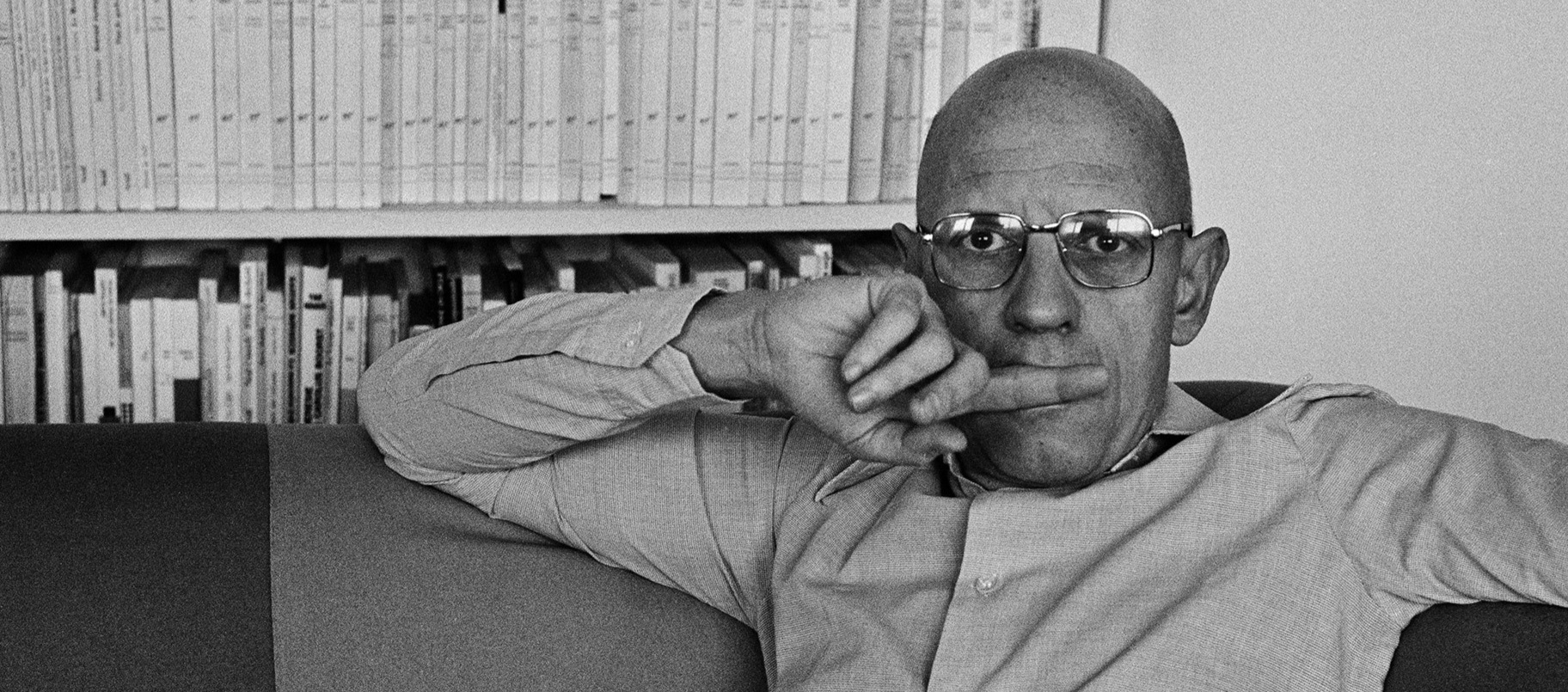

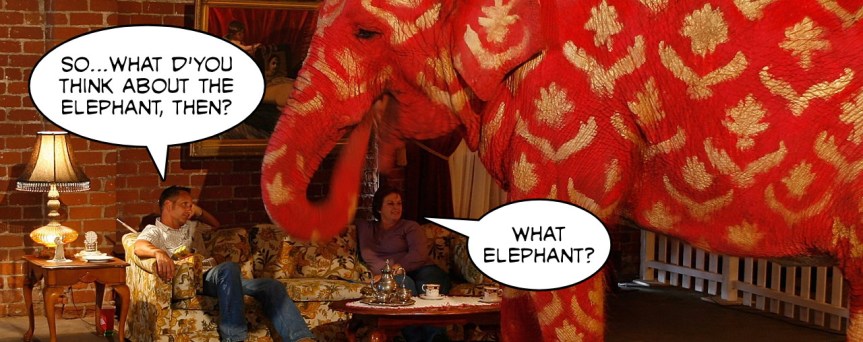


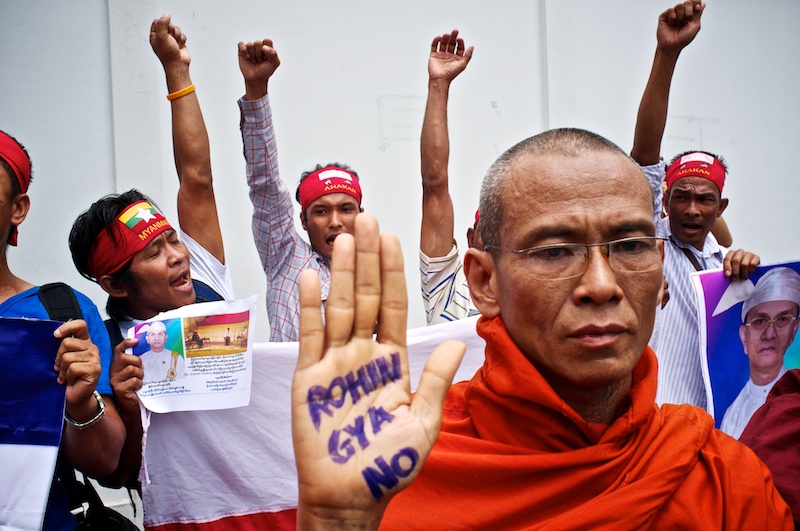


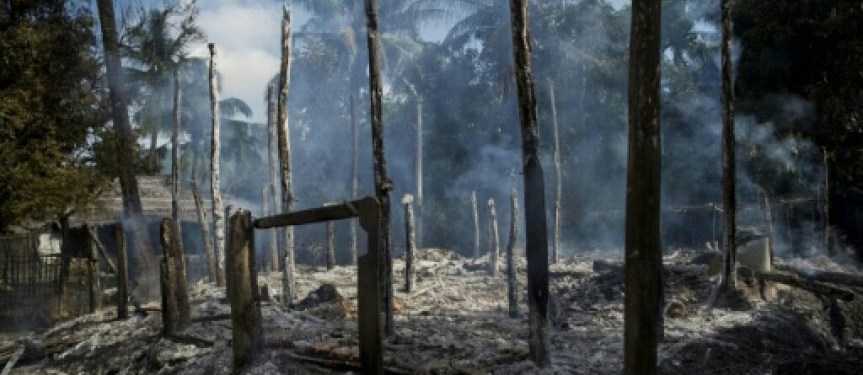


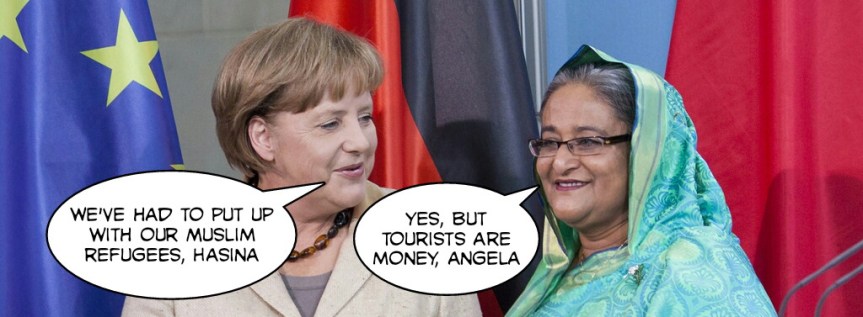





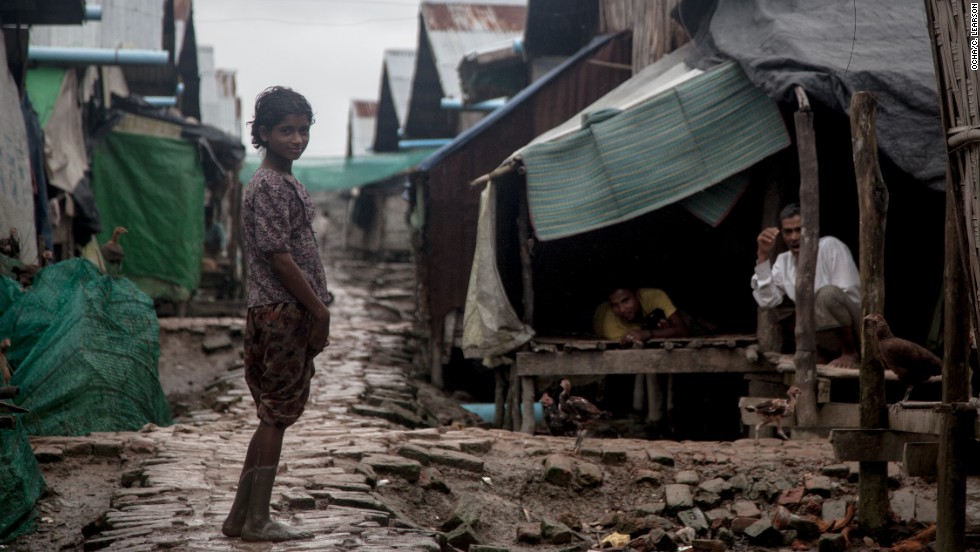


 soothfairy